 Skagit County
 Why More Concrete Homeowners Are Looking at Metal Roofing
Concrete sits up the Skagit River valley, tucked against the North Cascades foothills, and the roofs here work harder than people expect. Heavy timber cover, river humidity, and long stretches of overcast, wet weather mean a roof in Concrete rarely gets a real chance to dry out between storms. Asphalt shingle roofs in this part of Skagit County often show moss, granule loss, and soft spots well before their rated lifespan is up. Metal roofing is one of the few systems that genuinely holds up to that combination of moisture, shade, and temperature swings year after year, which is why we get more calls about it every season.
This page is about metal roofing specifically for homes in and around Concrete — not a generic rundown of the product. The right approach here depends on the tree cover on your lot, the pitch and age of your existing roof, and how much of the year your roof stays damp rather than dry.
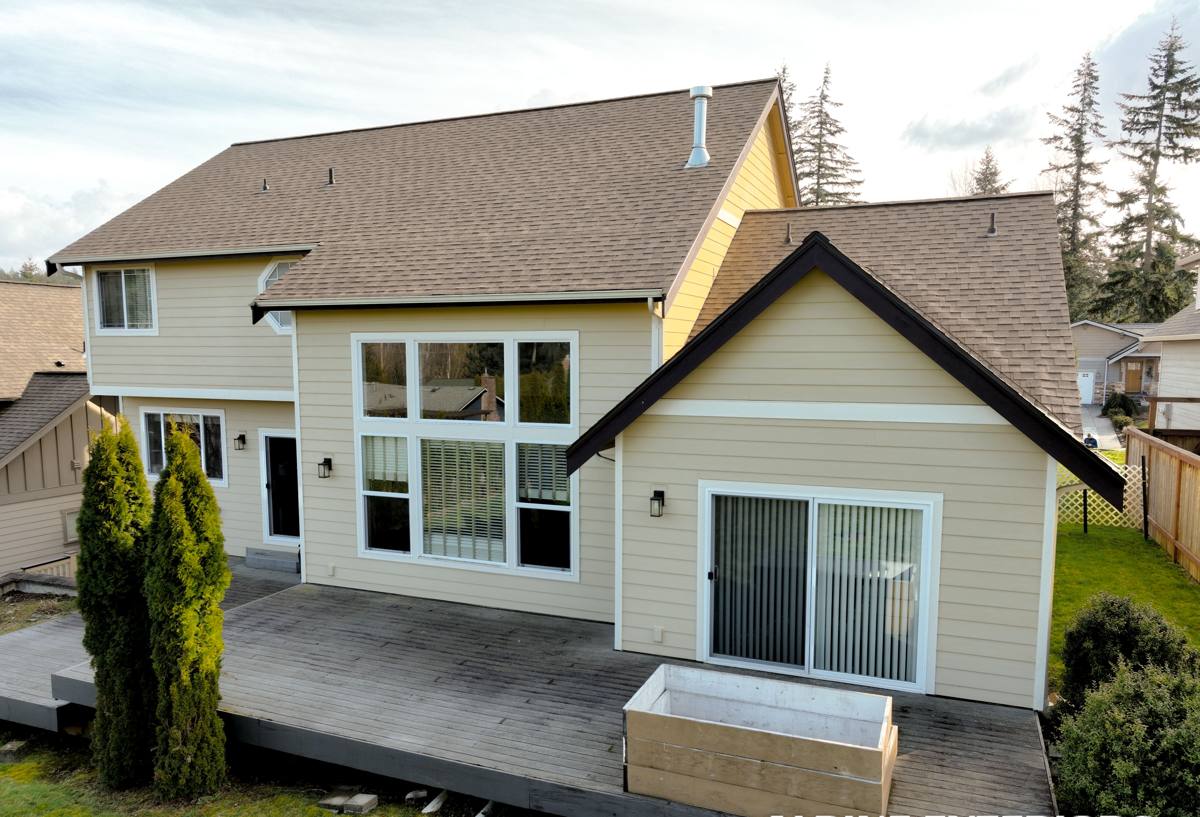
What Skagit County's Climate Does to a Roof in Concrete
Skagit County stretches from saltwater shoreline out on the coast to river valleys and forested foothills further inland, and Concrete sits well up that valley. Even without direct salt air exposure, homes here deal with their own version of the same problem: persistent moisture. Driving rain off the Cascades, dense evergreen canopy that shades roofs from sun and wind, and a long moss season all combine to keep roofing material wet for much of the year.
A few specific effects we see on roofs in this area:
- Moss and algae establish quickly on shaded, north-facing slopes and hold moisture against the roofing material.
- Needle and leaf litter from surrounding trees clogs valleys and gutters, backing up water under shingle edges.
- Repeated wet-dry cycling loosens fasteners and degrades asphalt shingle mat over time.
- Cooler valley temperatures and shade slow drying after every rain event, extending the time roofing stays saturated.
Metal roofing addresses most of these problems directly. It sheds water fast, doesn't absorb moisture into a mat the way shingles do, and gives moss and algae a much harder surface to colonize — though it isn't fully immune, which we'll get into below.
Choosing the Right Metal Roofing System
Panel Types
Not all metal roofing is the same product wearing different colors. The panel type matters as much as the metal itself, especially in a wet, tree-covered setting like Concrete.
| System | How It's Fastened | Best For | Trade-Offs |
|---|---|---|---|
| Standing seam | Concealed clips, no exposed fasteners | Long-term, low-maintenance roofs; steeper pitches | Higher upfront cost; needs a skilled crew |
| Exposed-fastener panel | Screws driven through the panel face | Budget-conscious projects, outbuildings, shops | Fasteners need periodic re-torque or replacement |
| Stone-coated steel / metal shingle | Interlocking panels, hidden fasteners | Homeowners who want a traditional shingle look | More seams and details than standing seam |
For a full-time residence in Concrete, we lean toward standing seam or a quality stone-coated steel panel. Exposed-fastener panels are a reasonable, lower-cost option for detached garages or shops, but the exposed screws are a maintenance item over time, and in a climate that stays damp as long as this one does, that maintenance gets skipped more often than it should.
Metal and Coating
Galvalume steel with a quality paint finish is the standard choice for most homes and holds up well under Skagit County's rain and humidity. Aluminum is worth discussing if a home is close to open water or has a history of corrosion issues, since it doesn't rust the way steel can if a coating is ever compromised. Copper and zinc are premium options with their own look and cost, and we're happy to talk through them, but for most Concrete homes, coated steel gives the best balance of durability and price.
What a Correct Metal Roof Installation Actually Involves
Metal roofing has a reputation for being "install it and forget it," but that reputation only holds up if the job underneath the panels is done right. A metal roof is only as good as what's beneath it.
Tear-Off and Deck Inspection
We remove the old roofing down to the deck rather than installing over existing shingles. That lets us check the sheathing for rot or soft spots — common on older Concrete homes where roof leaks have gone unnoticed under moss for a season or two — and replace any damaged sections before anything new goes down.
Underlayment
Metal roofs need a synthetic or high-temp underlayment rated for the panel type, plus a self-adhered membrane at eaves, valleys, and around penetrations. In a valley climate with heavy rain and ice on cold mornings, this layer is what protects the deck if wind-driven water ever gets under a seam.
Flashing and Penetrations
Chimneys, plumbing vents, and skylights are where most roof leaks actually start, on metal or shingle roofs alike. Correct step flashing, counterflashing, and boot seals at every penetration matter more than the panel itself.
Ventilation
Metal roofs perform best with balanced intake and exhaust ventilation. In a shaded, humid setting, poor attic ventilation traps moisture that can condense on the underside of metal panels or rot the deck from the inside, regardless of how good the roofing above it is.
Our Process, Start to Finish
- Free on-site estimate. We walk the roof, check the deck condition where accessible, and talk through panel and color options for your home.
- Written quote. A clear scope and price, including tear-off, underlayment, flashing, and ventilation work — no vague allowances.
- Scheduling around weather. Metal roofing goes on best in a dry window, and we plan around Skagit County's forecast rather than rushing a job into the rain.
- Tear-off and deck repair. Old roofing comes off, the deck is inspected, and any rot or soft spots are addressed before underlayment goes down.
- Installation. Panels, flashing, and trim are installed to manufacturer spec, with attention to the details around valleys, chimneys, and vents.
- Cleanup and walkthrough. Job site debris and old materials are hauled off, and we walk the finished roof with you before we consider the job done.
Cost Factors for Metal Roofing in Concrete
Metal roofing costs more upfront than asphalt shingles, and the honest answer to "what will it cost" is that it depends on the details below rather than a flat per-square-foot number.
| Factor | Why It Affects Price |
|---|---|
| Roof pitch and complexity | Steep pitches, multiple valleys, and dormers take more time and material to flash correctly |
| Panel type | Standing seam runs higher than exposed-fastener panel for the same square footage |
| Deck condition | Rot found during tear-off means added repair before new roofing goes on |
| Tree access and canopy | Heavy overhanging trees, common around Concrete properties, can add setup and cleanup time |
| Ventilation upgrades | Older homes often need added intake or exhaust vents brought up to a workable standard |
As a broad range, expect metal roofing to run higher than a comparable shingle replacement, with the gap narrowing over the life of the roof since metal typically lasts two to three times as long with less maintenance. We'll give you real numbers for your roof at the estimate — we don't like quoting ranges that don't mean anything for your specific house.
Maintenance: What Keeps a Metal Roof Performing for Decades
A correctly installed metal roof needs far less attention than shingles, but "less" isn't "none," especially under Concrete's tree cover and long moss season.
- Clear needles and leaf debris from valleys and around penetrations at least once or twice a year.
- Check gutters and downspouts for buildup that can back water up under eave flashing.
- Watch for moss or algae growth in shaded valleys and low-slope sections, and address it before it holds moisture against seams.
- Re-check exposed fasteners on screw-down panel systems periodically, since washers can compress and loosen over time.
- After major windstorms, take a look for any lifted trim or debris impact, particularly if branches overhang the roof.
Why Hiring a Crew That Already Works in Concrete Matters
Metal roofing done wrong doesn't fail gracefully — a poorly flashed valley or an underventilated attic can cause damage that's hidden until it's expensive. A crew that already works in Concrete and the surrounding Skagit County valley knows how the local tree cover, rainfall patterns, and older home construction here tend to interact with a roof, and builds the underlayment, flashing, and ventilation plan around that instead of a generic checklist. That local familiarity is what separates a metal roof that quietly does its job for decades from one that needs a callback in year three.
If you're weighing metal roofing for a home in Concrete, we're glad to come take a look, walk you through what your specific roof needs, and give you a clear, honest quote — no pressure, no upsell. Use the form below to request a free estimate.