 Skagit County
 Why Concrete Homes Wear Out Roofs Differently
Concrete sits up the Skagit River valley in the foothills of the North Cascades, and that location shapes what a roof has to deal with all year. Homes here sit under heavier tree cover than most of Skagit County, which means more shade, more standing moisture after a storm, and a much longer moss season than you'd see on an open lot closer to the coast. Add in the driving rain that funnels through the valley and the temperature swings between the river bottom and the surrounding hillsides, and you've got a climate that's hard on roofing materials that aren't installed with real attention to detail.
A roof that would hold up fine in a drier, sunnier part of the state can fail early here if the underlayment, flashing, and ventilation weren't done right the first time. That's the core of what this page is about: what a correct new roof installation looks like for a Concrete home, and why the details matter more here than they do in a lot of other places.
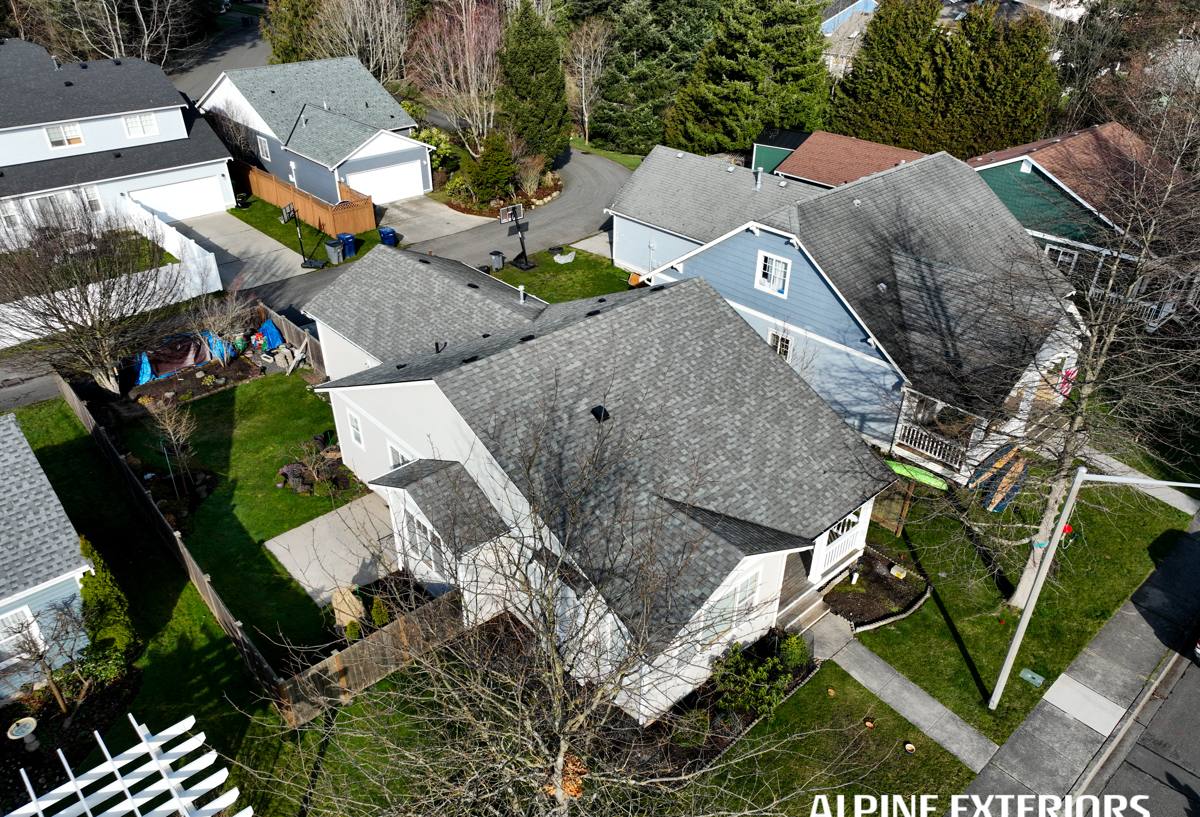
Signs a Concrete Roof Needs Replacement, Not Another Repair
Repairs make sense when the damage is isolated and the roof still has structural life left. Replacement is the honest answer when the problems are spread across the whole roof or point to something failing underneath the shingles. Common signs we look for on homes in this area include:
- Granules collecting in gutters and downspouts, a sign the shingle surface is breaking down
- Moss and lichen that keep coming back within a season or two of cleaning, even after treatment
- Soft or spongy spots on the decking when walked, usually meaning moisture has gotten underneath
- Daylight visible through the roof deck from inside the attic
- Curling, cracking, or missing shingles concentrated on north-facing or shaded slopes
- Persistent leaks around chimneys, skylights, or valleys that keep returning after patching
If you're only seeing one or two of these on a roof that's otherwise sound, a repair is usually the right call and we'll say so. If several of these show up together, patching becomes a short-term fix for a problem that's already system-wide.
What a Correct New Roof Installation Actually Involves
Tear-Off and Deck Inspection
We remove the old roofing down to the decking rather than layering over it. That's the only way to actually see the plywood or plank sheathing underneath, which matters a lot in a shaded, damp environment like Concrete where hidden rot doesn't announce itself until it's serious. Any soft or delaminated decking gets replaced before anything else goes down.
Underlayment
Given how much rain this valley sees, we pay close attention to underlayment coverage, especially at eaves, valleys, and low-slope transitions where water moves slowest and sits longest. This is one of the layers homeowners never see again once the roof is finished, but it's doing most of the work when a storm rolls through.
Flashing
Flashing around chimneys, skylights, vent pipes, and roof-to-wall transitions is where most leaks actually start, not in the field of the roof itself. Correct flashing means new metal, properly lapped and sealed, not old flashing reused to save time.
Field Installation
Whatever material is chosen, it gets installed to the manufacturer's nailing pattern and exposure specs, not a shortcut version. This is what protects the warranty and what actually holds up to the wind that comes down the river valley during winter storms.
Ventilation
Intake and exhaust venting get balanced so heat and moisture can actually escape the attic space. We cover this in more detail below because it's one of the most overlooked parts of a roof job.
Roofing Material Options for a Concrete Property
There's no single "best" roofing material for every home here — it depends on the roof's pitch, how much shade it sits under, and what the homeowner wants to maintain long-term. Here's how the common options compare for this kind of climate:
| Material | Moss Resistance | Maintenance | Typical Lifespan |
|---|---|---|---|
| Asphalt composition shingle | Moderate — benefits from algae-resistant granules | Periodic moss removal in shaded areas | 25–30 years |
| Metal (standing seam or panel) | High — sheds moisture quickly, little to grip | Low; occasional debris clearing | 40–50+ years |
| Cedar shake | Low without diligent upkeep | Regular treatment and cleaning required | 20–30 years with maintenance |
| Synthetic/composite shingle | Good, varies by product | Low to moderate | 30–50 years depending on product |
Cedar shake has a real place in this region's building tradition, but on a heavily shaded lot it takes ongoing maintenance to keep moss from taking hold. We're upfront about that trade-off rather than pretending it isn't a factor. Metal roofing has become a popular choice for exactly this reason — its smooth surface and fast drainage give moss and lichen very little to hold onto, which matters on the shadier lots common around Concrete.
Ventilation and Moisture: The Part Nobody Sees
A new roof can be installed with premium materials and still fail early if the attic underneath can't breathe. Trapped heat and humidity accelerate shingle aging from below, and in a valley with this much rainfall and shade, poor ventilation also invites condensation that can rot decking and framing over time. We check existing intake and exhaust venting on every replacement and correct imbalances as part of the job, not as an upsell afterward. It's inexpensive to fix while the roof is open and expensive to fix once it's closed back up.
Moss, Debris, and Long-Term Roof Care in a Forested Valley
Living under conifer cover has real upsides, but it means roofs here collect needles, cones, and organic debris faster than roofs in open areas. That debris holds moisture against the roof surface, which is exactly what moss and lichen need to establish. A new roof isn't the end of that fight — it changes the terms of it. Algae-resistant shingle products, smooth metal surfaces, and properly flashed valleys (where debris tends to collect) all make ongoing maintenance easier, but nothing eliminates the need for periodic cleaning and gutter clearing in a setting like this.
Our Installation Process
- On-site inspection and honest assessment of whether repair or full replacement is the right call
- Written estimate covering materials, labor, tear-off, disposal, and any decking contingencies
- Material selection based on your roof's pitch, shade exposure, and budget
- Scheduling around weather windows — we don't tear off a roof ahead of a forecast that won't let us close it back up
- Tear-off, deck inspection and repair, underlayment, flashing, and field installation
- Ventilation check and correction as needed
- Final walkthrough and cleanup, including magnetic sweep for nails
Why a Crew That Already Works in Concrete Matters
Roofing crews that mostly work in drier, more open parts of Skagit County can underestimate how much shade and moisture change the job in a place like Concrete. We factor in the realities of this specific setting from the start: scheduling around weather patterns that move through the valley, choosing flashing and underlayment details suited to a wetter microclimate, and being honest about which materials will actually hold up under heavy tree cover instead of just selling whatever's easiest to install. That local familiarity affects real decisions on your roof, not just talking points.
What Affects the Cost of a New Roof
| Factor | Why It Matters |
|---|---|
| Roof size and pitch | More surface area and steeper slopes increase labor and material needs |
| Decking condition | Rot from hidden moisture means added repair before installation |
| Material choice | Asphalt, metal, and cedar carry different material and labor costs |
| Roof complexity | Valleys, dormers, and multiple penetrations add flashing work |
| Access and site conditions | Tree cover, steep driveways, or tight lots can affect setup and disposal |
Costs for a full residential roof replacement in this region commonly range from the high single-digit thousands for a straightforward asphalt shingle roof to considerably more for metal or complex, multi-plane roofs. Every estimate we give is based on an actual look at your roof, not a phone quote.
Before You Schedule a Roof Replacement, Have Ready:
- Any known history of leaks, repairs, or attic moisture issues
- Age of the current roof, if known
- Whether the home has had recent moss treatment or gutter work done
- Photos of any visible problem areas, if you can safely get them
- A general sense of your timeline and any scheduling constraints
If your roof is showing signs of wear or you're just planning ahead, we're happy to take a look and give you a straightforward, no-pressure estimate. Fill out the form below to get started.