 Skagit County
 Siding Repair Built for Concrete's River Valley Climate
Concrete sits up the Skagit River in the North Cascades foothills, tucked into a valley with heavy tree cover, steep terrain, and a lot more annual rainfall than homeowners closer to Puget Sound deal with. That setting is beautiful, but it's tough on exterior siding. Skagit County as a whole gets a mix of conditions — coastal towns near the water contend with salt air working at fasteners and finishes, while river valley communities like Concrete deal with driving rain, dense shade, and a moss season that can run most of the year. Either way, siding here works harder than siding in a drier inland climate, and repairs done without accounting for that tend to fail again faster than they should.
This page covers what actually goes wrong with siding on Concrete homes, what a correct repair involves, how we approach the job, and why hiring a crew that already works this part of Skagit County — rather than one learning the valley on your project — makes a real difference in how long the repair holds up.
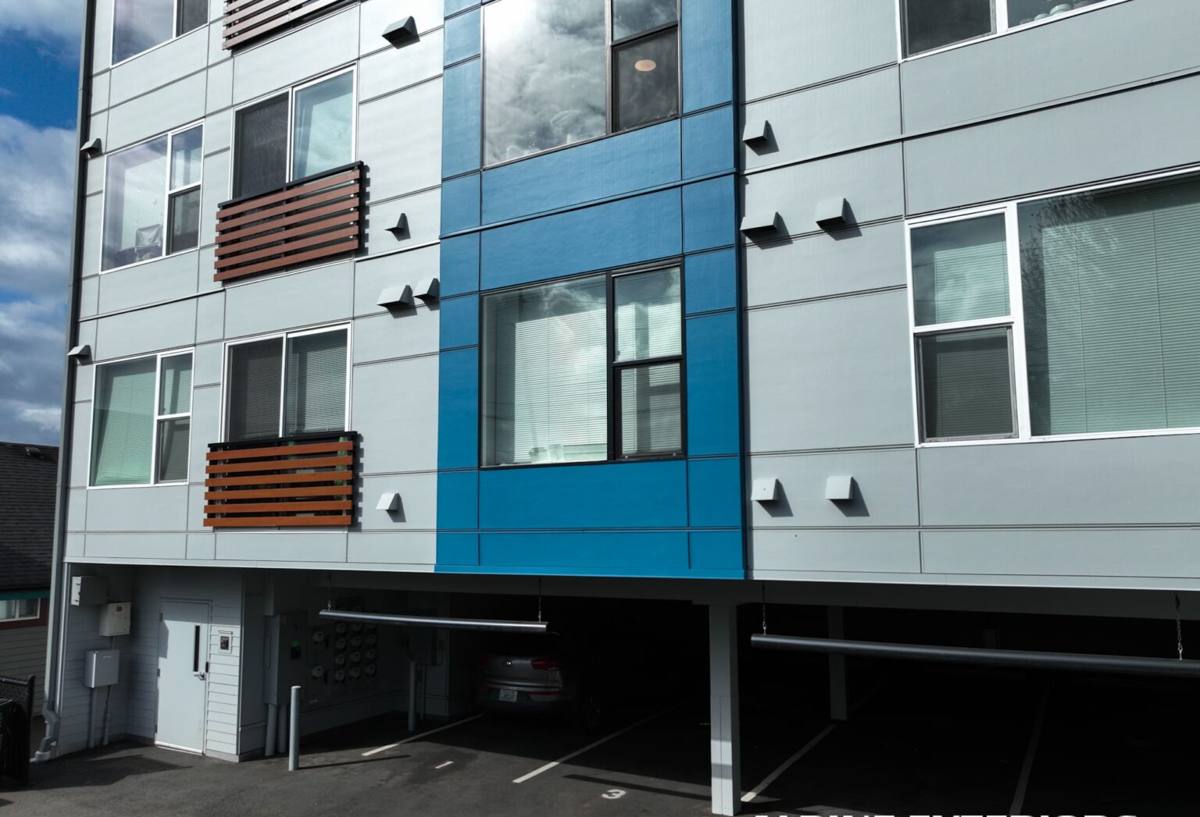
What Actually Damages Siding in Concrete
Driving Rain and Wind-Driven Moisture
Rain in a river valley doesn't always fall straight down. Terrain and wind push it sideways into wall assemblies, forcing water up under laps, into seams, and behind trim where a casual glance wouldn't catch it. Over time, that wind-driven moisture finds every weak point in a siding installation — a gap where caulk has failed, a fastener that's backed out slightly, a butt joint that was never properly flashed. The damage usually starts small and stays hidden until it's already worked into the sheathing behind the siding.
Moss, Algae, and Constant Shade
Heavy tree cover keeps a lot of Concrete properties shaded for large stretches of the day, and that shade keeps siding surfaces damp far longer after a rain event than siding out in the open. That combination — moisture plus limited sun exposure to dry things out — is exactly what moss and algae need to take hold. On some siding materials that's mostly cosmetic. On others, especially wood-based products, sustained surface moisture from moss growth is a direct path to rot underneath.
Humidity Trapped Against the Wall
Dense landscaping and a river valley setting both raise ambient humidity around a home. When siding is installed tight against overgrown shrubs or trees, or when ventilation behind the siding wasn't detailed correctly during the original installation, that humidity has nowhere to go. It sits against the wall assembly and accelerates whatever deterioration is already underway.
Freeze Cycles at Elevation
Concrete sits at higher elevation than most of the county, and it sees more genuine cold snaps and freeze-thaw cycling than towns closer to the water. Water that's worked its way into a crack or seam and then freezes expands that damage, turning a small crack into a larger one. This is a repair-timing issue as much as anything — problems that could be caught and fixed easily in the fall get worse fast once winter freeze cycles start working on them.
Signs Your Siding Needs Repair
- Soft, spongy, or crumbling siding when pressed, especially near the bottom of walls or under windows
- Visible moss or algae buildup that keeps returning after cleaning, particularly on shaded north- or west-facing walls
- Peeling, bubbling, or discolored paint or finish in specific areas rather than evenly across the whole house
- Gaps opening up at seams, corners, or trim boards where caulk has cracked or pulled away
- Warped, buckled, or visibly separated boards or panels
- Water stains or discoloration on interior walls near exterior siding, which usually means moisture has already gotten past the siding itself
- A musty smell near exterior walls, particularly after a stretch of wet weather
Any one of these on its own might be minor. Several appearing together, or appearing in the same general area of the house, usually points to a moisture problem that's been building for a while.
Cosmetic Wear vs. Structural Problems
Not every issue calls for the same response, and telling the difference correctly is the first real job of an honest repair estimate.
| Symptom | Usually Cosmetic | Often Structural |
|---|---|---|
| Moss or algae film on the surface | Yes, if the siding underneath is firm | Only if it's been left long enough to trap sustained moisture |
| Faded or chalky paint finish | Yes — sun and weathering | Rarely on its own |
| Soft spot when pressed | No | Yes — indicates rot or moisture damage underneath |
| Cracked caulk at seams or trim | Cosmetic if caught early | Becomes structural if water has already worked past it |
| Warped or bowed board | Rarely | Usually — moisture absorption has already occurred |
| Interior water stains near an exterior wall | No | Yes — moisture has breached the wall assembly |
Cosmetic issues can typically wait for routine maintenance. Structural issues shouldn't be deferred, because moisture that's reached the sheathing or framing keeps working even when nothing looks urgent from the outside.
How We Diagnose a Repair Before Recommending a Scope
A repair estimate that means something starts with an actual inspection, not a guess from the driveway. That typically includes:
- Pressing and probing suspect areas of siding to check for soft spots that indicate rot or trapped moisture, not just a visual pass
- Checking seams, butt joints, and trim intersections for failed caulking or missing flashing, since these are the most common entry points for water
- Looking behind moss or algae growth rather than just noting that it's there, since what's growing on top doesn't tell you what's happening underneath
- Inspecting for any signs moisture has already reached interior walls, which changes the scope from a siding repair to something broader
- Assessing how shade, drainage, and airflow around the specific wall are contributing to the problem, since fixing the siding without addressing those factors often means repeating the repair
- Determining whether the surrounding siding is a genuine match for a patch repair or whether a larger section needs to come off to tie in cleanly
We walk through what we find plainly — what needs attention now, what can be monitored, and what's purely cosmetic — before recommending a scope of work.
What a Correct Siding Repair Actually Involves
Fixing the Cause, Not Just the Symptom
A soft or damaged board is a symptom. Failed flashing, a gap that's been letting wind-driven rain in, or moss that's been holding moisture against the wall is usually the cause. Replacing the visible damage without correcting what caused it tends to bring the same problem back, often in the same spot.
Matching Materials Correctly
Repair work means tying new material into what's already on the wall. Matching profile, reveal, and finish keeps a repair from looking like a patch, and getting the flashing and fastening details right at that transition point matters more than the patch itself — that seam is where the next leak starts if it's done carelessly. On homes where the existing siding is a wood-based or engineered product showing widespread wear, we'll say so directly if repair is only a short-term fix rather than a real solution.
Correct Fastening and Sealant Standards
In a climate that sees this much driving rain, the difference between a repair that holds and one that doesn't often comes down to fastener placement and sealant quality at seams and penetrations. We don't cut corners on these details because they're the part of the job nobody sees once it's painted over — but they're exactly what determines whether the repair lasts.
Why We Install Only James Hardie Fiber Cement
We repair the siding that's already on a home, whatever the material. But when a homeowner in Concrete is dealing with repeated repairs, widespread moisture damage, or siding that's simply reached the end of its useful life, our recommendation is James Hardie fiber cement, and it's the only product we install for full replacement work. Fiber cement doesn't absorb and hold moisture the way wood-based products can, it's non-combustible, and Hardie's ColorPlus factory finish holds up to sustained damp shade and moss exposure better than field-applied paint does over time. In a valley climate where siding stays wet longer than it does in drier parts of the county, that moisture resistance is the whole ballgame.
Repair vs. Replace: How That Decision Gets Made Honestly
| Factor | Favors Repair | Favors Replacement |
|---|---|---|
| Extent of damage | Isolated to one or two areas | Widespread across multiple walls |
| Age and condition of remaining siding | Still structurally sound, cosmetic wear only | Nearing or past its practical service life |
| Repair history | First repair on this section | Same area has needed repair more than once |
| Material type | Fiber cement or another durable, matchable product | Wood-based product with recurring moisture issues |
| Underlying cause | Isolated flashing or caulk failure, easily corrected | Systemic moisture, ventilation, or original installation problems |
We'll give a straight answer about which category a given repair falls into, including when a targeted repair is genuinely the right call and full replacement isn't needed yet.
Maintenance That Extends a Repair's Lifespan
- Trim back trees and shrubs that keep siding in constant shade or brush directly against the wall
- Rinse moss and algae off siding surfaces before it has a chance to build up and hold moisture against the material
- Check caulking at seams, trim, and window and door surrounds annually, since this is where most repair issues start
- Keep gutters and downspouts clear so roof runoff isn't dumping extra water directly onto a wall section
- Walk the exterior after any major windstorm to catch loosened boards or trim early, before the next rain gets behind them
- Address soft spots or discoloration right away rather than waiting for the next scheduled inspection
Why It Matters That We Already Work in Concrete
A crew based lower in the county can still do competent siding work, but repair jobs up the valley have variables that come up more consistently here than they do closer to the water — deeper shade patterns that keep walls damp longer, terrain that pushes wind-driven rain into siding from angles a flatter site wouldn't see, and elevation that brings more real freeze-thaw cycling into the picture each winter. Working this area regularly means we're not guessing at how those conditions behave — we've seen what actually fails first on a shaded, valley-facing wall in Concrete, and we scope repairs accordingly instead of applying a generic checklist built for a different part of Skagit County.
That familiarity also means a more accurate estimate the first time, with less back-and-forth once work is underway, because the inspection already accounted for how this particular climate treats siding.
Get an Honest Look at Your Siding
Whether you're dealing with a specific problem area, recurring moss and moisture issues, or just want a straight opinion on where your siding stands, we're glad to walk the property and tell you plainly what we find — including if the honest answer is that it doesn't need much yet. Reach out below for a free, no-pressure estimate.