 Skagit County
 Storm Damage Roof Repair Built for Concrete's Climate
Concrete sits in the Skagit River valley, tucked between forested foothills and the North Cascades, and that setting shapes how storms treat a roof here. Wind funnels through the valley and picks up speed where the terrain narrows. Rain arrives sideways more often than straight down. Heavy tree canopy throws shade on north- and west-facing slopes for months at a time, which means moss gets a head start and doesn't let go easily. None of this is unique to any one street in town, but taken together it adds up to a roofing environment that's harder on a roof than most homeowners realize until something actually fails.
Storm damage roof repair in this kind of setting isn't just about patching a leak. It's about understanding why the leak happened in the first place, because a roof that failed once under these conditions will fail again in the same spot unless the underlying cause gets addressed.
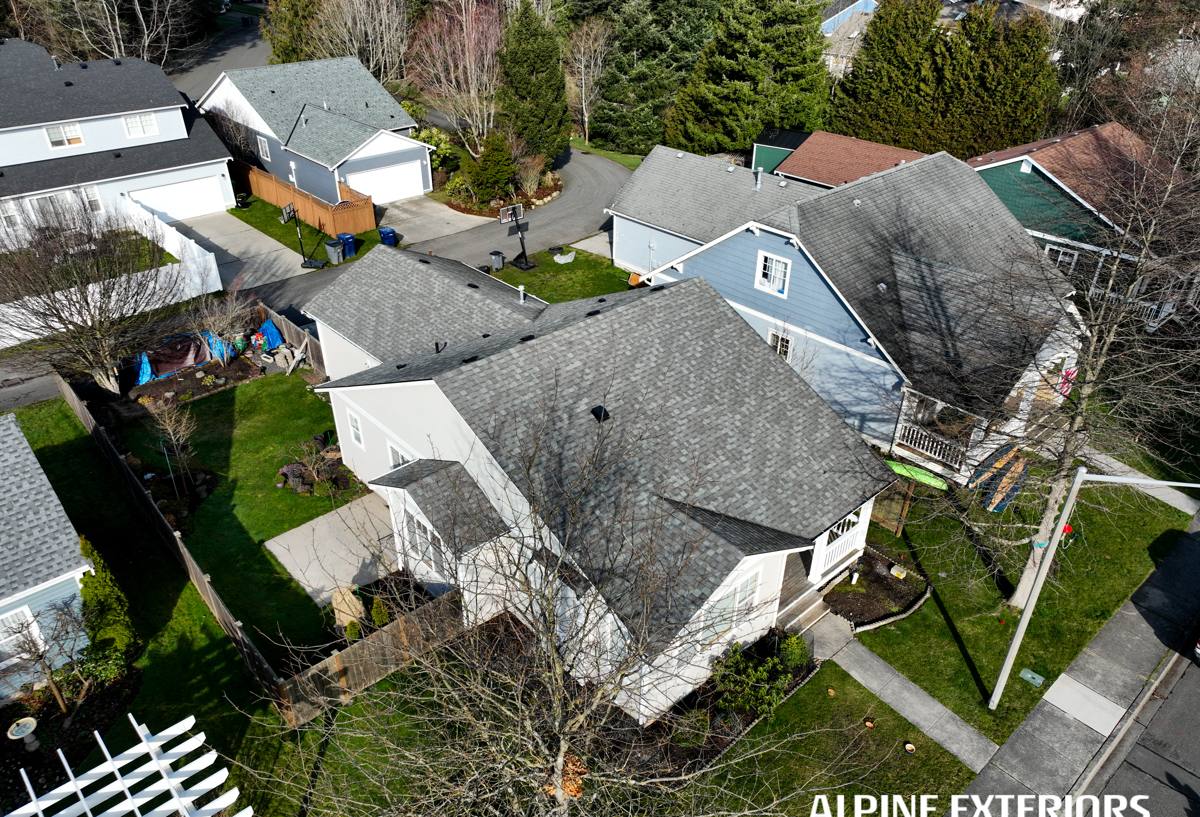
What Skagit County Weather Does to a Concrete Roof Over Time
Driving Rain and Wind-Driven Water
When wind pushes rain sideways instead of letting it fall straight, water gets forced up under shingle edges, around flashing, and into places a roof was never designed to shed water from. A roof that's perfectly watertight in a calm, straight-down rain can still leak during a windstorm because the water is attacking from an angle the roofing system doesn't account for.
Long Moss Season
Dense tree cover and persistent moisture give moss a long growing window in this part of Skagit County. Moss holds water against the roofing surface far longer than open air ever would, and over a season or two that constant dampness works into shingle granules, fasteners, and eventually the decking underneath. Storm damage often shows up worse in areas where moss has already been quietly undermining the roof for years.
Wind and Debris
Surrounding trees mean wind events regularly bring down limbs, needles, and cones onto roofs. Even without a direct limb strike, wind gusts moving through the valley can lift shingle tabs, work fasteners loose, and peel back ridge caps, especially on roofs that were already weakened by trapped moisture or age.
Common Types of Storm Damage We Repair in Concrete
- Wind-lifted or missing shingles — tabs torn loose or blown off entirely, usually along ridges, edges, and valleys where wind pressure concentrates
- Moss-related deck softening — moisture trapped under moss mats has worked into the sheathing, often discovered only once a leak forces a closer look
- Flashing failure — chimney, skylight, and valley flashing pulled loose or corroded, letting wind-driven rain track underneath
- Limb and debris impact — punctures, cracked shingles, or dented metal roofing from falling branches
- Granule loss and shingle brittleness — accelerated by repeated wet-dry cycling, leaving shingles less able to seal against wind uplift
- Gutter and edge damage — overflow and ice-edge issues during colder snaps that back water up under the first course of shingles
Why Acting Quickly After a Storm Matters
A roof that's been compromised by wind or debris rarely announces itself with an obvious hole. More often it's a missing shingle tab, a lifted ridge cap, or a flashing seam that's opened a fraction of an inch. Left alone through the next few rain events, that small opening lets water reach the decking, insulation, and eventually interior framing. What would have been a straightforward shingle and flashing repair turns into a decking replacement, or worse, drywall and insulation work inside the house.
If you've had visible storm damage, or you suspect it after a windy night, a tarp over the affected area and a prompt inspection are the two things that limit how much worse it gets. We'd rather look at a roof that turns out to be fine than have a homeowner wait through another storm cycle on a roof that's already been compromised.
What a Correct Storm Damage Repair Actually Involves
Inspection Before Anything Else
A legitimate repair starts with getting on the roof (or using a drone where access is limited) and checking beyond the obvious damage point. Wind and moisture problems are rarely confined to a single shingle — we check surrounding courses, flashing, ridge and valley lines, and the attic side where accessible, since interior staining tells you how far water has actually traveled.
Decking Assessment
Given how common moss-related moisture is in this area, we don't assume the decking underneath a damaged section is sound just because the surface shingles look repairable. Soft or delaminated sheathing has to be cut out and replaced before new roofing goes down over it — covering rot with new shingles just hides the problem for a future owner to find.
Matching Materials Honestly
Where a repair is patching into an existing roof, we match shingle type, profile, and as close to color as the product line allows. On older roofs, an exact color match sometimes isn't possible because of sun fading and product discontinuation — we'll tell you that upfront rather than let you be surprised by a visible patch.
Flashing and Fastening Done Right
A lot of storm damage repairs fail a second time because the flashing was reused or the fastening pattern didn't account for wind exposure. We replace flashing rather than re-bend and reuse it in high-exposure areas, and we fasten to match or exceed the wind rating the roofing product is designed for.
Repair or Replace? How We Help You Decide
Not every storm-damaged roof needs full replacement, but not every roof is a good candidate for another round of patching either. These are the factors that actually drive that decision:
| Factor | Leans Toward Repair | Leans Toward Replacement |
|---|---|---|
| Age of roof | Under 12-15 years, still within expected lifespan | Nearing or past manufacturer-rated lifespan |
| Extent of damage | Isolated to one section or slope | Spread across multiple slopes or recurring in different spots |
| Decking condition | Sound, dry sheathing under the damaged area | Soft, delaminated, or repeatedly wet decking |
| Moss/moisture history | First significant issue, roof otherwise well-maintained | Long-term moss coverage with signs of chronic trapped moisture |
| Material availability | Matching shingles still in production | Discontinued product, patch would be visibly mismatched |
We'll walk you through where your roof falls on these points rather than defaulting to whichever option is more profitable for us. Plenty of storm damage in Concrete is genuinely repairable, and we say so when that's the honest answer.
Cost Factors to Expect
Repair costs depend heavily on how much decking needs replacing, how accessible the roof is, and whether matching material is readily available. Rather than quote a number without seeing the roof, we give a firm price after inspection — but broadly, isolated flashing or shingle repairs cost far less than sections requiring deck replacement, and multi-area storm damage can approach the cost of a partial re-roof depending on scope.
Our Process for Concrete Homeowners
- Free on-site inspection, including photos of the damage and any underlying issues we find
- Clear explanation of what caused the damage and what repair (or replacement) actually requires
- Written estimate before any work starts, with material and labor scope spelled out
- Emergency tarping if the roof is actively leaking or further storms are forecast
- Repair work performed with matched materials and proper flashing, not shortcuts
- Final walkthrough so you can see what was done and ask questions before we call it finished
Working With Your Insurance Claim
Storm damage is often covered under a standard homeowner's policy, but insurers want clear documentation of both the damage and its cause. We provide detailed photos and a written scope of damage that you can submit with your claim. We're not a public adjuster and won't promise a claim outcome, but we can make sure the documentation reflects what we actually found on your roof, which matters when an adjuster is trying to distinguish storm damage from wear and tear.
What to Do Right After a Storm
- Check for granules collecting in gutters or at downspout outlets — a sign of shingle damage even without visible holes
- Look for shingles or shingle pieces in the yard
- Note any new water stains on ceilings or upper walls
- Photograph visible roof damage from the ground if it's safe to do so — don't climb up yourself after a storm
- Avoid walking on the roof, especially if it's wet, mossy, or you can see obvious damage
- Call for an inspection before the next rain event, not after
Why Hire a Crew That Already Works in This Area
Concrete's combination of valley wind patterns, heavy tree cover, and a long wet season isn't something every roofing crew accounts for the same way. A repair approach that works fine on an open, sun-exposed roof elsewhere in Skagit County can fall short on a shaded, moss-prone roof here. Knowing which areas of a roof take the brunt of wind-driven rain in this specific setting, and how quickly moss regrows if the underlying moisture issue isn't addressed, changes how a repair should be done — not just what it costs.
If your roof has taken storm damage, or you're not sure whether recent weather left something behind that needs attention, we're happy to take a look. The estimate is free, there's no pressure to move forward, and you'll get a straight answer about what your roof actually needs.