 Skagit County
 Building Decks for Mount Vernon's Particular Climate
Mount Vernon sits in the heart of the Skagit Valley, close enough to Puget Sound and the Skagit River delta that homes here deal with a mix of conditions you don't see everywhere in Washington. Salt-tinged air moves in off the Sound, rain falls steadily for months at a stretch, and shaded or north-facing surfaces grow moss for a good part of the year. A deck that would hold up fine in a drier inland climate can start showing problems within a few seasons here if it wasn't built with this environment in mind.
We're not describing anything exotic — it's the ordinary reality of building outdoor structures in western Skagit County. But it does change how a deck should be designed, what materials make sense, and how the substructure needs to be protected. This page walks through what we think about when we build a custom deck for a Mount Vernon property, and why the details matter more here than the sales brochures usually let on.
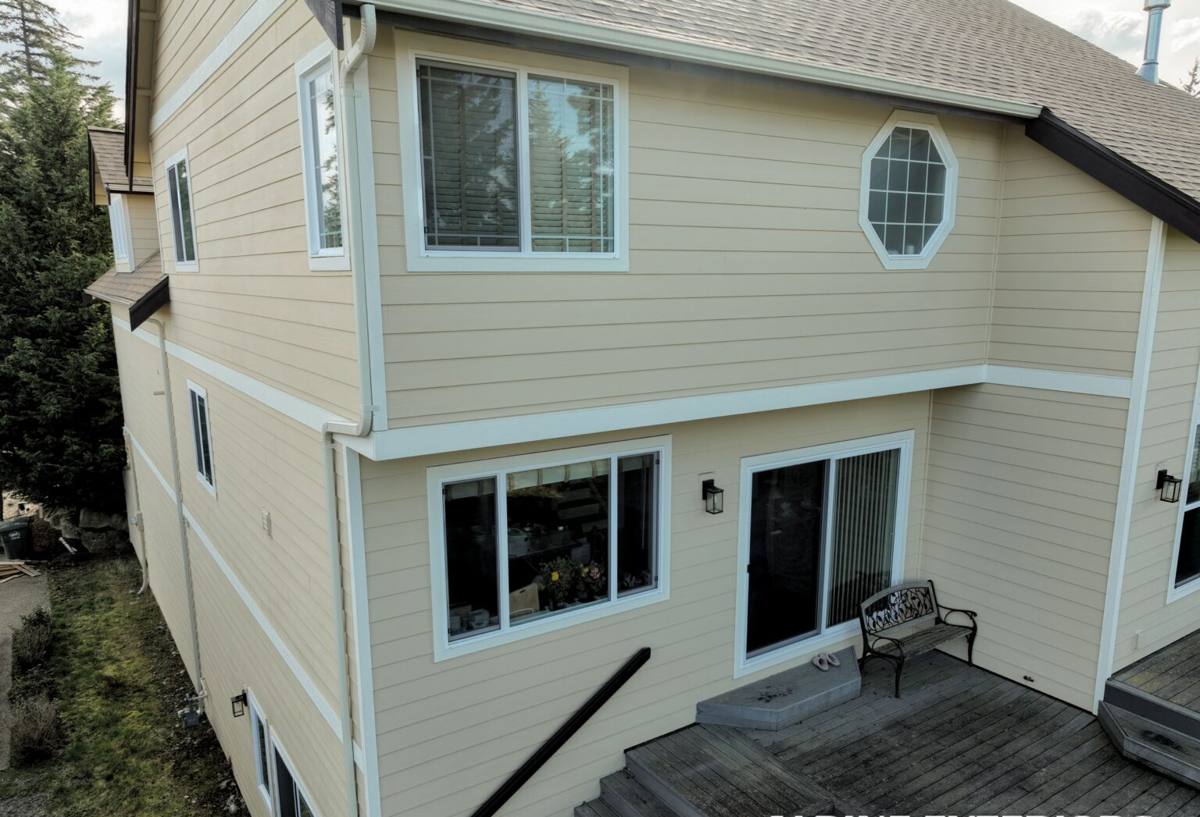
What Local Conditions Actually Do to a Deck
Moisture that doesn't let up
The Skagit Valley gets long stretches of steady, low-intensity rain rather than short heavy downpours. That means wood, fasteners, and framing connections stay damp for extended periods rather than getting wet and drying out quickly. Any spot where water can pool, or where it's slow to drain and dry, becomes a weak point over time.
Salt air and corrosion
Proximity to Skagit Bay and the Sound means airborne salt reaches inland further than people expect, especially with prevailing winds. Salt air accelerates corrosion in fasteners, hardware, and metal connectors. A deck built with the wrong grade of screws or joist hangers can develop rust streaks and weakened connections well before the wood itself is a problem.
Moss and organic growth
Shaded decking, north-facing stairs, and anything under tree cover in this part of the county will grow moss and algae for much of the year. Beyond looking bad, moss holds moisture against the decking surface and turns stairs and walking surfaces slippery and genuinely dangerous, particularly on wood.
Choosing the Right Decking Material
There's no single "best" decking material — there's a best material for a given budget, sun exposure, and how much upkeep a homeowner actually wants to do. Here's how the common options compare for a Mount Vernon property specifically.
| Material | How it handles our climate | Maintenance | Typical lifespan |
|---|---|---|---|
| Pressure-treated wood | Affordable, but needs consistent sealing to resist moisture cycling and moss | Annual cleaning and re-sealing recommended | 10-15 years with upkeep |
| Cedar | Naturally moisture- and insect-resistant, but still needs finish maintenance against gray-out and moss | Periodic cleaning and oiling/staining | 15-20 years with upkeep |
| Capped composite | Handles moisture and moss growth well; surface doesn't absorb water like wood | Occasional washing, no sealing or staining | 25+ years, manufacturer-warrantied |
| PVC decking | Fully synthetic, very strong moisture resistance, easiest to keep moss-free | Minimal — occasional washing | 25-30+ years, manufacturer-warrantied |
We install all of these, and we'll tell you honestly which one fits your situation rather than steering everyone toward the highest-margin product. A sunny, open deck on well-drained ground can do fine in cedar with a homeowner who's willing to maintain it. A shaded deck tucked against the house, or one over a walkout basement where drying time is limited, is usually a better fit for composite or PVC precisely because moss and standing moisture are a bigger factor there.
What a Correctly Built Deck Actually Requires
The decking surface is the part everyone sees, but it's the substructure and moisture management underneath that determines whether a deck lasts 10 years or 30. This is where a lot of corners get cut on lower-bid jobs, and it's the part homeowners usually can't inspect themselves once the decking boards are down.
Ledger attachment and flashing
Where the deck attaches to the house is the single most common failure point we see on older decks in this area — not because the ledger board itself failed, but because water got behind it. Proper flashing at the ledger, installed so water sheds away from the house rather than into the rim joist, is non-negotiable in a climate that stays wet as long as ours does.
Joist protection
Untreated joist tops absorb water that sits on them after rain, which is exactly the slow-drying moisture cycle that rots framing from the inside. We use joist tape or an equivalent moisture barrier on top of the framing before decking goes down — a small material cost that meaningfully extends the life of the structure underneath.
Fasteners and hardware
Given the salt air in this part of the county, we use corrosion-resistant, coated or stainless fasteners and connectors rather than standard-grade hardware. It costs more up front and makes no visible difference on installation day — the difference shows up five or ten years later, in whether the connections are still sound.
Footings and drainage
Footings need to be set below frost depth and, just as importantly, in ground that actually drains. In parts of the Skagit Valley with heavier clay or low-lying soil, that sometimes means additional drainage work around footings so they aren't sitting in standing water through the winter.
Design Choices That Matter Here
Beyond materials and structure, a few design decisions make an ongoing difference for how much maintenance a deck demands:
- Gapping and spacing decking boards adequately so water and debris don't sit between them
- Orienting boards and planning drainage so water sheds off the deck surface rather than pooling
- Keeping decking a proper distance from siding and trim so airflow can dry that edge out
- Choosing railing materials (metal, composite, or sealed wood) that won't trap moisture against wood posts
- Planning stair and landing surfaces with traction in mind, since these are the first spots to get slick with moss or algae
- Positioning any covered or partially shaded sections with drainage and airflow in mind, since shade is exactly where moss establishes fastest
None of these are expensive changes to make at the design stage. They become expensive — or impossible — to fix after the deck is built.
Permits and Local Requirements
Most deck projects in and around Mount Vernon — attached decks in particular, and anything above a modest height off the ground — require a building permit through the applicable jurisdiction, whether that's the City of Mount Vernon or unincorporated Skagit County depending on the property's location. Setback requirements, railing height and spacing codes, and guardrail rules also apply. Some properties near the Skagit River or in low-lying areas may have additional considerations tied to drainage or flood-related review, which is worth checking early rather than after a design is finalized.
We handle the permit process as part of our build — pulling the right permit, building to the applicable code for railings, stair geometry, and structural spans, and scheduling inspections as required. A deck built without the correct permit can turn into a real problem at resale, so this isn't a step worth skipping even on smaller projects.
Our Process for a Custom Deck Build
- Site visit and assessment — we look at sun exposure, drainage, soil, and how the deck will tie into the house before talking materials.
- Design and material selection — we walk through the honest trade-offs between wood and composite/PVC options for your specific site, budget, and maintenance preferences.
- Permitting — we prepare and submit the permit application and structural details required by the jurisdiction.
- Framing and substructure — footings, ledger flashing, joist protection, and corrosion-resistant hardware go in first, since this is the part that determines longevity.
- Decking, railing, and finishing — surface material, railing system, and stairs are installed to code and finished out.
- Final walkthrough and inspection — we confirm the work with you and complete any required inspection sign-off.
Maintaining a Deck Through a Skagit Valley Year
Even a well-built deck needs some seasonal attention in this climate. What that looks like depends on the material, but the general rhythm holds for most decks in this area:
- Spring: clear winter debris from between boards and off ledger flashing; check railings and stairs for looseness after the wet season
- Summer: the drier months are the right window for sealing or staining wood decking, and for any hardware inspection
- Fall: clear leaves and organic debris before the rain sets in, since trapped debris is what jump-starts moss growth
- Winter: keep an eye on drainage paths and stairs for slip hazards as moss and algae take hold in the shaded, wet months
Composite and PVC decking cut most of this down to occasional washing, which is a real factor for homeowners who'd rather spend a weekend doing something other than deck maintenance.
Why a Crew That Already Works Mount Vernon Matters
A deck built by a crew unfamiliar with this specific climate tends to look fine on day one and start showing its weak points a few winters in — moss on the stairs, rust bleeding from fasteners, soft spots near the ledger. Those aren't material failures so much as decisions made without accounting for what a Skagit Valley winter actually does to a structure.
We work in Mount Vernon and across Skagit County regularly, which means we're not guessing at how salt air, sustained rain, and moss season affect a deck here — we're building around it as a matter of course: the right flashing details, the right fastener grade, the right decking choice for a shaded versus sun-exposed site. That's the difference between a deck that needs real repair work in ten years and one that just needs an occasional wash.
Get a Free Estimate
If you're planning a new deck or need to talk through whether an existing one is holding up the way it should, we're happy to take a look and give you a straightforward, no-pressure estimate. Use the form below to get started.