 Skagit County
 Windows Built for Anacortes Conditions
Anacortes sits at the edge of the Salish Sea, and that location shapes everything about how windows perform here. Homes get a steady dose of salt-laden air off the water, long stretches of driving rain in the fall and winter, and a moss season that lingers longer than it does further inland in Skagit County. Standard, off-the-shelf windows can hold up for a while under those conditions, but "custom" isn't a marketing word in this market — it's often the only way to get a window that actually fits the opening, the wall assembly, and the exposure a specific home faces.
Custom windows mean the unit is sized, engineered, and specified for your house rather than pulled from a generic size chart. On older Anacortes homes especially, openings are rarely a perfect match for stock dimensions, and forcing a standard-size window into an odd opening is one of the more common causes of leaks and drafts we get called out to fix.
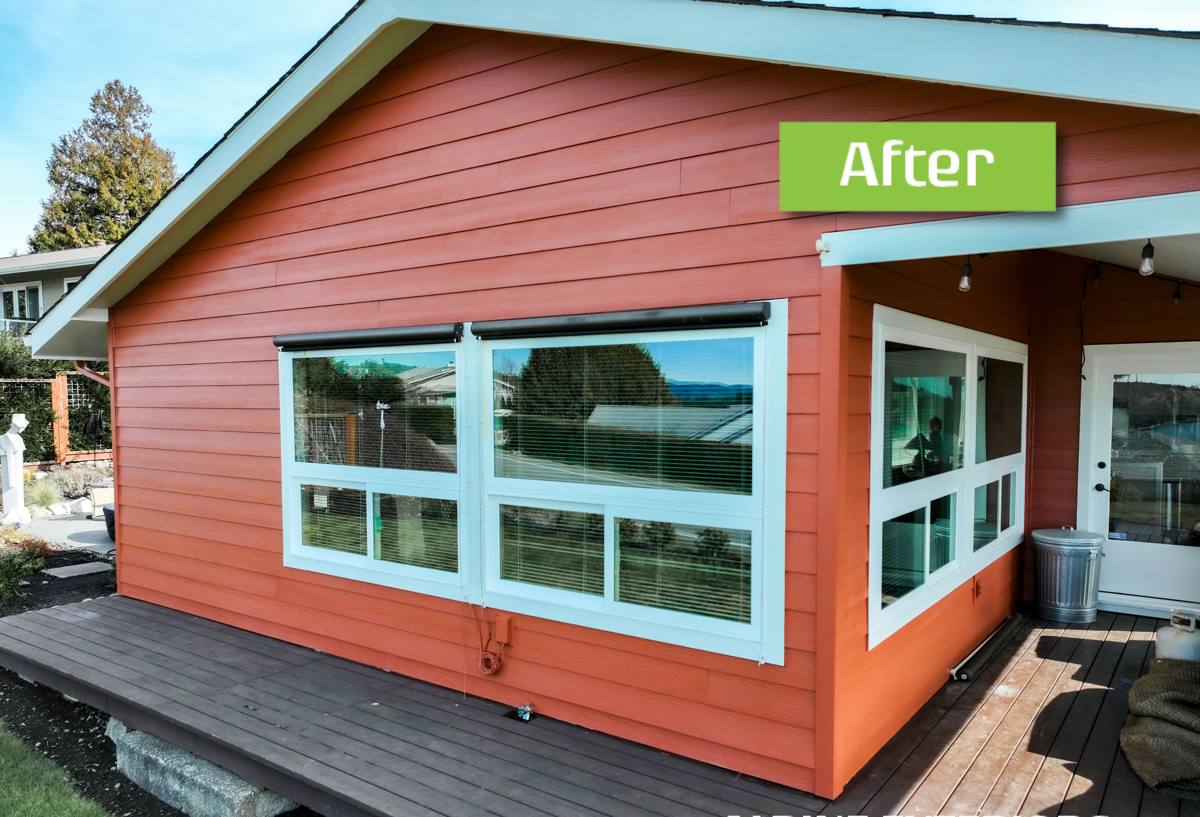
What Salt Air, Rain, and Moss Actually Do to Windows
Salt Air and Corrosion
Coastal salt exposure accelerates corrosion on hardware, fasteners, and lower-grade metal components. Cranks, locks, and hinges that aren't rated for coastal use tend to pit and seize years before they would inland. This is one of the biggest differences between a window that's "fine for most of Skagit County" and one that's genuinely suited to Anacortes.
Driving Rain and Wind-Driven Water
Wind off the water doesn't just bring rain straight down — it pushes it sideways into wall assemblies. A window's water resistance rating and the quality of its flashing and sealant details matter more here than in a sheltered inland lot. A window that's watertight in a lab test can still fail on-site if the flashing behind it isn't detailed correctly.
Moss, Mildew, and Prolonged Dampness
A long wet season means wood trim, sills, and surrounding siding stay damp longer, which is exactly what moss and mildew need to take hold. Window materials and finishes that resist moisture absorption, and installation details that keep water moving away from the frame instead of pooling against it, cut down on the moss and staining that show up around window openings on north- and west-facing walls.
What a Correct Installation Involves
A custom window is only as good as the opening it goes into. Our process treats the installation as a system, not just a swap-in of glass and frame:
- Accurate field measurement of the actual opening, not assumed "standard" dimensions
- Inspection of the existing sill, jamb, and header for rot or moisture damage before anything new goes in
- Correct flashing sequence — water-resistive barrier, sill pan, and flashing tape layered so water sheds outward, never behind the siding
- Sealant and backer rod sized and placed for the specific gap, not just caulked over
- Hardware selected for coastal exposure where the home's location calls for it
- Interior and exterior trim reinstalled or replaced to match the home, with attention to any wood components that touch moisture-prone areas
Skipping any one of these steps is how a brand-new window ends up with a soft sill or a moss-streaked wall within a few seasons. The window unit itself is often not the point of failure — the flashing and sealing details around it are.
Choosing Materials for This Climate
There's no single "best" window material for every Anacortes home — it depends on the home's age, exposure, and budget. Here's how the common options generally compare for this specific climate:
| Material | Coastal/Moisture Performance | Maintenance | Typical Trade-Offs |
|---|---|---|---|
| Vinyl | Good — won't rot or corrode, handles moisture well | Low — occasional cleaning | Fewer color/finish options; can look less "custom" without upgraded profiles |
| Fiberglass | Very good — dimensionally stable, resists moisture and salt exposure well | Low | Higher upfront cost than vinyl |
| Wood (clad exterior) | Depends heavily on the cladding and detailing; bare wood exposure is a liability here | Higher — exterior cladding reduces but doesn't eliminate upkeep | Best appearance for historic-style homes; needs disciplined maintenance in this climate |
| Aluminum | Prone to corrosion near salt air unless properly finished/anodized | Moderate | We're selective about where we recommend it on coastal Anacortes properties |
For homes directly exposed to marine air, we lean toward vinyl or fiberglass options with upgraded, corrosion-resistant hardware. For homes further from the water or in more sheltered spots, wood-clad windows can be a good fit if the owner is comfortable with the added maintenance.
Signs Anacortes Homeowners Should Watch For
Because of the local exposure, certain warning signs show up here more often and more clearly than they would in drier parts of the county:
- Soft or spongy wood at the sill or lower frame corners
- Moss or dark streaking building up on the siding directly below a window
- Hardware that's stiff, pitted, or difficult to operate
- Fogging between panes on double- or triple-glazed units, indicating a failed seal
- Drafts noticeable during windy, wet weather specifically, even if the window seems fine on calm days
- Paint or finish failing faster around certain windows than others on the same wall
Any of these on their own might just mean routine maintenance is due. Several showing up together, especially on the same wall, usually points to a flashing or installation issue worth having looked at before it spreads into the wall structure.
Our Process for a Custom Windows Project
1. On-Site Assessment
We start by looking at the actual openings, the condition of the surrounding wall and trim, and the specific exposure of each elevation of the house. A window on the water-facing side of a home often needs a different spec than one on a sheltered back wall of the same house.
2. Measurement and Specification
Each opening is measured individually. We don't assume uniformity across a home, especially on older Anacortes construction where settling and past repairs can mean no two openings are exactly alike.
3. Material and Hardware Selection
We walk through the trade-offs above with the homeowner, factoring in the home's exposure, style, and budget, and land on a spec that's honest about maintenance expectations going forward.
4. Removal and Opening Inspection
Old windows come out carefully so we can inspect the sill, jamb, and sheathing underneath before anything new goes in. This is the point where hidden rot or past water intrusion, if any, gets found and addressed rather than sealed over.
5. Installation with Full Flashing Detail
New sill pan, flashing, and sealant go in as a system, in the correct order, so water is directed out and away from the wall assembly rather than trapped behind it.
6. Trim, Finish, and Final Check
Interior and exterior trim is finished to match the home, hardware is tested, and the opening is checked for square operation and a tight seal before we call the job done.
Why Local Experience Matters Here
A crew that mainly works dry, inland jobs can install a technically correct window and still miss the details that matter on a marine-exposed Anacortes property — the extra flashing course, the hardware upgrade, the sill detail that keeps moss from taking hold on a north wall. Working regularly in Skagit County's coastal areas means we've seen how these specific conditions — salt air, driving rain, and a long moss season — actually play out on real houses over time, not just in a spec sheet. That's the difference between a window that looks right on installation day and one that still performs correctly five or ten wet seasons later.
Cost Factors to Expect
Custom window pricing varies by opening size, material, hardware, and the condition of the existing opening, so broad ranges are more honest than a flat number. Generally, expect cost to move with:
| Factor | Effect on Cost |
|---|---|
| Number and size of openings | More or larger openings raise total project cost proportionally |
| Material choice (vinyl vs. fiberglass vs. wood-clad) | Fiberglass and wood-clad typically run higher than standard vinyl |
| Hardware upgrades for coastal exposure | Modest increase per unit, often worth it on water-facing walls |
| Hidden rot or sheathing repair found during removal | Can add cost if damage is discovered once old windows come out |
| Trim complexity and finish matching | Custom or historic-style trim work adds labor time |
We won't know exact numbers for your home until we've seen the openings in person — anyone quoting a firm price sight-unseen on a custom job is guessing.
If you're weighing window options for a home in Anacortes, we're glad to come take a look, walk the exterior, and give you a straight read on what your specific openings need. There's no cost and no pressure for a free estimate — just an honest assessment based on what we see on-site.