 Skagit County
 Building a Deck That Actually Belongs in La Conner
La Conner sits right on the Swinomish Channel, and that location shapes everything about how a deck should be built here. This isn't a climate where you can install the same deck you'd build forty miles inland and expect it to hold up the same way. Between the salt-laden air off the water, the long stretch of wet months, and the shade and moisture that let moss take hold on almost any horizontal surface, a La Conner deck is under more sustained pressure than most homeowners realize until something starts to fail.
We build decks throughout Skagit County, and La Conner projects get treated as their own category. The framing, fastener selection, decking material, and drainage details all get adjusted for a waterfront-adjacent, marine-influenced site. This page walks through what that actually means in practice — not marketing language, just the real differences between a deck that's built for this specific environment and one that just happens to be located in it.
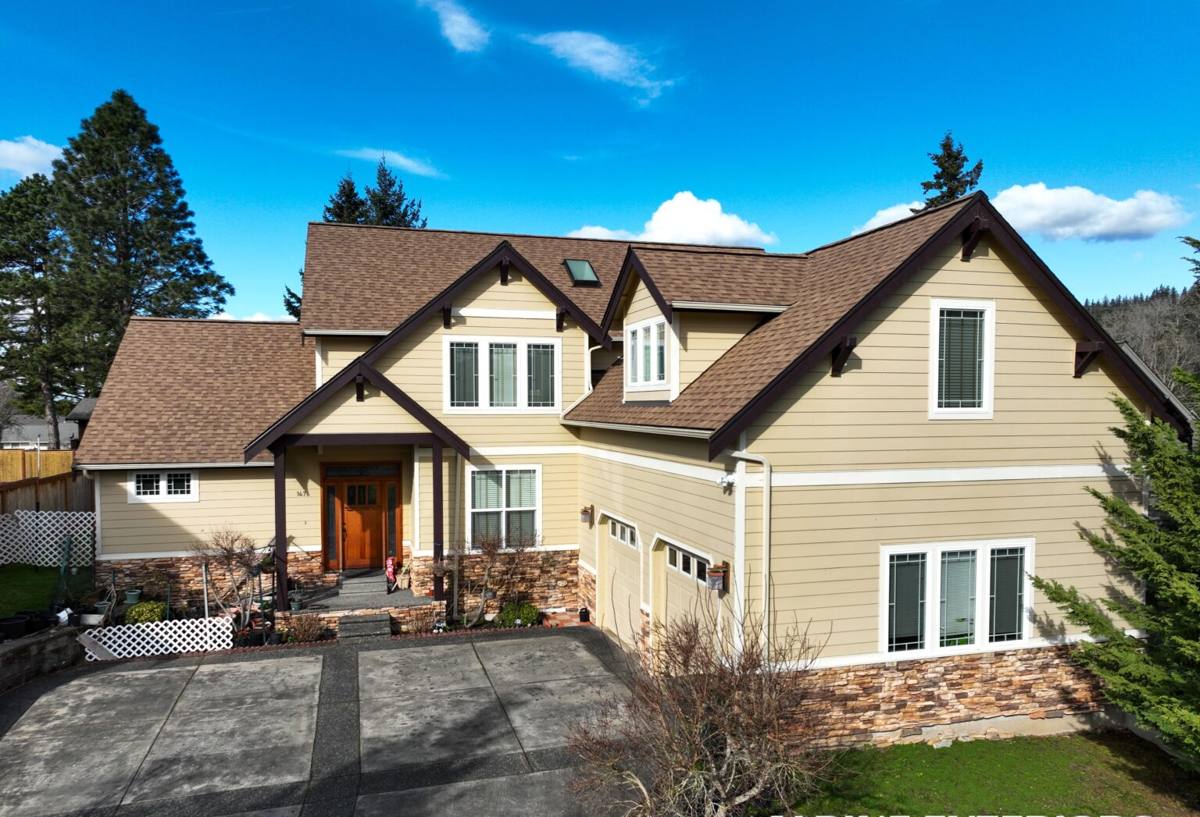
What La Conner's Climate Does to a Deck Over Time
Salt Air and Metal Fatigue
Proximity to the channel means a steady, low-level exposure to salt-carrying air, even for homes that aren't directly waterfront. Salt air accelerates corrosion on anything metal — fasteners, joist hangers, hidden fastening clips, railing hardware. On a deck built with standard-grade hardware, that corrosion process can start well before the wood itself shows any wear, and once fasteners start failing, the structural integrity of the whole deck is in question even if the boards look fine on top.
Driving Rain and Moisture Cycling
Skagit County gets a long wet season, and La Conner's exposure to wind off the water often means rain doesn't just fall straight down — it drives sideways into ledger boards, rim joists, and any vertical surface that isn't properly flashed. That wet-dry cycling is what causes rot, not a single soaking. Wood and even some composite substrates that stay damp for extended periods without a chance to dry out are the ones that fail first, especially at the ledger connection to the house.
Moss and the Shade-Moisture Combination
Moss needs shade and sustained moisture, and a lot of La Conner properties have both — mature tree cover, marine-layer humidity, and decks that don't get much direct sun for long stretches of the year. Moss on decking isn't just cosmetic. It holds moisture against the board surface, and on wood decking that moisture retention speeds up rot underneath a layer of growth you can't see until you lift it.
Choosing Decking Material for This Environment
There's no single "best" decking material for every home — it depends on budget, how much maintenance the homeowner wants to take on, and how exposed the deck is to salt air and shade. Here's how the common options actually perform in La Conner's conditions specifically.
| Material | Salt Air Resistance | Moss Resistance | Maintenance Burden |
|---|---|---|---|
| Pressure-treated wood | Moderate — hardware is the weak point, not the lumber | Low — porous surface holds moisture and organic growth | High — annual cleaning and periodic sealing |
| Cedar | Good — naturally rot-resistant | Low to moderate — still needs regular cleaning in shade | Moderate to high — sealing recommended, fades without upkeep |
| Composite decking | Good — doesn't corrode, but hardware still can | Moderate — smoother varieties resist growth better than others | Low — occasional washing, no sealing |
| PVC / capped composite | Very good — fully synthetic surface | Good — non-porous, sheds moisture and debris more easily | Low — washing only |
We don't push one material on every homeowner. A wood deck built correctly — with the right fasteners and drainage details — can hold up fine here for years. The point isn't that wood is wrong for La Conner; it's that whatever material gets chosen, the details around it (hardware, flashing, spacing for drying) matter more in this climate than they would somewhere drier and less shaded.
A Note on Fastener Specification
Whatever decking material goes down, we spec fasteners and structural hardware rated for coastal or high-moisture exposure — typically stainless steel or heavy hot-dip galvanized, depending on the connection. Standard electro-galvanized hardware is not something we use on La Conner decks. It's a small cost difference up front and a significant difference in how long the structure lasts before hardware becomes the failure point.
Framing and Ledger Details That Don't Show Up in Photos
The part of a deck that determines whether it lasts fifteen years or thirty-five is almost entirely hidden once the project is done. The ledger board — where the deck attaches to the house — is the single most common failure point on decks in wet, coastal-influenced climates, because it's the connection most exposed to water intrusion behind the framing where nobody sees it until there's a problem.
A correct ledger installation includes proper flashing that sheds water away from the house framing, a gap or drainage plane behind the ledger so water doesn't get trapped against the siding, and structural fasteners sized and spaced to code for the specific loads involved. Skipping or shortcutting any of that is invisible on installation day and becomes very visible five or ten years later.
Joist spacing and blocking also get adjusted based on decking material — composite and PVC products generally require tighter joist spacing than solid wood to prevent flexing, and that's a spec that has to be right from the framing stage, not something that can be corrected after the fact.
Drainage, Slope, and Airflow to Keep Moss From Taking Over
Moss control on a deck isn't really about the decking material alone — it's about how much moisture the deck surface is allowed to hold onto. A few structural decisions make a real difference over the life of the deck:
- Proper board spacing so water drains through rather than pooling on the surface
- A slight slope away from the house so water doesn't sheet back toward the ledger
- Adequate clearance underneath the deck for airflow, so the underside can dry out between rain events
- Keeping planting and landscaping clear of the deck perimeter where practical, since dense shade right at deck level keeps the surface wetter longer
- Choosing a decking surface texture that doesn't trap organic debris in grooves or fastener channels
None of this eliminates the need for periodic cleaning — nothing does in this climate — but it significantly changes how often that cleaning is needed and how much moss actually establishes between cleanings.
Permits and Local Requirements
Deck projects in La Conner and unincorporated Skagit County generally require a building permit once the deck exceeds a certain height or size threshold, and any work near the shoreline or within designated shoreline jurisdiction can involve additional review. Requirements vary by exact location, lot, and scope of work, so we handle permit research and applications as part of the project rather than leaving homeowners to sort out which jurisdiction and which rules apply to their specific address. We'd rather confirm the exact requirements for your property before quoting than guess.
How We Approach a La Conner Deck Project
1. On-Site Assessment
We look at sun and shade exposure, proximity to water, existing moisture or moss issues if it's a replacement, and how the deck ties into the house. That assessment drives the material and hardware recommendations, not a standard package.
2. Material and Design Conversation
We walk through the real trade-offs — cost, maintenance, appearance, longevity — for your specific site, rather than defaulting to whatever's easiest to install. If wood makes sense for your budget and you're comfortable with the upkeep, we'll build it right. If low-maintenance matters more, we'll steer you toward composite or PVC options suited to the shade and moisture on your lot.
3. Permitting
We confirm what's required for your specific parcel and handle the application before work starts.
4. Construction
Framing, flashing, and fastener choices follow the coastal-exposure standards outlined above, not a generic inland spec.
5. Final Walkthrough
We go over basic maintenance expectations for your specific material and site conditions so there are no surprises about upkeep down the road.
Maintenance a La Conner Deck Actually Needs
Maintenance needs differ by material, but every deck in this climate benefits from a basic seasonal routine. Skipping these steps is the most common reason a deck that was built correctly still ends up with premature moss growth or rot.
- Clear leaves, needles, and debris from the deck surface and between boards regularly, especially in fall
- Wash the surface at least annually to remove early moss growth and organic buildup before it establishes
- Check and clear any debris from underneath the deck that could block airflow or trap moisture
- Inspect visible fasteners and hardware periodically for early signs of corrosion or loosening
- For wood decking, reapply sealer or stain on the manufacturer's recommended schedule — don't wait until it's visibly failing
- Keep gutters and downspouts near the deck functioning so roof runoff isn't dumping extra water onto or near the structure
Why It Matters That We're a Skagit County Crew
A crew that mostly builds decks in drier, inland climates isn't necessarily going to default to coastal-grade hardware or think through moss-prone shade patterns unless it's flagged for them. We build in this environment regularly — Skagit County's mix of marine influence, river valley humidity, and heavy wet seasons means we're specifying corrosion-resistant hardware and drainage details as a matter of course, not as an upsell. For a town like La Conner, right on the water, that's not an optional upgrade — it's what a deck actually needs to last here.
If you're planning a new deck or need to replace one that's showing its age, we're glad to come take a look and talk through what makes sense for your specific property. There's a free, no-pressure estimate form below — reach out and we'll go from there.