 Skagit County
 Deck Repair in Lyman: Built for Skagit County Weather
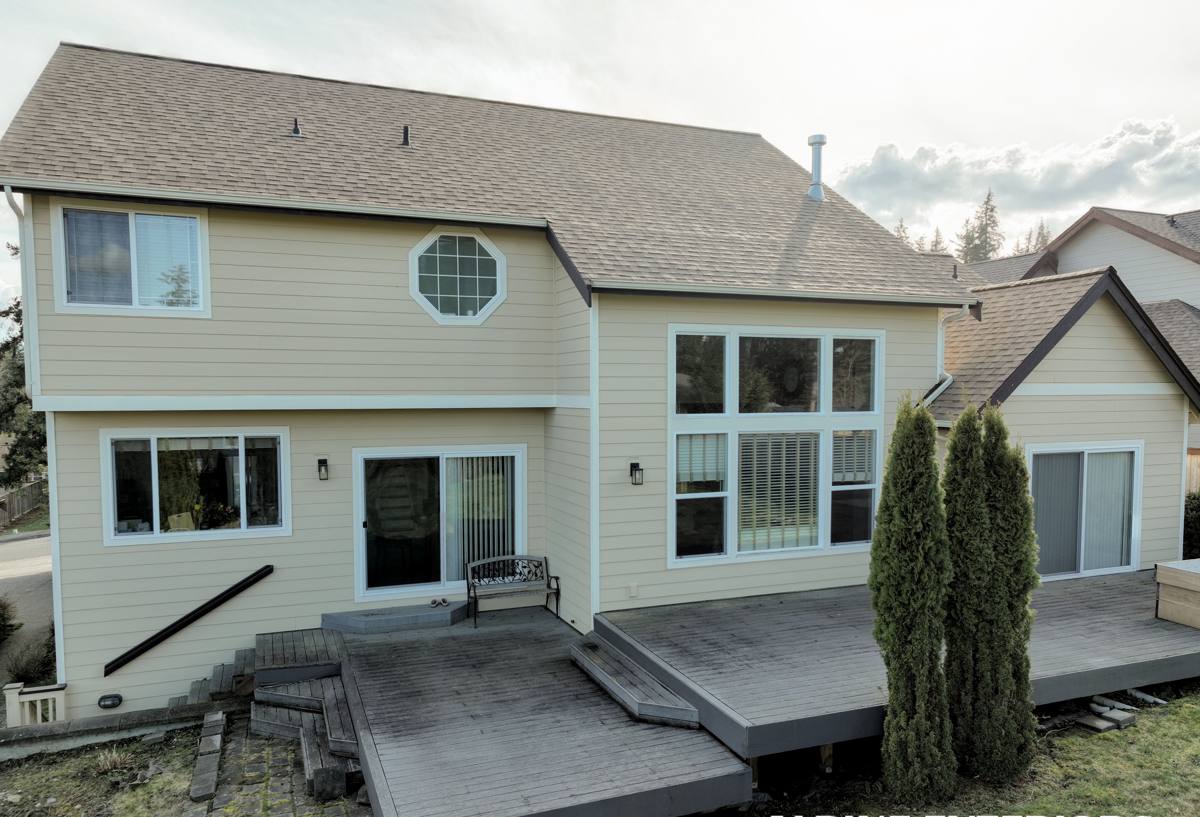
A deck in Lyman doesn't fail the way a deck fails in a dry climate. Out here, the problem is rarely one dramatic storm — it's the slow, steady grind of a long wet season, shaded ground, and moisture that never quite finishes drying before the next rain arrives. Skagit County's mix of driving rain, marine-influenced humidity, and a moss season that can run half the year works into every joint, fastener hole, and end-grain cut on a deck's structure. If you own a home in Lyman, you already know the pattern: a deck can look fine from a distance and still be quietly losing strength underneath.
We work decks throughout Skagit County, and Lyman jobs have a consistent signature — heavier shade from surrounding trees, slower drying times after rain, and a tendency for moss and algae to establish on decking, railings, and stair treads before homeowners notice anything structural is happening below the surface. Repairing a deck correctly here means addressing the moisture source and the wood's ability to shed water, not just replacing the boards that look bad.
Signs a Lyman Deck Needs Repair
Most deck problems show themselves in small ways long before they become safety issues. Catching them early is the difference between a repair and a full rebuild.
- Boards that feel spongy, springy, or noticeably softer underfoot in one area than the rest of the deck
- Persistent moss or dark green-black staining that comes back within weeks of cleaning
- Fasteners that have backed out, rusted through, or left dark streaking down the wood
- Gaps opening up between the ledger board and the house, or visible daylight where the deck meets the siding
- Railings or stair stringers that flex or wobble more than they used to
- Standing water that doesn't drain within an hour or two of rain stopping
- Any sign of rot at post bases, near planters, or wherever debris collects against the wood
None of these on their own mean the whole deck is unsafe, but each one is a place where Skagit County's wet season has a foothold. Left alone through another rainy stretch, small issues compound.
What a Correct Deck Repair Actually Involves
It Starts Underneath, Not On Top
A deck that only gets new surface boards without an inspection of what's underneath is a deck that will show the same problems again in a few years. A proper repair starts with pulling questionable decking to check the joists, ledger board, and framing connections for rot, checking that flashing at the house connection is still doing its job, and confirming posts and footings haven't shifted or begun to decay at ground contact.
The Parts That Fail First in This Climate
In our experience working decks around Skagit County, the failure points are predictable:
- Ledger board connection — where the deck attaches to the house is the single most common source of hidden rot, because water tracks behind poorly flashed ledgers for years before it's visible
- Fasteners — the wrong screw or nail for the wood treatment corrodes and weakens over a wet season faster than most homeowners expect
- Post bases and end grain — end-cut lumber absorbs water fastest, and post bases sitting in standing water or debris rot from the ground up
- Stair stringers — heavy foot traffic combined with moisture makes stairs one of the first structural elements to show wear
We repair to the cause, not just the symptom. Replacing a soft board without correcting the moisture source or fastener issue that caused it just resets the clock on the same failure.
Repair or Replace? Honest Cost Factors
Not every deck problem calls for a full tear-off, and not every deck is worth patching. The table below covers the factors we actually weigh when giving a homeowner a straight answer.
| Factor | Leans Toward Repair | Leans Toward Replacement |
|---|---|---|
| Framing condition | Joists and ledger are sound; issues are isolated | Rot found at multiple structural points |
| Age of deck | Under 12-15 years, built to a reasonable standard | Original construction is older or was never permitted correctly |
| Extent of damage | A few boards, one railing section, isolated fasteners | Widespread soft spots across the surface |
| Post/footing condition | Footings solid, posts sound at grade | Footings undersized, cracked, or posts rotted at base |
| Budget goals | Extend usable life a decade or more affordably | Want a different layout, size, or material long-term |
We'll tell you plainly which category your deck falls into. A deck with sound bones and a moss or moisture problem is usually a strong repair candidate. A deck with structural rot at the ledger or multiple posts is money better spent on a rebuild that's flashed and framed correctly from the start.
Materials That Hold Up to River-Valley Moisture
Lyman sits in a setting where tree cover and river-valley humidity keep decks damp longer than they'd stay damp in an open, sun-exposed yard. That changes which materials and details actually make sense.
Pressure-Treated Lumber
Still the most common and most economical repair material, and it performs well when the fasteners, flashing, and drainage details around it are correct. Its weak point isn't the wood itself — it's cut ends and fastener holes that aren't re-sealed after installation, which is where rot starts first in a shaded, wet setting.
Composite and Capped Decking
Composite boards resist moss staining and moisture absorption better than wood, which matters in Lyman's shaded, slow-drying spots. The trade-off is a higher material cost and the fact that composite still needs a properly built and ventilated frame underneath — composite decking on a poorly framed or poorly ventilated structure just hides problems longer instead of preventing them.
Fasteners and Hardware
We use fasteners rated for the wood treatment they're going into and hardware rated for exterior, wet-climate use. Mismatched fasteners are one of the most common causes of premature deck failure we see, and it's an easy thing to get wrong if a repair is done quickly without matching hardware to material.
Our Deck Repair Process
- Inspection — we check framing, ledger, posts, footings, and surface decking, not just what's visibly damaged
- Honest scope — you get a clear explanation of what's failing, what's still sound, and why we're recommending what we're recommending
- Moisture correction first — flashing, drainage, and grading issues get addressed before or alongside board replacement, since fixing the surface without fixing the water source doesn't last
- Structural repair — rotted framing, posts, or connections get replaced to code, not patched around
- Surface and rail work — decking, stair treads, and railings replaced or repaired to match the rest of the structure
- Final walkthrough — we go over what was done and what to expect from the repair going forward
Keeping a Repaired Deck Healthy Through the Wet Season
A repair holds up longer with a little seasonal attention, especially in a shaded, moisture-prone setting like Lyman.
- Clear leaves and debris from between boards before the fall rains settle in
- Keep gutters and downspouts near the deck clear so water isn't dumping onto or under it
- Trim back vegetation that's shading the deck and slowing drying time
- Rinse off moss and algae as soon as it appears rather than letting it establish
- Check fasteners and railings once a year for movement, rust, or looseness
- Keep planters and furniture off any spots where water tends to pool
None of this is complicated, but skipping it is how a good repair turns into a repeat repair three or four years later.
Why a Crew That Already Works Lyman Matters
Deck repair advice that works for a dry, open lot doesn't automatically work for a shaded property in a river valley. Drying times are different, moss pressure is different, and the moisture path behind a ledger board behaves differently under a heavy tree canopy than it does in full sun. A crew that already works this part of Skagit County has seen how local conditions play out on decks over years, not just on the day of the estimate.
We also know the practical side of working here — what permitting looks like for deck repair versus replacement in the county, what inspection typically expects to see on structural work, and how to sequence a repair around a wet-season forecast so lumber isn't sitting exposed longer than it should. That local familiarity isn't a marketing line — it's the difference between a repair that's built for this climate and one that was built for somewhere else.
If your deck in Lyman has soft spots, stubborn moss, or just feels like it's not what it used to be, we're happy to take a look and give you a straight assessment — no pressure, no upsell. Reach out for a free estimate using the form below.