 Skagit County
 March Point's Decks Face a Tougher Environment Than Most
March Point sits out on the water, tucked between Padilla Bay and the refinery flats south of Anacortes, and that location comes with a specific set of problems for anything built outdoors. Homes here get salt-laden air rolling off the bay almost year-round, driving rain that comes in sideways during winter storms, and a moss season that can run from October through May in a typical Skagit County year. A deck that would hold up fine twenty miles inland in Sedro-Woolley or Mount Vernon often shows rot, fastener corrosion, and slick moss growth years earlier out here.
We've worked on enough decks in this stretch of the county to know the failure patterns are predictable. Salt air accelerates corrosion on anything metal — nails, screws, joist hangers, bolts — long before the wood itself gives out. Moss and algae hold moisture against boards and framing, which speeds up rot in exactly the spots you can't see from a casual walk across the deck. And the constant damp means mildew and soft, spongy wood show up in places that would stay dry in a drier climate.
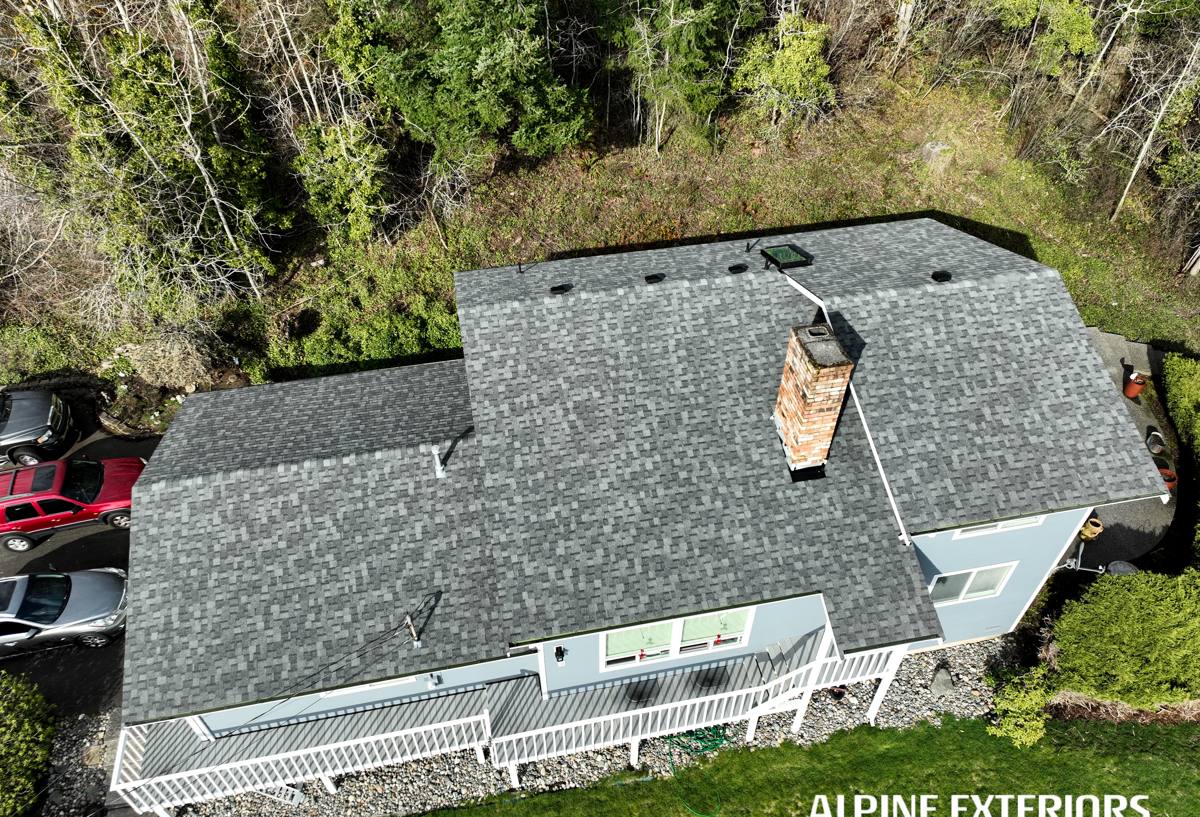
Signs a March Point Deck Needs Repair — Not Just a Cleaning
A lot of deck problems start looking like cosmetic issues before they become structural ones. Knowing the difference matters, because catching a repair early is a fraction of the cost of catching it late.
- Boards that feel springy, bouncy, or soft underfoot, especially near the house or along the outer edge
- Green or black staining that keeps coming back within weeks of cleaning
- Rust streaks running down from screw heads, joist hangers, or ledger bolts
- Gaps opening up between boards, or boards cupping and warping
- A ledger board (where the deck attaches to the house) that shows any daylight, staining, or separation from the siding
- Railings or posts that wobble or flex when you lean on them
- Stairs that feel less solid than they used to, particularly at the stringers
Any one of these on its own might be minor. Several together, or anything involving the ledger connection or the stairs, usually means it's time for a real assessment rather than another round of power-washing and sealant.
What a Correct Deck Repair Actually Involves
Deck repair gets treated like a surface job more often than it should. Pressure-washing and restaining a deck that has underlying rot or corroded hardware just hides the problem for another season. A repair done right starts underneath, not on top.
Structural inspection first
Before we touch a board, we get under the deck and check the framing: joists, beams, posts, and — most important — the ledger board connection to the house. In a salt-air environment like March Point, this is where we most often find hidden trouble, because moisture and corrosion work from the inside out. A deck can look solid on the surface with a joist or ledger bolt that's failing underneath.
Fastener and hardware condition
Original builder-grade nails and screws are frequently the first thing to fail here, well before the wood around them. We check every joist hanger, every ledger bolt, and the general condition of fasteners throughout the frame, not just the ones near visible damage.
Decking boards
Individual boards get tested for softness and rot, not just visually inspected. A board can look fine on top and be compromised underneath where it sits against the joist.
Railings and stairs
Because these take direct lateral load and get handled constantly, we check post connections, baluster attachment, and stringer condition separately from the deck surface itself.
Wood, Composite, and Repair Compatibility
One thing that comes up often in repair work: what to use when replacing damaged sections. The right answer depends on what's already there and what the homeowner wants going forward.
| Material | How it handles this climate | Repair considerations |
|---|---|---|
| Pressure-treated lumber | Handles moisture well when properly sealed; still needs regular maintenance against moss and mildew | Easiest to match to existing PT framing; needs re-sealing after repair |
| Cedar | Naturally rot-resistant but softens over time with constant damp exposure | Good for matching an existing cedar deck's appearance; more prone to graying and moss uptake |
| Composite decking | Resists rot and moss growth far better than wood; doesn't absorb moisture the same way | Can't always be seamlessly patched into an aging wood deck — sometimes makes more sense to swap out larger sections |
| Fasteners/hardware | Standard galvanized hardware corrodes faster near salt air | We use stainless or heavily coated fasteners rated for coastal exposure on repair work here |
We don't push composite as a blanket upgrade — a wood deck that's structurally sound and well-maintained can keep going for years with the right repairs. But when we're already replacing significant sections, it's worth talking through whether composite decking makes sense for the parts that take the most moss and moisture exposure, since it holds up longer in this specific environment with less ongoing upkeep.
Our Repair Process
We keep the process straightforward because deck repair doesn't need to be complicated to be done right.
- On-site assessment. We inspect the deck surface, framing underneath, ledger connection, railings, and stairs, and walk you through exactly what we find.
- Scope the repair. We separate what's cosmetic from what's structural, and give you an honest read on whether repair or partial replacement makes more sense for the affected area.
- Address the framing first. Any compromised joists, beams, or hardware get replaced before we touch the decking surface — repairing on top of bad framing just wastes the work.
- Replace damaged decking, railings, or stair components. Matched to existing material where practical, or discussed as an upgrade opportunity where it isn't.
- Fasten with coastal-appropriate hardware. Given the salt air off Padilla Bay, we don't use standard hardware where it's going to corrode out again in a few seasons.
- Final check and homeowner walkthrough. We go over what was repaired, what to watch for, and any maintenance recommendations specific to your deck's exposure and material.
Fasteners and Hardware: The Part Nobody Sees
This is worth its own section because it's the single most common thing we find has failed on decks out toward March Point before the visible wood damage catches up to it. Standard galvanized nails and screws are built for general use, not for sitting a few hundred yards from saltwater with driving rain on top. Once the coating on a fastener breaks down, corrosion works fast, and a corroded fastener loses grip strength well before it looks obviously rusted through.
On repair work in this area, we generally step up to stainless steel or heavy-duty coated fasteners rated for coastal or high-moisture exposure, particularly on structural connections like joist hangers and ledger bolts. It costs a little more upfront than matching original builder-grade hardware, but it's the difference between a repair that holds for a long time and one that needs revisiting in a few years.
Maintenance Between Repairs
A repaired deck still needs upkeep to get the most life out of it, especially with the moss season Skagit County sees. A little regular attention goes a long way toward keeping small issues from becoming repair calls again.
- Clear leaves, needles, and debris out of gaps between boards — trapped organic matter holds moisture and feeds moss
- Rinse or gently scrub visible moss and algae buildup before it gets a foothold, particularly on shaded or north-facing sections
- Check railings and stair connections for looseness once or twice a year
- Reseal or restain wood decking on the manufacturer's recommended schedule — don't stretch it just because the surface still looks okay
- Keep an eye on the ledger connection area where the deck meets the house, since that's a common spot for hidden moisture problems
- Walk the underside of the deck occasionally to spot early rust streaking or soft framing before it's a bigger job
What Drives the Cost of a Deck Repair
Every deck repair is different, but a few factors consistently move the price up or down. We give a firm number after seeing the deck in person — anything quoted sight-unseen is a guess.
| Factor | Why it matters |
|---|---|
| Extent of framing damage | Repairs limited to surface boards cost far less than anything involving joists, beams, or the ledger connection |
| Deck size and height | Larger decks and second-story decks take more material and more labor time |
| Material match | Matching an older or discontinued decking product can take more sourcing time than repairing with current stock materials |
| Access | Decks with easy underside access cost less to inspect and repair than ones enclosed by skirting or landscaping |
| Railing and stair condition | These take direct handling and load, so damage here often needs prompt, thorough repair rather than a patch |
Why It Matters Who You Hire for This
Deck repair looks like a simple job from the outside — pull a few bad boards, put in new ones. The part that actually determines how long the repair lasts is the framing and fastener work underneath, and that's exactly what gets skipped by a crew that's not paying close attention or isn't used to what salt air and constant rain do to a structure over time. A repair that ignores a weakening ledger connection or reuses corroded hardware because it "still looks fine" isn't really a repair — it's a delay.
We work on homes throughout Skagit County, and the decks out around March Point get treated differently than the ones further inland because the exposure is different. Salt air off Padilla Bay, near-constant dampness, and a long moss season all change what "built to last" actually means here. A crew that's already familiar with those conditions knows to check the ledger board first, knows which fasteners actually hold up, and knows moss buildup on a deck isn't just cosmetic — it's a moisture problem waiting to become a rot problem.
If you've got a deck in March Point that's showing soft spots, rust streaks, moss that won't stay gone, or just doesn't feel as solid as it used to, we're happy to take a look and give you a straightforward read on what it needs. Reach out for a free, no-pressure estimate using the form below.