 Skagit County
 Why Decks Wear Out Faster in Anacortes
Anacortes sits right at the edge of Skagit County, surrounded by saltwater on three sides. That location is beautiful, but it's hard on exterior wood and hardware. Salt-laden air corrodes fasteners, hinges, and railing brackets faster than it would ten or twenty miles inland. Add the region's long stretch of wet, overcast months and the moss and algae growth that comes with it, and you get a deck environment that's tougher than the national average, even by Pacific Northwest standards.
A deck built with inland assumptions — standard coated screws, minimal ventilation underneath, decking laid tight with no drainage plan — tends to show its age early here. Boards cup, joist hangers rust, and the north-facing or shaded sections grow a slick green film that outlasts most pressure washing. Understanding why a deck failed is the first step in building a replacement that actually holds up.
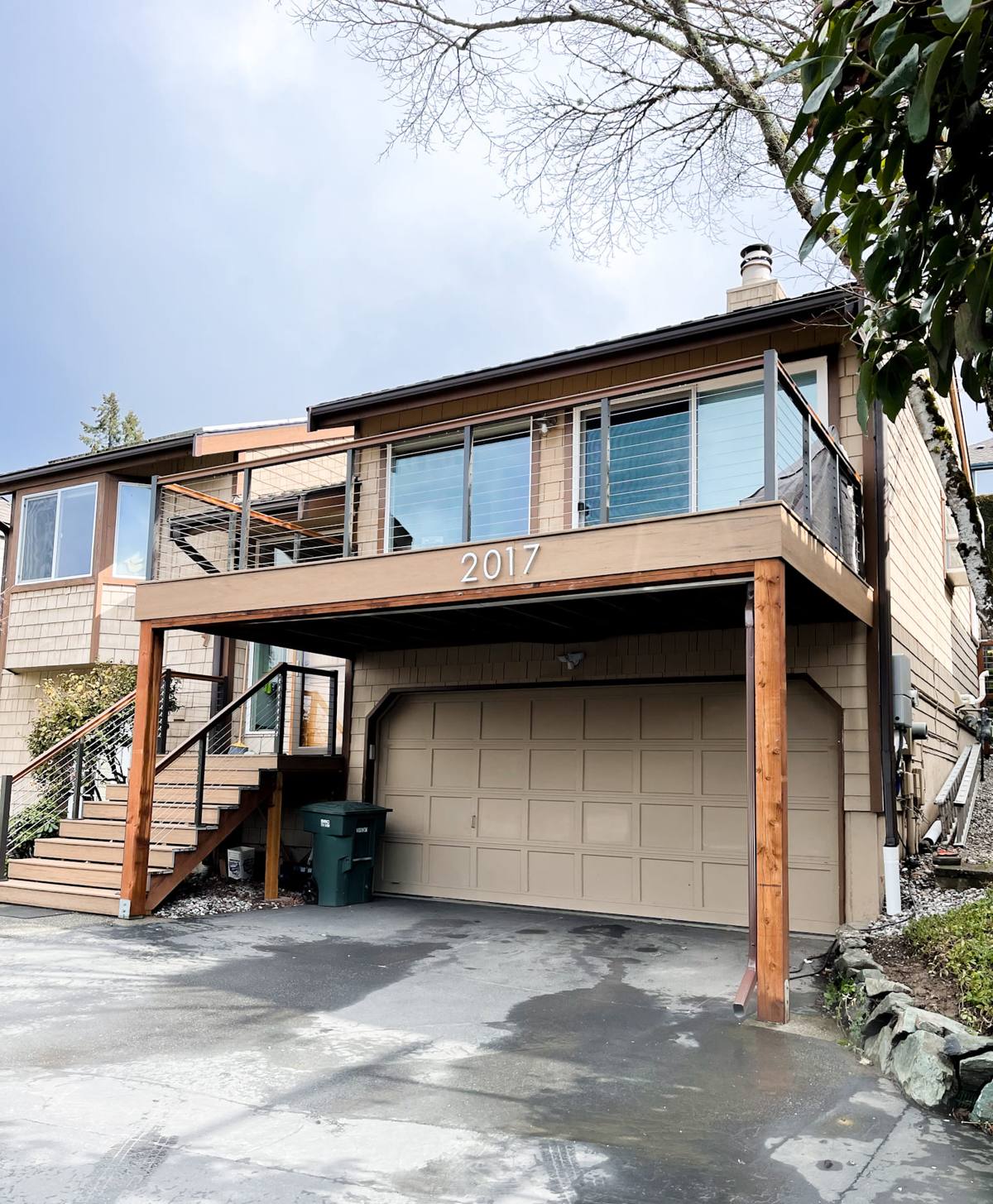
Repair or Full Replacement? How to Tell
Not every tired-looking deck needs to come down. But in a marine climate, cosmetic damage on the surface often points to something more serious underneath. Before recommending a full replacement, we check the parts of the deck you can't see from the top.
- Soft or spongy spots when you walk the deck, especially near the house or stair landings
- Rust streaks bleeding from screw heads or joist hangers
- Gaps or separation where the ledger board meets the house
- Wood that's gray, splintering, or crumbles when probed with a screwdriver
- Persistent green or black staining that returns within weeks of cleaning
- Railings or posts that flex or wiggle more than they used to
If the issues are limited to a handful of boards and the substructure underneath is sound, repair can be the honest answer. If the ledger board, joists, or footings are compromised, patching the surface just delays the real problem — and on a structure people stand on, that's not a corner worth cutting.
What Moss Season Hides
Skagit County's moss season runs long — roughly fall through spring — and it does more than make a deck slippery. Moss and algae hold moisture against wood surfaces well after a storm has passed, which is exactly the condition that accelerates rot in untreated or under-ventilated framing. A deck that looks "just dirty" every winter is often absorbing water it never fully sheds before the next rain arrives.
What a Correct Deck Replacement Actually Involves
A deck is only as good as what's underneath the decking boards. Replacement done right means rebuilding the whole system, not just swapping the visible surface.
Footings and Posts
Footings need to sit below frost depth and bear on solid, undisturbed soil. In areas with poor drainage or fill soil — common in parts of Skagit County near the water — we check that existing footings are adequate before reusing them, rather than assuming an old deck's foundation is still sound.
Ledger Board Attachment
The ledger board, where the deck ties into the house, is the single most common point of failure on older decks. Proper flashing between the ledger and the house siding is what keeps water from tracking behind the wall assembly. This detail is invisible once the deck is finished, which is exactly why it's the detail most often done wrong on cheaper rebuilds.
Joists and Framing
Joist hangers, hardware, and fasteners all need to be rated for exterior and, ideally, coastal exposure. Standard interior-grade hardware corrodes noticeably faster this close to saltwater. We also space and support framing with airflow in mind — tight, unventilated framing is what traps the moisture that feeds rot and moss.
Decking Surface and Drainage
How boards are gapped and how water is directed off the deck matters as much as the material itself. A deck that drains well sheds rain quickly and dries between storms; one that pools water stays damp longer, which is exactly the condition moss and algae need to take hold.
Choosing a Decking Material for This Climate
There's no single "best" decking material — every option is a trade-off between upfront cost, maintenance, and how it handles moisture over time. Here's how the common choices compare for a marine, high-moss environment like Anacortes:
| Material | Upfront Cost | Maintenance | Moisture & Moss Behavior |
|---|---|---|---|
| Pressure-treated wood | Lowest | Annual cleaning, periodic staining/sealing | Prone to moss growth if not resealed; needs airflow underneath to avoid cupping |
| Cedar | Moderate | Regular oiling to maintain color and resist gray weathering | Naturally moisture-resistant but still needs sealing in salt-air exposure |
| Capped composite | Higher | Occasional washing, no staining or sealing | Resists moisture absorption well; surface film reduces (not eliminates) moss adhesion |
| PVC decking | Highest | Lowest — soap and water cleaning | Doesn't absorb moisture, but can still develop surface algae film that needs occasional cleaning |
We don't push one material as universally "best." A pressure-treated deck that's cleaned and resealed on schedule can last for decades; a composite deck installed with poor drainage detailing can still trap moisture at the framing below. The material matters less than whether the whole system — framing, flashing, fastener grade, and drainage — is built correctly underneath it.
Our Deck Replacement Process
- On-site evaluation — we inspect the ledger, footings, and framing, not just the surface boards, and explain honestly whether repair or full replacement makes sense.
- Plan and permitting — deck replacements of significant size or height typically require a permit through the local jurisdiction; we handle that coordination as part of the job.
- Demolition — full removal of the old decking, and framing where it's compromised, with attention to what the removal reveals about the house's ledger connection.
- Rebuild — footings verified or replaced, framing built with coastal-rated hardware, ledger flashed properly against the house.
- Decking and railing installation — boards laid with proper gapping for drainage and expansion, railings set to current code height and spacing.
- Final walkthrough — we walk the finished deck with you and point out what maintenance it will need going forward.
Cost Factors Worth Understanding
Every deck is different, so we won't quote a number without seeing the job, but these are the variables that move the price most:
| Factor | Why It Matters |
|---|---|
| Deck size and height | Taller decks need more substantial framing, footings, and often stairs or code-required guardrails |
| Decking material chosen | Material cost per square foot varies widely between wood and composite/PVC options |
| Condition of existing footings | Reusable sound footings cost far less than footings that need to be dug and poured new |
| Ledger and flashing work | Extent of siding removal needed to properly flash the ledger board against the house |
| Site access | Waterfront and hillside lots common around Anacortes can add setup and material-handling time |
Maintaining a Deck in Skagit County's Climate
Whatever material you choose, a few habits go a long way toward getting the full lifespan out of a deck exposed to salt air and long wet seasons.
- Sweep debris off the deck regularly — trapped leaves and needles hold moisture against the boards
- Clean moss and algae film before it builds up thick, using a deck-safe cleaner rather than an aggressive pressure washer that can gouge wood fibers
- Check and re-tighten hardware annually, since salt air accelerates corrosion on fasteners and connectors
- Reseal or re-stain wood decking on the schedule the product calls for, not just when it visibly needs it
- Keep gutters and downspouts near the deck clear so runoff isn't draining directly onto or under it
- Watch the area where the deck meets the house — that's the first place to catch early flashing or ledger problems
Why a Locally Experienced Crew Matters Here
Deck-building fundamentals don't change from region to region, but the details that determine longevity do. A crew that already works in Anacortes and the surrounding Skagit County waterfront knows to spec coastal-rated hardware without being asked, understands which lots tend to have drainage or fill-soil issues, and has already seen how the local moss season treats different decking materials over a few winters. That's the kind of judgment that shows up ten years later, not on installation day.
We also know the local permitting process for deck work in this area, which keeps the project moving instead of stalling on paperwork. Hiring a crew with a track record close to home means fewer surprises and a deck that's actually built for the conditions it has to survive.
If your deck in Anacortes is showing its age — or you're just not sure whether it needs repair or a full replacement — we're happy to take a look and give you an honest assessment. Reach out for a free, no-pressure estimate using the form below.