 Skagit County
 Decks in Hamilton Take a Different Kind of Beating
Hamilton sits in the Skagit River valley, tucked between the water and the tree line, and that setting is exactly what makes decks here wear out faster than the same structure would in a drier part of the state. The valley holds moisture. Rain lingers on wood longer than it does in open, breezy spots because the surrounding hills and tree cover slow down air movement and sun exposure. Add in Skagit County's long stretch of driving rain through fall, winter, and spring, and a deck that isn't built or finished correctly starts showing rot, cupping, and soft spots well before its time.
Moss is the other constant. Anywhere shaded or north-facing in this part of Skagit County grows moss on decking, railings, and stair treads within a season or two if the surface isn't sealed and ventilated properly. Moss holds water against the wood, and a slick, mossy deck is also a fall hazard for anyone using it in wet weather — which, in this part of Washington, is most of the year.
None of this means a Hamilton deck can't last. It means the build has to account for water from day one: how it drains, how it's flashed, what fasteners are used, and what happens where the deck meets the house. A deck that's replaced with those details handled correctly will outlast one that just looks good on installation day.
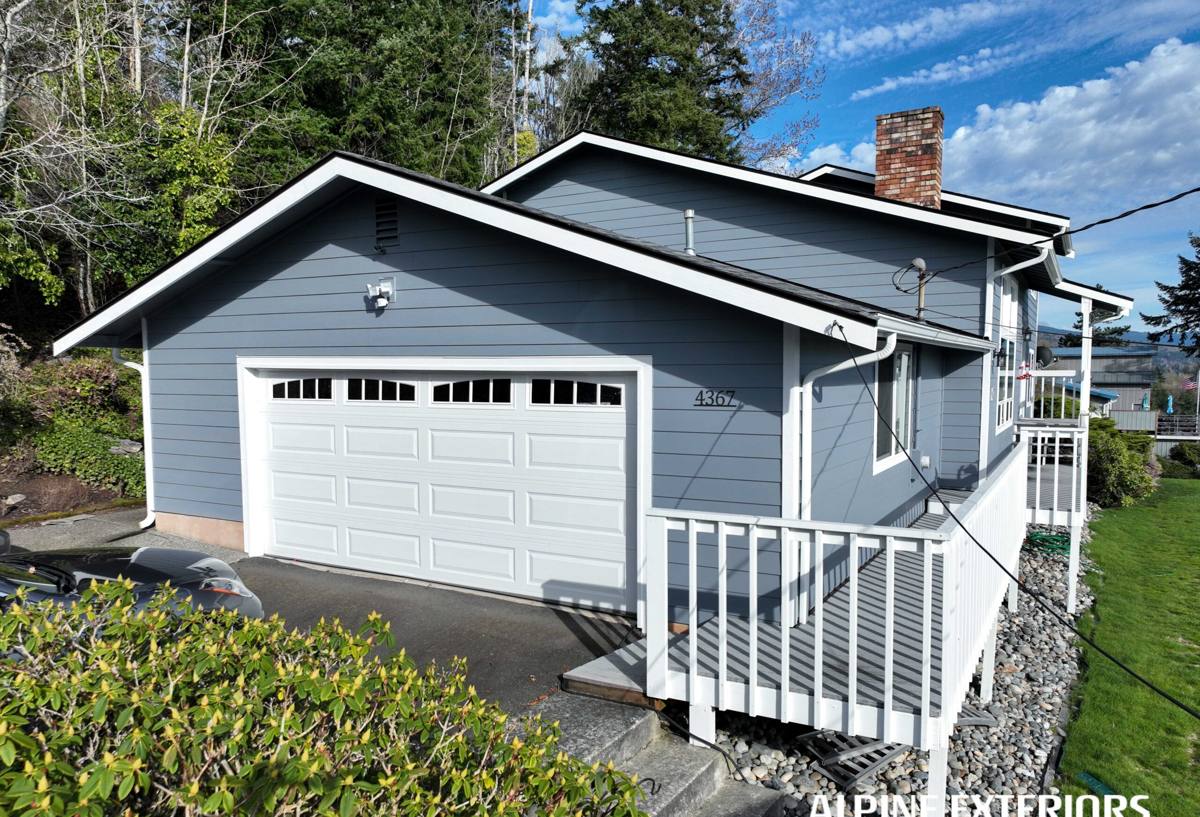
Signs a Deck Needs Replacement, Not Just Repair
Not every tired-looking deck needs to be torn out. But there's a point where patching boards or re-staining is just delaying a bigger problem, especially once the framing itself is compromised. Here's what tells us a full replacement is the honest recommendation rather than a repair:
- Soft or spongy spots in the decking or stair treads when you walk on them
- Visible rot, splitting, or dark staining at the ledger board where the deck attaches to the house
- Railing posts that wiggle or feel loose even after tightening hardware
- Persistent moss or algae growth that comes back within weeks of cleaning
- Fasteners that are rusted, popped up, or staining the wood around them
- Gaps or unevenness that have gotten worse year over year rather than staying stable
- A deck older than 15–20 years that was built with basic pressure-treated lumber and no membrane or flashing at the house connection
The ledger board is the item we look at closest, because it's the single most common point of structural failure on older decks in wet climates like this one. If water has been getting behind the ledger for years, the framing behind it can be compromised even when the decking on top still looks fine.
What a Correct Deck Replacement Actually Involves
Structure First
A deck is only as good as what's underneath it. That means footings sized and set to the depth required by local building code, posts and beams rated for the actual span and load, and joists spaced correctly for whatever decking material goes on top. Composite and PVC decking, for example, often call for tighter joist spacing than solid wood does — skipping that detail is a common shortcut that shows up as bounce or sag within a few years.
The Ledger Connection
Where the deck meets the house is the most important flashing detail on the entire project. Done right, it includes proper flashing that sheds water away from the house framing and stops it from ever reaching the ledger board or the rim joist behind it. In a climate that gets as much driving rain as Skagit County does, this detail alone determines whether a deck lasts one decade or three.
Fasteners and Hardware
Every structural connector, screw, and bolt on an exterior deck needs to be rated for outdoor and treated-lumber contact. Using the wrong hardware is invisible on day one and shows up as rust streaks, weakened connections, and eventual failure a few years down the road — usually right around when the deck sees the most winter rain.
Drainage and Airflow
Decking boards need consistent gapping so water can shed through rather than pool on the surface. Framing underneath needs enough clearance and airflow to dry out between rain events, which in this valley can mean days at a stretch without a real drying window. Joist tape over the top of the framing adds a layer of protection against the boards themselves absorbing water where fasteners penetrate.
Choosing the Right Decking Material for This Climate
There's no single "best" decking material — there's a best material for your budget, your maintenance tolerance, and how much shade and moss exposure your specific site gets. Here's how the common options actually compare in a wet, moss-prone valley climate:
| Material | Moisture Behavior | Maintenance | Typical Lifespan |
|---|---|---|---|
| Pressure-treated pine | Absorbs water readily; needs sealing to resist rot and moss staining | Annual cleaning and re-sealing recommended | 10–15 years with upkeep |
| Cedar | Naturally rot-resistant but still needs regular sealing in this climate | Cleaning and oil/sealant every 1–2 years | 15–20 years with upkeep |
| Capped composite | Very low water absorption; resists moss staining better than wood | Occasional washing, no sealing or staining | 25+ years, backed by manufacturer warranty |
| PVC decking | Fully synthetic, essentially no moisture absorption | Lowest maintenance of the options; simple washing | 25+ years, backed by manufacturer warranty |
Wood costs less upfront but asks for more of your time every year, which matters in a place where mold and moss growth won't wait for a dry weekend to clean it off. Composite and PVC cost more initially but hold up better against the specific conditions Hamilton deals with — damp shade, driving rain, and long stretches without direct sun to dry things out. We'll walk through the honest trade-offs for your specific site rather than push one material across the board.
Our Deck Replacement Process
- On-site evaluation. We inspect the existing deck's framing, ledger connection, footings, and any moisture damage before recommending replacement over repair.
- Design and material selection. We go over decking options, railing style, and layout based on your budget and how you actually use the space.
- Permitting. Deck replacements in Skagit County typically require a permit when structural work is involved. We handle the application and inspection scheduling.
- Demo and haul-away. The old deck comes out, including any compromised framing, footings, or ledger material that isn't sound.
- Structural rebuild. Footings, posts, beams, and joists go in to code, followed by proper ledger flashing and joist protection.
- Decking, railing, and stairs. Final surface materials are installed with correct gapping and fastening for the product chosen.
- Final walkthrough. We go over the finished deck with you, including basic maintenance expectations for your chosen material.
Permits and Local Building Requirements
Most deck replacements that involve structural changes — new footings, altered framing, or a deck attached to the house — require a permit under local building code. Guardrails on elevated decks generally need to meet minimum height and baluster-spacing requirements, and stairs have their own rise-and-run rules. Skipping permits on a structural deck project isn't just a compliance issue; it can also complicate things if you ever sell the home and a buyer's inspector flags unpermitted work. We handle the permit process as part of the job rather than leaving it for the homeowner to sort out.
Why a Crew That Already Works in Hamilton Matters
A deck built with the wrong assumptions about the local climate will fail in ways that aren't obvious until years later — a ledger flashed for a drier region, framing spaced for a material that doesn't need it, or a finish schedule that doesn't account for how much shade and moisture the site actually gets. Working regularly in Hamilton and the surrounding Skagit County towns means we already know how the valley's rain patterns and tree cover affect a deck's long-term performance, and we build accordingly instead of applying a generic spec sheet. It also means shorter travel time for the inspection, the build, and any follow-up, and a crew that's already familiar with the local permitting process rather than learning it on your project.
Maintenance That Actually Extends Deck Life Here
Whatever material you choose, a few habits matter more in Skagit County's climate than they would somewhere drier:
- Sweep debris and standing leaves off the deck regularly — trapped organic matter holds moisture and feeds moss
- Clean moss and algae off decking and stairs as soon as it appears rather than waiting for a seasonal deep-clean
- Check and re-seal wood decking on the schedule the material actually needs, not just when it looks dry
- Keep gutters and downspouts near the deck clear so runoff isn't draining directly onto or under the structure
- Inspect the ledger connection and fasteners once a year for staining, rust, or soft wood
What Replacement Typically Costs
Every deck is different, but the biggest cost factors are consistent across projects. This isn't a quote — it's a starting point for the conversation:
| Factor | Why It Matters |
|---|---|
| Deck size and shape | More square footage and complex angles mean more material and labor |
| Decking material | Composite and PVC cost more upfront than wood but reduce long-term maintenance |
| Height and stairs | Elevated decks need more structural framing, footings, and often additional railing and stair work |
| Existing structural condition | Rot or ledger damage found during demo can add framing repair beyond the original scope |
| Railing style | Cable, glass, and composite railing systems cost more than standard wood or metal balusters |
| Site access | Difficult access for equipment and material delivery can add labor time |
We give you a firm, itemized quote after the on-site evaluation, not a rough guess over the phone, so you know exactly what you're paying for before work starts.
If your Hamilton deck is showing soft spots, moss that won't quit, or a ledger connection that looks questionable, we're glad to take a look and give you a straight answer on whether it needs replacing. Reach out below for a free, no-pressure estimate.