 Skagit County
 Asphalt Shingle Roofing for Edison's Coastal Conditions
Edison sits close enough to the water and the open farmland of the Skagit flats that its roofs take a different kind of beating than roofs twenty miles inland. Salt-laden air off the bay, wind-driven rain that gets pushed sideways under poorly sealed shingles, and a moss season that can run eight months out of the year all add up to a roofing environment that punishes shortcuts. An asphalt shingle roof installed the same way you'd install one in a dry inland suburb will not hold up the same way here. It needs the right materials, the right ventilation, and the right detailing at every edge, valley, and penetration.
We work on homes throughout Skagit County, and Edison roofs get specific attention because of where they sit. This page covers what a correctly built or repaired asphalt shingle roof looks like for this area, what tends to go wrong when it isn't, and how we approach the job from first inspection to final cleanup.
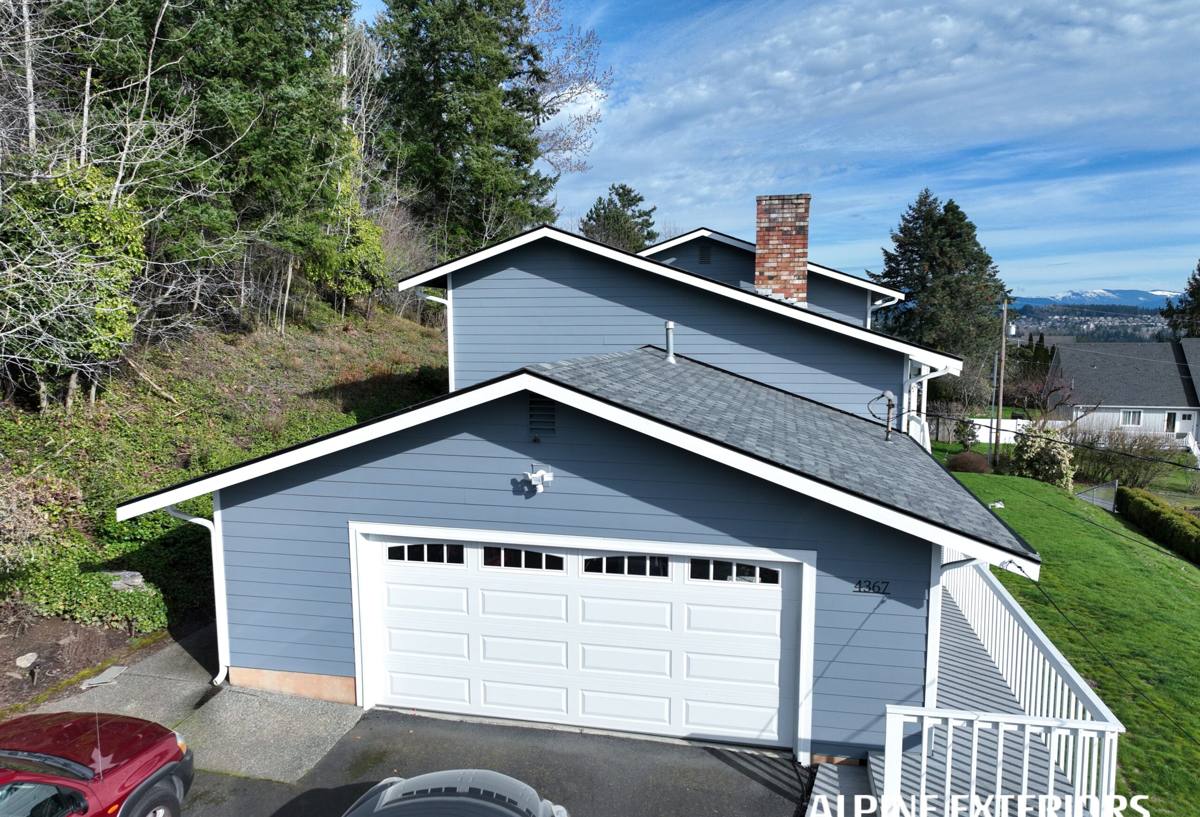
What Local Conditions Actually Do to a Roof
Salt Air and Metal Fatigue
Salt air accelerates corrosion on any exposed metal component of a roofing system — flashing, drip edge, nail heads, vent caps, and fasteners. Standard electro-galvanized nails and thin flashing stock corrode faster near the coast, and once a fastener starts to rust it loses holding power long before it visibly fails. Over years, this shows up as streaking around vents and chimneys, loosening flashing at valleys, and eventually leaks that trace back to a single corroded fastener rather than a shingle problem at all.
Driving Rain and Wind Uplift
Edison gets its share of wind off the water, and wind-driven rain doesn't just fall straight down — it gets forced sideways and even upward under shingle edges and around penetrations. A roof that would shed water fine in calm conditions can leak in a sideways storm if the underlayment, starter course, and shingle overlap weren't installed with that in mind. Wind uplift is also a real factor here; shingles rated for standard wind exposure but nailed with too few fasteners or in the wrong pattern are the most common cause of blow-offs we see after fall and winter storms.
Moss and Moisture Retention
The long wet season across Skagit County keeps roofs damp for extended stretches, and shaded or north-facing slopes barely dry out at all between rains. That's ideal growing conditions for moss and algae. Moss isn't just cosmetic — as it establishes itself under shingle tabs, it lifts them slightly, holds moisture against the roof deck, and accelerates granule loss. Left unchecked for a few seasons, moss growth can shorten the effective life of an otherwise sound shingle roof by years.
What a Correct Asphalt Shingle Roof Involves
A roof is a system, not just a layer of shingles. For Edison's climate, every layer matters:
- Deck inspection and repair: Any soft, delaminated, or water-stained sheathing gets replaced before new material goes down — covering a bad deck just hides the problem.
- Synthetic or felt underlayment: A continuous, properly lapped underlayment is the roof's real waterproofing layer; shingles are the wear surface on top of it.
- Ice and water shield at vulnerable areas: Eaves, valleys, and roof-to-wall transitions get a self-adhering waterproof membrane, since these are the spots where wind-driven rain and ice dams cause the most damage.
- Corrosion-resistant flashing and fasteners: Given the salt exposure, we favor flashing and fastener materials that hold up better near the coast rather than the cheapest standard stock.
- Correct nailing pattern: Manufacturer nailing specs exist for a reason — under-nailing is the single biggest cause of wind-related shingle loss.
- Balanced attic ventilation: Intake at the eaves and exhaust at the ridge keep the roof deck at a stable temperature and let moisture escape instead of condensing against the underside of the sheathing.
Skip any one of these and the roof might look fine for a season or two, but the weak point will show up eventually — usually during the first real windstorm or after the moss has had a year to establish itself.
Choosing Shingles for an Edison Roof
Not every asphalt shingle product is built the same, and for this area a few features matter more than they would somewhere drier and calmer. The table below outlines the main factors we walk homeowners through.
| Factor | Why it matters in Edison | What we look for |
|---|---|---|
| Algae resistance | Long wet season promotes algae staining and moss establishment | Shingles rated with algae-resistant granules (often copper- or zinc-infused) |
| Wind rating | Coastal wind exposure and driving rain increase uplift risk | Higher wind-rated shingles paired with correct nailing and sealant strip activation |
| Weight and thickness | Heavier, thicker shingles resist granule loss and lie flatter under wind | Architectural (laminated) shingles over basic three-tab where budget allows |
| Warranty structure | Coastal wear can trigger warranty questions sooner than inland installs | Manufacturer warranties that don't require pro-rated deductions for algae or wind in coastal zones |
We don't push a single brand as the only option — different manufacturers offer comparable products at different price points, and the right choice depends on budget, roof pitch, and how long the homeowner plans to stay in the house. What we do insist on is matching the shingle's rated performance to what this specific location will put it through.
Our Process, Start to Finish
1. On-Site Inspection
We get on the roof, not just in the attic or on a ladder from the ground. We check the deck condition, existing flashing, ventilation setup, moss and algae growth patterns, and how many layers of roofing are already there. We also look at gutters and eave detailing, since backed-up water at the roof edge is a common source of hidden rot in this area.
2. Honest Scope and Estimate
Not every roof needs full replacement. Some need targeted repair — reflashing a chimney, replacing a section of storm-damaged shingles, fixing ventilation. We tell you which category your roof falls into and why, with the reasoning laid out plainly.
3. Tear-Off and Deck Prep
For full replacements, we remove existing roofing down to the deck, replace any compromised sheathing, and address any ventilation gaps we find once the old material is off.
4. Underlayment, Flashing, and Shingle Install
Waterproof underlayment goes down first, followed by ice and water shield at eaves and valleys, corrosion-resistant flashing, and then the shingles themselves, installed to manufacturer nailing and exposure specs.
5. Ventilation Check and Final Walkthrough
Before we call the job done, we confirm intake and exhaust ventilation is balanced, clean up the site including magnetic sweeps for stray nails, and walk the roof with you if you'd like to see the finished work up close.
Repair or Replace? What Actually Determines the Answer
Homeowners often assume any leak means a full new roof. That's frequently not true. Here's how we weigh it:
| Situation | Usually points toward |
|---|---|
| Isolated leak at a single flashing point, shingles otherwise granule-intact | Targeted repair |
| Widespread granule loss, curling, or brittle shingles across multiple slopes | Full replacement |
| Heavy moss coverage but deck and underlayment still sound | Cleaning, moss treatment, and ventilation correction — not automatic replacement |
| Roof is 20+ years old with multiple prior patch repairs | Full replacement, since remaining material is near end of service life anyway |
| Visible sagging or soft decking underfoot | Replacement with deck repair — this is a structural issue, not cosmetic |
We'd rather tell a homeowner they need a repair now and a replacement in a few years than sell a full roof when it isn't warranted. That approach is also just better business over time in a small community like this one, where word of mouth carries.
Ventilation and Moss: Prevention Beats Cleanup
A lot of moss problems trace back to a ventilation imbalance rather than the roof simply being in a shaded spot. When an attic doesn't have enough intake ventilation at the eaves relative to exhaust at the ridge, moisture gets trapped, the roof deck stays damper longer after each rain, and moss has more time to take hold before the surface dries out. Correcting the ventilation balance during a repair or replacement often does more for long-term moss resistance than any topical treatment applied afterward.
That said, ventilation fixes don't erase moss that's already established. For roofs with active growth, we recommend a gentle removal method that won't strip granules, followed by a zinc or copper-based treatment that discourages regrowth without damaging the shingles or nearby landscaping.
Maintaining an Asphalt Shingle Roof in This Climate
Between professional inspections, a few homeowner habits go a long way toward protecting the investment:
- Keep gutters and downspouts clear, especially heading into fall when leaf debris combines with rain to back water up at the eaves
- Trim back overhanging branches that keep sections of the roof shaded and slow to dry
- Watch for granule buildup in gutters, which signals accelerated shingle wear
- Have flashing around chimneys, skylights, and vents checked every few years, since these are the first points to fail from corrosion
- Address small leaks immediately rather than waiting — trapped moisture under shingles does more damage the longer it sits
- Schedule a roof check after any major windstorm to catch lifted or missing shingles before the next rain gets underneath them
Why It Matters That We Already Work in Edison
A roofing crew that only occasionally works this far out on the Skagit flats doesn't necessarily know which details matter most here — how much heavier the moss growth runs on north-facing slopes near the water, how much faster standard fasteners corrode in this air, or how differently wind behaves on an open, low-lying property compared to a sheltered inland lot. We work this area regularly enough to build those details into every estimate and every install, rather than treating this as a generic asphalt shingle job with a different zip code.
That local familiarity also means we're not guessing at material choices or nailing patterns based on manufacturer minimums — we're building in the margin this specific climate calls for, from the fasteners up through the finished ridge cap.
Get a Straightforward Estimate
If you're dealing with a leak, visible moss, storm damage, or just want an honest read on how much life is left in your current roof, we're glad to take a look. The estimate is free, there's no pressure attached to it, and you'll get a clear explanation of what we find — use the form below to get started.