 Skagit County
 Concrete's Climate Is Harder on Siding Than It Looks
Concrete sits in the Skagit River valley at the edge of the North Cascades foothills, and that setting creates its own version of the tough conditions siding deals with across Skagit County. It's not the open, salt-tinged air you get closer to the coast — it's a river-valley climate with heavy annual rainfall, dense evergreen tree cover, and humidity that hangs around long after a storm has moved on. Homes here take on moisture from more directions than most homeowners realize, and the siding is the first line of defense against all of it.
Rain That Comes Sideways, Not Just Down
Wind-driven rain off the Cascades doesn't just fall on a roof and run off — it drives into wall assemblies at window trim, corner boards, and anywhere two pieces of siding meet. Over years, siding that isn't installed with correct clearances and flashing starts to hold water at exactly those joints, and that's where rot and paint failure begin, whether the underlying wall is old growth cedar, a mid-century addition, or a newer build.
Shade, Moss, and Walls That Never Fully Dry
Concrete's tree cover is part of what makes the area what it is, but it also means a lot of exterior walls sit in shade for large parts of the day, especially on north- and east-facing elevations. Shaded siding dries slower after every rain, and slow-drying siding is exactly where moss, algae, and mildew take hold. A long, gray moss season isn't cosmetic here — it's a sign that a wall surface is staying wet longer than it should, which is hard on paint, caulk, and the material underneath it.
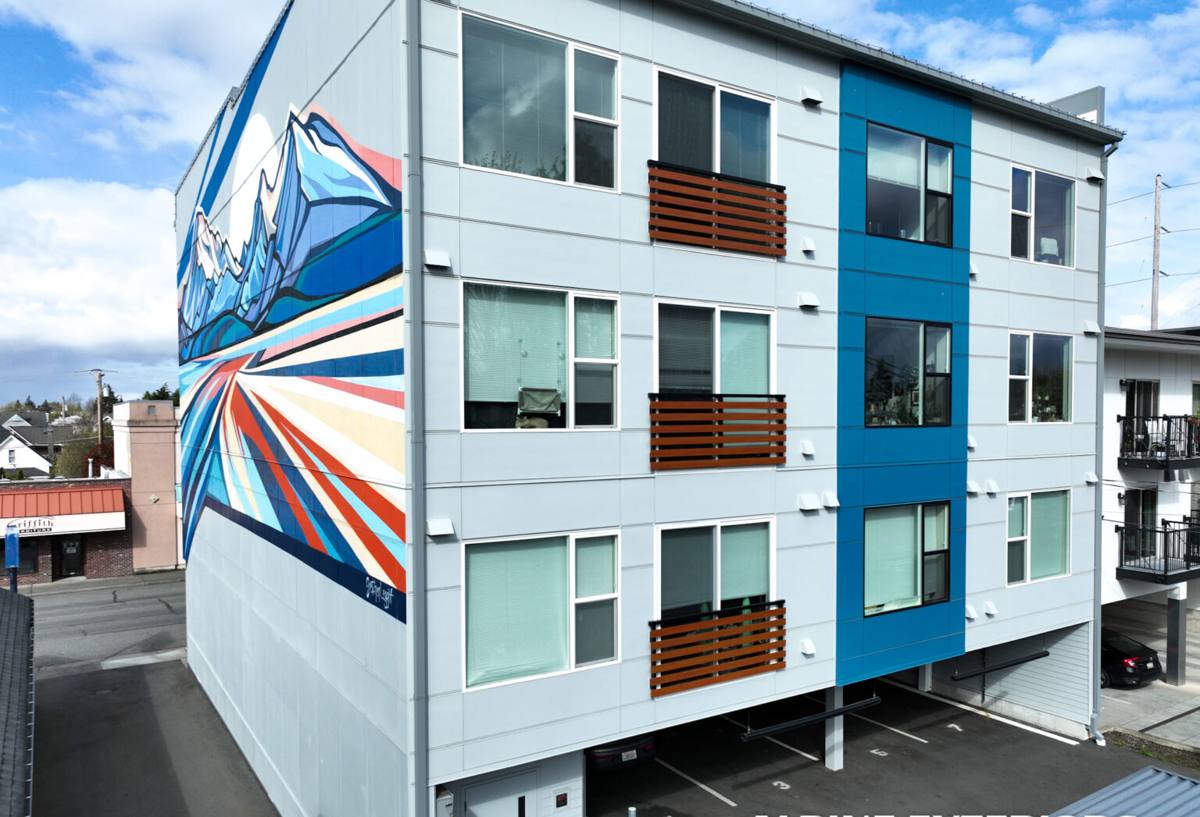
Why We Only Install James Hardie Fiber Cement
Our crews install one siding system: James Hardie fiber cement. That's not a marketing preference — it's a standard we settled on after years of seeing which products actually hold up in this kind of climate and which ones create ongoing maintenance headaches for homeowners. Fiber cement is non-combustible, dimensionally stable, and doesn't feed the moss and mildew growth that softer, more porous materials are prone to in a shaded, wet environment.
What We Don't Install, and Why
We don't install vinyl, LP SmartSide, cedar, or primed spruce, and we're upfront about why. Vinyl expands and contracts more than fiber cement across our seasonal temperature swings, and it can warp or crack over time, especially at fastener points. LP SmartSide and other engineered wood products use wood fiber, which means any breach in the factory coating gives moisture a path into the material — a real risk in a climate where walls stay damp for extended stretches. Cedar and primed spruce look great going up, but they demand a maintenance schedule — recoating, caulking, spot repairs — that most homeowners underestimate, and in a moss-heavy climate that schedule gets more demanding, not less. None of these products are bad products in the right setting. We just don't think Concrete's climate is the right setting for them, and we'd rather tell a homeowner that upfront than sell a product we know will cause callbacks.
How Fiber Cement Stacks Up Against the Alternatives
| Factor | James Hardie Fiber Cement | Vinyl | Wood / LP SmartSide |
|---|---|---|---|
| Moisture resistance | Engineered cement composite; won't rot or swell | Won't rot, but seams and J-channels trap water | Vulnerable once the surface coating is breached |
| Moss and algae resistance | Dense surface resists growth; factory finish sheds spores better | Can host growth in seams and overlaps | Porous surface is a common growth site |
| Behavior in temperature swings | Minimal expansion/contraction | Expands, contracts, can warp | Moderate movement; seams can open |
| Fire resistance | Non-combustible | Melts/deforms under heat | Combustible (wood fiber based) |
| Typical maintenance | Occasional wash; repaint only if not ColorPlus | Periodic washing; limited repair options | Regular recoating and caulk inspection |
What a Correct Fiber Cement Installation Actually Involves
Fiber cement performs the way it's supposed to only when it's installed to the manufacturer's specifications. A rushed or improperly detailed install can leave a home with the same moisture problems as a lesser material, just with a better-looking surface hiding it.
The Specs We Follow on Every Job
- Correct clearance between siding and grade, roofing, decks, and other horizontal surfaces so water has somewhere to go
- Proper starter strip installation so the first course sits at the correct angle and doesn't trap water at the bottom edge
- Flashing at every window, door, and penetration, integrated with the home's water-resistive barrier rather than just caulked over
- Manufacturer-specified fastener type, spacing, and depth — over-driven nails crack the board and under-driven ones leave it loose
- Correctly sized gaps at butt joints and trim, sealed with a compatible sealant rather than left tight or over-caulked
Mistakes That Show Up Years Later
Most fiber cement problems we get called to look at aren't material failures — they're installation shortcuts. Siding nailed directly against trim with no gap, missing or improvised flashing, boards installed too close to a roofline or deck surface — these don't cause visible damage on day one. They cause it two, five, or ten winters later, once enough rain cycles have found the weak point. In a wet, shaded climate like Concrete's, that timeline is often shorter than it would be somewhere drier.
James Hardie's Product Lines and Why the Details Matter
James Hardie engineers its siding by climate zone (its HZ10 and HZ5 lines), which matters in the Pacific Northwest specifically because the product formulation accounts for the moisture load our region deals with. On top of that, most Hardie products are available with a factory-applied ColorPlus finish — baked on under controlled conditions rather than brushed on at the jobsite. That finish holds color and resists fading, chipping, and moisture intrusion at the surface better than a field-applied paint job, which matters most on the shaded, slow-drying elevations that are common on wooded Concrete lots. Hardie also backs its products with a transferable limited warranty, which carries real value if a home changes hands before the siding's service life is up.
Our Process for a Concrete Siding Project
We walk every home before we quote anything. That means looking at which elevations get the most shade and rain exposure, checking for existing moisture damage around windows and at the base of walls, and confirming what's underneath the current siding before we plan the tear-off. A home near the river or tucked under heavy tree cover often needs more attention to drainage planning and flashing detail than a home in an open, sunny lot, and we plan the job differently based on what we actually find.
What to Expect Once Work Starts
Tear-off and disposal of the old siding, inspection and repair of the sheathing and water-resistive barrier underneath, then installation following Hardie's fastening and clearance specs from the ground up. We flash every opening as we go rather than catching it at the end, and we walk the finished job with the homeowner before we call it done. Most single-family homes take a matter of days to a couple of weeks depending on size, complexity, and trim detail — weather is the main variable, since we won't install over wet sheathing or in conditions that compromise the seal at joints and flashing.
What Fiber Cement Siding Costs in Concrete
Fiber cement costs more upfront than vinyl and is generally comparable to or less than high-end wood siding once you account for a wood product's ongoing maintenance. Exact pricing depends on the specifics of the home, but the main cost drivers are consistent from job to job:
| Cost Factor | Why It Matters |
|---|---|
| Home size and wall complexity | More corners, dormers, and trim detail mean more cutting, flashing, and labor time |
| Condition of existing sheathing | Rot or moisture damage found during tear-off adds repair scope before new siding goes on |
| Siding profile and trim package | Lap width, board-and-batten, and trim style all affect material and labor cost |
| ColorPlus vs. primed-for-paint boards | Factory finish costs more per board but eliminates a separate paint job |
| Access and site conditions | Steep lots, tree cover, and limited staging space (common on wooded Concrete properties) can add time |
Maintenance in a Moss-Prone, Rainy Climate
Fiber cement is low-maintenance, not no-maintenance. In a climate where shaded walls stay damp longer, a little seasonal attention goes a long way toward protecting the investment.
- Rinse siding annually with a garden hose and soft brush, focusing on shaded, north-facing walls where moss and algae are most likely to establish
- Avoid pressure washing directly at joints and seams — it can force water behind the siding rather than just cleaning the surface
- Keep gutters clear and downspouts directed away from the foundation so runoff doesn't sheet down wall surfaces
- Trim back tree limbs and brush that keep specific wall sections shaded and wet longer than the rest of the house
- Walk the exterior once a year and check caulking at trim and penetrations, since sealant wears out well before the siding itself does
- Address any soft spots, staining, or bubbling paint promptly rather than waiting — it's almost always cheaper to fix early
Why Hire a Crew That Already Works in Concrete
A crew that regularly works Skagit County homes already understands how a river-valley, tree-covered lot behaves differently than a home in an open, sunnier part of the county — which walls will need extra flashing attention, how much clearance to plan for given the local rain pattern, and what moisture issues tend to show up on this type of property. That local pattern recognition doesn't replace following Hardie's install specs to the letter, but it does mean fewer surprises during tear-off and a job that's planned around how this specific climate actually treats a home, not a generic install approach.
If you're weighing a siding replacement or repair on a Concrete home, we're glad to come take a look and walk you through what we find — no pressure, no obligation. Request a free estimate below and we'll give you an honest read on your home's siding and what it would take to get it right.