 Skagit County
 Why Mount Vernon Homes Need Siding Built for This Climate
Mount Vernon sits in the Skagit River valley, close enough to Skagit Bay and the greater Puget Sound to pick up salt-laden air, and low enough in elevation that fog, standing humidity, and slow-draining wet spells are a normal part of the year. Add a moss season that can run from late fall through spring, and you have a climate that is genuinely harder on exterior materials than most of the country ever deals with. Siding here isn't just a cosmetic layer. It's the thing standing between your framing and months of driving rain, damp air that never quite dries out, and organic growth that thrives on any surface holding moisture.
We install fiber cement siding on homes throughout Mount Vernon and the rest of Skagit County, and we install exactly one brand: James Hardie. This page walks through what this climate actually does to siding over time, what a correct fiber cement installation involves, and why the installation matters as much as the product itself.
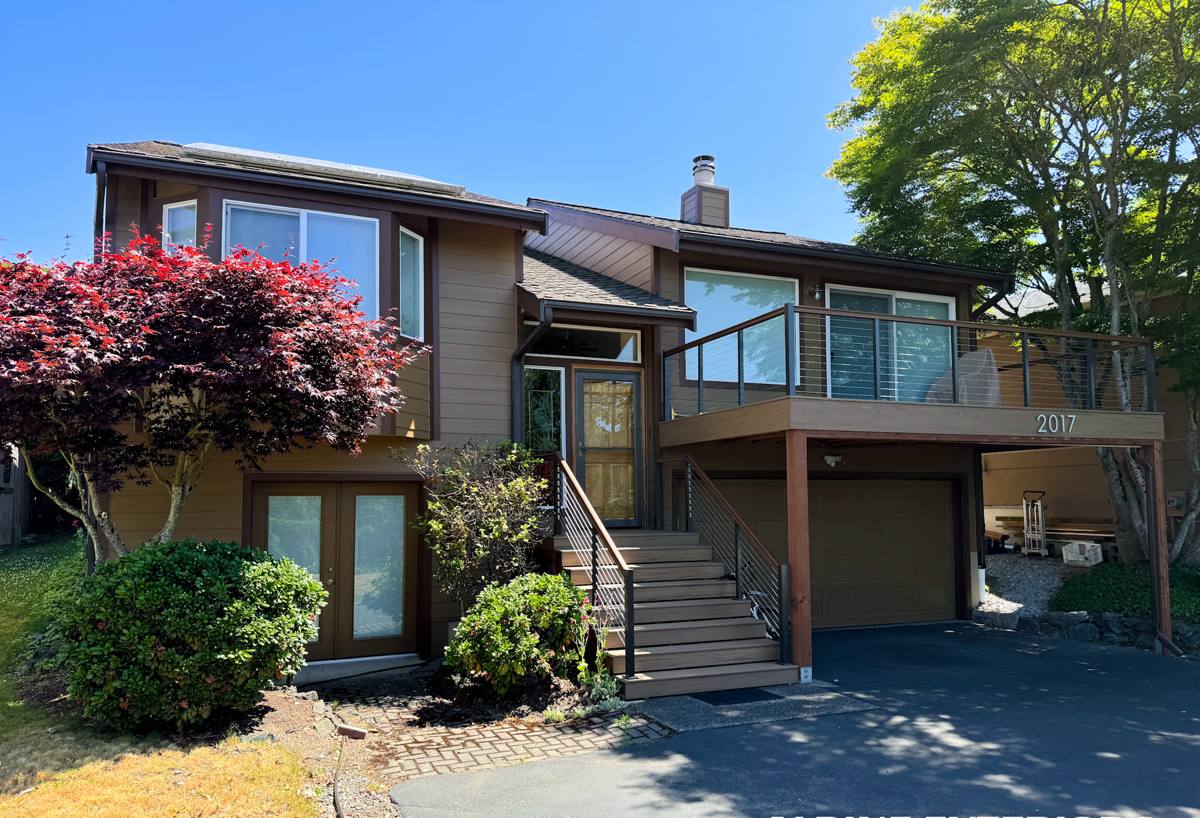
What Driving Rain, Salt Air, and Moss Do to a House Over Time
Driving Rain and Wind-Driven Moisture
Skagit County storms don't just fall straight down. Wind off the valley and the bay pushes rain sideways into wall assemblies, which means siding has to do more than shed water — it has to resist moisture intrusion at every seam, corner, and penetration. Materials that swell, delaminate, or wick water at cut edges will show it here faster than they would in a drier climate.
Salt Air
Proximity to the Sound means airborne salt settles on exterior surfaces over the years. Salt exposure doesn't destroy siding outright, but it accelerates corrosion on fasteners and trim, and it stresses paint films and coatings that aren't formulated to hold up under repeated wet-dry salt cycling.
Moss and Sustained Dampness
Moss needs shade, moisture, and a surface to hold onto — Mount Vernon has all three for a good chunk of the year. Wood-based sidings and their coatings are especially vulnerable because moss roots into the surface and holds moisture against the material long after the rain has stopped. Once moss and the fungal growth that often comes with it establish themselves, the wall behind them stays damp far longer than it should.
Why James Hardie Fiber Cement Is What We Put on Skagit County Homes
We standardized on James Hardie because it's engineered specifically for problems like the ones above, not just tolerant of them. A few things matter directly for a Mount Vernon home:
- Non-combustible core. Fiber cement doesn't feed a fire the way wood-based sidings can, which matters for insurance conversations and long-term peace of mind.
- Engineered for Pacific Northwest moisture. Hardie's HZ5 product line is specifically formulated and tested for climates like ours — wet, humid, and prone to sustained damp periods rather than quick dry-outs.
- ColorPlus factory finish. The color is baked on in a controlled factory process rather than field-applied, which gives a more consistent, better-adhered finish that holds up to the wet-dry cycling salt air and rain create.
- Dimensionally stable. Fiber cement doesn't swell and shrink with moisture the way wood does, so joints and caulk lines stay tighter over the years — fewer gaps for water to find.
- A surface moss struggles to hold onto. It's not moss-proof — nothing outdoors truly is — but a dense fiber cement surface with a correctly maintained finish gives moss and algae far less to grip compared to raw or lightly coated wood substrates.
We don't install LP SmartSide, vinyl, Cemplank, Allura, primed spruce, or cedar. Each of those products has legitimate strengths, but none of them combine non-combustibility, factory-cured moisture resistance, and long-term finish durability the way Hardie's engineered fiber cement does — and in a climate this demanding, that combination is what we're willing to stand behind.
What a Correct Fiber Cement Installation Actually Involves
Fiber cement is only as good as its installation. A misinstalled Hardie job can still trap water, and in Mount Vernon's climate that shows up faster than it would somewhere drier. A correct install includes:
Water Management Behind the Siding
A proper weather-resistant barrier and correctly lapped flashing at every window, door, and penetration come first — the siding itself is the second line of defense, not the only one. Flashing details at horizontal trim and butt joints are where most water intrusion problems start if they're rushed.
Clearances and Gaps
James Hardie's installation guidelines specify minimum clearances from grade, roof lines, and decks, along with gap requirements at butt joints and trim. These aren't arbitrary — they give the assembly room to shed water and dry out rather than holding moisture against end grain, which is one of the most common failure points on any siding job.
Fastening
Correct fastener type, spacing, and depth matter for wind resistance and for keeping the siding tight against the wall plane, especially given the wind-driven rain this area sees. Overdriven or underdriven nails both create long-term problems.
Caulking and Sealant Joints
Joints need the right sealant, applied at the right points — not everywhere, since fiber cement also needs some joints to stay open for drainage. Over-caulking is almost as common a mistake as under-caulking.
Painted Field Cuts
Any factory edge that gets cut on site needs to be sealed with touch-up paint before installation. An unsealed cut edge is one of the few ways moisture can get into fiber cement, and it's an easy step to skip if a crew is moving fast.
Our Process on Mount Vernon Homes
| Stage | What Happens |
|---|---|
| Assessment | We inspect existing siding, sheathing, and trim for hidden moisture damage before quoting — common on older Mount Vernon homes with years of wet-dry cycling |
| Tear-off & sheathing check | Remove old siding, inspect and repair sheathing, address any moss or rot damage found underneath |
| Water barrier & flashing | Install weather-resistant barrier and flash every window, door, and penetration correctly before any siding goes up |
| Siding installation | Install Hardie panels or lap siding to spec — correct clearances, gaps, and fastening |
| Trim & sealant | Install trim, seal appropriate joints, touch-up paint any field cuts |
| Final walkthrough | Walk the job with the homeowner and confirm everything meets spec before we call it done |
Why Local Installation Experience Matters Here
Skagit County's weather windows for exterior work are real — there are stretches of the year where getting a wall open and closed back up before the next rain requires planning, not luck. A crew that already works Mount Vernon regularly knows how to sequence a job around that, how to protect an open wall overnight, and where moss and moisture problems tend to show up first on homes in this area versus drier parts of the state. That local pattern-recognition is part of what keeps a job from turning into a callback.
Permitting and inspection requirements can also vary by jurisdiction within the county, and a crew that's pulled permits in Mount Vernon before isn't learning the process on your project.
Cost Factors on a Mount Vernon Fiber Cement Project
| Factor | Why It Affects Price |
|---|---|
| Existing wall condition | Hidden rot or moisture damage found during tear-off adds repair scope before new siding goes on |
| Siding profile | Lap siding, panel siding, and shingle-style profiles differ in material and labor cost |
| Trim complexity | Homes with more corners, dormers, and window trim take more time to flash and finish correctly |
| Story height | Two- and three-story sections require more staging and safety setup |
| Color/finish selection | Standard ColorPlus colors versus premium finishes carry different material costs |
We give straight, itemized estimates rather than broad ballpark numbers, because the condition of the wall underneath the old siding is often the biggest variable on a real Mount Vernon home.
Living With Fiber Cement Siding in This Climate
Correctly installed Hardie siding is low-maintenance, but "low" isn't "none" in a climate like this. A simple annual routine keeps it performing the way it's designed to:
- Rinse the siding down once a year to clear off salt residue, pollen, and early moss growth before it establishes
- Keep gutters clear so water isn't sheeting down the wall face
- Trim back landscaping that's shading and holding moisture against any section of wall
- Check caulk joints periodically and have any cracked or missing sealant addressed promptly
- Watch for moss starting in shaded, north-facing sections first — it's easier to address early than after it's established
Get a Straight Answer for Your Home
If you're weighing a siding replacement in Mount Vernon and want to know honestly what your home needs — not a generic pitch — we're glad to take a look and walk you through it. Request a free, no-pressure estimate using the form below and we'll go from there.