 Skagit County
 Why Sedro-Woolley Homes Need Siding Built for This Climate
Sedro-Woolley sits in the Skagit River valley, framed by farmland, forest, and the foothills of the North Cascades. That setting means shade, humidity, and moisture that lingers longer than it does in drier parts of the state. Add in the wind-driven rain events that roll through the county in fall and winter, and the salt-tinged marine air that pushes inland off Puget Sound and Padilla Bay during stronger weather systems, and you get an exterior environment that's genuinely hard on siding materials. Homes tucked against tree lines or facing north often carry a green tinge of moss and algae on their siding by late winter — a sign that the material is staying damp longer than it should.
None of this is unique to any one street or subdivision in Sedro-Woolley. It's the reality across most of Skagit County, and it's exactly why the siding you choose — and how it's installed — matters more here than it would in a dry climate. A product that looks fine on a spec sheet can still fail early if it can't handle sustained moisture exposure or if it's installed without the right clearances and flashing details.
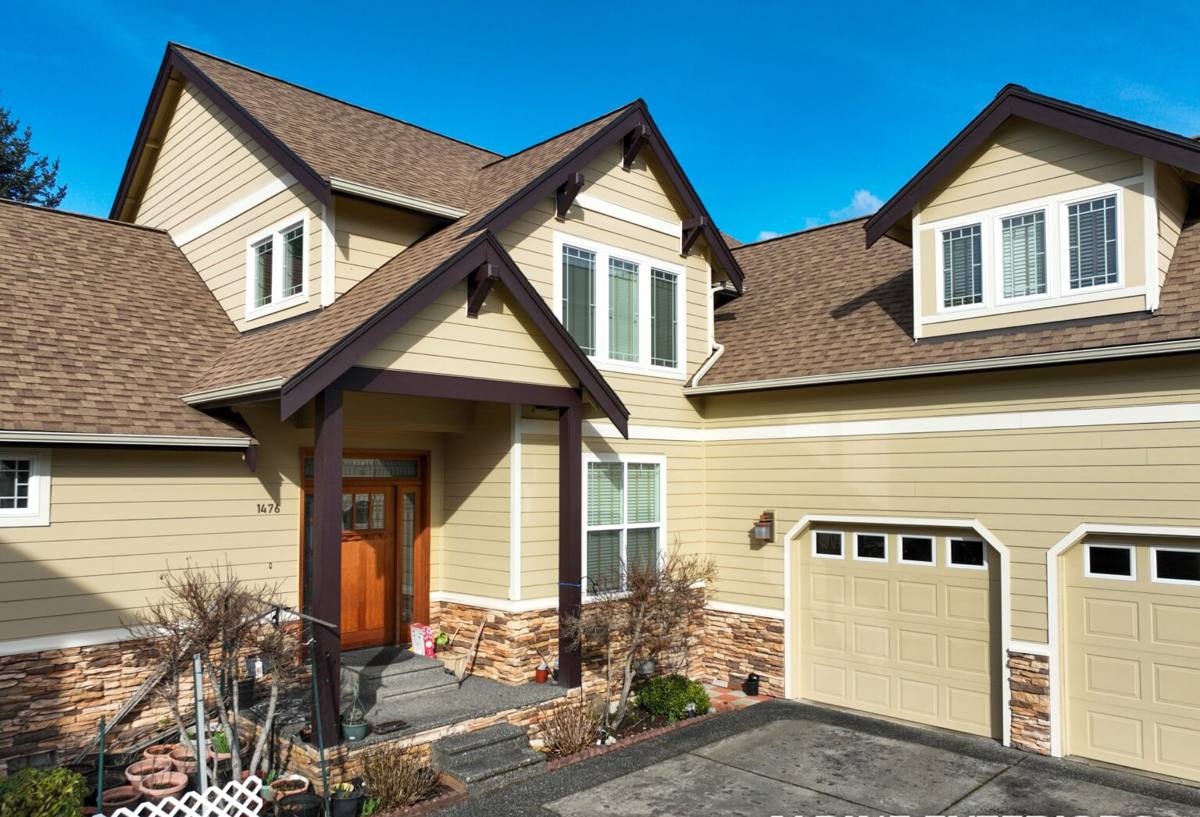
What Siding Actually Needs to Do in This Environment
Strip away the marketing language and a siding material really only needs to do a handful of things well in a climate like this:
- Resist water absorption instead of wicking it into the substrate
- Hold its shape and stay flat through repeated wet-dry cycles
- Resist rot, pest damage, and fungal growth
- Keep a factory finish that doesn't chalk, peel, or fade prematurely in shaded, damp conditions
- Be non-combustible, which matters for insurance and long-term durability alike
Fiber cement checks these boxes better than most alternatives available today, which is why it's become the standard choice for homeowners in wet Pacific Northwest counties who want to stop dealing with siding problems every few years.
Why We Install Only James Hardie Fiber Cement
We install James Hardie products exclusively — not LP SmartSide, not vinyl, not Cemplank or Allura, not primed spruce or cedar. That's a deliberate standard, not a lack of options.
LP SmartSide is an engineered wood product with an OSB-based substrate. It performs reasonably well when every cut edge is sealed and every seam is maintained, but in a climate where siding stays wet for days at a stretch, that installation sensitivity becomes a real liability — a missed edge seal or a failed caulk joint gives moisture a path into wood-based material, and wood-based material doesn't handle sustained moisture the way cement-based material does. Vinyl siding is low-maintenance and inexpensive, but it's a cladding, not a moisture barrier system in the way homeowners often assume — it expands and contracts with temperature swings, can warp or crack in cold snaps, and doesn't hold up structurally or aesthetically the way fiber cement does over a 30-plus year window. Cedar and primed spruce are beautiful materials, but they're wood, and wood in a valley climate like Skagit County's means an ongoing cycle of caulking, repainting, and watching for rot at end grain and ground contact.
James Hardie fiber cement is engineered specifically for climate zones like this one — the company's HZ5 formulation is built for regions with the freeze-thaw and moisture exposure typical of the Pacific Northwest. It doesn't absorb water the way wood-based siding can, it won't rot, and it carries a factory-applied ColorPlus finish that's baked on and warrantied, rather than a field-applied coat that will eventually need to be redone. That combination — non-combustible core, climate-matched engineering, and a finish system backed by a real manufacturer warranty — is why it's the only siding we put on homes.
What a Correct Installation Actually Involves
Drainage Plane and Water-Resistive Barrier
Fiber cement siding is not itself a waterproofing system — it's a cladding that sits over a water-resistive barrier and, ideally, a drainage gap that lets any moisture that gets behind the siding drain and dry out instead of sitting against the sheathing. On a home in a climate this wet, skipping or shortcutting the drainage plane is one of the most common causes of hidden rot behind siding that otherwise looks fine from the curb.
Clearances and Flashing
James Hardie's installation instructions specify minimum clearances from grade, roof lines, decks, and other transitions, along with flashing details at every window, door, and horizontal joint. These clearances exist specifically to keep splash-back and standing water away from the bottom edge of the siding — a detail that matters more in a region with heavy seasonal rainfall than it would somewhere dry.
Fastening and Joint Treatment
Fasteners need to be corrosion-resistant and driven correctly — not overdriven, which can crack the board or compromise its ability to move slightly with temperature changes. Butt joints need to be treated and sealed per the manufacturer's specification, not just butted together and caulked as an afterthought.
Factory Finish vs. Field Painting
ColorPlus prefinished boards arrive with the color and topcoat already cured at the factory, which gives a more consistent, longer-lasting finish than caulking and painting on-site after installation. Primed boards that get field-painted can still perform well, but the finish is only as good as the paint job and the weather conditions it was applied in.
Product Lines That Fit Sedro-Woolley Homes
| Product | Typical Use | Look |
|---|---|---|
| HardiePlank lap siding | Most common choice for full re-sides; traditional horizontal profile | Classic clapboard or beaded look |
| HardiePanel vertical siding | Gables, accent walls, board-and-batten style sections | Modern vertical lines, often paired with lap siding |
| HardieShingle | Accent areas, gable ends, homes wanting a shingle-style look without cedar's maintenance | Staggered or straight-edge shingle texture |
| HardieTrim | Corners, window and door surrounds, fascia | Clean, paintable trim that matches the siding system |
Our Process on a Sedro-Woolley Project
We start with a site walk, not a quote pulled from square footage alone. That means checking the existing siding for hidden rot at butt joints, corners, and around penetrations — common failure points on older homes in this area — and assessing how much sun exposure, tree shade, and drainage each elevation actually gets. North- and west-facing walls tucked near trees typically need closer attention to moss and moisture history than south-facing walls that dry out faster.
From there, we handle proper tear-off of the old material rather than installing over it, since covering existing damage just hides a problem instead of solving it. We install the water-resistive barrier and drainage plane, then the Hardie boards to manufacturer clearance and flashing specifications, and pull any required permitting through the appropriate local authority before work starts. A crew that's already worked houses in Sedro-Woolley and the surrounding Skagit County towns has usually already seen the moisture patterns your specific lot and orientation will present — that's a real advantage over a crew learning the area's quirks on your project.
What Drives the Cost
| Factor | Why It Matters |
|---|---|
| Home size and number of stories | More square footage and taller walls mean more material and labor, plus added equipment for access |
| Existing siding removal | Tear-off, disposal, and any sheathing repair needed once old material is off |
| Product line and profile | Lap width, panel vs. shingle style, and trim complexity all affect material cost |
| Finish type | ColorPlus prefinished boards cost more up front but skip a field-painting phase |
| Trim and detail work | Corner boards, window surrounds, and transitions add labor time |
| Access and site conditions | Steep lots, tree-heavy yards, and tight setbacks common in this area can add staging time |
We won't quote a price without seeing the house — condition, access, and design details swing the number too much to estimate blind, and we'd rather give you an accurate number than a low one that changes later.
Living With Fiber Cement Siding in a Wet, Mossy Climate
Correctly installed James Hardie siding is genuinely low-maintenance, but "low-maintenance" doesn't mean "no maintenance" in a climate that grows moss on roofs, decks, and siding alike. A short annual routine keeps it looking right and catches problems early:
- Rinse siding annually with a garden hose and soft brush — avoid high-pressure washing, which can drive water behind boards or damage the finish
- Keep gutters and downspouts clear so water isn't overflowing onto siding below
- Trim back vegetation and tree limbs that keep a wall in constant shade and slow drying
- Check caulking at trim joints, windows, and butt joints yearly and recaulk if it's cracked or pulling away
- Watch shaded, north-facing sections for early moss or algae growth and address it before it spreads
- Note any soft spots, staining, or discoloration near ground level, which can signal a drainage or clearance issue worth having checked
Why Hiring Locally Familiar Crews Matters
Siding installation manuals are written for a national audience, but the moisture, wind, and drainage conditions in Skagit County are specific enough that experience here counts for something. A crew that's already worked houses in Sedro-Woolley knows what kind of siding failures show up on older homes in this valley, understands local permitting, and installs with this climate's demands in mind rather than treating every job the same regardless of region. That local track record, paired with manufacturer-backed installation of a product engineered for this climate zone, is what actually protects the investment you're making.
If your siding is showing moss, staining, soft spots, or just age, we're happy to take a look and walk you through what we'd recommend for your home — no pressure, no obligation. Reach out using the form below to schedule a free estimate.