 Skagit County
 Roofing in Hamilton: A Skagit Valley Microclimate
Hamilton sits along the Skagit River in the upper valley, tucked between forested slopes that funnel weather up from the Sound and down from the Cascades. It's a different exposure than the coast, but it shares the same wet Pacific weather pattern that defines Skagit County roofing: long stretches of low, steady rain, short dry windows in summer, and shaded, tree-lined lots that stay damp longer than open ground. Homes here don't need a coastal-grade roof built to fight salt spray directly, but they do need a roof built for the same driving rain, standing moisture, and moss pressure that affects the rest of the county — arguably worse in spots where mature trees keep a roof shaded most of the day.
We work Skagit County from the coast inland to the river valley, and we treat those as two related but distinct problems. A roof spec that works in Anacortes isn't automatically right for Hamilton, and vice versa. This page is about what actually matters for an asphalt shingle roof on a Hamilton home.
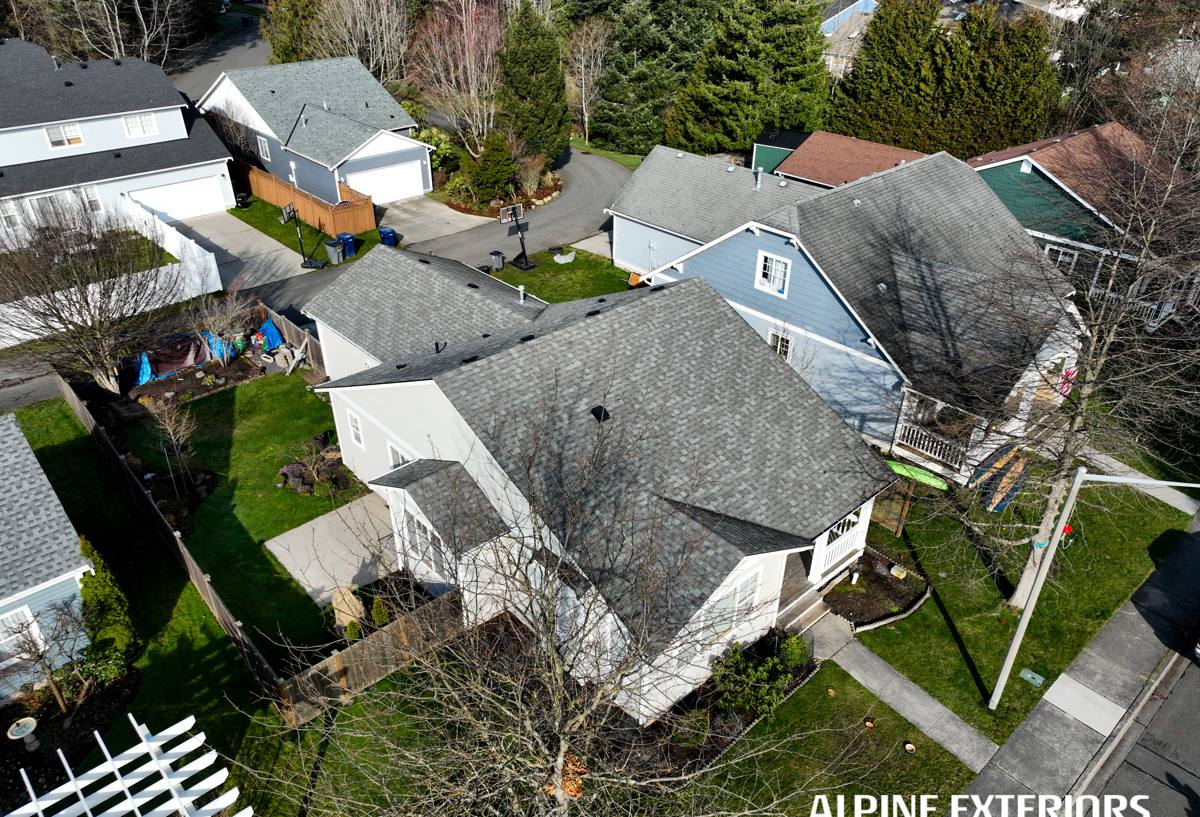
What Rain and Moss Actually Do to a Shingle Roof
Moss and Algae
Moss doesn't just look bad — it lifts shingles as it grows, holds moisture against the roof deck, and works its way under tabs and around fasteners. In shaded, tree-covered lots like a lot of Hamilton properties, north-facing slopes and anything under a tree canopy can stay damp for days after a storm passes. Left alone over a few seasons, moss growth shortens the usable life of a shingle roof regardless of how good the shingle itself is. Algae streaking is a separate, mostly cosmetic issue — dark streaks from airborne algae spores — but it's worth planning for since it shows up fastest on north-facing roof planes with limited sun exposure, which describes a lot of valley lots here.
Driving Rain and Flashing
Wind-driven rain finds weak points a calm rain never would — laps that aren't sealed correctly, flashing that's caulked instead of properly integrated, and nail patterns that don't match the shingle manufacturer's spec. Skagit County's rain isn't usually violent, but it's persistent, and persistent low-grade exposure is what eventually finds every shortcut in a roof system. Valleys, chimney flashing, and any roof-to-wall transition are where we see the most callbacks from other installs — not the open field of shingles.
What a Correct Asphalt Shingle Roof Install Involves
A shingle roof is a system, not a single product. Skipping any layer below the shingle is usually where a roof underperforms in this climate, even if the shingles themselves are a good product.
| Layer | Purpose | Why it matters here |
|---|---|---|
| Roof deck inspection/repair | Solid, dry nailing surface | Trapped moisture under old roofing rots sheathing before it's visible from inside |
| Ice and water shield | Self-adhered waterproofing at eaves, valleys, penetrations | Covers the spots wind-driven rain and backed-up moss debris hit hardest |
| Synthetic underlayment | Secondary water barrier under the shingles | Backup protection during the wettest months before shingles are the only line of defense |
| Drip edge and flashing | Directs water off the roof edge and away from walls | Most leaks trace back to flashing, not shingle failure |
| Balanced intake/exhaust ventilation | Moves moist attic air out | Poor ventilation traps humidity that feeds moss and rot from underneath |
| Shingle installation | Weather-facing layer | Correct nailing pattern and exposure matter as much as shingle quality |
Ventilation is the layer homeowners hear about least and regret skipping most. A roof that's properly ventilated dries out faster after every storm, which matters in a valley where the next rain is rarely more than a few days out.
Choosing an Asphalt Shingle for Hamilton's Conditions
Most manufacturers offer several shingle tiers. We don't push the most expensive option automatically, but we also don't recommend the cheapest option for a roof that's going to sit under tree cover through a wet Skagit County winter.
| Shingle type | Typical lifespan | Fit for Hamilton |
|---|---|---|
| 3-tab | 15–20 years | Lowest upfront cost; less wind resistance and thinner profile means less margin against moss lift over time |
| Architectural / laminate | 25–30 years | Our standard recommendation — thicker, better wind rating, holds up better under recurring wet-dry cycling |
| Algae-resistant (AR) granules | Same as base shingle, with warranty coverage against algae staining | Worth the small upcharge on shaded or north-facing roof planes |
| Premium/designer | 30+ years, often lifetime limited warranty | Makes sense on steep-pitch, highly visible roofs; not required for performance alone |
For most Hamilton homes we recommend a mid-to-upper tier architectural shingle with algae-resistant granules, especially on shaded slopes. The cost difference over a basic 3-tab is modest relative to the added service life in a climate that never really gives a roof a long dry break.
Our Process for a Hamilton Roofing Project
- On-site inspection. We walk the roof (or use a lift/drone when pitch or access requires it), check the deck condition, flashing points, and ventilation, and take photos to review with you.
- Written scope and estimate. You get a clear breakdown of materials, layers, and cost — no vague "roof replacement" line item with everything bundled together.
- Material selection. We walk through shingle tiers and color options based on your roof's exposure, not just what's cheapest to stock.
- Tear-off and deck check. Old roofing comes off, and we inspect the deck underneath before anything new goes down — this is where hidden rot or moisture damage actually gets found.
- Install to manufacturer spec. Ice and water shield, underlayment, flashing, ventilation, and shingles installed in the order and pattern the manufacturer requires to keep your warranty valid.
- Final walkthrough and cleanup. Magnetic sweep for nails, debris hauled off, and a final review with you before we consider the job done.
Roof Maintenance Checklist for Skagit County Homes
An asphalt shingle roof isn't maintenance-free, especially under tree cover. This is what we recommend homeowners in and around Hamilton stay on top of between full inspections:
- Clear gutters and downspouts at least twice a year — more often if you're under conifers
- Watch for moss starting at ridge lines and north-facing slopes; treat it early rather than waiting for full coverage
- Trim back branches that shade the roof or drop debris directly onto it
- Check attic ventilation isn't blocked by insulation or debris
- Look for granule buildup in gutters, which signals accelerating shingle wear
- Have flashing around chimneys, skylights, and vents checked every few years, not just when a leak shows up
Why Hire a Crew That Already Works Hamilton
A roofer who mainly works city lots in Mount Vernon or coastal jobs near Anacortes isn't necessarily wrong for Hamilton, but they may not default to the right assumptions — how much shade a lot actually gets, how fast moss comes back under tree cover, what access and staging look like on river valley properties. Working this area regularly means we've already seen how roofs here age, which shingle tiers hold up, and where the moisture problems actually start. That's the difference between a roof that's technically installed correctly and one that's installed correctly for this specific property.
Cost Factors for Asphalt Shingle Roofing
Exact pricing depends on the roof, but the main variables that move cost on a Hamilton project are consistent enough to plan around:
| Factor | Why it affects cost |
|---|---|
| Roof size and pitch | More square footage and steeper pitches mean more material and labor time |
| Deck condition | Rotted sheathing found during tear-off adds repair cost, usually discovered mid-project |
| Layers to remove | Tearing off multiple existing layers costs more than a single-layer tear-off |
| Shingle tier chosen | 3-tab vs. architectural vs. premium changes material cost per square |
| Access and staging | Tree cover, driveway access, and lot layout affect how efficiently a crew can work |
| Ventilation upgrades | Adding or correcting intake/exhaust vents is worth the modest added cost |
Broadly, most Hamilton-area asphalt shingle roof replacements land somewhere in the low-to-mid five figures depending on size, pitch, and shingle tier — we won't know your number until we've actually looked at the roof, which is why the estimate is free and comes with a written scope, not a guess.
If your roof is showing moss buildup, curling shingles, or you just want an honest read on how many years it has left, we'll come out, take a real look, and give you a straight answer — no pressure, no upsell. Use the form below to request a free estimate for your Hamilton property.