 Skagit County
 Metal Roofing Built for Hamilton's Weather, Not a Showroom
Hamilton sits along the Skagit River corridor, tucked into a valley that stays wet, shaded, and humid for most of the year. That combination is different from what a roof faces out on the open coast or up in a dry inland town, and it changes what actually matters when you're choosing a roof for a home here. Homes in this part of Skagit County deal with long stretches of driving rain, heavy tree cover that keeps roofs damp and shaded, and a moss season that can run from fall through spring. Add in the salt-laden air that moves through the broader Skagit County region off Puget Sound, and you've got a set of conditions that will find every weak point in a roofing system within a few years if the job wasn't done right.
We install metal roofing across Skagit County, and Hamilton comes with its own set of considerations: mature tree canopy, valley humidity that doesn't burn off as fast as it does closer to open water, and driveways and access that aren't always straightforward for a full re-roof. This page covers what actually matters for a metal roof on a Hamilton home — not generic roofing marketing, but the specific things that determine whether a metal roof performs for twenty-plus years here or starts giving you trouble in five.
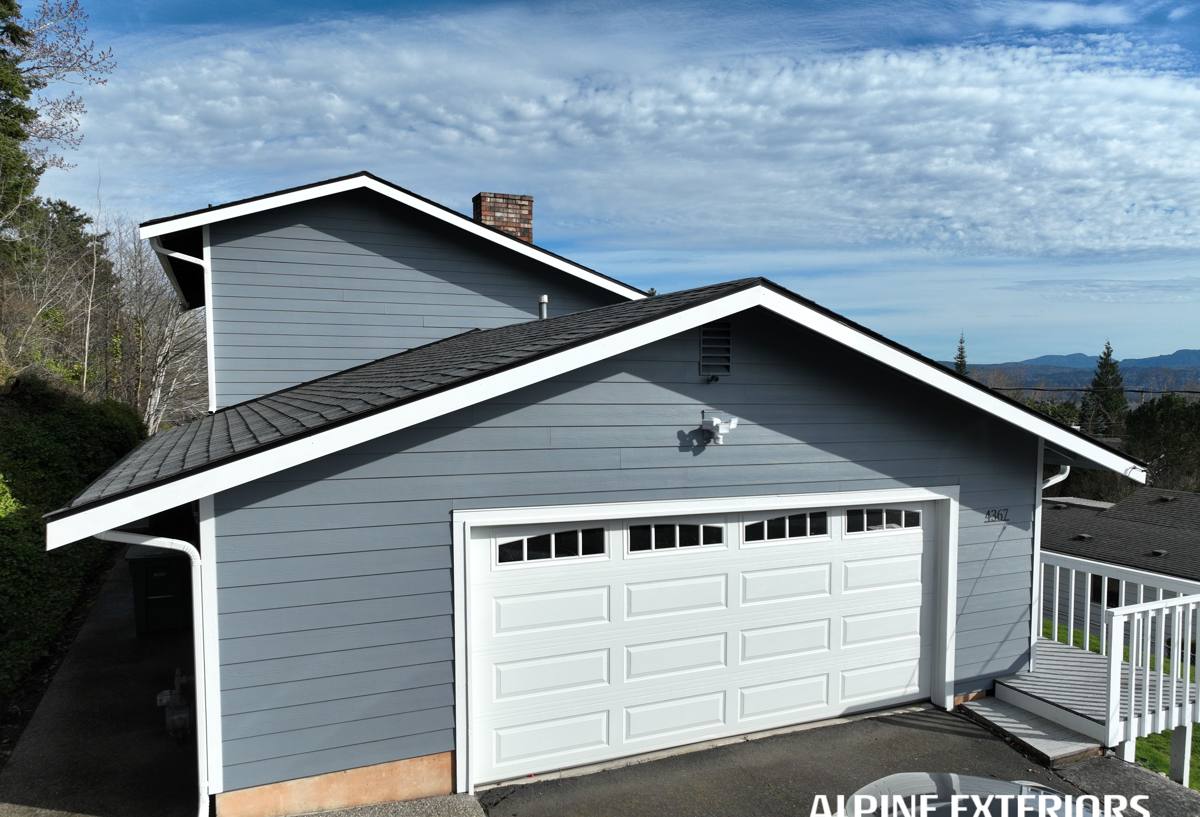
What Driving Rain and a Long Moss Season Actually Do to a Roof
It's worth being specific about the failure mechanisms, because they're what drive every decision in a correct metal roof installation.
Driving Rain
Wind-driven rain doesn't just fall straight down and run off — it gets pushed sideways and upward under laps, around penetrations, and into any gap in flashing. On a roof with poor detailing, that means water finds its way behind step flashing at chimneys and walls, under improperly lapped panels, and into fastener penetrations that weren't sealed correctly. Metal roofing handles this well when it's installed correctly, because a properly lapped and fastened metal system sheds water aggressively. But "properly installed" is doing a lot of work in that sentence — the same driving rain that a good metal roof shrugs off will punish a roof with even minor flashing mistakes.
Moss and Shade
Hamilton's tree cover is a mixed blessing. It's part of what makes the area attractive, but it also means roofs stay damp longer after rain, get less direct sun to dry out, and collect organic debris — needles, leaves, seed pods — that traps moisture against the roof surface. On asphalt shingles, that moisture retention is what lets moss get a foothold, and moss roots work into the shingle mat and lift granules, shortening the roof's life. Metal roofing doesn't give moss the same foothold. There's no granule mat for roots to grip, and the smooth, hard surface sheds debris and dries faster than shingle. That's one of the clearest, most practical reasons metal performs better than shingle roofing in a shaded, valley-humidity setting like Hamilton — it's not about looks, it's about what the surface does with moisture and organic material over time.
Salt Air and Corrosion
Across Skagit County generally, salt-laden air is a real factor in material selection, even at properties well inland from the water, because prevailing weather moves moisture and salt content through the region. For metal roofing, that means fastener and coating quality matter more here than they would in a dry inland climate. We account for this in material selection rather than treating every metal roof spec the same way regardless of exposure.
Why Metal Roofing Fits This Climate
Metal isn't automatically the right choice for every home or budget, and we'll say so plainly if it isn't the right fit for yours. But for a Hamilton property dealing with heavy shade, persistent moisture, and driving rain, metal roofing offers real, specific advantages:
- Steep water-shedding surface that doesn't retain moisture the way a shingle mat does
- No exposed granule surface for moss and algae to root into
- Long service life that reduces how often the roof is disturbed and re-flashed over the decades
- Strong performance under wind-driven rain when laps, seams, and penetrations are detailed correctly
- Lower long-term maintenance burden in a heavy tree-cover setting compared to shingle
The trade-off is upfront cost and installation sensitivity — metal roofing rewards correct installation and punishes shortcuts more visibly than shingle does. A poorly installed metal roof can leak, oil-can, or develop fastener problems faster than a mediocre shingle job would show its flaws. That's why the installer matters as much as the material.
Panel Types: What We Actually Recommend and Why
Not all metal roofing is the same system, and the differences matter for a shaded, wet property like the ones common in Hamilton.
| Panel Type | How It's Fastened | Best Fit | Trade-offs |
|---|---|---|---|
| Standing Seam | Concealed clips, no exposed fasteners through the panel field | Long-term performance in wet, shaded conditions; our default recommendation for Hamilton | Higher material and labor cost; requires an experienced crew to detail correctly |
| Exposed-Fastener Panel | Screws driven through the panel face into the substrate | Budget-conscious projects, outbuildings, shops | Fasteners and washers age and need periodic re-torquing or replacement; more failure points in a high-moisture setting |
| Stone-Coated Steel | Concealed and lapped, mimics shingle or shake profile | Homeowners who want a traditional look with metal's durability | More surface texture can hold debris longer in heavy shade than a smooth standing-seam panel |
For most Hamilton homes under tree cover, we lean toward standing seam because the concealed fastening system removes the long-term maintenance item of exposed screws working loose or their washers degrading — which matters more here than in a drier, more open setting where that same roof would age more slowly regardless of fastener type.
Coating and Gauge Considerations
Given the regional exposure to salt-influenced air across Skagit County, we pay attention to coating quality and steel gauge rather than defaulting to the thinnest, cheapest panel available. A heavier gauge panel resists oil-canning (visible waviness in the panel field) and handles foot traffic during maintenance or gutter work without denting. Coating quality affects how the finish holds up against UV, moisture cycling, and airborne salt over the life of the roof — this is a place where spending a bit more up front pays off over twenty-plus years rather than needing a repaint or panel replacement mid-life.
What a Correct Metal Roof Installation Actually Involves
The panels themselves get the attention, but most metal roof failures we're called to diagnose trace back to what's underneath or around them, not the panels. A correct job includes:
Underlayment
Metal roofing needs a high-temperature synthetic or self-adhered underlayment rated for use under metal, not a generic felt product. In a valley setting with long damp periods, the underlayment is the backup line of defense if wind-driven rain ever does work past a seam — it needs to actually do that job.
Flashing at Every Transition
Chimneys, wall intersections, valleys, skylights, and roof-to-roof transitions are where driving rain causes the most damage on any roof. Metal roofing requires flashing details specific to the panel profile being used — a flashing detail that works for one standing seam profile doesn't necessarily transfer cleanly to another. This is where installer experience shows up most directly.
Fastening and Panel Layout
Panel runs need to be laid out to minimize seams in the direction water travels, with laps oriented so driving rain doesn't get pushed into them. Fastener spacing and clip type need to account for wind exposure specific to the site, including how much the tree line does or doesn't block prevailing wind.
Ventilation
A metal roof over a poorly ventilated attic can trap moisture underneath rather than solving a moisture problem — proper ridge and intake ventilation keeps the roof deck dry from below, which matters as much as shedding water from above in a humid valley climate.
Our Process for Hamilton Projects
Every Hamilton property is a little different depending on tree cover, roof pitch, and access, so our process starts with an honest look at your specific roof rather than a standard package:
- On-site assessment — we walk the roof and attic where accessible, check current flashing and ventilation, and note tree exposure and shade patterns that affect moisture and moss risk
- Material and panel recommendation — based on your roof's exposure, budget, and how long you plan to stay in the home, not a one-size answer
- Written scope and pricing — laid out plainly, including what's covered in flashing, underlayment, and ventilation work, not just panel installation
- Installation — scheduled around Skagit County's wetter months when possible, with attention to the driveway and site access conditions common in Hamilton's more wooded lots
- Final walkthrough — reviewing flashing, seams, and any penetrations with you before we consider the job done
Because we work throughout Skagit County, we're familiar with the permitting and inspection expectations that apply in this area, and we plan debris removal and site access around the more rural, tree-lined driveways typical of Hamilton properties rather than assuming a standard suburban lot.
Keeping a Metal Roof Performing in a Shaded, Wet Setting
Metal roofing is genuinely lower-maintenance than shingle, but "lower-maintenance" doesn't mean "no maintenance," especially under heavy tree cover. A short annual checklist covers most of it:
- Clear needles, leaves, and debris from valleys and around penetrations before they compact and hold moisture
- Check gutters and downspouts are clear so water isn't backing up against roof edges or fascia
- Look for any branches or limbs close enough to drag across panels in wind
- Have flashing and sealant at penetrations checked periodically, since sealant is the one component with a shorter service life than the panels themselves
- Watch for any dark streaking or early moss growth in shaded valleys or north-facing slopes, and address it before it spreads
None of this is heavy work, but skipping it entirely for years at a time is how a well-installed metal roof still ends up with a debris-related moisture problem in a spot like Hamilton.
Why It Matters That We Already Work in Hamilton
A roofing crew that only occasionally works this part of Skagit County will treat your project like a generic install. A crew that regularly works Hamilton and the surrounding valley knows the tree-cover and drainage patterns that affect roof placement decisions, has already dealt with the access and staging challenges common to the area's driveways and lot layouts, and understands the pace of moss and debris accumulation typical to this specific microclimate rather than a coastal or dry-side assumption. That local familiarity shows up in smaller decisions throughout the job — where we route water off the roof, how we detail a valley under heavy tree cover, and what maintenance advice actually applies to your property instead of generic guidance that assumes a different climate.
Cost Factors to Expect
Every roof is priced from its own measurements, pitch, and complexity, but the factors that move a metal roofing estimate up or down are consistent:
| Factor | Effect on Cost |
|---|---|
| Panel type (standing seam vs. exposed fastener) | Standing seam typically costs more in material and labor than exposed-fastener panel |
| Roof complexity (valleys, dormers, penetrations) | More transitions mean more flashing work and labor time |
| Tear-off vs. install over existing roof | Removing old roofing adds labor and disposal cost but is often the right call for long-term performance |
| Access and site conditions | Steep pitch, limited driveway access, or heavy tree cover near the roof can add staging time |
| Coating and gauge selection | Heavier gauge and higher-grade coatings cost more upfront and typically outlast lower-grade options |
We'll walk through these factors specific to your roof during the estimate rather than quoting a flat per-square number that doesn't reflect your actual project.
If you're weighing a metal roof for a Hamilton property, we're happy to take a look and give you an honest read on what your roof actually needs — no pressure, no generic package pricing. Use the form below to request a free estimate.