 Skagit County
 Building New in Hamilton? Get the Windows Right the First Time
New construction is the one point in a home's life where windows can be installed exactly as they're supposed to be — full nailing flange, proper flashing sequence, correct sill pan, no working around existing siding or trim. Once the walls are closed up and the siding is on, fixing a window mistake means tearing into finished work. In Hamilton and the rest of Skagit County, that first installation matters even more than in a dry climate, because our weather doesn't give a poorly flashed window any room for error. Salt-laden air moving up the valley, long stretches of driving rain, and a moss season that can run most of the year all put steady pressure on every seam, sill, and fastener. Get it right during framing and rough-in, and the windows will perform for decades. Get it wrong, and you won't see the consequences until there's already rot in the wall.
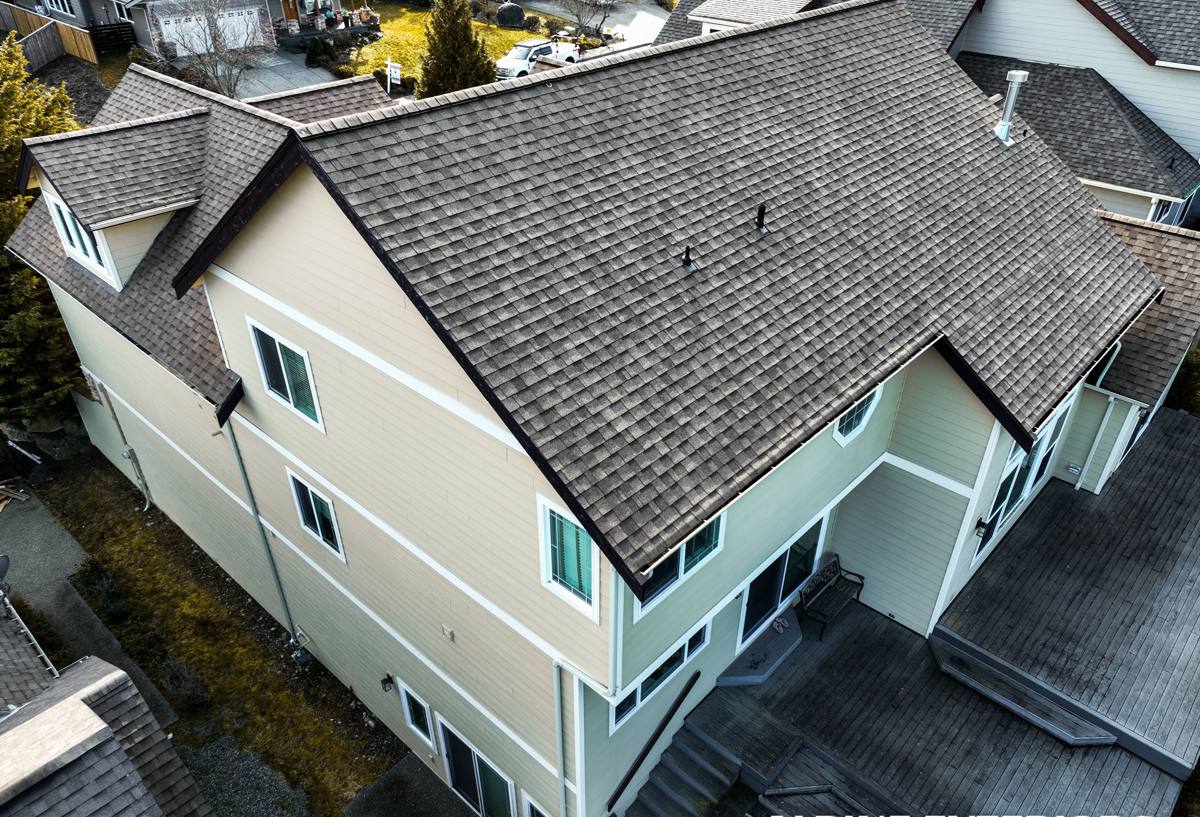
What Hamilton's Climate Actually Does to a Window Opening
Hamilton sits in the Skagit River valley, and homes here deal with a combination most drier regions never have to think about: prolonged damp weather, wind-driven rain that finds its way sideways under eaves and around corners, and moisture-loving growth — moss, algae, lichen — that thrives in the shade and humidity of a wooded valley setting. None of that is dramatic on its own. The damage comes from repetition, season after season, water finding the one flashing detail that wasn't done correctly.
For new construction, this means:
- Sill pans are not optional. Any water that gets past the window — and some always will, eventually — needs a sloped, sealed path back out, not a flat wood sill that holds moisture against the framing.
- Flashing has to shed water in the right order. Weather-resistant barrier, sill pan, window flange, side flashing, then head flashing — installed shingle-style so each layer laps over the one below it. Skip a step or reverse the order and you've built a water trap instead of a water shed.
- Fastening and shimming affect long-term performance, not just fit. A window that isn't shimmed square will rack over time, opening gaps at the corners where wind-driven rain concentrates.
- Moss and algae staining is a maintenance issue, not just cosmetic. Trim details, drip caps, and product selection all affect how much organic growth collects around a window over the years.
Why New Construction Is the Right Time to Do This Properly
On a retrofit or replacement job, we're often working within the limits of what's already there — existing siding, existing flashing, sometimes existing rot that has to be addressed before a new window even goes in. New construction removes those limits. We're flashing to bare sheathing, integrating with the weather-resistant barrier as it's installed, and coordinating window placement with the siding and trim details before anything is closed up.
That's the advantage — and it's also where the risk sits. Because there's no old window to compare against, mistakes made now get built into the house. A framing crew that isn't thinking about window flashing sequencing, or a siding crew installed weeks apart from window install with no coordination between them, is exactly how gaps happen in new homes. We treat window installation on new builds as its own trade sequence with its own checklist, not a task squeezed between framing and siding.
What a Correct Installation Looks Like, Step by Step
- Rough openings checked for square, level, and correct dimensions before any window arrives on site.
- Weather-resistant barrier installed and lapped correctly around the opening ahead of the window.
- Sloped sill pan installed with back-dam protection, sealed at the corners.
- Window set into the opening, shimmed square and plumb, fastened per manufacturer spec — not just "close enough."
- Flange sealed and flashed in the correct shingle-lap order: sides first, head last, so water always flows over the layer beneath it.
- Interior air sealing at the rough opening, separate from exterior water management — these are two different jobs that both need to happen.
- Final check of operation, drainage path, and fastener pattern before siding closes the wall.
Choosing Windows for a Skagit County New Build
Product selection matters as much as installation technique. In a valley climate with sustained moisture exposure, we steer homeowners toward window materials and finishes that hold up without a lot of upkeep, and we're honest about the trade-offs of each option rather than pushing whatever has the best margin.
| Frame Material | Performance in Skagit County Conditions | Maintenance Reality |
|---|---|---|
| Vinyl | Good moisture resistance, no paint or finish to maintain, solid energy performance | Low — occasional cleaning, no refinishing |
| Fiberglass | Excellent dimensional stability in wet/dry cycling, strong long-term seal integrity | Low — durable finish, holds paint well if color changes later |
| Wood-clad | Good appearance and performance, but the interior wood face and any exposed wood detailing need real upkeep in a damp climate | Moderate to high — finish maintenance and seam monitoring over time |
| Aluminum | Prone to condensation and thermal transfer unless thermally broken; not our first recommendation for this climate | Low physical maintenance, but higher risk of interior moisture issues |
We don't tell homeowners a given brand or material is "bad" — every option has a legitimate use case. Our job is to explain which trade-offs make sense for a specific house, budget, and level of long-term upkeep the owner actually wants to take on. For most new builds in Hamilton, vinyl or fiberglass windows with a factory finish give the best balance of performance and low maintenance against our rain and moss cycle.
Coordinating With Framers, Siding, and Trim Crews
One of the most common sources of window failure on new construction isn't the window itself — it's the handoff between trades. If the framing crew leaves an opening slightly out of square, if the WRB is installed before window sequencing is planned, or if siding goes on without confirming flashing was completed correctly, water finds that gap eventually. On a Hamilton build, "eventually" might be one wet winter.
Because we work new-construction window installs regularly in Skagit County, we coordinate directly with the general contractor's schedule — showing up at the right point in the framing sequence, confirming WRB and flashing compatibility before install, and doing a final walk with the siding crew so nobody covers up a detail that needs to be visible or corrected first. That coordination is worth more than any single product spec.
What to Ask Before Hiring Anyone for New-Construction Windows
Not every siding or window company installs to new-construction standards — some crews are set up for replacement work and treat new builds the same way, which misses opportunities the open wall gives you. Before hiring, a Hamilton homeowner or builder should ask:
- Do you install a sloped sill pan on every window, every time, regardless of window brand?
- What's your flashing sequence, and can you explain why it's in that order?
- Have you worked on new construction in Skagit County specifically, not just replacement jobs?
- How do you coordinate scheduling with the framing and siding crews so nothing gets covered up before it's checked?
- What's the manufacturer's installation instruction, and do you follow it to keep the warranty valid?
A crew that hesitates on any of those questions is telling you something. Correct new-construction window installation isn't exotic work, but it does require discipline and a crew that's done it enough times in this specific climate to know where the failure points usually show up.
The Cost of Getting It Wrong Later
The financial argument for doing this correctly the first time is simple. Fixing a window leak after siding, insulation, and interior finish are complete means removing finished materials, assessing for rot and mold, replacing damaged framing if needed, and reinstalling everything — on top of the original window cost. On new construction, that same correct installation costs nothing extra beyond doing the job to spec, because the wall is already open. There's no "cheap version" of proper flashing; it's the same labor either way, done right or done wrong.
Our Process for Hamilton New Builds
We start with a walkthrough of the rough openings against the window schedule, confirm product selection fits the home's exposure and the owner's maintenance expectations, then install on our schedule aligned with the framing and WRB sequence. Every window gets the same sill pan, flashing order, and fastening standard regardless of size or location on the house. Before siding closes the wall, we do a final check — because that's the last point where a mistake is cheap to fix.
If you're building new in Hamilton or elsewhere in Skagit County and want windows installed to hold up against the valley's rain and moss for the long run, we're happy to walk your plans and give you a straightforward, no-pressure estimate.