 Skagit County
 Why Siding in Bow Has to Work Harder Than Siding Inland
Bow sits close enough to Samish Bay and the open water of Skagit County that homes here deal with a version of the weather that inland neighborhoods simply don't. Salt-laden air moves in off the water, driving rain comes in sideways more often than most homeowners expect, and the long, gray stretch of fall through spring gives moss and algae months to take hold on anything that stays damp. None of that is unusual for this part of Washington — but it does mean siding that's rated for a generic "Pacific Northwest" climate isn't always rated for a coastal-adjacent one.
Salt air is corrosive to metal fasteners and trim, and it accelerates the breakdown of finishes that aren't built to resist it. Driving rain doesn't just wet the surface of a wall — wind-driven moisture pushes into laps, seams, and any gap in the water-resistive barrier, which is where most siding failures actually start. And moss doesn't just look bad; it holds moisture against the siding surface for weeks at a time, which is a slow but steady stress on any material that isn't dimensionally stable when wet.
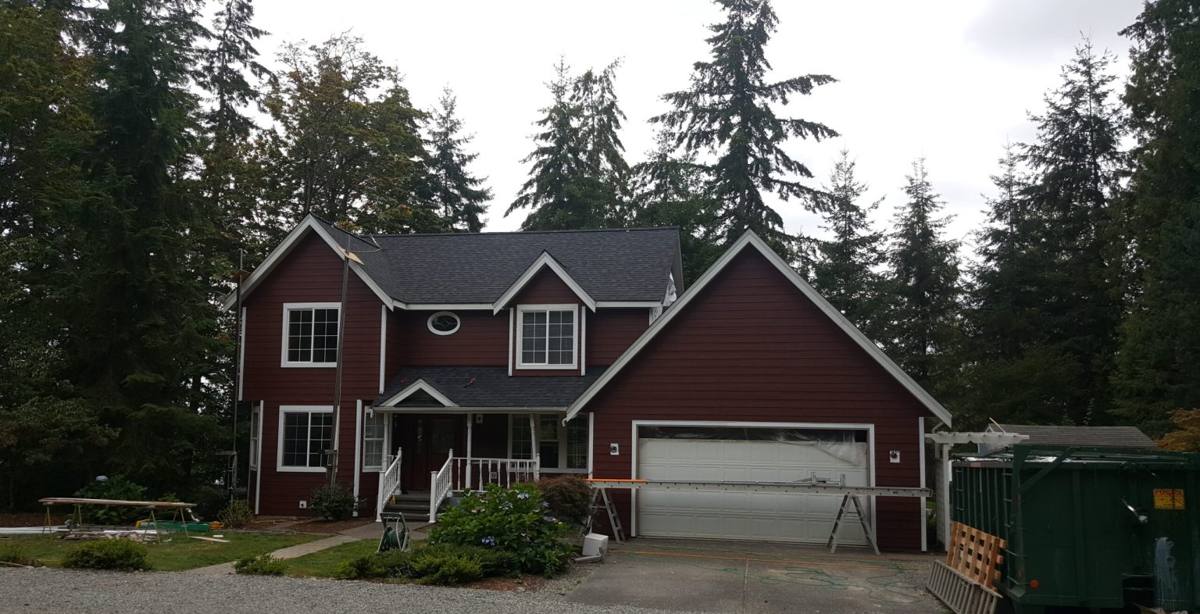
What James Hardie Siding Is Actually Built to Handle
James Hardie fiber cement is engineered specifically for regional climate zones, and homes in Skagit County fall into the HZ5 category — the zone James Hardie built for cold, wet, high-moisture conditions like ours. That matters because the product isn't a one-size-fits-all board; the formulation, moisture resistance, and freeze-thaw performance are matched to what this climate actually does to a wall over 20-plus years, not just what it looks like on install day.
A few things make Hardie's fiber cement well-suited to a place like Bow specifically:
- Non-combustible core — fiber cement doesn't burn, swell, or rot the way wood-based products can when they take on repeated moisture.
- Dimensional stability — it doesn't expand and contract with humidity the way wood and some composite products do, which matters when a wall is wet for days at a stretch.
- ColorPlus factory finish — a baked-on finish applied and cured under controlled conditions, which holds up to salt air and UV exposure far better than field-applied paint.
- Moisture resistance built into the material, not just the paint layer, so the siding itself isn't the weak point when water gets past a flashing detail.
None of that replaces good installation — it's a foundation. A great product installed poorly will still fail in this climate. That's why the install details below matter as much as the product choice itself.
Picking the Right Hardie Product Line for a Bow Home
James Hardie makes several distinct product lines, and the right one for a given home depends on its style, exposure, and how much of the wall is direct-facing weather versus sheltered. Most Bow homes end up on one of three lines:
| Product | Best For | Why It Fits This Climate |
|---|---|---|
| HardiePlank lap siding | Traditional and craftsman-style homes, the most common choice | Wide lap profile sheds driving rain well when installed with correct overlap and flashing |
| HardiePanel vertical siding | Modern facades, gable accents, shop/outbuilding walls | Fewer horizontal seams means fewer potential water-entry points on exposed walls |
| HardieShingle siding | Cottage and cape-style homes, accent gables | Individual shingle profile handles wind-driven rain without the maintenance burden of cedar shakes |
Trim, soffit, and fascia matter just as much as the field siding. Salt air is hard on cheaper trim materials, so we pair Hardie siding with Hardie trim wherever possible rather than mixing in a lower-durability product that will weather differently and age unevenly next to the fiber cement.
What a Correct Installation Actually Involves
Most siding problems we see on older homes in this area didn't start with a bad product — they started with installation shortcuts that don't show up until years later, once water has had time to work behind the wall. Getting it right in a climate like Bow's means paying attention to details that don't show on the surface:
- Proper water-resistive barrier installed and lapped correctly before any siding goes up
- Flashing at every window, door, and roofline intersection — not caulk used as a substitute for flashing
- Correct minimum clearance between the bottom of the siding and grade, decks, and roof lines, so splash-back and standing water don't sit against the material
- Manufacturer-specified fastener pattern and fastener type — corrosion-resistant fasteners matter more here than in a drier inland climate
- Proper gapping and sealant at butt joints, using sealants rated for the movement and moisture exposure Hardie specifies
- Field-cut edges primed or sealed per manufacturer instructions so the cut edge doesn't become the weak point
Every one of those steps is spelled out in James Hardie's installation guidelines, and skipping any of them can void the manufacturer warranty even if the siding itself is genuine Hardie product. It's also exactly the kind of shortcut that's invisible at the walkthrough and only shows up as a stain, a soft spot, or a moss-covered wet patch a few winters later.
Why We Only Install James Hardie
We get asked fairly often why we don't offer vinyl, LP SmartSide, or cedar as alternatives, so it's worth being straightforward about it. Vinyl siding is inexpensive and low-maintenance, but it's a poor performer in high-wind, driving-rain conditions — it can flex, crack in cold snaps, and its seams are a weaker moisture barrier over time than a properly lapped fiber cement installation. Engineered wood products like LP SmartSide use a wood-strand core that, however well-treated, is still wood at its core — in a climate with this much sustained moisture and a long moss season, wood-based cores are simply more exposed to the failure mode we're trying to avoid. Cedar and primed spruce look excellent when new, but they demand a maintenance schedule — regular refinishing, moisture monitoring, insect and rot vigilance — that most homeowners don't want to commit to indefinitely, and any gap in that schedule shows up fast near the water.
None of those products are bad in every application. They're just not what we're willing to put our name behind for homes in a climate this consistently wet and salt-exposed. James Hardie's fiber cement, installed correctly, gives homeowners here the best combination of low long-term maintenance, real moisture resistance, and a warranty structure that's actually meaningful because it's backed by a material engineered for this exact zone.
Living With Moss and Salt Air After Installation
Even the right siding still needs a little seasonal attention in this climate. Moss and algae growth on the north and shaded sides of a home is common in Skagit County, and while ColorPlus finish resists staining far better than field-painted siding, it isn't immune to organic growth sitting on the surface for months. A gentle rinse once or twice a year, keeping gutters clear so water isn't sheeting down the wall, and trimming back vegetation that keeps a wall shaded and damp all go a long way. Avoid pressure washing directly at the siding surface — it can drive water behind laps and damage caulking; a garden hose and soft brush is usually enough.
Salt air mainly shows up as an issue with fasteners, flashing, and any exposed metal trim rather than the fiber cement panels themselves, which is another reason correct fastener selection during installation matters as much as the siding choice.
Our Process for a Bow Siding Project
Because every home's exposure is a little different — a wall facing open water weathers differently than a sheltered side yard — we start with an actual walk of the property rather than a generic quote.
- On-site assessment — we look at current siding condition, moisture damage, trim, and how exposed each elevation is to wind and rain direction.
- Moisture and substrate check — before any new siding goes up, we confirm what's underneath is sound, or scope repairs where it isn't.
- Product and detail plan — we recommend the Hardie product line, profile, and color, and plan out flashing and clearance details specific to that home.
- Installation to manufacturer spec — following James Hardie's published installation requirements, not shortcuts, so the warranty stays intact.
- Final walkthrough — checking clearances, caulking, and finish before we call the job done.
Cost Factors for a Hardie Siding Project in Bow
Every home is different, but the factors that move the price up or down are consistent. Fiber cement siding projects in the Puget Sound region commonly land in a broad range depending on these variables — we'll give you an actual number after seeing the home, but this is what tends to drive it:
| Factor | Why It Matters |
|---|---|
| Amount of existing damage or rot | Substrate repair adds labor and material before new siding can go up |
| Home size and wall complexity | More corners, gables, and trim details mean more labor hours |
| Product line and profile chosen | HardieShingle and specialty trim run higher than standard lap siding |
| Access and site conditions | Difficult access or extensive removal of existing siding adds time |
| Color and finish options | Factory ColorPlus finishes vs. field-painted primed product affect both cost and long-term maintenance |
As a general reference point, fiber cement siding installation in this region is often quoted somewhere in the range of a moderate mid-market exterior remodel — well above vinyl, generally in line with or below high-maintenance wood siding once you account for the maintenance that wood requires over its lifespan. We can walk through real numbers for your specific home during an estimate.
Why It Matters That We Already Work in Skagit County
A crew that already works Bow and the surrounding Skagit County communities knows what a wall facing open water needs versus a sheltered wall on the same house — that's not something you get from a general-market crew running the same details on every job regardless of climate. We know how local permitting works, we know what flashing details actually hold up through a full wet season here, and we're not learning the difference between a coastal-adjacent installation and an inland one on your house. That local, repeated experience is a big part of why the installation, not just the product, ends up performing the way it's supposed to for the next several decades.
If you're weighing siding options for a home in Bow or elsewhere in Skagit County, we're happy to take a look and give you a straight, no-pressure estimate — no obligation, just an honest read on what your home needs and what it would take to do it right. Use the form below to get started.