 Skagit County
 James Hardie Siding in March Point: Siding Built for a Peninsula Climate
March Point sits out on its own finger of land between Fidalgo Bay and Padilla Bay, close enough to open water that homes here take on a different kind of weather exposure than houses a few miles inland in Skagit County. It's not one big storm that wears siding out on the point — it's the steady combination of salt air, driving rain, and a long moss season that grinds away at paint, seams, and trim year after year. We install James Hardie fiber cement siding on homes throughout this area, and March Point is exactly the kind of location where the difference between a correctly installed Hardie system and a lower-grade product shows up fastest.
This page focuses specifically on James Hardie siding for March Point homes — what the local climate actually demands from a siding system, what correct installation looks like out here, and how our process works from first look to finished wall. We don't install vinyl, LP SmartSide, or other fiber cement alternatives. James Hardie is the only siding system we put on homes, and a location like March Point is a good example of why.
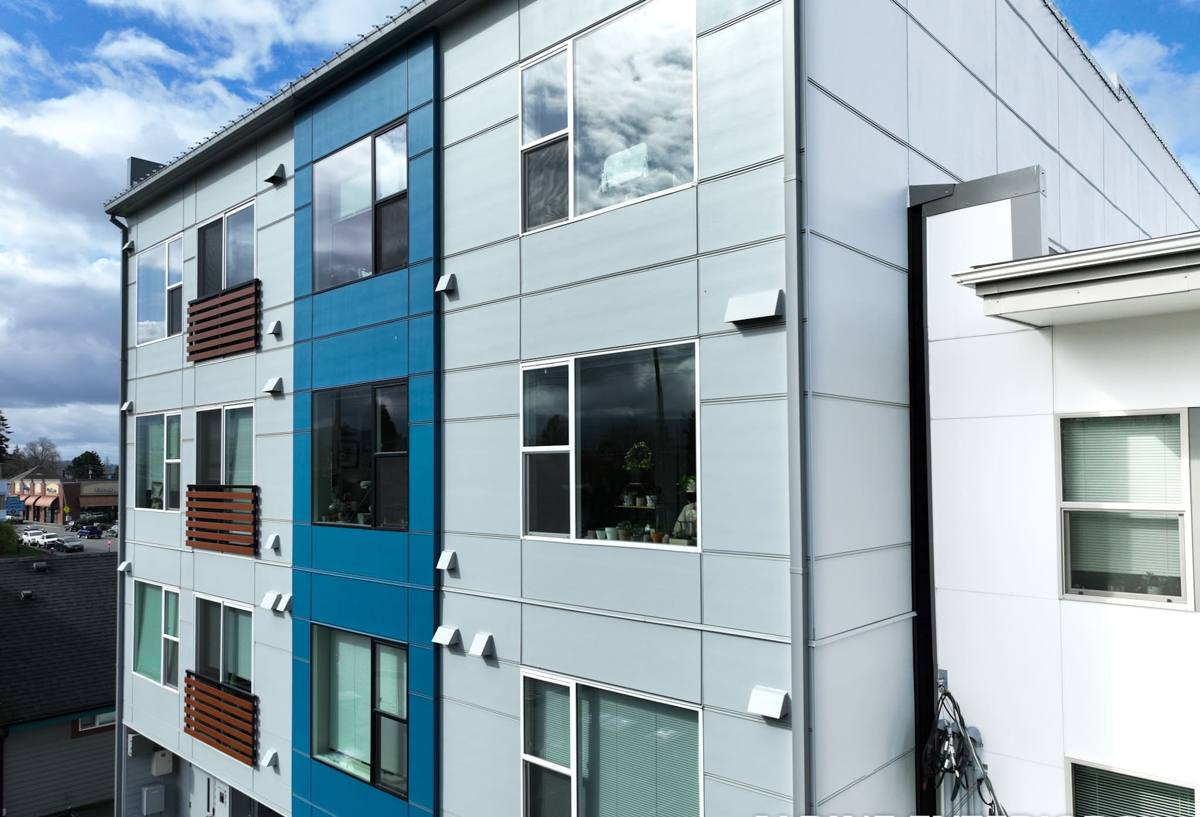
What March Point's Exposure Actually Does to Siding
Salt Air and Slow Material Breakdown
Air moving off Fidalgo Bay and Padilla Bay carries salt, and salt-laden air is harder on exterior materials than people expect. It attacks paint finishes first, dulling and chalking factory coatings years before they should show wear, and it accelerates corrosion on any exposed metal fasteners or trim hardware. Siding that isn't engineered with this kind of exposure in mind can start looking tired on a March Point home well before it would on the same house set back from the water.
Driving Rain and Wind-Driven Moisture
Being out on a point means less shelter from wind, and wind means rain doesn't just fall straight down — it drives sideways, working its way into lap seams, around trim, and behind any siding edge that isn't properly sealed or flashed. A siding system that sheds water fine in calm weather can still let moisture in during a wind-driven storm if the details underneath weren't built for that kind of pressure. That's a big part of why flashing and water-management details matter more here than in a calmer inland yard.
A Long Moss and Moisture Season
Skagit County's mild, damp climate gives moss and mildew a long window to establish themselves, especially on north-facing walls and anywhere shade keeps a section of siding from drying out between rains. On lower-quality siding, that constant moisture exposure can mean swelling, delamination, or paint failure over time. Fiber cement doesn't feed mold or absorb moisture the way wood-based products can, which matters a lot in a spot that stays damp as long as March Point does.
Why We Standardized on James Hardie for Areas Like This
We made a decision a while back to install only James Hardie fiber cement siding, and we don't treat that as a marketing line — it's a practical call based on what holds up in this climate. Hardie's fiber cement is non-combustible, doesn't rot, doesn't provide a food source for mold or insects, and is engineered specifically for the Pacific Northwest's wet, mild weather through Hardie's HZ5 product line. That combination matters more in an exposed, damp location like March Point than it does somewhere more sheltered.
ColorPlus factory finish is a big part of that decision too. It's baked on in a controlled factory environment rather than field-applied, which gives it better adhesion and better resistance to fading and chalking than a job-site paint job — a real advantage against the salt air and UV exposure a waterfront-adjacent home takes on. We back Hardie's own warranty coverage with correct installation, because a good product installed wrong still fails wrong.
Product Lines We Use on March Point Homes
| Product | Best Fit For | Why It Matters Here |
|---|---|---|
| HardiePlank lap siding | Most single-family homes, traditional and modern styles | Widest color and texture range, proven long-term performer in wet coastal climates |
| HardiePanel vertical siding | Accent walls, gables, modern or board-and-batten looks | Clean vertical water shedding, pairs well with lap siding for varied facades |
| HardieTrim boards | Corners, window and door surrounds, fascia | Matches siding durability so trim doesn't fail before the field siding does |
| HZ5 engineered formulation | All installations in this region | Formulated specifically for freeze-thaw and moisture-heavy Pacific Northwest conditions |
What a Correct James Hardie Installation Involves
Water Management Comes First
Before a single piece of siding goes up, the wall needs a correctly lapped weather-resistive barrier, properly integrated flashing at every window, door, and penetration, and a drainage plane that lets any moisture that does get behind the siding find its way back out. On a wind-exposed property like a March Point home, skipping or rushing this step is the single most common reason a siding job fails years down the road — not because the siding itself was bad, but because water got behind it and had nowhere to go.
Fastening and Clearances
James Hardie specifies exact fastener placement, spacing, and clearances from the ground, roofline, and other trim — details that exist for a reason, especially in a climate with this much moisture. Panels need proper gaps at butt joints to allow for expansion, and fasteners need to be seated correctly, not overdriven or underdriven. Get this wrong and you invite cracking, water intrusion, or premature paint failure regardless of how good the siding material itself is.
Sealing and Caulking Practices
Hardie's own installation guidelines call for sealant at specific joints and transitions, not everywhere indiscriminately. Over-caulking can trap moisture just as easily as under-caulking can let it in, so knowing which joints need a bead and which need to breathe is part of what separates a correct install from a fast one.
Finishing Details That Matter on an Exposed Property
On a property with this much wind and salt exposure, we pay particular attention to corner details, trim-to-siding transitions, and anywhere two materials meet, since these are the spots wind-driven rain finds first. Getting these details right the first time avoids callbacks and, more importantly, avoids hidden moisture problems building behind the wall where nobody sees them until there's real damage.
Our Process for a March Point Siding Project
- On-site assessment — we look at the existing siding, wall condition, and any moisture or rot already present before quoting anything
- Honest scope discussion — full replacement versus targeted repair, with the reasoning explained, not just a number
- Product and color selection — walking through Hardie's lines and ColorPlus palette based on the home's style and exposure
- Tear-off and wall prep — removing old siding, checking sheathing for hidden damage, correcting anything found before covering it up
- Weather barrier and flashing installation — the water-management layer that does the real long-term work
- Siding installation to manufacturer spec — correct fastening, clearances, and sealing throughout
- Final walkthrough — checking trim lines, caulking, and finish details with the homeowner before calling the job done
Signs a March Point Home May Need New Siding
- Visible cracking, warping, or buckling in existing siding panels
- Paint that's chalking, peeling, or fading unevenly, especially on the side facing the water
- Soft spots when pressing on siding near the base of walls or below windows
- Persistent moss, algae, or dark streaking that keeps returning after cleaning
- Gaps opening up at seams, corners, or trim joints
- Rising energy bills that might point to failing insulation behind old, damaged siding
- Visible rot or staining on trim boards around windows and doors
Why a Crew That Already Works Out Here Is Worth Something
March Point isn't a huge area, and the properties out here share a lot of the same exposure conditions — proximity to the bays, wind off the water, and the same long wet season the rest of Skagit County deals with, just with less shelter from it. A crew that's already worked this stretch knows what to check for before starting: how badly salt air has typically treated the fasteners on a house this age, where wind-driven rain tends to find its way in on a north- or west-facing wall, and which trim details tend to need extra attention out here. That's not something you get from a general contractor who's never worked past the sheltered part of the county.
It also means less guesswork during the estimate. We're not learning the area's quirks on your project — we already know what a properly installed Hardie system needs to hold up against a peninsula's worth of salt air and driving rain, and we build the quote and the installation plan around that from the start.
Cost Factors to Understand Before You Get a Quote
| Factor | What It Affects |
|---|---|
| Home size and wall complexity | More corners, gables, and dormers mean more trim and cutting labor |
| Existing wall condition | Hidden rot or sheathing damage found during tear-off adds repair scope |
| Product mix | Lap siding alone costs less than lap plus panel accents and full trim replacement |
| Color and finish choice | Standard ColorPlus colors versus custom finishes can shift material cost |
| Access and site conditions | Waterfront-adjacent lots, slopes, or tight access can affect labor time |
We don't quote a flat per-square-foot number sight unseen, because the factors above genuinely change the scope of work on a given house. What we do offer is a straightforward, on-site look and a clear explanation of what's driving the number, so there are no surprises once the crew starts.
If your March Point home's siding is showing its age — or you're planning ahead rather than waiting for a problem — we're happy to come take a look and give you a straightforward, no-pressure estimate for James Hardie siding built for what this location actually deals with.