 Skagit County
 Why La Conner's Climate Is Hard on Windows
La Conner sits close enough to Skagit Bay and the Swinomish Channel that salt-laden air is a daily fact of life, not an occasional nuisance. Add in the driving rain that comes off Puget Sound through fall and winter, plus a long stretch of the year when moisture just sits in the air and never fully dries out, and you have a climate that finds every weak point in a window system. Salt air accelerates corrosion on hardware and fasteners. Wind-driven rain tests seals and flashing in ways a calm-weather storm never will. And the long moss season that blankets roofs and siding around here is really a symptom of the same problem: persistent dampness that window frames, sills, and trim have to shed rather than absorb.
Windows that are built and installed for a dry inland climate simply don't hold up the same way here. That's the case for treating "custom windows" in La Conner as a genuinely different job than the same words would mean somewhere in eastern Washington.
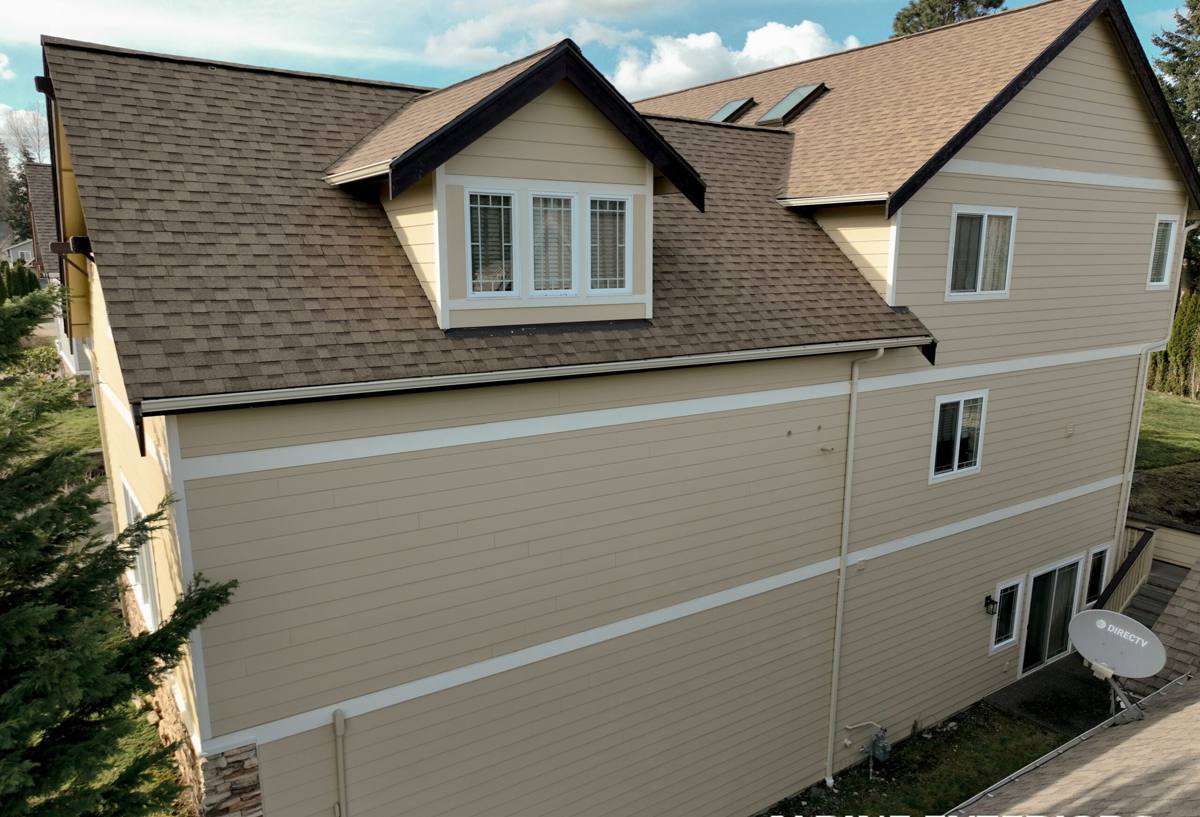
What "Custom" Actually Means for a La Conner Home
Custom doesn't just mean a non-standard size, though that matters — a lot of homes in this area, especially older ones near the waterfront or in the historic district, have window openings that don't match modern standard dimensions. Custom also means matching the right frame material, glazing package, and installation detail to the specific exposure of that wall.
Exposure-Specific Decisions
A window on the side of a house that takes the brunt of the prevailing wind and rain needs different flashing and sealant strategy than one tucked under an eave on a protected side. We look at each elevation separately rather than treating a house as having one uniform "window need."
Matching the Home's Age and Style
Many La Conner homes have real architectural character, and a custom window job should respect that — matching sightlines, grille patterns, and trim profiles so the replacement doesn't look like a generic swap. That's part of what "custom" buys you over an off-the-shelf replacement.
Frame Material Comparison for a Marine Climate
Material choice matters more here than in drier parts of the state. Salt air and constant moisture change how different frame materials age.
| Material | Behavior in Salt Air / Rain | Maintenance | Where It Fits Best |
|---|---|---|---|
| Vinyl | Doesn't corrode; can become brittle over many years of UV and moisture cycling | Low — occasional cleaning | Most standard replacements, good value |
| Fiberglass | Excellent dimensional stability, resists moisture-driven expansion and contraction | Low | High-exposure walls, larger openings |
| Aluminum-clad wood | Attractive, but cladding seams and any exposed fasteners are vulnerable to salt corrosion over time | Moderate to high | Historic-style homes where appearance is the priority, with careful detailing |
| Bare wood | Handsome but requires diligent upkeep to resist the constant dampness and moss-friendly conditions | High | Only where owners are committed to regular refinishing |
We're honest with clients that bare wood and lower-grade aluminum-clad options carry a real maintenance burden in this specific climate — not because the material is bad, but because salt air and sustained moisture punish any material that depends on an intact painted or sealed surface. Our standard recommendation for most La Conner homes is a quality vinyl or fiberglass frame, reserving wood-look options for cases where the homeowner understands and wants the upkeep.
The Installation Details That Actually Determine Lifespan
The window unit itself is only part of the story. In a climate like this, installation quality is often the difference between a window that lasts and one that fails early.
Flashing and Water Management
Proper flashing directs any water that gets past the exterior cladding back out, rather than letting it sit against the framing. Given how much driving rain La Conner sees, we treat flashing detail — not just caulk — as the primary defense against water intrusion.
Sealant Selection
Not all exterior sealants tolerate salt air and constant UV/moisture cycling equally well. We use sealants rated for the kind of sustained coastal exposure this area gets, and we don't rely on sealant alone to do a flashing detail's job.
Hardware and Fasteners
Standard fasteners can corrode faster near salt water. We use corrosion-resistant hardware on exterior-facing components so that locks, hinges, and cranks keep working smoothly for years instead of seizing up or staining the frame.
Signs a La Conner Home's Windows Are Losing the Battle
Because moisture problems build slowly, a lot of homeowners don't notice window failure until it's already caused secondary damage. Watch for:
- Fogging or condensation between panes of double- or triple-glazed units (a sign the seal has failed)
- Soft or discolored trim or sill wood around the window frame
- Visible moss or dark streaking on the exterior casing, especially on north- or shade-facing walls
- Drafts or noticeable temperature difference near the window even when it's fully closed and latched
- Hardware — locks, cranks, or slides — that has become stiff, sticky, or corroded
- Paint or finish that's peeling or bubbling on the interior sill, which often points to moisture getting in from outside
Any one of these on its own isn't an emergency, but a window showing two or more of these signs is usually past the point where sealing or minor repair will fix it for good.
Our Process, Start to Finish
1. On-Site Assessment
We look at each window opening individually — exposure, current condition, framing, and how water has historically behaved around that opening — rather than quoting a blanket price for "the whole house."
2. Material and Style Recommendation
Based on that assessment, we recommend frame material and glazing suited to that specific wall's exposure, and talk through style options that fit the home.
3. Precise Measurement and Ordering
Custom sizing means getting exact measurements before ordering, accounting for the existing rough opening rather than forcing a standard size to fit.
4. Removal and Inspection of the Opening
When we remove the old window, we check the framing underneath for any hidden moisture damage — a common finding in older homes in this climate — and address it before the new window goes in.
5. Installation with Proper Flashing and Sealing
This is where the climate-specific details described above get applied: correct flashing sequence, appropriate sealant, corrosion-resistant fasteners.
6. Final Check
We test operation, check for air and water tightness, and walk the finished work with the homeowner before calling the job done.
Living With Custom Windows in a Salt Air, Moss-Prone Climate
Even a well-installed, quality window benefits from some basic upkeep in this environment.
Rinse Salt Buildup Periodically
A simple rinse with fresh water a couple times a year, especially on windows facing open water or prevailing wind, keeps salt deposits from slowly working into hardware and finishes.
Keep Trim and Sills Clear of Moss and Debris
Moss and organic debris hold moisture against the frame and trim. Keeping sills and surrounding casing brushed clear during the wetter months reduces the chance of trapped dampness.
Check Weep Holes and Drainage Paths
Most modern window systems have small drainage channels or weep holes designed to let water escape. If these get clogged with debris or repainted shut, water can back up inside the frame — worth a quick visual check once a year.
What Drives the Cost
Pricing for custom window projects in La Conner varies based on a handful of factors, and we'd rather explain those than quote a number that doesn't hold up once we've actually seen the openings.
| Factor | Why It Matters |
|---|---|
| Frame material | Vinyl, fiberglass, and clad-wood options carry different material and labor costs |
| Opening size and shape | Non-standard or larger openings require custom fabrication |
| Exposure and flashing complexity | High-exposure walls may need more extensive flashing and water management work |
| Condition of existing framing | Hidden moisture damage found during removal can add repair scope |
| Number of windows and access | Multiple openings on one visit typically cost less per window than single, hard-to-access jobs |
Generally, homeowners in this area should expect a range that reflects a genuinely custom, well-flashed installation rather than a bargain big-box swap — but the only honest way to give a number is to look at the specific openings in person.
Why Local Experience in La Conner Matters
A crew that already works in La Conner and the rest of Skagit County has seen how this specific combination of salt air, wind-driven rain, and prolonged dampness plays out on real houses over years, not just at the moment of installation. That translates into practical judgment calls — which flashing detail to prioritize on a given wall, which frame material actually holds up here versus on paper, and what a normal amount of weathering looks like versus an early warning sign. It also means being available and familiar if a question comes up after the job is done, rather than dealing with a crew that installed windows here once and moved on.
If your La Conner home has windows showing their age, or you're planning a renovation and want window openings that are sized and detailed correctly the first time, we're happy to come take a look. Reach out for a free, no-pressure estimate — use the form below to get started.