 Skagit County
 Building New in La Conner? The Windows Have to Match the Site
La Conner sits close enough to Skagit Bay and the surrounding tidal flats that "coastal-adjacent" isn't a marketing phrase here — it's a design constraint. If you're framing a new home or a major addition in or near La Conner, the window package you choose during the build phase will decide how much maintenance you're doing five, ten, and twenty years from now. New construction gives you one real advantage over a retrofit: you get to flash the rough openings correctly from the start, before siding, trim, and interior finishes cover up the details that actually keep water out. That's the opportunity — and the risk, if it's rushed.
We install new-construction windows across Skagit County, and La Conner jobs get treated differently than a job inland. Salt-laden air off the water accelerates corrosion on hardware and fasteners that would otherwise last decades. Driving rain off Puget Sound and Skagit Bay stresses flashing details and sill pans in ways a sheltered lot never will. And the long, wet moss season here keeps every exterior surface damp for months at a time, which punishes any window assembly that traps moisture instead of shedding it.
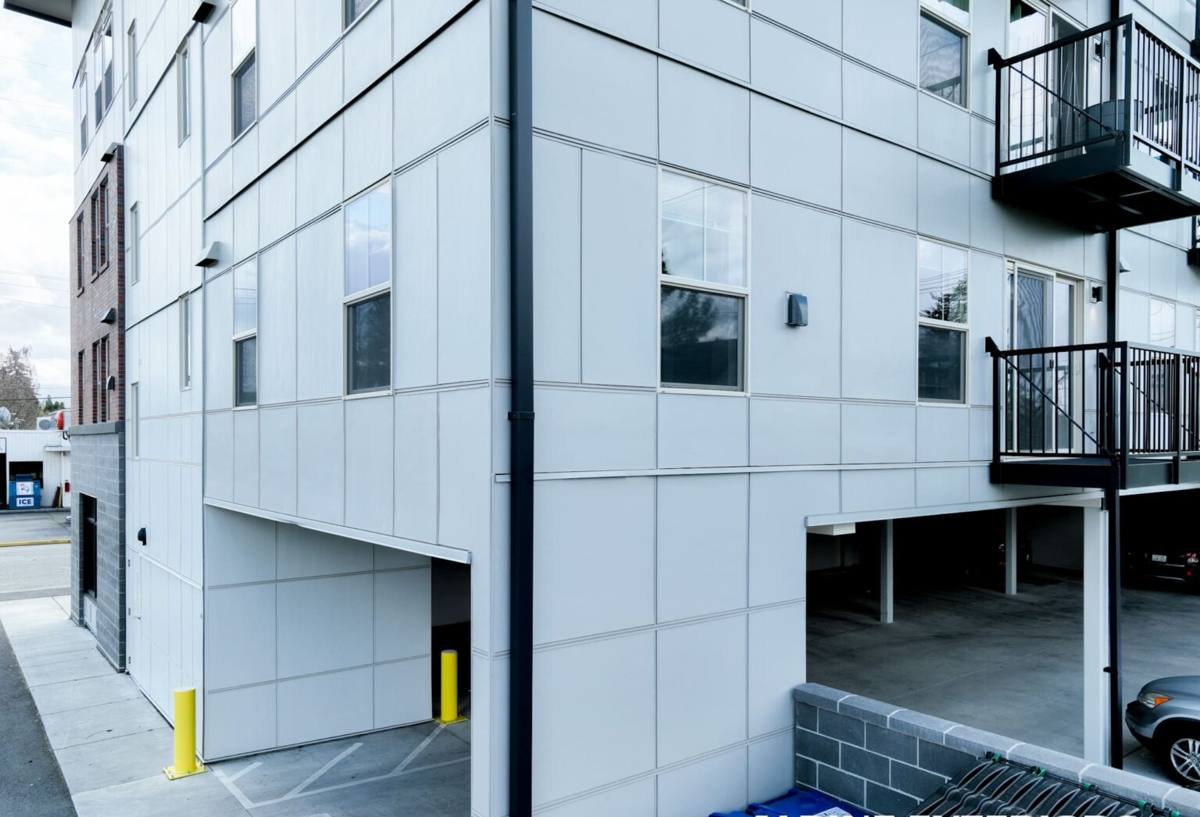
What Skagit County's Climate Actually Demands From a Window
Salt Air and Hardware Life
Homes near La Conner's waterways see more airborne salt than a typical inland Skagit County lot. Left unaddressed, that salt attacks unprotected fasteners, cheap cladding, and low-grade hardware over time. We favor window lines with corrosion-resistant hardware and cladding systems rated for coastal exposure, and we pay attention to the fasteners and flashing tape used around the frame — a window is only as good as the metal and adhesives holding it in place.
Driving Rain and Wind-Driven Water
Storms coming off the water don't just fall straight down — wind pushes rain sideways into wall assemblies. That means the water-resistive barrier, sill pan, and flashing sequence around every rough opening matter as much as the window unit itself. A window with a great performance rating installed with a sloppy flashing job will still leak. We treat every new-construction opening as a system: sill pan first, back dam, correct shingle-lap order for the flashing tape, then the window.
Moss Season and Sustained Moisture
Skagit County's moss season runs long — months of low sun, high humidity, and surfaces that never fully dry out. That sustained dampness is hard on any assembly that relies on caulk alone to stay sealed, and it's exactly the condition that turns a small flashing gap into a slow, hidden rot problem behind the trim. New construction lets us build in mechanical water management (sill pans, back dams, proper drainage planes) instead of leaning on sealant as the only line of defense.
What a Correct New-Construction Window Install Involves
"New-construction window" refers to a window with a nailing fin, installed before siding goes on, as opposed to a retrofit/insert window installed into an existing frame. Doing it right on a new build means:
- Rough openings sized and squared to the window manufacturer's specifications, not "close enough"
- A sloped sill pan under every opening, so any water that gets past the window has somewhere to go besides your framing
- Water-resistive barrier integrated with the window flashing in the correct shingle-lap sequence — upper layers overlapping lower ones, always
- Nailing fins fastened per manufacturer spec, not just "enough nails to hold it"
- Backer rod and appropriate sealant at the interior and exterior, sized for the gap — not overfilled or underfilled
- Shimming that supports the frame without racking it out of square
- A final water test or visual verification pass before siding covers the opening
That last step matters more in La Conner than most places. Once siding goes up, a flashing mistake is invisible until it shows up as a stain, a soft spot, or a mold smell years later. New construction is the one window in the project's life where you can actually catch a problem before it's buried.
Choosing a Window Line for a La Conner Build
We don't push one brand as the only acceptable option — the right choice depends on your budget, the home's design, and how exposed the lot is to wind and salt air. What we do insist on is being honest about trade-offs instead of upselling on features you don't need.
| Frame Material | Coastal/Salt-Air Fit | Maintenance | Typical Use Case |
|---|---|---|---|
| Vinyl | Good — inert to salt corrosion, but check hardware quality | Low | Budget-conscious builds, rental or spec homes |
| Fiberglass | Excellent — dimensionally stable, resists warping in wet/dry cycles | Low | Owner-occupied homes wanting long service life |
| Aluminum-clad wood | Good exterior protection, but seams and hardware need attention | Moderate | Architectural styles wanting a wood interior look |
| Bare wood | Poor without diligent upkeep — moss season is unforgiving | High | Historic-style projects where the owner accepts the upkeep |
We steer most La Conner clients away from bare wood exteriors specifically because of the moss season and salt exposure — not because wood windows are a bad product, but because the maintenance schedule needed to keep them sealed in this climate is a real, ongoing cost that a lot of owners underestimate at the time of the build. If you want a wood look, clad options give you that appearance with far less upkeep.
Our Process for New-Construction Window Jobs
1. Plan Review and Site Assessment
We look at the build plans, the lot's exposure to wind and water, and the siding/cladding plan before recommending a window line. A window package for a sheltered inland lot near Sedro-Woolley doesn't need the same spec as an open, waterfront-facing lot near La Conner.
2. Rough Opening Coordination
We work with your framer or general contractor to confirm rough opening sizes before windows are ordered — a mismatch here causes delays that ripple through the whole schedule.
3. Flashing and Installation
Sill pans, WRB integration, and flashing tape go in before the window, following the shingle-lap sequence. The window goes in square, shimmed, and fastened to spec.
4. Inspection Before Siding
We check every opening before it gets covered — this is the point where a mistake is cheap to fix and after siding, it's not.
5. Interior and Exterior Finish
Sealant, trim, and interior finish work happen last, once we've confirmed the water management underneath is correct.
Why the Installer Matters as Much as the Window
Two identical windows, installed by two different crews, can have completely different lifespans. The window unit itself is maybe half the equation — the flashing, sequencing, and fastening decisions made during install are the other half, and they're invisible once the house is finished. A crew that's done new-construction work throughout Skagit County knows which details get skipped when a job is rushed, and knows to check for them: back dams that got left out, flashing tape run in the wrong order, sealant used to paper over a gap instead of proper backer rod.
Hiring locally also means the crew has already dealt with La Conner's specific conditions — the salt air, the wind exposure off the water, the months-long stretch where nothing dries out fast. That's not something you can fully spec on paper; it's something a crew learns by doing the work here repeatedly.
Budgeting for New-Construction Windows
Costs vary widely based on window count, size, frame material, and glass package (double vs. triple pane, low-E coatings, etc.), so we won't quote a number here that wouldn't hold up for your specific build. What we can tell you is what drives the cost up or down:
| Cost Factor | Impact |
|---|---|
| Frame material (vinyl vs. fiberglass vs. clad wood) | Largest single driver of unit cost |
| Window size and count | Larger openings and more units scale cost directly |
| Glass package (double vs. triple pane, coatings) | Moderate impact; affects energy performance and comfort |
| Site exposure and access | Waterfront or hard-to-access lots can add install complexity |
| Custom shapes or sizes | Non-standard openings cost more than stock sizes |
The best way to get a real number is a site-specific estimate — plans and lot exposure change the math enough that generic pricing isn't useful to you.
A Few Things Worth Checking Before You Commit
- Does the installer flash every opening with a sloped sill pan, or rely mainly on sealant?
- Are they familiar with coastal-adjacent conditions, or mainly doing inland/sheltered builds?
- Will they coordinate rough opening sizing directly with your framer or GC?
- Do they inspect flashing before siding covers it, and can they show you that step in their process?
- What's the warranty structure — on the window unit itself, and separately on the installation labor?
If you're planning a new build or major addition in La Conner and want a window package that's actually matched to the site's exposure, we're happy to walk the plans with you and put together a straightforward, no-pressure estimate.