 Skagit County
 Lyman sits along the Skagit River corridor, where the valley's fog, driving rain, and heavy tree cover create some of the toughest roofing conditions in Skagit County. Asphalt shingle roofs here don't fail because the material is weak — they fail because moisture, moss, and shade get into the details of the installation that nobody checks after the crew leaves. If you own a home in or around Lyman, understanding what your roof is actually up against is the first step to getting a job that holds up.
Why Lyman's Climate Is Hard on Asphalt Shingle Roofs
Lyman's position in the Skagit Valley means homes here deal with more standing moisture than roofs closer to open water or higher ground. Surrounding tree cover keeps roof surfaces shaded and damp longer after a storm, which is exactly the environment moss and algae need to take hold. Add in the salt-laden air that moves up the valley from Puget Sound and the near-constant drizzle typical of a Skagit County winter, and you've got a roof that's fighting moisture on three fronts at once: driving rain forcing water sideways under poorly lapped shingles, moss roots working into the granule surface, and salt air slowly degrading metal flashings and fasteners.
None of this means asphalt shingles are a bad choice for Lyman — they're still one of the most practical, cost-effective roofing systems available for this region. It means the installation has to account for these conditions from the start, not treat them as an afterthought.
What Moss Season Actually Does to a Roof
Moss doesn't just look bad. As it establishes on a shaded slope, it holds water against the shingle surface long after the rest of the roof has dried out. Over a season or two, that trapped moisture works granules loose, softens the asphalt mat underneath, and creates a foothold for the moss roots to lift shingle edges. Once edges lift, wind-driven rain — common in this valley — gets underneath the shingle course instead of running over it. That's when small moss problems turn into deck rot and interior leaks.
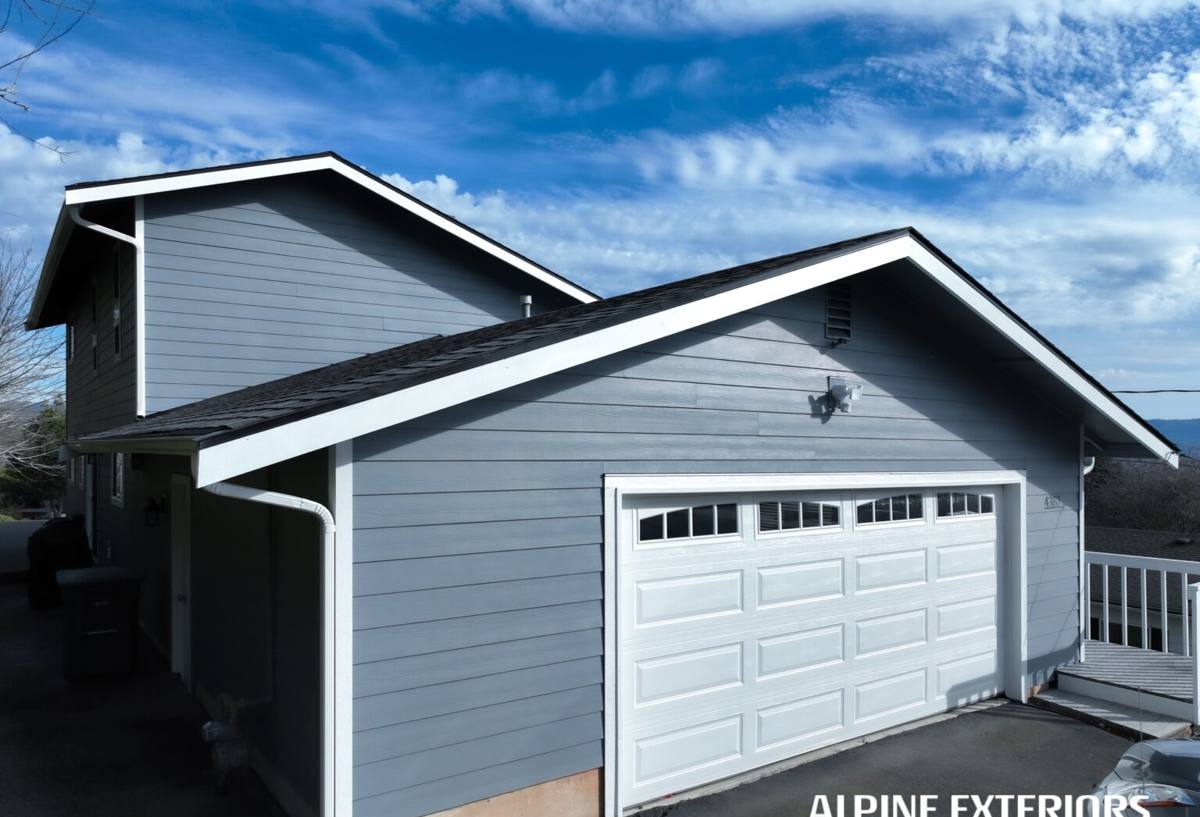
What a Correct Asphalt Shingle Job Looks Like Here
A roof that's going to hold up in Lyman needs more than shingles nailed to a deck. The details that matter most in this climate are the ones that control water and moss — not the ones that are easiest to see from the street.
- Ice-and-water shield or a comparable self-adhering membrane at eaves, valleys, and any low-slope transitions, since these are where driving rain backs up first
- Proper shingle nailing pattern and placement — high-wind and high-moisture regions punish shortcuts on fastener count and location
- Correct starter strip and drip edge at eaves and rakes so wind-driven rain can't get up and under the first course
- Step flashing and counter-flashing at every wall intersection and chimney, not just caulk over an old flashing
- Ventilation that matches intake to exhaust, so trapped attic moisture doesn't rot the deck from underneath
- Valley construction (open metal or woven) matched to the roof's actual water volume, not just whatever's fastest to install
- Zinc or copper strips near the ridge on shaded, moss-prone slopes, where the homeowner wants ongoing moss suppression without chemical treatments
Underlayment Matters More Than the Shingle Brand
Homeowners often focus on shingle color and warranty length, but in a climate like Lyman's, the underlayment system underneath the shingles does more day-to-day work. A synthetic underlayment with proper lap and fastening, combined with self-adhering membrane in the vulnerable spots, is what actually keeps water out when a shingle tab lifts in a windstorm or a gap opens up after years of freeze-thaw cycling. We treat underlayment as a primary defense layer, not a formality.
Our Process for Lyman Roofing Projects
Every asphalt shingle project we take on in the Lyman area follows the same sequence, because skipping steps is where problems get built into a roof that won't show up for a year or two.
- On-site inspection — We look at the existing roof (or, for new construction, the framing and ventilation plan), check for deck damage, moss growth patterns, and shade exposure specific to the property's tree line and orientation.
- Honest scope and estimate — We tell you plainly whether you need a repair, a partial re-roof, or a full tear-off, and why. We don't upsell a full replacement when a targeted repair will hold.
- Deck assessment during tear-off — Once the old roofing is off, we check the deck for soft spots or rot, especially near valleys and eaves where moisture damage concentrates. Any repairs are called out before we move forward, not billed as a surprise afterward.
- Underlayment and flashing installation — This is where the moisture-management details above get built in, matched to the specific slopes and exposures of your roof.
- Shingle installation — Proper nailing pattern, coursing, and ventilation tie-in, done to manufacturer specification so warranty coverage stays intact.
- Final walkthrough — We review the completed work with you, including any moss-prevention measures installed, so you know what to expect and watch for going forward.
Choosing an Asphalt Shingle System for a Lyman Home
Not every shingle line is built the same, and the differences matter more in a wet, shaded climate than they do in drier parts of the state. The table below outlines the general tiers of asphalt shingle products and how they tend to perform under Skagit County conditions.
| Shingle Type | Typical Lifespan | Moss/Algae Resistance | Wind Rating | Best Fit |
|---|---|---|---|---|
| 3-Tab (economy) | 15–20 years | Low unless treated | Lower | Budget-driven projects, low-slope exposure limited |
| Architectural / Dimensional | 25–30 years | Moderate, better with algae-resistant granules | Higher | Most Lyman homes — the standard we recommend for full re-roofs |
| Algae-Resistant (AR) upgrade | Same as base line + added protection | High — copper-infused granules resist streaking | Same as base line | Heavily shaded lots, north-facing slopes, tree-line properties |
| Premium/Designer | 30+ years | High with AR granules | Highest | Homeowners prioritizing longevity and appearance |
For most properties in the Lyman area, we steer homeowners toward architectural shingles with algae-resistant granules as the practical middle ground — the upgrade cost is modest compared to the labor of a full re-roof, and it directly addresses the moss and streaking problems this climate causes.
Repair Versus Replacement: How We Decide
Not every roofing call in Lyman ends in a full replacement. We look at three things to make that call honestly: the age of the existing roof relative to its expected lifespan, the extent of deck damage (if any) found during inspection, and whether the damage is isolated or spread across multiple slopes. A roof with a handful of wind-lifted shingles and no deck rot is a repair. A roof with widespread granule loss, multiple leak points, and soft decking in the valleys is past the point where patching makes financial sense. We'll tell you which situation you're in and explain the reasoning, not just quote a number.
Maintenance That Actually Extends Roof Life in Lyman
Because moss season here runs long, a roof that's installed correctly still benefits from periodic attention. This isn't about generating repeat business — it's about the reality of a shaded, damp valley environment.
- Keep overhanging branches trimmed back to reduce shade and debris buildup on the roof surface
- Clear gutters and valleys of needles and leaf litter before the fall rains set in, so water has a clear path off the roof
- Address small moss patches early with a gentle, roof-safe treatment rather than letting them spread across a slope
- Have flashing and sealant checked every few years, since salt air and UV exposure break these down faster than the shingles themselves
- Watch for granules collecting in gutters, which signal a shingle surface that's wearing down
Why a Crew That Already Works in Lyman Makes a Difference
Roofing crews who haven't worked this specific stretch of Skagit County often underestimate how much shade, moisture, and salt air actually affect a roof's detailing needs. A crew that's already worked homes in and around Lyman knows which slopes tend to hold moss, where valley water volume gets heavier than it looks from the ground, and how local wind patterns off the valley affect shingle exposure at eaves and rakes. That local pattern recognition shows up in the small decisions — where to add extra underlayment, which slopes need algae-resistant shingles, how tight the flashing details need to be — that a generic installation checklist won't catch.
If you're dealing with an aging roof, active leaks, or just want an honest read on where your asphalt shingle roof stands, we're happy to take a look. Reach out for a free, no-pressure estimate — we'll walk the roof, tell you what we see, and lay out your options plainly using the form below.