 Skagit County
 New Roof Installation for Lyman Homes
Lyman sits in a stretch of Skagit County where homes deal with a lot of wet weather over the course of a year — steady rain through the fall and winter, damp air off the river valley, and shaded rooflines that stay moist long after a storm has passed. A roof out here isn't just covering the house, it's fighting moisture almost year-round. When it's time for a new roof, the materials and installation details matter more than they would in a drier climate, and getting them right the first time saves homeowners a lot of grief down the road.
This page covers what a correct new roof installation looks like for a home in Lyman specifically — not a generic overview, but the details that actually matter given the climate and the kind of housing stock common in this part of Skagit County.
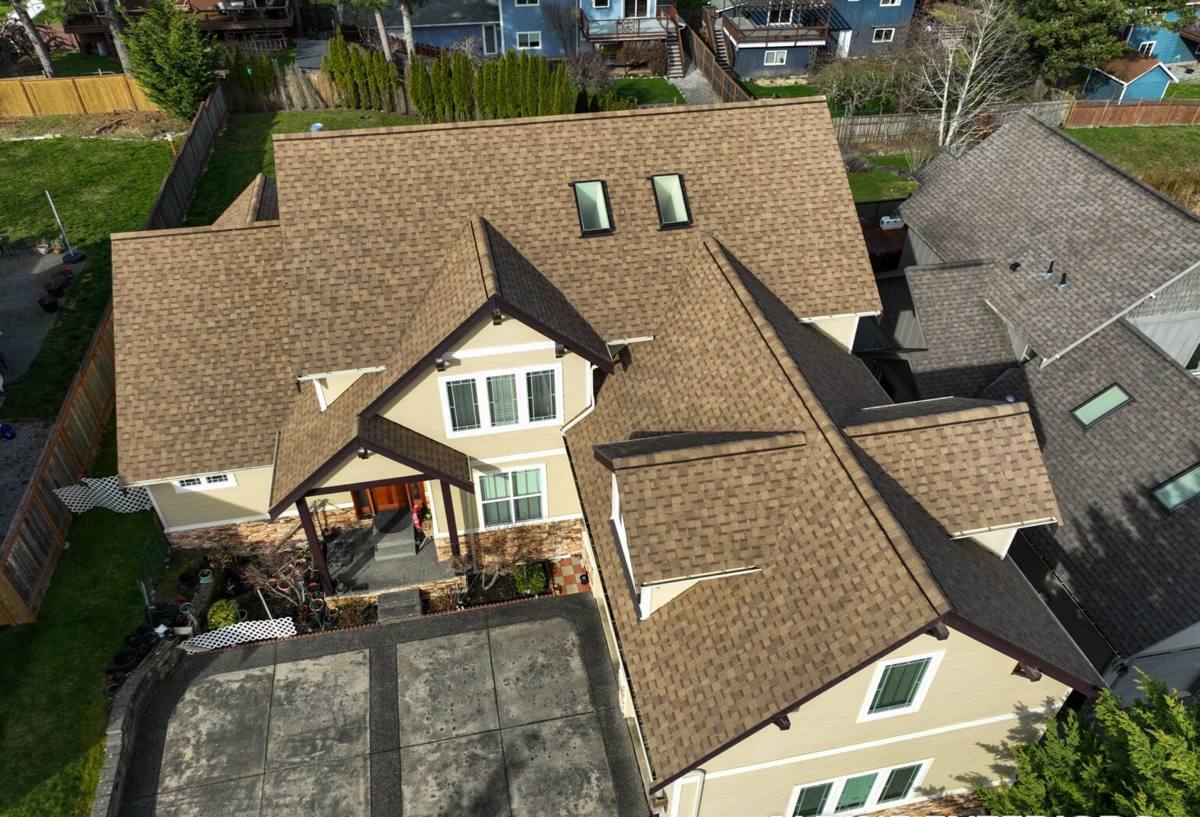
What Skagit County's Climate Demands From a New Roof
Between the driving rain, the humid air, and long stretches of overcast, low-sun days, this region is about as hard on a roof as it gets in Washington. A few things stand out:
- Moss and moisture retention: Shaded roof sections — north-facing slopes, areas under trees — stay damp for extended periods, which is exactly what moss needs to take hold. Once moss establishes, it holds water against the roofing material and works its way under shingles and shakes.
- Driving rain: Wind-driven rain doesn't just fall straight down — it gets pushed sideways and upward under eaves, flashing, and ridge caps. Underlayment and flashing details have to account for water moving in directions a fair-weather installation wouldn't consider.
- Salt-laden air: Coastal and marine-influenced air moving through the county carries moisture and salt content that accelerates corrosion on unprotected metal fasteners, flashing, and vents.
- Long wet seasons: Roofs here spend more months of the year saturated than dry, which shortens the effective lifespan of materials that aren't rated or installed for sustained moisture exposure.
None of this means a roof in Lyman needs to be exotic or overbuilt — it means the fundamentals (ventilation, underlayment, flashing, fastening) have to be done correctly and without shortcuts, because this climate finds every weak point eventually.
Signs a Lyman Home Needs a New Roof, Not a Repair
Not every roof problem calls for full replacement. But there are signs that patching is just delaying the inevitable:
- Granule loss heavy enough that you're finding shingle grit in gutters and downspouts regularly
- Multiple layers of moss or algae staining across large sections, not just isolated patches
- Soft or spongy decking felt underfoot when walking the roof, indicating water has reached the sheathing
- Daylight visible through the roof deck from inside the attic
- Shingles curling, cracking, or losing their seal in multiple areas rather than one or two spots
- A roof at or past its expected service life combined with recurring leaks in different locations each season
If the damage is localized and the rest of the roofing system is sound, a repair may genuinely be the right call — we'll tell you that if it's true. A full replacement makes sense when the underlying materials (decking, underlayment, flashing) are compromised broadly enough that repairs would just be chasing new leaks every wet season.
Choosing the Right Roofing Material for This Climate
There's no single "best" roofing material for every home — it depends on the roof's pitch, sun exposure, budget, and how much long-term maintenance the homeowner wants to take on. Here's how the common options compare for a Skagit County home like the ones around Lyman:
| Material | Moisture & Moss Resistance | Typical Lifespan Here | Maintenance Load |
|---|---|---|---|
| Architectural asphalt shingles | Good with proper ventilation; algae-resistant granules help on shaded slopes | 20-30 years | Low to moderate — periodic moss/debris removal |
| Metal roofing (standing seam) | Excellent — sheds water fast, doesn't hold moisture, resists moss better than most materials | 40-60 years | Low — occasional fastener and sealant checks |
| Cedar shake | Poor to fair without diligent upkeep — absorbs moisture, prone to moss and rot in shaded areas | 15-25 years with regular treatment | High — regular cleaning, treatment, and inspection required |
| Composite/synthetic shingle | Good — engineered to resist moisture absorption | 30-50 years | Low to moderate |
We install and recommend based on the specific roof, not a one-size-fits-all pitch. For heavily shaded lots common in the tree-lined areas around Lyman, metal or a quality architectural shingle with algae-resistant granules tends to hold up with the least ongoing headache. Cedar shake can still be the right aesthetic choice for some homeowners — we just make sure they understand the maintenance commitment going in, because in this climate an untreated cedar roof will show moss and moisture wear faster than most people expect.
What a Correct Installation Actually Involves
Tear-Off and Deck Inspection
We remove the old roofing down to the deck rather than layering over it. This lets us actually see the sheathing — soft spots, rot, or water staining don't show up until the old material is off. Any damaged decking gets replaced before anything new goes down; installing new roofing over a compromised deck just hides the problem.
Underlayment Built for Wet Climates
Given how much of the year this region spends wet, we use underlayment rated for sustained moisture exposure, not the minimum required by code. In vulnerable areas — valleys, eaves, and low-slope transitions — we install ice-and-water shield or a comparable self-adhering membrane as extra insurance against wind-driven rain finding its way under the primary roofing material.
Flashing at Every Transition
Chimneys, skylights, sidewalls, and roof-to-wall transitions are where the vast majority of leaks actually start — not in the field of the roof itself. Properly formed and sealed flashing at every one of these points is non-negotiable, especially with driving rain that can push water sideways and upward under poorly fitted flashing.
Ventilation
A roof that can't breathe traps moisture in the attic, which condenses, soaks the underside of the decking, and shortens the life of the whole system from the inside out. Balanced intake and exhaust ventilation is part of every installation, not an upsell.
Fastening and Hardware
We use corrosion-resistant fasteners and hardware throughout, given the salt content in the air moving through this part of the county. Cutting corners on fasteners is a common way cheap installations fail early — usually a few years after the crew that installed it is long gone.
Our Process for Lyman Homeowners
- On-site inspection and honest assessment — we look at the whole roofing system, not just the visible surface, and tell you plainly whether you need a repair or a replacement.
- Material recommendation based on your roof — pitch, sun exposure, tree coverage, and budget all factor into what we suggest, with the trade-offs explained clearly.
- Written estimate — scope, materials, and price laid out before any work starts, no surprises added mid-project.
- Tear-off and deck repair — old material removed, decking inspected and repaired as needed.
- Installation — underlayment, flashing, ventilation, and roofing material installed to manufacturer specification and built for the local climate.
- Final walkthrough — we go over the finished roof with you before we consider the job done.
Why a Crew That Already Works in Skagit County Matters
Roofing crews who work this region regularly understand things that don't show up in a generic training manual — how far moss can spread on a shaded north slope in one wet season, how driving rain behaves against exposed valleys in a river-valley microclimate, and which flashing details tend to fail first under this area's specific weather pattern. That local experience shows up in fewer callbacks and fewer surprises during install.
It also matters for something more practical: availability. A crew based in and around Skagit County can respond faster if something needs attention after a storm, and isn't traveling in from out of the area to service a warranty claim. For a homeowner in Lyman, that local presence is part of what you're paying for, even if it's not itemized on the estimate.
Cost Factors for a New Roof in This Area
Every roof is different, so we won't quote a number without seeing the job, but the factors that most affect cost for homes in this area are consistent:
- Roof size and the number of planes, valleys, and penetrations (chimneys, skylights, vents)
- Roof pitch — steeper roofs take longer and require more safety setup
- Material choice — asphalt shingle, metal, composite, or cedar shake carry different material and labor costs
- Condition of the existing decking — hidden rot or water damage found during tear-off adds scope
- Accessibility — tree cover, driveway access, and how close a crew can get equipment to the house
- Extent of flashing and ventilation work needed
We give a written estimate after an actual inspection, not a phone-quote guess, because the honest range depends entirely on what we find once we're on the roof.
A Practical Checklist Before You Commit to a Roofing Contractor
- Do they tear off old roofing rather than layering over it?
- Do they inspect and document the condition of the deck before installing new material?
- Do they specify the underlayment and flashing details in writing, not just "standard materials"?
- Do they address ventilation as part of the job, not as an optional add-on?
- Are they licensed and insured, and willing to show proof without being asked twice?
- Do they give you a written, itemized estimate before work begins?
- Do they have a track record of work in Skagit County specifically, not just the broader region?
If your roof is showing its age or you're just planning ahead, we're glad to come take a look and give you a straight answer — repair or replace — along with a free, no-pressure estimate. There's a form below to get that scheduled.