 Skagit County
 Why Lyman Roofs Wear Out Faster Than the Warranty Says
Lyman sits up in the Skagit River valley, tucked between timbered hillsides that keep a lot of homes shaded for a good part of the day. That shade is nice in August and brutal on a roof the rest of the year. Combine it with the moisture that moves up the valley off Skagit Bay and the wider Puget Sound region, and you get a roofing environment that's harder on materials than most manufacturer warranties assume. Roofing products are tested and rated under fairly generic conditions — they're not rated for "shaded, damp, and rained on eight months a year," which is closer to what a Lyman roof actually deals with.
Three things drive most of the roof replacement calls we get in this part of Skagit County:
- Moisture that doesn't dry out. Driving rain off marine weather systems soaks roofs repeatedly through fall, winter, and spring, and tree cover slows down drying time between storms.
- Moss. A long, mild, damp season is exactly what moss wants. Once it takes hold on shingles or shakes, it holds water against the roof surface and works its way under tabs and flashing.
- Salt-influenced air. Prevailing marine air carries fine salt content into the county generally, and it accelerates corrosion on exposed metal — fasteners, flashing, gutters, vents — faster than an inland-only climate would.
None of that means Lyman homes need exotic materials. It means the install has to account for moisture management and moss resistance from the start, not as an afterthought.
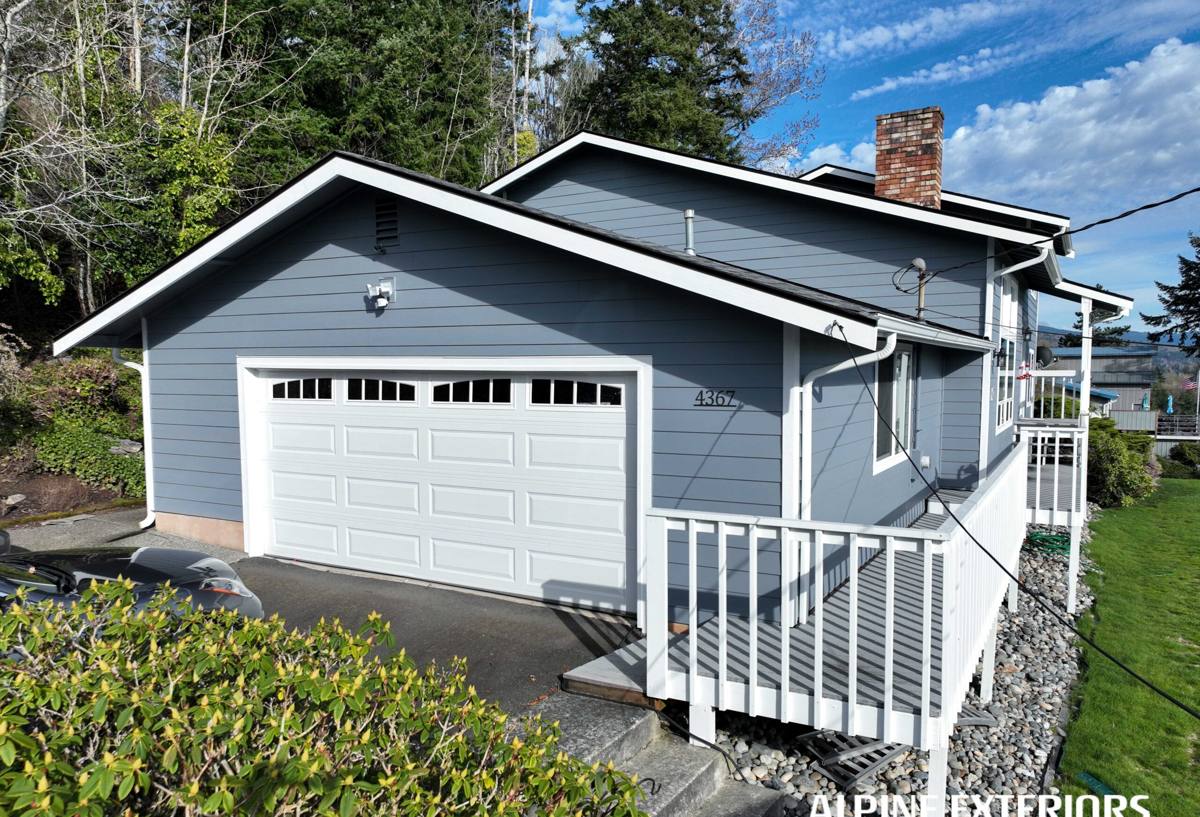
Signs a Lyman Home Needs Replacement, Not Another Repair
Roofs rarely fail all at once. They give warning signs for a year or more before a leak actually shows up inside the house. If you're seeing more than one or two of these, it's worth having someone look at the whole roof rather than patching the one spot that's bothering you.
- Granules collecting in gutters or at downspout outlets — a sign the shingle surface is breaking down
- Shingles that are curling, cupping, or have lost their flat profile
- Moss or dark streaking covering more than isolated patches, especially on north-facing or shaded slopes
- Soft or spongy spots when walking the roof, which usually means the decking underneath has absorbed water
- Daylight visible through the roof deck from inside the attic
- Flashing around chimneys, skylights, or valleys that's rusted, lifted, or was sealed with visible caulk patches
- A roof that's approaching or past the manufacturer's rated lifespan, especially if it's never had a tear-off
A roof with isolated damage — one storm-torn section, one bad valley — is often a legitimate repair. A roof with widespread granule loss, moss coverage, and multiple soft spots is past the point where repair makes financial sense. We'll tell you honestly which category yours is in before recommending a full replacement.
What a Correct Roof Replacement Actually Involves
Tear-Off, Not Overlay
A second layer of shingles over an existing roof is sometimes allowed by code, but it's a shortcut we don't recommend on homes in this climate. Overlaying traps moisture between layers, hides the condition of the decking, and shortens the life of the new roofing. A proper replacement starts with a full tear-off down to the deck.
Deck Inspection and Repair
Once the old roofing is off, we inspect the plywood or plank decking for soft spots, delamination, or rot — common in valleys and around old flashing where water has been getting in slowly. Any bad decking gets replaced before anything new goes down. Skipping this step is the single most common reason a "new roof" leaks again within a few years.
Underlayment and Ice-and-Water Protection
In a climate that gets sustained, driving rain, the underlayment layer matters as much as the shingles themselves. We use synthetic underlayment across the field of the roof and self-adhering ice-and-water membrane at the eaves, valleys, and around every roof penetration — chimneys, vents, skylights — where water concentrates and wind-driven rain can work its way sideways under a standard shingle lap.
Flashing and Metal Details
New step flashing, valley metal, and vent flashing go in with every replacement — we don't reuse old flashing. Given the corrosion effect of marine air in this region, we pay attention to flashing material choice as well as fastener quality, since these are the components most likely to fail first.
Ventilation
A roof that can't breathe traps moisture in the attic, which shortens the life of the decking and the new roofing from underneath. We check and correct intake and exhaust ventilation as part of every replacement — this is covered in more detail below.
Roofing Material Options for a Damp, Shaded Climate
There's no single "right" roofing material for Lyman — it depends on the home, the roof pitch, budget, and how much shade the roof sits under. Here's how the common options actually compare for this climate, honestly:
| Material | Moss Resistance | Maintenance | Typical Lifespan | Notes |
|---|---|---|---|---|
| Architectural asphalt shingle | Moderate (better with algae-resistant granules) | Periodic moss treatment recommended | 25-30 years | Most common choice; good value, wide color range |
| Standing seam metal | High | Low | 40-50+ years | Sheds moisture fast, sheds moss better than any shingle; higher upfront cost |
| Cedar shake | Low without upkeep | High — regular treatment needed | 20-30 years with maintenance | Traditional look; moisture and moss are a real ongoing commitment in this climate |
| Synthetic/composite shake | Moderate to high | Low to moderate | 30-50 years | Cedar appearance without the same moisture sensitivity |
We install architectural asphalt shingle most often on Lyman homes because it balances cost, appearance, and performance well — especially when the granules are algae-resistant. For heavily shaded roofs or homeowners who want to minimize maintenance long-term, metal is worth a serious look. We're honest about cedar shake: it can look great, but in a climate this damp, it asks a lot of ongoing maintenance to hold up, and we'll walk you through that trade-off rather than talk you into or out of it.
Ventilation and Moisture: The Part Homeowners Don't See
A lot of premature roof failure in this region isn't about the shingles at all — it's about what's happening underneath them. If an attic doesn't have enough intake ventilation (soffit vents) and exhaust ventilation (ridge or roof vents) working together, warm moist air from inside the house gets trapped against the underside of the roof deck. Over a wet Skagit County winter, that leads to:
- Premature rot in the decking, invisible from outside
- Reduced shingle lifespan from the underside as well as the top
- Condensation that can be mistaken for a roof leak
- Ice damming risk on colder stretches, where warm attic air melts snow that refreezes at the colder eaves
Every replacement includes a ventilation check as standard practice, not an upsell. If your current setup is undersized or blocked with insulation, we'll fix it as part of the job.
Our Roof Replacement Process
- On-site assessment. We walk the roof, check the attic, and give you a straight read on condition — repair, or replacement, and why.
- Written estimate. Material options, scope, and price laid out clearly, with no vague allowances.
- Permitting. Roof replacement generally requires a building permit in Skagit County; we handle that paperwork so you don't have to track it down.
- Property protection. Landscaping, siding, and outdoor living areas get covered before tear-off starts, and we run magnetic sweeps for stray nails at the end of each day.
- Tear-off and deck repair. Old roofing comes off, decking gets inspected and repaired as needed.
- Underlayment, flashing, and roofing installation. Installed to manufacturer specification, with extra attention at valleys, eaves, and penetrations.
- Ventilation correction. Intake and exhaust balanced for the attic and roof design.
- Final walkthrough and cleanup. We review the finished roof with you and make sure the property is left clean.
Most straightforward residential replacements in this area run a few days to about a week, weather permitting — which in Skagit County means we schedule with rain windows in mind rather than fighting them.
What Affects the Cost of a Roof Replacement
| Factor | Why It Matters |
|---|---|
| Roof size and pitch | Steeper roofs take longer and require more safety setup |
| Number of layers to remove | Tearing off two layers costs more than one |
| Decking condition | Rot or soft spots found during tear-off add material and labor |
| Material choice | Asphalt, metal, and shake carry different material and labor costs |
| Roof complexity | Valleys, dormers, chimneys, and skylights all add flashing detail work |
| Accessibility | Tree cover and tight lots common in Lyman can add setup and disposal time |
Because of these variables, we don't quote roof replacement over the phone. A walk-through gives you an accurate number instead of a low estimate that grows once work starts.
Why It Matters to Hire a Crew That Already Works in Lyman
Roofing crews that mostly work in drier parts of the country default to detailing that's fine there and inadequate here. A crew that regularly works Skagit County knows to size up ice-and-water coverage for our rain patterns, to account for shade and moss when recommending materials, and to plan a schedule around a weather pattern that doesn't always cooperate. We also know the local permitting process, which keeps the job moving instead of stalling on paperwork.
Just as important: we're not driving off after the last shingle goes on. If a question comes up two years from now about moss, a flashing detail, or attic condensation, you're calling a crew that's still working in Skagit County and stands behind the work.
Keeping a New Roof Performing Long-Term
A correct install is most of the battle, but a little upkeep protects the investment:
- Have moss growth treated before it establishes, rather than after it's visibly thick
- Keep gutters and downspouts clear so water isn't backing up under the roof edge
- Trim back overhanging branches where practical to reduce shade and debris buildup
- Schedule a roof check every couple of years, especially after major windstorms
- Address any flashing or sealant issues promptly rather than waiting for a visible leak
If you're seeing moss, granule loss, or just aren't sure how much life is left in your roof, we're happy to take a look and give you a straight answer — no pressure, no upsell. Request a free estimate below and we'll get you scheduled.