 Skagit County
 Asphalt Shingle Roofing Built for March Point Conditions
March Point sits right where Skagit County's marine weather does the most damage to a roof: salt-laden air off the water, wind-driven rain that finds every gap in flashing, and shaded, moisture-holding spots where moss gets a foothold and never lets go. Asphalt shingles are still the most practical roofing choice for most homes out here — they're proven, repairable, and reasonably priced — but only when they're installed and maintained with this specific climate in mind. A shingle roof installed the same way you'd install one in a dry inland town will underperform here, sometimes by a decade or more.
This page is specifically about asphalt shingle roofing for March Point homes — not a general roofing overview. If you're trying to figure out whether your roof needs a repair, a partial re-roof, or a full replacement, and what a correctly installed system actually looks like in this environment, this is written for you.
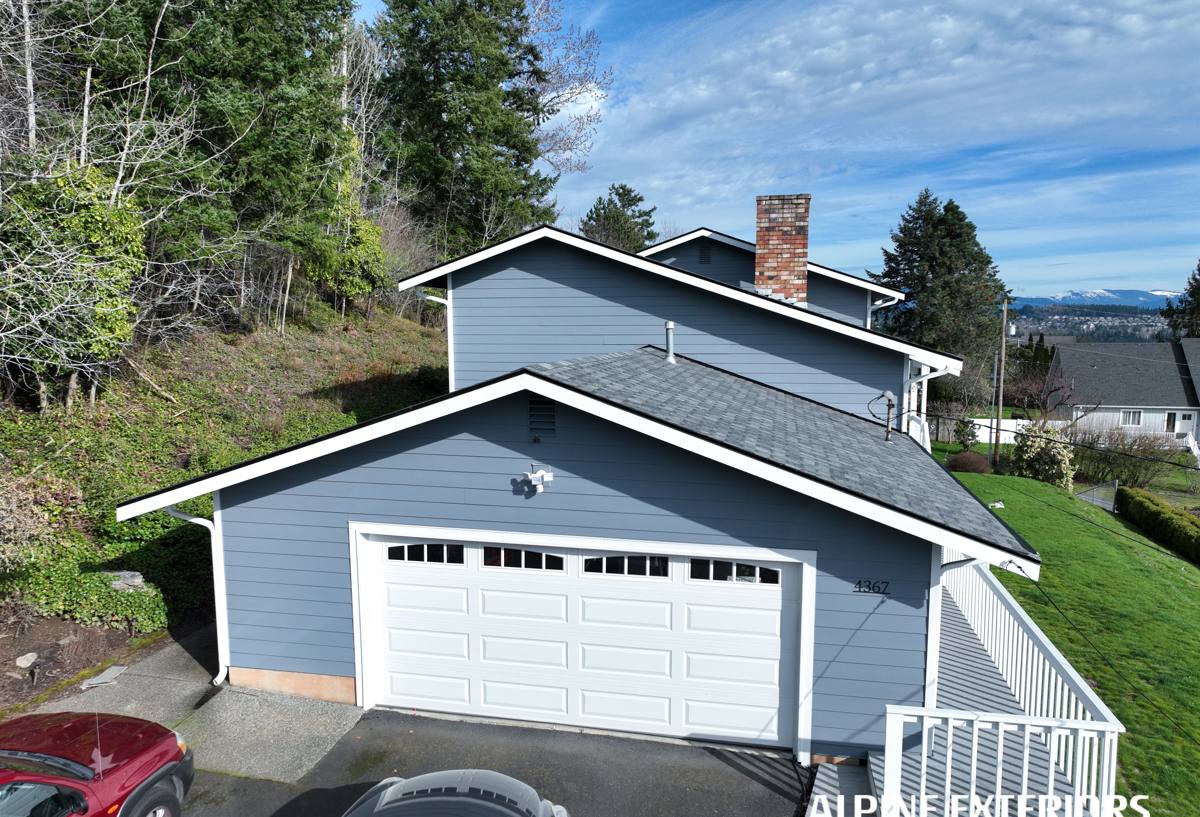
What Salt Air, Driving Rain, and Moss Actually Do to a Shingle Roof
Salt Air
Airborne salt doesn't just sit on the surface — over years it accelerates the breakdown of metal flashing, fasteners, and vent components before the shingles themselves show much wear. A roof can look fine from the ground while the metal underneath is already corroding at the seams. This is why we pay close attention to the grade and coating of every metal component we use on a March Point roof, not just the shingles.
Driving Rain
Wind-driven rain doesn't fall straight down — it gets pushed sideways and upward under shingle tabs, around vent boots, and along valleys and wall intersections. A roof can be watertight in a light, calm rain and still leak in a sideways storm if the underlayment, flashing laps, and fastening pattern weren't built for wind-driven moisture specifically. This is one of the most common causes of "mystery leaks" we get called out for — the shingles look intact, but the water got in sideways, not straight through.
Moss and Sustained Moisture
Skagit County's long, cool, wet stretches mean roof surfaces — especially north-facing slopes and areas under tree cover — stay damp far longer than in drier climates. Moss and algae take hold in that sustained moisture, and once established they hold water against the shingle surface, work into the granule layer, and can lift tabs as they grow. Left unaddressed, moss doesn't just look bad — it shortens the functional life of the roof underneath it.
What a Correct Asphalt Shingle Job Involves Here
A shingle roof is a system, not a single product. Every layer matters, and skipping or downgrading any one of them is where premature failures start.
Deck Inspection and Prep
Before anything goes down, the roof deck itself needs to be sound — no soft spots, no hidden rot from a slow leak that's been going for years. We check this during tear-off, not just from a ladder, because deck problems are invisible until the old roofing is off.
Underlayment
In a climate with this much wind-driven rain, underlayment selection matters more than most homeowners realize. Synthetic underlayment with proper lap and fastening, plus self-adhered membrane (ice-and-water-type product) at vulnerable areas — eaves, valleys, penetrations, and low-slope transitions — gives the roof a real second line of defense if wind ever drives water past the shingles themselves.
Flashing
Flashing around chimneys, skylights, sidewalls, and valleys is where the majority of leaks originate on shingle roofs generally, and salt air makes it worse by accelerating corrosion on lower-grade metal. We use flashing rated for the exposure and detail it with proper laps and sealant — not just caulk over old metal.
Ventilation
A roof that can't breathe traps moisture in the attic, which works against the roof deck from underneath and can worsen moss and rot conditions from the inside. Balanced intake and exhaust ventilation is part of a correct install, not an optional extra.
Fastening and Shingle Installation
Proper nailing pattern and placement — not staples, not high-nailing to save time — is what keeps shingles from lifting in the wind events this area sees. We follow manufacturer specs for exposure and fastening because that's what keeps the warranty valid and the roof performing.
Our Process, Start to Finish
- Inspection and honest assessment — we get on the roof (not just a drive-by look) and tell you plainly whether you're looking at a repair, a partial re-roof, or full replacement, and why.
- Written estimate — clear scope, materials, and pricing before any work starts. No surprise add-ons mid-job.
- Tear-off and deck check — old roofing removed, deck inspected and repaired as needed before anything new goes down.
- Underlayment and flashing install — the moisture-management layers that do the real work in this climate.
- Shingle installation — installed to manufacturer spec for exposure, wind performance, and warranty compliance.
- Ventilation check — confirming intake and exhaust are balanced for the finished roof.
- Cleanup and walkthrough — magnetic sweep for nails, debris hauled off, and a walk through what was done.
Repair, Partial Re-Roof, or Full Replacement?
Not every March Point roof needs full replacement, and we won't tell you it does when it doesn't. Here's how we generally think through it:
| Situation | Likely Approach | Why |
|---|---|---|
| Isolated leak, roof under ~10-12 years old, shingles otherwise sound | Targeted repair | Flashing or fastening issue, not a systemic material failure |
| Moss coverage on an otherwise intact roof | Cleaning + treatment, monitor going forward | Addressing moss early can extend remaining roof life |
| Granule loss, curling, or multiple leak points across the roof | Full replacement | Signs the shingle system itself is at end of life |
| One slope storm-damaged, rest of roof sound and recent | Partial re-roof | No need to replace what's still performing well |
| Roof near or past manufacturer's rated lifespan | Full replacement | Underlayment and deck condition typically warrant a full rebuild by this point |
We'll tell you which category your roof falls into and why, in plain language, during the inspection — not push you toward the most expensive option by default.
Choosing the Right Shingle for This Climate
Not all asphalt shingles are built the same, and in a marine climate the differences matter more than the color swatch. Higher wind-rated, algae-resistant shingles cost more up front but tend to hold up noticeably better against the moss and streaking that's common here. Standard 3-tab shingles are the lowest-cost option but generally have the weakest wind rating and shortest realistic service life in a climate like this — we'll walk you through the honest trade-offs for your budget rather than defaulting to the cheapest option without explaining what you're giving up.
General Cost Factors
- Roof size and number of slopes/valleys (more cuts and complexity = more labor)
- Current layer count — tear-off vs. overlay (we generally recommend tear-off for a proper underlayment reset)
- Deck repair needs found during tear-off
- Shingle grade and wind rating chosen
- Flashing and ventilation work required
- Access and pitch — steeper or harder-to-access roofs take more time and safety setup
We give real ranges after seeing the roof, not a number pulled from a phone call — every roof and every access situation is different.
Homeowner Maintenance Checklist for March Point Roofs
A well-installed roof still needs occasional attention in this climate. Between professional inspections, here's what's worth keeping an eye on:
- Check for moss or dark streaking on north-facing or shaded slopes each fall and spring
- Keep gutters and valleys clear of needles and debris so water isn't pooling against shingles
- Trim back overhanging branches that keep sections of roof shaded and damp
- Look for lifted or missing shingle tabs after major windstorms
- Watch for granules collecting in gutters — a sign of aging shingles
- Have flashing and attic ventilation checked periodically, not just the shingles themselves
Catching small issues during a routine check is almost always cheaper than dealing with the water damage that follows a leak nobody noticed for a season.
Why a Crew That Already Works March Point Matters
Roofing crews that mostly work drier, inland areas don't always default to marine-grade detailing unless a homeowner specifically asks for it. A crew that regularly works Skagit County's coastal and low-lying areas already knows to spec corrosion-resistant flashing without being asked, to pay extra attention to wind-driven-rain details at valleys and walls, and to factor moss-prone shading into the roof plan from the start. That familiarity shows up in fewer callbacks and a roof that's actually built for the conditions it has to survive, not just the conditions on a spec sheet.
It also means a faster, more accurate read on whether what you're looking at is a simple fix or something bigger — because we've already seen how roofs in this specific area age and fail.
Ready for a Straight Answer on Your Roof?
If you're dealing with a leak, moss buildup, or just wondering how much life is left in your March Point roof, we're happy to take a look and give you a clear, no-pressure assessment. Use the form below to request a free estimate — we'll tell you honestly whether you're looking at a repair or a replacement, and what it involves either way.