 Skagit County
 March Point's Climate Puts Real Stress on Siding
March Point sits close to the water in Skagit County, which means homes here deal with a combination most inland Washington neighborhoods don't see in the same intensity: salt-laden air off the surrounding bays, wind-driven rain that hits walls sideways instead of falling straight down, and long stretches of gray, damp weather that keep exterior surfaces wet for days at a time. That combination is hard on any cladding, but it's especially hard on materials that weren't engineered with coastal Pacific Northwest conditions in mind.
Salt air accelerates corrosion of fasteners and trim metal, and it can degrade certain finishes faster than manufacturers' standard testing accounts for. Driving rain finds every gap in flashing and caulking, pushing moisture behind siding where it doesn't dry out quickly. And moss season — which in this part of Skagit County can run from fall through spring — means anything that traps moisture against a wall becomes a growth surface. Siding that looks fine going up can fail quietly over a few winters if it wasn't matched to this environment and installed with these specific risks in mind.
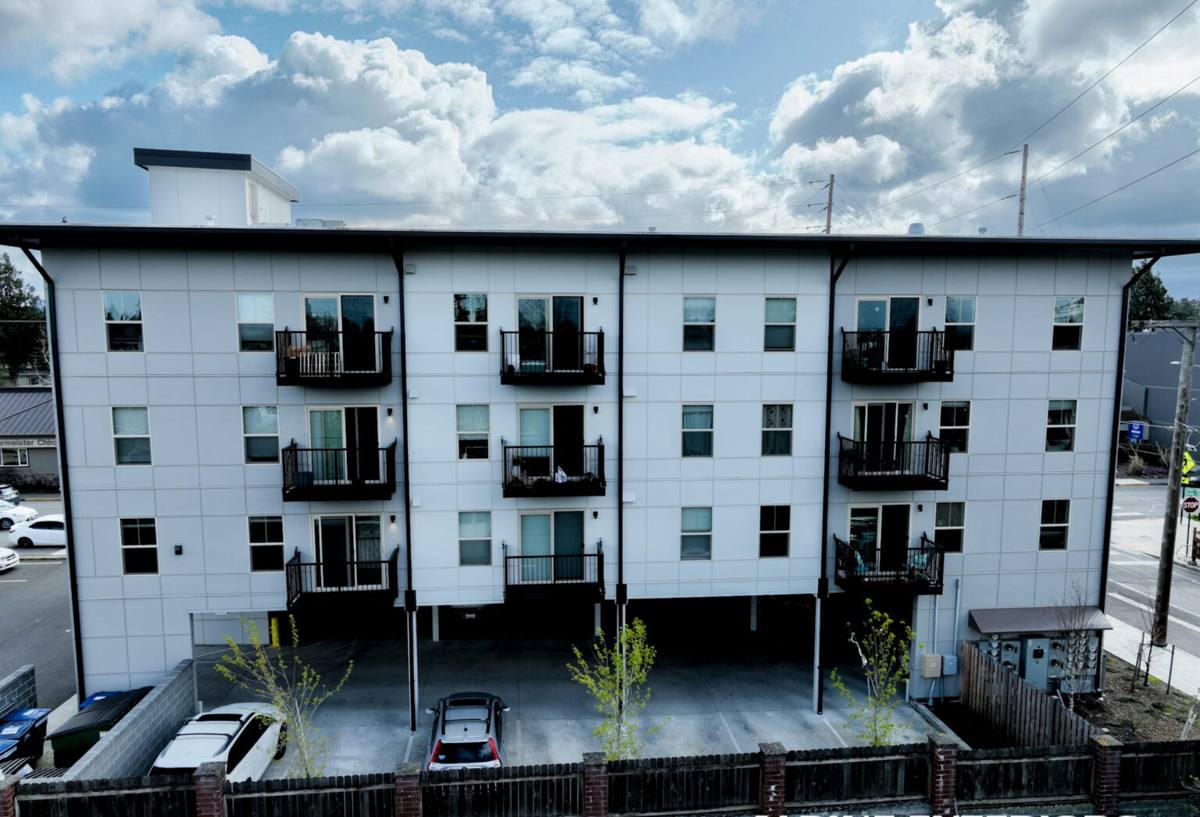
Why Fiber Cement Performs Better Here Than the Alternatives
Fiber cement is a mix of cellulose fiber, sand, and portland cement, pressed and cured into a rigid board. It doesn't rot, it doesn't feed insects, and it's non-combustible — none of which are marketing claims, they're basic properties of the material. For a home near the water in Skagit County, the properties that matter most are dimensional stability and moisture tolerance. Fiber cement doesn't expand and contract with humidity the way wood-based products do, and it doesn't warp or cup when it takes on a soaking from sideways rain. That stability is what keeps seams tight and paint lines straight year after year, which in turn is what keeps water from finding its way behind the board in the first place.
We get asked fairly often why we don't offer vinyl, LP SmartSide, or cedar alongside fiber cement. The honest answer is that each of those products asks a coastal Skagit County home to make a trade-off we're not willing to install and then walk away from:
- Vinyl can warp or distort in temperature swings and doesn't hold up structurally against wind-driven debris the way a rigid board does; seams and J-channels also give salt-laden moisture more places to work into.
- LP SmartSide is a wood-strand product with a resin binder — well-engineered, but still wood-based, which means cut edges and any breach in the factory coating are vulnerable to moisture intake over time, especially in a climate that rarely lets a wall fully dry out.
- Cedar and primed spruce are beautiful but need ongoing maintenance — refinishing, caulking, moisture checks — that most homeowners underestimate until the first sign of rot shows up at a butt joint or sill.
None of those are bad products in the abstract. They're just not what we'd choose to put on a home that sits in salt air and takes on winter after winter of driving rain. James Hardie fiber cement, engineered specifically for climates like this one and finished with a factory-applied ColorPlus coating, is the material we've standardized on because it matches what March Point's weather actually demands.
What "Climate-Engineered" Means in Practice
James Hardie makes region-specific HZ formulations — HZ5 for the harsher freeze-thaw climates and HZ10 for the wetter, milder zones typical of the coastal Northwest. The board itself is engineered around the moisture and temperature profile of the region it's sold into, which matters more than people expect. A siding product formulated for a dry inland climate and installed on a bay-facing wall in Skagit County is starting from a mismatch before the first nail goes in.
What a Correct Fiber Cement Installation Involves
Fiber cement is only as good as the installation behind it. Most of the siding failures we get called to look at — on any brand — trace back to installation shortcuts, not the material itself. In a climate like March Point's, a handful of details matter more than usual.
Moisture Management Behind the Board
A correct install starts with a weather-resistive barrier and rainscreen or drainage gap, not just the siding itself. That gap lets any moisture that does get past the cladding drain and evaporate instead of sitting against the sheathing. Flashing at every window, door, and horizontal transition needs to be lapped correctly — over the layer below, under the layer above — so wind-driven rain is directed out and down, not into the wall assembly.
Fastening and Clearances
Fiber cement needs corrosion-resistant fasteners driven to the manufacturer's specified depth — too shallow and boards can work loose in wind, too deep and you crack the board or compromise its water resistance at that point. Near salt air, fastener choice matters even more, since standard hardware corrodes faster here than it would forty miles inland. James Hardie also specifies minimum clearances between the bottom of the siding and grade, roof lines, decks, and other surfaces, so water has somewhere to go instead of wicking up into the board's cut edge.
Cut Edges and the ColorPlus Finish
Factory-primed or factory-finished boards are only fully protected on the factory edges. Every field cut exposes raw fiber cement that needs to be sealed with the correct touch-up product before that edge goes into a joint or gets caulked. Skipping this step is one of the most common corner-cutting mistakes we see, and it's invisible until moisture starts working into that exposed edge years down the road.
Choosing the Right Product Line for a March Point Home
James Hardie offers several siding profiles, and the right one depends on the home's style and how exposed the walls are to weather.
| Product Line | Best Suited For | Key Trait |
|---|---|---|
| HardiePlank Lap Siding | Traditional and craftsman-style homes | Most common profile; wide range of textures and reveals |
| HardiePanel Vertical Siding | Modern homes or accent walls | Clean vertical lines, often paired with battens |
| HardieShingle | Cottage or coastal-style homes | Shingle look without wood's maintenance burden |
| HardieTrim | Corners, fascia, window and door surrounds | Matches the field siding's finish and durability |
For a home exposed to bay-facing wind and rain, we typically lean toward the HZ10 formulation and pay extra attention to reveal size and fastening pattern on the most exposed elevations, since those are the walls that take the brunt of the weather.
Our Process From Estimate to Finished Job
- On-site assessment. We look at the existing siding, wall assembly, and any signs of past moisture intrusion before quoting anything.
- Product and color selection. We walk through profile and ColorPlus color options based on the home's style and sun/weather exposure.
- Tear-off and inspection of the sheathing. Removing the old siding lets us check for rot or hidden damage before it's covered up again.
- Weather barrier and drainage plane installation. This is the layer that does the real long-term moisture work, done correctly before any siding goes up.
- Flashing at every penetration. Windows, doors, hose bibs, vents — each one gets flashed and sequenced correctly.
- Siding installation to manufacturer spec. Correct fastening, clearances, and sealed cut edges throughout.
- Final walkthrough. We go over the finished job with the homeowner before calling it done.
Living With Fiber Cement in a Moss-Prone, Salt-Air Climate
Fiber cement is low-maintenance compared to wood, but "low-maintenance" doesn't mean "no maintenance," especially this close to the water. A simple seasonal routine keeps a correctly installed system performing the way it should for decades.
- Rinse siding gently once or twice a year to clear salt residue and organic buildup before it turns into moss or algae growth.
- Keep gutters clear so overflow doesn't run down the siding face and stay wet longer than it should.
- Trim back vegetation and tree cover that keeps walls shaded and damp — a common driver of moss in this part of Skagit County.
- Inspect caulking at trim joints and penetrations every couple of years and re-caulk where it's cracked or pulled away.
- Touch up any chips or scrapes at cut edges promptly with the correct sealant, rather than leaving raw fiber cement exposed.
What Affects the Cost of a March Point Siding Job
Every home is different, but the same handful of factors drive most of the cost variation we see on fiber cement projects in this area.
| Factor | Why It Matters |
|---|---|
| Home size and wall complexity | More corners, gables, and transitions mean more cutting, flashing, and labor time |
| Condition of existing sheathing | Rot or moisture damage found at tear-off adds repair work before siding can go up |
| Product line and profile | Lap, panel, and shingle profiles carry different material and labor costs |
| Color and finish | ColorPlus factory finishes vs. field-painted options affect both cost and long-term upkeep |
| Accessibility and exposure | Wind- and rain-exposed elevations often need extra flashing and detailing attention |
We give honest, itemized estimates rather than a single flat number, so homeowners can see exactly where the cost is going and where there's room to make choices.
Why It Matters to Hire a Crew That Already Works This Area
Fiber cement installation instructions are the same on paper wherever you read them, but applying them correctly to a home exposed to Skagit County's coastal weather takes judgment that comes from doing this work in these conditions repeatedly. A crew that already works in and around March Point knows how much extra attention bay-facing walls need, understands which fastener and flashing choices hold up against salt air over time, and recognizes early signs of moss or moisture trouble before they become expensive repairs. That local experience is what separates a siding job that looks good at handoff from one that still looks good in fifteen years.
If you're weighing your siding options for a home in March Point, we're happy to walk the exterior with you, talk through what your walls are actually dealing with, and put together a straightforward, no-pressure estimate. There's no obligation — just an honest look at what your home needs. Fill out the form below to get started.