 Skagit County
 Roofing on March Point Comes With Its Own Set of Problems
March Point sits out on the water, and that changes what a roof has to deal with compared to a house a few miles inland. Homes here take on salt-laden air off the bay, wind-driven rain that finds its way under anything loosely fastened, and long stretches of damp, shaded weather that let moss and moisture-loving growth get a foothold on the roof deck. A repair approach that works fine in a drier part of Skagit County can fall short out here, because the underlying causes of leaks and shingle failure are different.
We work on roofs throughout Skagit County, and March Point's waterfront exposure is one of the more demanding environments we see. That's not a knock on the neighborhood — it's just physics. Salt air accelerates corrosion on exposed metal fasteners and flashing. Wind off the water pushes rain sideways into laps and seams that were never meant to see water head-on. And the mild, wet Pacific Northwest climate means moss has months every year to establish itself, especially on north-facing slopes and anywhere shade keeps a roof from drying out between storms.
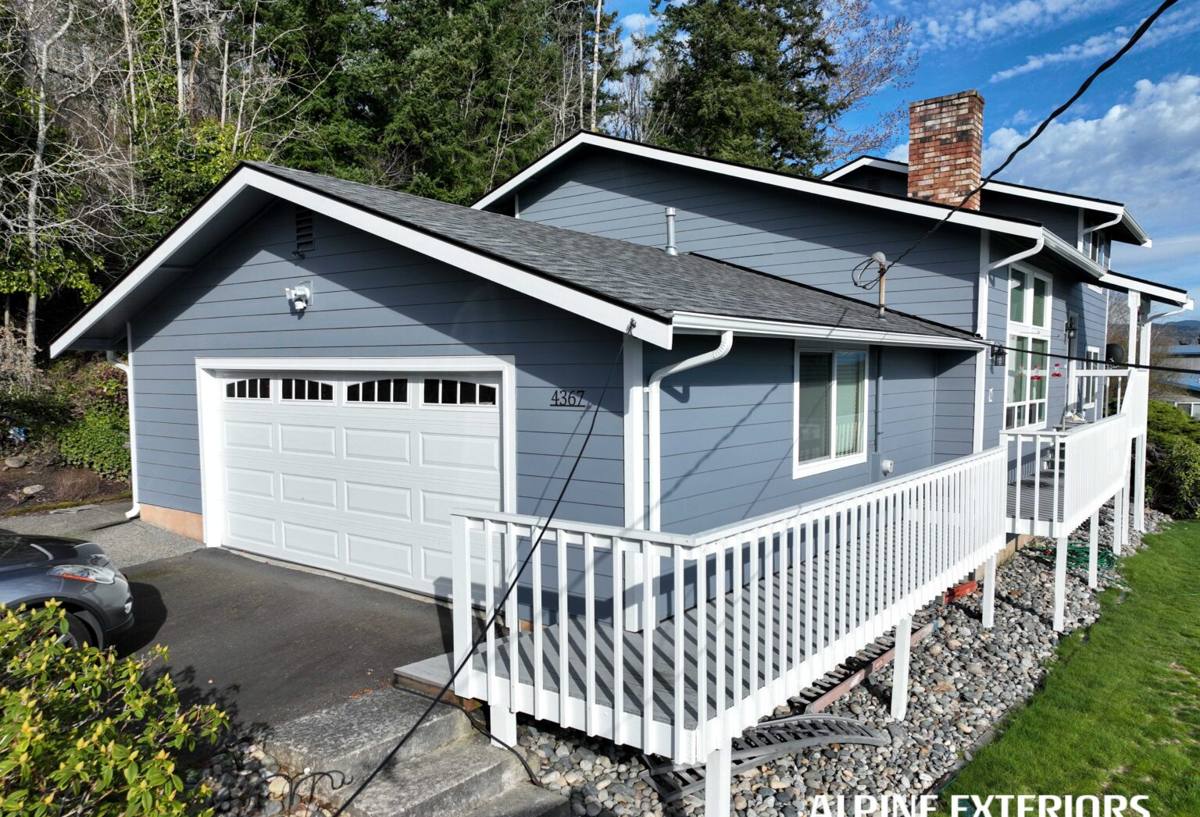
What March Point's Climate Actually Does to a Roof
Salt Air and Corrosion
Airborne salt doesn't just affect boats and siding — it settles on roofing metal too. Nails, flashing, drip edge, and vent stacks that aren't rated for coastal exposure can start corroding years before they would inland. Once a fastener corrodes, it loses its grip, and a shingle or piece of flashing that's supposed to be locked down starts working loose in the wind.
Driving Rain and Wind Exposure
Being out on the point means less tree cover and more open exposure to wind coming off the water. Rain that would normally run straight down a roof slope gets pushed sideways and even slightly upward at eaves, ridges, and around penetrations. Roofing systems rely on gravity and overlapping layers to shed water — wind-driven rain defeats that by forcing water into gaps that were never designed to handle water moving in that direction.
Moss, Moisture, and Shaded Slopes
Skagit County's long wet season gives moss plenty of time to take hold, and March Point's marine humidity makes it worse. Moss holds moisture directly against the roofing material, which shortens the life of shingles, keeps the deck underneath damp longer than it should be, and can lift shingle edges as it grows and spreads. Left alone, a moss problem doesn't stay cosmetic — it becomes a moisture problem.
Signs a March Point Roof Needs Repair, Not Just a Look
- Granules collecting in gutters or at downspout outlets — a sign shingles are wearing thin
- Dark streaking or thick moss growth, especially on shaded or north-facing slopes
- Curling, cupping, or lifted shingle edges, particularly on wind-exposed sections
- Rust staining or visibly corroded flashing around chimneys, vents, or skylights
- Water stains on interior ceilings or in the attic after a windy rainstorm
- Soft or spongy spots underfoot on a walkable roof section
- Loose, missing, or rattling shingles after a windstorm off the water
- Daylight visible through the roof deck from inside the attic
Any one of these is worth a look. Several together usually mean the roof has been dealing with water intrusion for a while, even if there's no visible leak inside yet — houses on March Point can hide moisture damage longer than you'd expect because insulation and sheathing soak it up before it ever reaches drywall.
What a Correct Repair Actually Involves
A roof repair that holds up in this environment starts with figuring out why the original section failed, not just patching the spot that's leaking. If corroded fasteners or degraded flashing caused the problem, replacing shingles without addressing the metal underneath just buys a year or two before the same leak comes back.
Our Process on a March Point Repair Call
- Inspection first. We get on the roof (or use a camera where access is tight) and trace the actual path water is taking, not just where it's showing up inside.
- Identify the real cause. Failed flashing, corroded fasteners, wind-lifted shingles, moss-related deck saturation, or aged underlayment all get treated differently.
- Match materials to the exposure. On a wind- and salt-exposed roof, we use fasteners and flashing rated for coastal conditions, not whatever is cheapest to grab.
- Repair the underlayment and decking if needed. If water has reached the deck, shingles alone won't fix it — soft or rotted decking gets replaced before anything new goes down.
- Reseal and reinforce penetrations. Vent boots, chimney flashing, and skylight curbs are common failure points in wind-driven rain and get extra attention.
- Clean up moss and treat the cause. Removing moss without addressing airflow or shade issues just means it comes back — we talk through realistic options rather than a one-time scrape.
Repair Versus Replacement: How We Help You Decide
Not every roof on March Point that's showing wear needs to be replaced, and not every leak can be responsibly patched. The honest answer depends on the roof's age, how widespread the damage is, and whether the underlying deck is still sound.
| Situation | Repair Usually Makes Sense | Replacement Usually Makes Sense |
|---|---|---|
| Roof age | Under roughly 15-18 years, materials still have life left | Nearing or past expected lifespan for the material |
| Damage extent | Isolated to one section, flashing point, or slope | Spread across multiple slopes or recurring in different spots |
| Decking condition | Solid, no rot or soft spots found | Soft, delaminated, or water-damaged decking found |
| Moss history | First occurrence, addressed early | Long-term growth that has already degraded shingles broadly |
| Corrosion | Localized to a few fasteners or one flashing run | Widespread corrosion on fasteners and flashing throughout |
We'll give you a straight answer either way. If a repair will genuinely hold, we'll say so — there's no reason to sell a full replacement when a targeted fix solves the problem. If the roof is past the point where repair makes financial sense, we'll explain exactly why, in plain terms, so you can make the call with real information.
Materials and Methods We Use for Coastal Exposure
On a roof exposed to salt air and wind the way March Point homes are, the small details matter more than they would on a sheltered inland roof. We use corrosion-resistant fasteners and flashing rather than standard-grade materials, because the cost difference is minor compared to the cost of redoing a repair in a few years when standard hardware corrodes. Sealants and adhesives are chosen for their performance in cooler, damp conditions rather than products meant for drier climates, since they need to cure and bond properly even during the stretches of the year when March Point rarely sees a dry week.
Where wind exposure is a factor, we pay close attention to shingle sealing and fastening patterns, since a roof out on the point can see gusts that a sheltered roof a few miles away never experiences. Proper nailing pattern and sealant strip activation matter more here than on a calmer site.
Moss and Growth Management as Part of the Repair
Because moss is such a persistent issue in this part of Skagit County, we treat it as part of the repair conversation, not an afterthought. Removing moss the right way means working it off without tearing up the shingle surface underneath, then addressing what's keeping that section of roof damp — often shade, poor airflow, or debris buildup in valleys and gutters that holds moisture against the roofline. We can also talk through preventive options for slopes that are prone to regrowth, so you're not dealing with the same issue again in a year or two.
Why Hire a Crew That Already Works March Point
Roofing crews who mostly work drier, more sheltered parts of the county don't always account for what wind-driven rain and salt exposure do to a roof over time. We work throughout Skagit County, including waterfront and exposed sites like March Point, and we build our repairs around what actually holds up in that environment — not a generic approach that assumes calmer weather. That means flashing choices, fastener selection, and sealing methods that account for the wind and moisture this location sees, rather than finding out the hard way that a standard repair didn't hold through the next storm season.
A Few Things Worth Doing Between Professional Visits
- Keep gutters and valleys clear of debris so water has a clean path off the roof
- Trim back overhanging branches where possible to reduce shade and speed drying
- Look at the roof after any significant windstorm for lifted or missing shingles
- Note any new ceiling stains or musty attic smells and don't wait to have them checked
- Avoid pressure washing moss off yourself — it can strip granules and shorten shingle life
Get a Straight Answer About Your Roof
If you're seeing moss buildup, loose shingles after a windy stretch, or a slow leak that's hard to pin down, it's worth getting a professional look before it turns into a bigger repair. We offer free, no-pressure estimates for March Point homeowners — we'll tell you honestly whether you're looking at a repair or something bigger, and what it will take to get it done right for this location's climate. Fill out the form below to get started.