 Skagit County
 Siding Repair Built for March Point's Marine Exposure
March Point sits out on the water in Skagit County, and that location shapes everything about how siding ages here. Homes on this peninsula take a steady dose of salt air off the bay, wind-driven rain that doesn't just fall straight down but gets pushed sideways into wall assemblies, and a moss and algae season that runs long into the year thanks to the damp, shaded conditions typical of this part of Western Washington. Siding that would hold up fine forty miles inland can start showing real damage out here years earlier, simply because the exposure is different.
When we get a call for siding repair in March Point, we're rarely looking at one isolated problem. Salt-laden air accelerates corrosion on fasteners and trim metal, driving rain finds every gap in flashing and caulk, and moss holds moisture against the wall surface long after a storm has passed. Repairing siding correctly here means understanding that combination, not just patching whatever is visible from the ground.
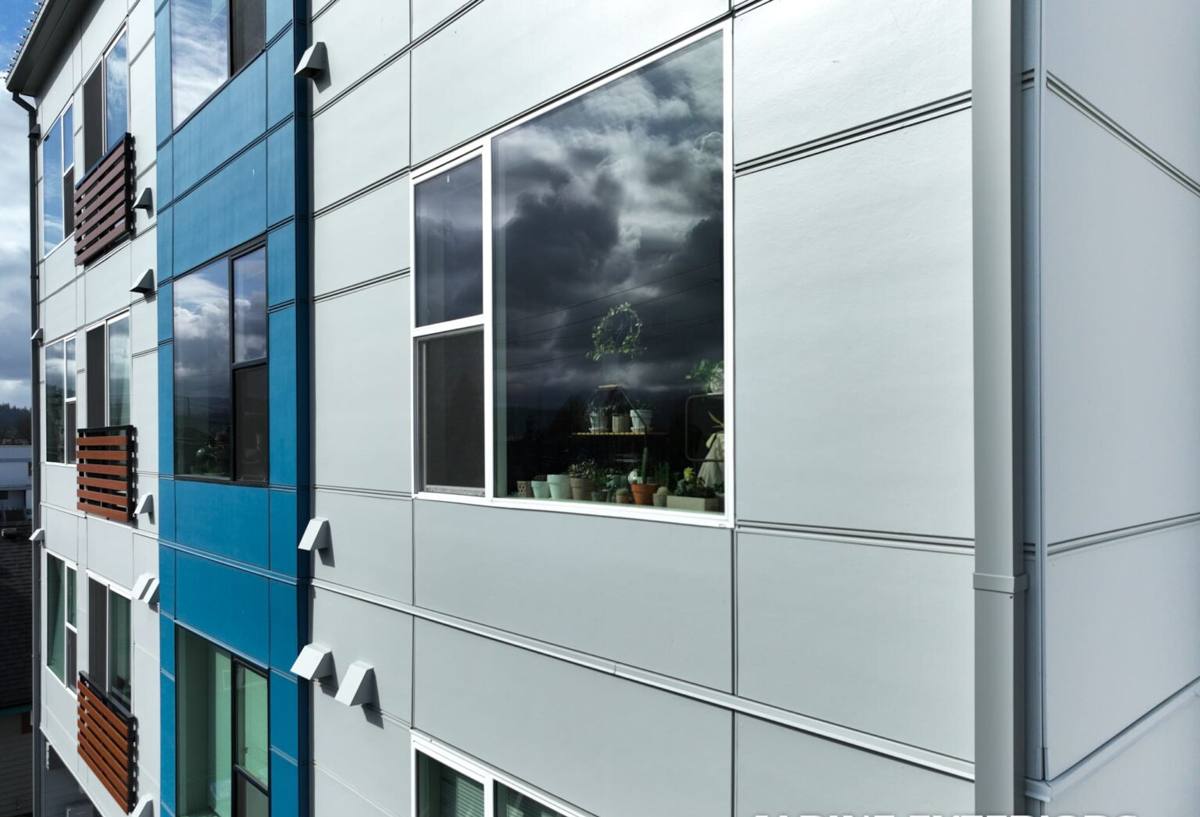
What March Point's Climate Does to Siding Over Time
Salt Air and Marine Corrosion
Proximity to Fidalgo Bay and the surrounding waterways means airborne salt settles on exterior surfaces year-round, not just during storms. Salt accelerates the corrosion of exposed steel fasteners, staples, and unprotected trim metal. Once fasteners start to rust and swell, they can loosen their grip on siding panels, and rust streaks bleed down the face of the wall — a telltale sign we look for on every March Point inspection.
Wind-Driven Rain
This isn't a climate where rain falls politely straight down. Storms off the water push rain sideways into wall assemblies, forcing water into seams, laps, and penetrations that would stay dry in a calmer setting. Siding systems and trim details that aren't built for horizontal water pressure — loose caulk joints, undersized overlaps, poorly flashed penetrations — are where we consistently find hidden rot.
Extended Moss and Algae Season
Shaded, damp conditions along the point keep moisture sitting on siding surfaces for extended stretches, especially on north-facing and tree-shaded walls. Moss and algae growth isn't just cosmetic — it holds water against the substrate, and on moisture-sensitive materials that constant dampness is what eventually leads to swelling, delamination, or rot underneath.
Signs Your March Point Home Needs Siding Repair
- Soft or spongy spots when you press on the siding, especially near the bottom courses or below windows
- Visible rust streaking from fasteners, trim, or flashing
- Persistent moss or algae buildup that returns quickly after cleaning
- Cracked, bubbled, or peeling paint that keeps failing in the same spots
- Gaps opening up at seams, corners, or where siding meets trim, windows, or doors
- Visible warping, buckling, or panels pulling away from the wall
- Interior signs — musty smells, staining on interior walls near exterior corners — that point to water getting behind the siding
- Increased pest activity around soft or damaged wood-based trim
What a Correct Repair Actually Involves
A lot of siding repair work in this region gets done as a surface-level patch — caulk over a gap, a fresh coat of paint over a stained board — without addressing what let water in to begin with. That approach doesn't hold up long in March Point's exposure, and it often just hides a problem until it's bigger and more expensive.
Our process starts by pulling back affected siding to see what's actually happening underneath: the condition of the house wrap or building paper, the state of the sheathing, whether framing has taken on moisture damage, and whether flashing at windows, doors, and penetrations is doing its job. Repair isn't just about replacing what's visibly damaged — it's about correcting the water management detail that failed in the first place, so the same spot doesn't fail again in two years.
Our Repair Process
- Inspection and diagnosis — we identify not just the damaged siding but the underlying cause: flashing failure, fastener corrosion, moisture trapped by moss, or a failed seal at a penetration.
- Removal of compromised material — damaged siding, and any rotted sheathing or framing underneath, gets removed rather than covered over.
- Water management repair — flashing, house wrap, and seal details are corrected before anything new goes back on the wall.
- Matched replacement — new siding is installed to match the existing profile and finish as closely as possible, with corrosion-resistant fasteners appropriate for a marine environment.
- Finish and seal — joints, corners, and penetrations are sealed correctly so wind-driven rain has nowhere to get in.
Why the Repair Material Matters Out Here
What you repair with matters as much as how you repair it. In a climate like March Point's, we install James Hardie fiber cement siding exclusively — we don't offer vinyl, LP SmartSide, or other engineered wood or composite products, and that's a deliberate standard, not a limitation of what we can source.
Fiber cement is non-combustible and dimensionally stable, so it doesn't swell, warp, or delaminate the way wood-based or moisture-sensitive materials can when they stay damp for extended periods — which is exactly the condition March Point's shaded, salt-air environment creates for months at a time. James Hardie's ColorPlus factory finish also holds up better against the fading and chalking that salt air and UV exposure cause on field-applied paint, which means repaired sections blend in and stay looking right for longer, rather than becoming the spot on the wall that needs repainting again in three years.
Repair Material Comparison for Marine-Exposed Homes
| Factor | James Hardie Fiber Cement | Vinyl Siding | Wood-Based Composite |
|---|---|---|---|
| Moisture response | Dimensionally stable, resists swelling | Doesn't absorb water but can warp/crack in temperature swings | Can swell or delaminate if edges aren't sealed |
| Salt air / UV finish durability | Factory ColorPlus finish resists fading and chalking | Field color can fade unevenly over time | Requires repainting on a recurring cycle |
| Combustibility | Non-combustible | Combustible | Combustible |
| Matching repairs to existing siding | Wide color/profile range, factory-finished consistency | Can be hard to color-match after sun fading | Variable depending on product line |
Why Local Experience on This Peninsula Matters
Siding repair in March Point isn't the same job as siding repair twenty minutes inland, even though it's still Skagit County. A crew that hasn't worked this specific exposure can underestimate how much water pressure a wall takes in a windstorm off the water, or misjudge how quickly moss returns on a shaded, damp wall face. We've done repair work across Skagit County's varied microclimates, and March Point's combination of salt air, wind-driven rain, and extended damp season is something we plan for specifically — in the fastener hardware we use, the flashing details we prioritize, and the moisture inspection we do before we ever touch the visible siding.
That local pattern recognition is also what keeps repairs efficient. Knowing which details tend to fail first on point-exposed homes means less exploratory demolition and a more accurate estimate up front.
Preventing the Next Repair
A repair is a good moment to address the conditions that caused the damage, not just the damage itself. For March Point homes, that often means:
- Improving flashing at windows, doors, and any wall penetrations to better handle sideways-driven rain
- Trimming back vegetation or addressing shade patterns that keep specific wall sections damp longer than the rest of the house
- Using corrosion-resistant fasteners rated for coastal or marine exposure rather than standard hardware
- Scheduling periodic exterior washing to keep salt residue and early moss growth from building up between inspections
None of that is a substitute for a properly built wall assembly, but combined with durable, non-combustible fiber cement siding, it meaningfully extends the time between repairs on a home this exposed.
Getting an Honest Assessment
Not every issue we find during an inspection needs a full repair — sometimes a section of trim or a failed sealant joint is the whole story, and we'll tell you that plainly. Other times, what looks like a small cosmetic issue on the surface turns out to be tracking back to a bigger moisture problem underneath, and it's better to know that now than after another wet Skagit County winter. Either way, our estimate reflects what we actually find on your walls, not a generic assumption.
If you're seeing signs of siding damage on your March Point home, or it's simply been a while since anyone took a close look at how your exterior is holding up against the salt air and rain, we're glad to come take a look. The estimate is free, there's no pressure, and you'll get a straight answer about what's going on and what it would take to fix it right.