 Skagit County
 Siding Replacement for March Point Homes
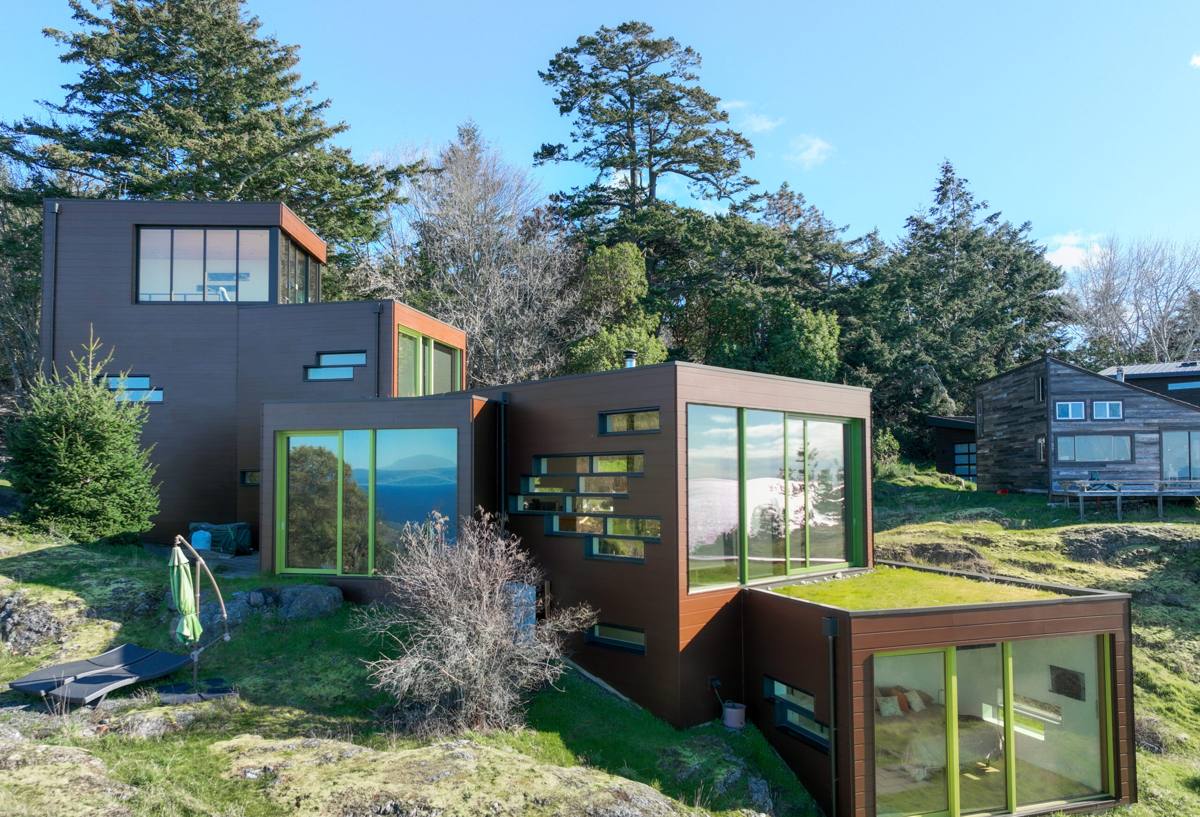
March Point sits out on the water in Skagit County, and that location shapes everything about how siding ages here. Homes on this peninsula take on a different kind of weather than houses further inland — salt-laden air off the bay, wind-driven rain that gets pushed sideways into wall assemblies, and a long, damp moss season that starts earlier and lasts longer than most homeowners expect. Siding that would hold up fine in a sheltered inland neighborhood can fail years early out here if it wasn't built and installed with this exposure in mind.
This page covers what siding replacement actually involves for a March Point home: what the climate does to different siding materials, what correct installation looks like on a coastal Skagit County property, and why we install James Hardie fiber cement exclusively rather than offering vinyl, LP SmartSide, or cedar as options.
What Salt Air, Driving Rain, and Moss Do to Siding
Salt Air
Airborne salt is corrosive to metal fasteners, trim, and flashing, and it accelerates the breakdown of paint films and coatings on wood-based products. Over years, salt exposure dulls finishes, pits unprotected metal, and speeds up the general weathering of anything not specifically engineered to resist it. This isn't unique to March Point — it's the same reason boats and dock hardware near the water need marine-grade materials — but it's often overlooked in residential siding choices.
Driving Rain
Wind off the water doesn't just bring rain, it drives it horizontally into siding laps, seams, and penetrations (windows, doors, vents, hose bibs) with more force than a calm rain event. That pressure pushes water into gaps that would stay dry on a sheltered wall. Siding systems and flashing details that work on a protected inland elevation can leak on an exposed March Point wall if the water-management details weren't built for that added pressure.
Extended Moss and Algae Season
Skagit County's damp, mild climate already favors moss and algae growth on north-facing and shaded walls. Proximity to the water adds humidity and keeps surfaces wet longer after storms, which extends the growing season for organic growth even further. Siding that holds moisture — or that has a surface texture and coating that organic growth can grip — stays green longer and needs more frequent cleaning to avoid staining and gradual surface degradation.
Signs a March Point Home Needs Replacement, Not Just Repair
Not every siding problem calls for full replacement. But on an exposed property like this, a few small issues are usually a sign of a bigger pattern underneath. Watch for:
- Soft or spongy spots when you press on the siding, especially near the bottom courses or around windows
- Paint that keeps failing in the same spots within a year or two of repainting
- Persistent moss or algae staining that comes back quickly after cleaning
- Visible warping, cupping, or separation at seams and laps
- Rising energy bills alongside drafts near exterior walls
- Siding that's original to a home more than 20-25 years old, particularly if it's a wood-based or composite product
- Interior signs — peeling paint, musty smell, or staining on interior walls that share an exterior wall exposed to the water side of the house
If you're seeing two or more of these, especially on the sides of the house facing the water or prevailing wind, it's worth a full inspection rather than another round of patching.
Why We Only Install James Hardie Fiber Cement
We don't offer vinyl, LP SmartSide, Cemplank, Allura, or primed spruce and cedar siding as options, and on a property like March Point that decision matters more than it would somewhere sheltered. Each of those products has real strengths, but each also has a trade-off that becomes a bigger problem right on the water:
- Vinyl expands and contracts more with temperature swings, and salt air can accelerate fading and brittleness over time, especially on sun- and wind-exposed elevations.
- Wood-based products (LP SmartSide, primed spruce, cedar) depend heavily on an intact factory or field-applied finish to keep moisture out. In a climate with this much driving rain and extended dampness, any gap in that protection — a cut edge, a nail hole, a coating breach — gives moisture a way in faster than it would in a drier region.
- Other fiber cement brands (Cemplank, Allura) are chemically similar to what we install, but we've standardized on one manufacturer, one factory-finish system, and one set of installation specs so every job we do is consistent and backed by a single warranty structure we fully understand.
James Hardie's fiber cement is non-combustible, dimensionally stable across temperature and moisture swings, and available in HZ product lines engineered for specific climate zones, including the wetter conditions common to the Pacific Northwest. The factory-applied ColorPlus finish is baked on under controlled conditions rather than applied on site, which gives it more consistent coverage and better resistance to fading and moisture intrusion than field-applied paint on wood-based siding. It's backed by a strong transferable warranty when installed to Hardie's specifications — which is also why correct installation, not just the material choice, matters so much.
| Factor | James Hardie Fiber Cement | Vinyl / Wood-Based Alternatives |
|---|---|---|
| Combustibility | Non-combustible | Combustible (wood, LP) or melts/deforms under heat (vinyl) |
| Finish durability in salt air | Factory-baked ColorPlus finish, engineered coverage | Field-applied paint or factory coatings more prone to early fade/chalking |
| Moisture behavior | Dimensionally stable, resists swelling | Wood-based products can swell, delaminate, or rot if coating fails |
| Maintenance in moss-prone areas | Cleans without damaging the substrate | Aggressive cleaning can strip finish or damage surface |
| Warranty structure | Long-term, transferable when installed to spec | Varies; often shorter or more conditional |
What Correct Installation Involves on the Water
The product is only half of what determines how siding performs. On an exposed peninsula like March Point, installation details matter as much as material choice:
Rainscreen and Drainage Plane
Given the amount of wind-driven rain a water-facing wall can see, a proper drainage plane and rainscreen gap behind the siding gives any moisture that does get past the surface a way to drain and dry out instead of sitting against the wall sheathing.
Flashing at Every Penetration
Windows, doors, vents, and any other wall penetration need flashing detailed to shed water outward, not just caulk relied on as the primary barrier. Caulk fails; flashing, done correctly, doesn't depend on staying perfectly intact for decades.
Fastening and Clearances
Hardie specifies fastener type, spacing, and minimum clearances from grade, decks, and roof lines. Those clearances matter more near the water, where humidity and splash-back keep the bottom courses of a wall wetter for longer after a storm.
Caulking and Joint Treatment
Butt joints and trim transitions need to be treated correctly for a coastal climate — sealed where Hardie calls for sealant, left to drain where it doesn't, and never sealed in a way that traps moisture behind the panel.
Our Process From Estimate to Finished Siding
- Inspection: We walk the exterior, check for soft spots, water staining, and existing moisture damage, and look specifically at how each elevation is exposed to wind and rain off the water.
- Assessment of what's underneath: Before quoting replacement, we check for sheathing or framing damage that needs to be addressed, since covering a moisture problem with new siding doesn't fix it.
- Product and color selection: We walk you through Hardie's plank, panel, and shingle lines and ColorPlus palette so the final look fits the home and the neighborhood.
- Written estimate: A clear scope covering removal, any sheathing or moisture repair, house wrap or rainscreen detailing, and installation to Hardie spec.
- Installation: Old siding removed, water-resistive barrier and drainage detailing installed, Hardie siding fastened and finished per manufacturer requirements.
- Final walkthrough: We review the finished job with you, including care and cleaning guidance suited to a salt-air, moss-prone property.
Why Hiring a Crew That Already Works March Point Matters
Siding crews that mostly work inland don't always account for the extra wind load, the salt exposure, or the moss cycle that a water-facing Skagit County property deals with every year. A crew that already works this area brings a few practical advantages: familiarity with how local weather actually hits different elevations of a home, an understanding of which details (rainscreen gaps, flashing laps, clearance from grade) matter most given the exposure, and a realistic sense of how the county's building requirements apply to exterior work. That local experience shows up less in any one visible feature and more in how the job holds up five and ten years out.
Cost Factors for March Point Siding Replacement
Every home is different, and we don't quote a number until we've inspected the property, but a few factors consistently move the price on jobs like this:
| Factor | Why It Affects Cost |
|---|---|
| Extent of existing damage | Rot or moisture damage found under old siding requires sheathing or framing repair before new siding goes on |
| Home size and elevation complexity | More corners, gables, and trim detail increase labor and material needs |
| Siding profile chosen | Lap, panel, and shingle styles carry different material and installation costs |
| Water/wind exposure of the site | Elevations facing the prevailing wind and water often need extra flashing and drainage detail |
| Access and site conditions | Tight lot lines, landscaping, or multi-story walls affect scaffolding and labor time |
If you're weighing siding replacement for a March Point property, we're glad to walk the exterior, explain what we're seeing, and put together a written estimate — no pressure, no obligation. Use the form below to get started.