 Skagit County
 Windows Built for March Point's Marine Climate
March Point sits out on the water — bordered by Fidalgo Bay and Padilla Bay, with wind coming off the marine environment nearly every day of the year. That location is part of what makes it a great place to live, but it's hard on a house. Salt-laden air, near-constant humidity, and driving rain off the water put more stress on windows here than on a comparable home twenty minutes inland in Mount Vernon or Sedro-Woolley. If you've noticed fogged glass, sticky sashes, soft wood at the sill, or a draft that wasn't there five years ago, the climate is probably the reason.
Window replacement in this part of Skagit County isn't just about picking a style out of a catalog. It's about choosing materials and installation details that hold up to salt exposure and wind-driven rain, and installing them in a way that keeps water out of the wall — not just out of the room.
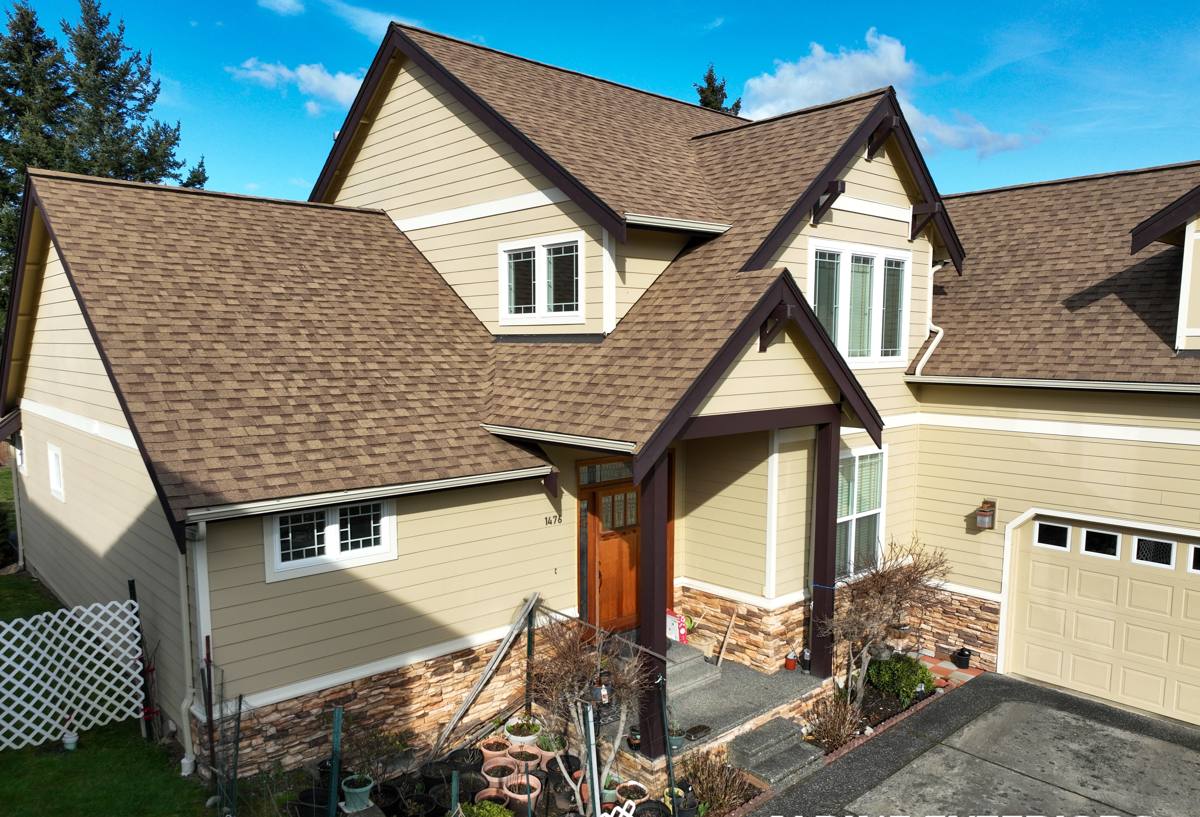
What the Local Climate Actually Does to Windows
Salt Air and Corrosion
Homes near Fidalgo Bay and Padilla Bay deal with airborne salt that settles on hardware, frames, and fasteners. Older aluminum-frame windows are especially vulnerable — aluminum pits and corrodes in a marine environment, and once hardware seizes up, a window that used to open smoothly won't. Screws and cladding that aren't rated for coastal exposure can also start showing rust streaks within a few years.
Driving Rain
Wind off the water doesn't just bring rain straight down — it drives it sideways into the wall. That means flashing details and sealant lines matter more here than they do on a sheltered inland lot. A window that's watertight in a light rain can still leak during a windstorm if the flashing wasn't lapped correctly with the house wrap underneath the siding.
Moss and Prolonged Moisture
Skagit County's long wet season keeps wood surfaces damp for weeks at a stretch, and moss doesn't limit itself to roofs — it takes hold on north-facing trim, sills, and anywhere water sits instead of shedding. Once moss and mildew get established around a window frame, they hold moisture against the wood and accelerate rot, which is why we see soft sills and stained trim well before the glass itself fails.
Signs a March Point Home Needs Window Replacement
- Fog or moisture trapped between panes of double-pane glass (a failed seal, not fixable by cleaning)
- Sashes that stick, drag, or won't stay open due to swollen frames or corroded hardware
- Visible moss, black mildew streaks, or soft wood at the sill or bottom corners
- Noticeable draft or cold spot near the frame even with the window latched
- Single-pane or original aluminum-frame windows original to an older home
- Paint or caulk that's cracked and pulling away from the frame
- A heating bill that's climbed without any other explanation
What a Correct Installation Involves
Replacing a window is straightforward in theory and easy to get wrong in practice. The parts that actually determine whether a window performs for the next 20+ years happen before the new unit ever goes in.
Removal and Inspection
We pull the old window and check the rough opening — sheathing, framing, and the water-resistive barrier behind the siding — for rot or hidden water damage. In a marine climate like March Point's, this step matters more than most homeowners expect, because moisture problems at a window opening often extend further into the wall than what's visible from outside.
Flashing and Sill Pan
The single most important detail for keeping wind-driven rain out of the wall is the flashing sequence: sill pan first, then the window, then side and top flashing integrated in the correct shingle-lap order with the house wrap so water is directed out, not in. Skipping or rushing this step is the most common cause of hidden rot behind a "new" window a few years down the line.
Sealing and Insulation
Gaps around the frame get filled with low-expansion foam or backer rod and sealant rated for exterior use — not just caulked over on the surface. Over-sealing the interior while under-sealing the exterior (or vice versa) can trap moisture in the wall cavity, so the sequence matters as much as the materials.
Exterior Trim and Finish
Trim gets refinished or replaced to match, with attention to drainage — no flat horizontal surfaces where water and moss can sit. This is a small detail that has an outsized effect on how long the installation looks and performs before it needs attention again.
Choosing Materials for a Coastal Skagit County Home
Not every window product sold in the Pacific Northwest is a good fit for a home sitting this close to salt water. We steer clients away from bare aluminum frames and lower-grade composite products for March Point installs — not because they're incapable of working, but because they carry more long-term maintenance burden and less margin for error in a marine environment. Here's how the common options stack up for this specific location:
| Frame Material | Salt Air / Corrosion | Maintenance | Typical Lifespan Here |
|---|---|---|---|
| Vinyl | Won't corrode; UV-stable grades hold color well | Low — occasional cleaning | 20–30 years |
| Fiberglass | Excellent; dimensionally stable in temperature/humidity swings | Low | 30+ years |
| Aluminum-clad wood | Good if cladding is intact; wood core needs the cladding to stay sealed | Moderate — watch seams and caulking | 20–25 years with upkeep |
| Bare aluminum | Poor — pits and corrodes near salt water; hardware seizes over time | High | Shorter, with earlier hardware failure |
Glass packages also matter more here than in a drier climate. A dual-pane unit with a warm-edge spacer and low-E coating resists condensation better in our humid, temperature-swinging air than an older-style spacer, which is part of why so many original 1980s and 90s windows in this area show fogged glass first.
What Drives the Cost
Every home is different, and we won't quote a number without seeing the job, but these are the factors that actually move the price up or down:
| Factor | Why It Matters |
|---|---|
| Full-frame vs. insert replacement | Full-frame replaces down to the rough opening (needed if there's rot or you're changing size); insert reuses the existing frame and costs less where the frame is still sound |
| Number and size of windows | Larger units and whole-house jobs bring per-window cost down versus one-off replacements |
| Frame material | Vinyl is generally the most budget-friendly; fiberglass and clad-wood cost more upfront but ask less in upkeep |
| Hidden rot or water damage | Found during removal — this is the most common reason an estimate changes once work is underway |
| Trim and exterior finish work | Matching existing trim or coordinating with siding work adds labor |
| Access | Second-story or hard-to-reach windows take more time and equipment |
Our Process
- On-site assessment — We look at every window being considered, check for rot or drainage issues, and talk through what's actually needed versus what can wait.
- Straightforward quote — Written, itemized, and explained in plain terms — no pressure to upgrade beyond what makes sense for your home.
- Removal and inspection — Old units come out, and we check the opening before anything new goes in.
- Installation — Sill pan, flashing, air-sealing, and insulation done in the correct order for a coastal wall assembly.
- Finish and cleanup — Trim finished to match, job site cleaned, and old windows hauled away.
- Walkthrough — We check operation on every window with you before we call it done.
Why a Crew That Knows March Point Matters
A window installer who mostly works drier inland areas of Skagit County can still do competent work — but they may not automatically think about sill pan flashing, corrosion-resistant fasteners, or drainage details the way a crew does when those problems show up in their own back yard. We work on homes across this stretch of the county regularly enough to recognize the difference between a window that just looks old and one where moisture has already gotten into the wall. That matters when the whole point of the job is to keep water out for the next couple of decades, not just make the house look updated for a season.
It also matters for coordination. If window replacement is happening alongside siding repair or replacement, having one crew handle both means the flashing and water-resistive barrier get tied together correctly instead of two separate contractors each assuming the other handled it.
Get a Straight Answer About Your Windows
If you're not sure whether your windows need full replacement, minor repair, or nothing at all right now, that's a fair question to ask before spending money. We'll take a look, tell you honestly what we see, and give you a free, no-pressure estimate — use the form below to get started.