 Skagit County
 Why Big Lake Homes Need a Roof Built for This Climate
Big Lake sits inland from Puget Sound but still lives under the same weather pattern that defines Skagit County: long wet winters, a marine air mass that carries salt and moisture off the Sound, and heavy tree cover that keeps roofs shaded and damp for much of the year. That combination is hard on a roof. Standing water and constant humidity work into fasteners, seams, and underlayment over time, and the moss that thrives in the shade of Douglas fir and cedar can lift shingles, hold water against the deck, and shorten the life of almost any roofing material that isn't installed with this environment in mind.
Metal roofing holds up well against this specific mix of problems. It sheds water fast, doesn't absorb moisture the way organic shingle mats can, and gives moss far less to grip onto. But "metal roofing" covers a wide range of products and installation quality, and not every metal roof performs the same way once it's been through a few Skagit County winters. The difference between a metal roof that looks and works great after fifteen years and one that's rusting at the fasteners or leaking at the valleys comes down to material choice, detailing, and workmanship — not just the fact that it's metal.
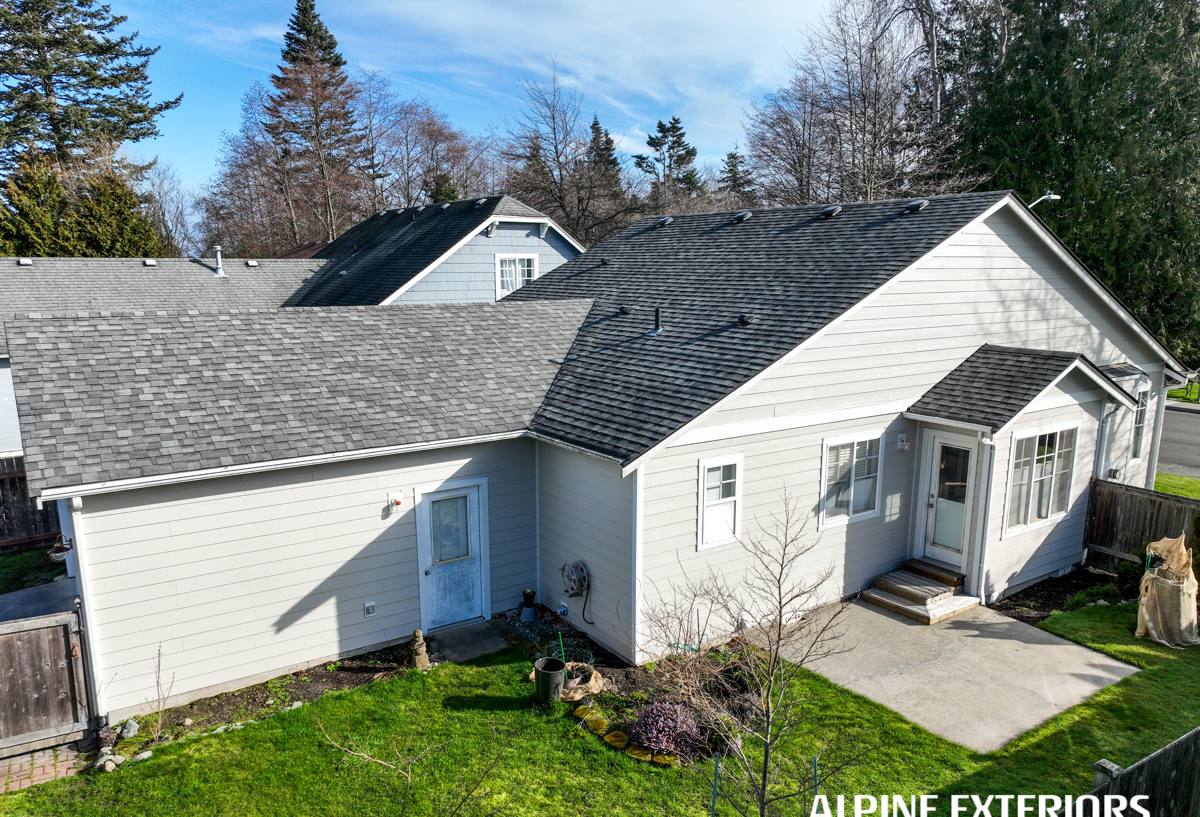
What Correct Metal Roofing Looks Like in a Wet, Wooded Setting
Underlayment and Moisture Barrier
Because metal panels are installed over a solid deck rather than woven into overlapping shingle courses, the underlayment underneath does more of the work protecting the home from wind-driven rain and any condensation that forms on the underside of the panels. In a climate like Big Lake's, we use a high-temperature synthetic or self-adhered underlayment rather than basic felt, and we pay particular attention to eave and valley protection, since those are the areas most exposed to standing water and ice-damming during cold snaps.
Fastening and Panel Seams
How a metal roof is fastened matters as much as the metal itself. Exposed-fastener panels rely on screws with rubber washers that compress the metal and seal the penetration; those washers degrade with age and sun exposure and eventually need attention. Standing seam panels use concealed clips instead, so there are no exposed fasteners for water or debris to work against. In a high-moisture area with a lot of tree litter, fewer exposed penetration points is a real long-term advantage.
Flashing and Penetrations
Most metal roof failures we're called out to inspect trace back to flashing, not the panels themselves — a chimney, vent pipe, or wall transition where the metal wasn't properly integrated. Every penetration needs step flashing, counterflashing, or a purpose-built boot sized for that specific detail, installed so water is directed out and away rather than sealed with caulk and hoped for the best.
Ventilation
A metal roof over an unventilated attic can trap moisture underneath the deck, especially in a shaded, humid setting like Big Lake. We check ridge and soffit ventilation as part of every metal roofing job, because a roof that can't breathe will eventually cause the plywood or OSB deck underneath to rot, regardless of how good the metal on top is.
Choosing the Right Metal Roofing System
Not every metal roof product is the right fit for every home or budget. Here's how the common options compare for a Skagit County property with significant tree cover and rain exposure:
| System | Best For | Moss & Moisture Resistance | Maintenance |
|---|---|---|---|
| Standing seam steel or aluminum | Long-term ownership, minimal maintenance | Excellent — concealed fasteners, smooth vertical panels shed debris | Low; periodic gutter and valley clearing |
| Exposed-fastener steel panels | Outbuildings, budget-conscious re-roofs | Good, but washers age and need inspection | Moderate; fastener check every few years |
| Stone-coated steel (shake or tile profile) | Homeowners wanting a traditional look with metal durability | Good; textured surface can hold organic debris more than smooth panels | Moderate; benefits from periodic soft washing |
For most Big Lake homes we recommend standing seam as the default starting point, simply because it minimizes the maintenance items that this climate tends to punish — exposed fasteners and debris-catching surfaces. That said, budget, roof pitch, and the look a homeowner wants all factor into the right call, and we walk through those trade-offs honestly rather than steering everyone toward the same product.
Moss, Tree Debris, and Big Lake's Wooded Lots
Many properties around Big Lake sit close to mature conifers, which means needles, cones, and organic debris collect on the roof year-round. On an asphalt shingle roof, that debris holds moisture against the granules and feeds moss growth directly on the roofing surface. On a properly installed metal roof, debris still lands on the roof, but it has far less to bond to — the panel surface doesn't hold water the way a shingle mat does, and moss has a much harder time establishing itself on bare metal.
That doesn't mean a metal roof near Big Lake's tree line is maintenance-free. Gutters and valleys still need to be cleared of needles and debris, and panel seams and flashing should be checked periodically to make sure nothing is damming water. We factor tree exposure into how we detail valleys and gutter systems on every job, because a roof that sheds water well but drains into a clogged gutter still causes problems at the fascia and soffit.
How We Handle a Metal Roofing Project
Inspection and Estimate
We start with a full roof and attic inspection — deck condition, existing ventilation, flashing points, and any signs of past moisture intrusion. That's also when we talk through panel options and give a written estimate, so there are no surprises once work starts.
Tear-Off or Overlay Decision
Metal roofing can sometimes be installed over an existing roof deck, but in a climate this wet, we generally recommend a full tear-off so we can inspect and, if needed, repair the deck underneath. Installing new roofing over a deck that's already retaining moisture just hides a problem instead of solving it.
Installation
We install underlayment, flashing, and panels in sequence, working eave to ridge, with particular care at valleys, penetrations, and wall transitions — the spots most likely to leak if rushed. Panels are fastened or clipped to manufacturer spec, not shortcut spacing.
Final Walkthrough
Before we consider the job done, we walk the roof and the attic with the homeowner, point out what was done, and go over basic maintenance so there's a clear picture of what upkeep, if any, the new roof needs going forward.
Why a Crew That Already Works Big Lake Makes a Difference
A roofing crew that works across a wide service area treats every roof the same way, regardless of local conditions. A crew that regularly works Big Lake and the surrounding Skagit County communities has already seen how tree-heavy lots load up valleys with debris, how the marine climate ages exposed fasteners, and which flashing details tend to fail first on older homes in this area. That local pattern recognition shows up in the details — where we add extra underlayment, how we handle a valley under a stand of firs, and what we flag during an inspection that a roofer unfamiliar with the area might not think to check.
It also matters for response time and accountability. A local crew is easy to reach if a question comes up after installation, and we're not disappearing to the next region once the job is finished.
Metal Roof Maintenance Checklist for Big Lake Homeowners
- Clear gutters and valleys of needles and debris at least twice a year, more often on heavily treed lots
- Visually check exposed fasteners (if applicable) for loose screws or worn washers every couple of years
- Inspect flashing around chimneys, vents, and wall transitions after major storms
- Keep overhanging branches trimmed back to reduce debris load and scuffing on panels
- Confirm attic ventilation isn't blocked by insulation or debris, since trapped moisture affects the deck from underneath
- Have the roof looked at after any significant windstorm, especially if branches or debris made contact
What Affects the Cost of a Metal Roof in This Area
Metal roofing costs more upfront than asphalt shingles, and the final number depends on several factors specific to the property and the system chosen:
- Panel type: standing seam typically costs more than exposed-fastener panels due to labor and material
- Roof complexity: valleys, dormers, and multiple penetrations add labor time and flashing work
- Tear-off vs. overlay: removing an old roof and repairing deck issues adds cost but avoids hiding problems
- Ventilation upgrades: adding or correcting ridge and soffit ventilation as part of the project
- Access: steep pitches or limited equipment access around mature trees can affect labor
We give straightforward, itemized estimates so homeowners can see exactly what's driving the cost, rather than a single lump-sum number with no explanation behind it.
If you're weighing metal roofing for a home near Big Lake, we're happy to take a look and talk through what actually makes sense for your roof and budget. Reach out for a free, no-pressure estimate using the form below.