 Skagit County
 Metal Roofing Built for Bow's Coastal Conditions
Bow sits close enough to Samish Bay and the open water of Skagit County that salt air is a real factor in how a roof ages here — not just a talking point. Add in the long, wet stretch of driving rain that defines a typical Pacific Northwest winter, plus a moss season that can run most of the year on shaded, north-facing slopes, and you've got a climate that is hard on roofing materials that aren't matched to it. Metal roofing, installed correctly, handles all three of these conditions better than most alternatives — but "installed correctly" is doing a lot of work in that sentence, and it's where a lot of metal roof problems actually start.
This page is about metal roofing specifically for homes in and around Bow — what the climate demands, what a correct installation actually involves, and how we approach the work when we're on your roof.
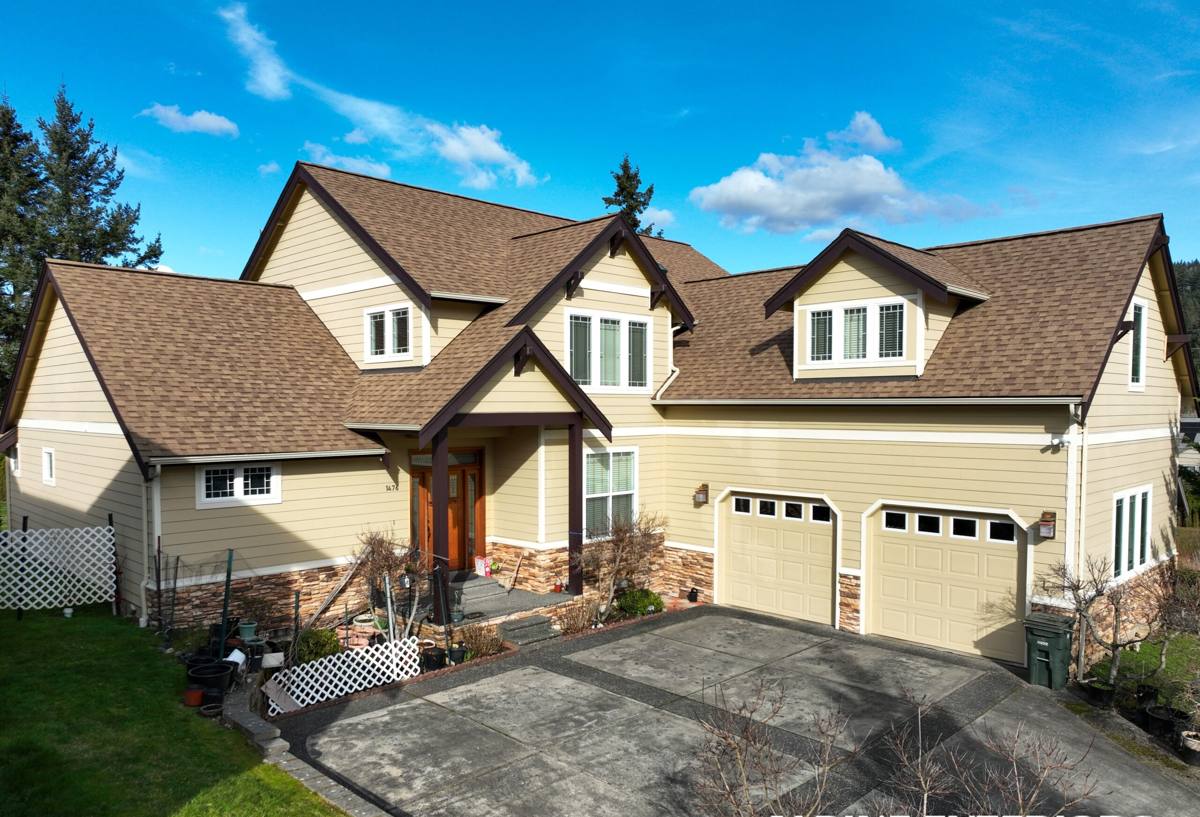
What Bow's Climate Actually Does to a Roof
Salt air and corrosion
Proximity to saltwater accelerates corrosion on any exposed metal — fasteners, flashing, panel edges — faster than it would happen further inland. This doesn't mean metal roofing is a bad choice near the water; it means the coating system, fastener grade, and flashing details matter more here than they would in a drier, inland part of the county.
Driving rain and wind-driven moisture
Storms coming off the water don't just drop rain straight down — wind pushes it sideways, under laps, up under ridge caps, and into any gap that a lazy installation leaves behind. A roof in Bow needs underlayment and flashing details that assume the rain isn't going to fall politely.
Moss and shaded roof sections
Tree cover and the region's damp, mild climate mean moss and algae growth are close to a year-round condition on shaded or north-facing roof planes, not just a late-winter nuisance. Moss holds moisture against a roof surface, and on the wrong material that moisture sits there long enough to cause real damage.
Why Metal Roofing Makes Sense Here
Metal sheds moss growth far better than asphalt shingles because there's no granulated, porous surface for spores to take hold in. It also handles wind-driven rain well when the panel seams and flashing are done right, since water has fewer places to collect and pool. And with the right coating and fastener specification, metal holds up to salt air exposure for decades rather than years.
That said, metal roofing is not automatically the right fit for every home or every budget, and it is not forgiving of a rushed or generic installation. The rest of this page is about what "done right" actually means for a Bow roof.
Choosing the Right Metal Roofing System
Not all metal roofing is the same product wearing different colors. The three systems we most often discuss with homeowners in this area differ in how they handle water, wind, and long-term maintenance:
| System | How It Sheds Water | Fastener Exposure | Typical Fit |
|---|---|---|---|
| Standing seam | Interlocking raised seams, no exposed penetrations on the field | Hidden clips, no exposed fasteners | Best long-term performance in driving rain and salt air; higher upfront cost |
| Exposed-fastener panel | Overlapping ribbed panels | Screws through the panel face, with gaskets | Lower cost option; gaskets and fasteners need periodic inspection |
| Stone-coated steel | Interlocking panels shaped to mimic shingle or tile profiles | Partially concealed depending on profile | Homeowners wanting a traditional look with metal's durability |
For homes closest to the water, or with a lot of shaded roof area prone to moss, we generally steer the conversation toward standing seam because there are no exposed fasteners for salt air to work on over time. Exposed-fastener systems can still be a sound choice, but the gaskets and screws become a maintenance item that needs to be checked, not forgotten.
What a Correct Metal Roof Installation Involves
Deck inspection and prep
Metal goes on top of a solid, dry deck. Any soft spots, old fastener holes, or moisture-damaged sheathing get addressed before a single panel goes down — covering up a problem with new material doesn't make it go away.
Underlayment matched to the exposure
Given how much wind-driven rain a Bow roof can see, we use underlayment products rated for high-moisture, high-wind exposure rather than a minimum-spec product. This is the layer that protects your home if wind ever pushes water past the panel seams.
Flashing at every transition
Valleys, chimneys, skylights, and wall intersections are where the vast majority of roof leaks originate, on metal or any other material. Correct flashing detail — not just caulk — is what keeps wind-driven rain from finding its way in at these points.
Fastener and panel-edge treatment
In a salt-air environment, fastener grade matters. We use fasteners and panel-edge treatments specified for coastal exposure rather than standard-grade hardware, because that's the detail that determines whether corrosion shows up in five years or twenty-five.
Ventilation
A roof that traps moisture underneath the metal is a roof that will develop problems regardless of how good the panels are. Proper ridge and soffit ventilation keeps moisture from condensing against the underside of the deck.
Our Process
- Inspection and assessment — we look at the existing roof, deck condition, ventilation, and how exposed the home is to wind and salt air off the water.
- System recommendation — based on that assessment, we walk you through which metal system fits your home, your roof's exposure, and your budget, honestly, including the trade-offs.
- Tear-off and deck repair — old roofing comes off, and any deck issues get fixed before new material goes down.
- Underlayment and flashing — the moisture-management layer goes in first, sized to the exposure the roof actually faces.
- Panel installation — panels, seams, and fasteners installed to manufacturer spec and matched to coastal conditions.
- Final walk-through — we go over the finished roof with you, including what maintenance to expect and when.
Maintenance in a Moss-Prone, Salt-Air Environment
Metal roofing needs less maintenance than shingles, but "less" isn't "none," especially this close to the water. A simple annual check goes a long way:
- Clear debris and organic buildup out of valleys and along the eaves, where moisture and moss are most likely to collect
- Check exposed fasteners (if your system has them) for early signs of corrosion or backing out
- Look at flashing around chimneys, skylights, and wall transitions for gaps or sealant failure
- Confirm gutters are clear so water isn't backing up under the roof edge during heavy rain
- Watch shaded, north-facing sections for moss or algae taking hold, even on metal
None of this is intensive work, but skipping it is how small issues near the water turn into expensive ones.
What Affects the Cost of a Metal Roof
Metal roofing costs more upfront than asphalt shingles, and the range on any given home depends on a handful of factors:
| Factor | Why It Matters |
|---|---|
| Panel system chosen | Standing seam runs higher than exposed-fastener panel systems |
| Roof complexity | More valleys, penetrations, and transitions mean more flashing work and labor time |
| Deck condition | Any sheathing repair needed before installation adds to the scope |
| Ventilation upgrades | Older homes often need ridge or soffit vent improvements as part of the job |
| Tear-off scope | Full removal of existing roofing versus a simpler recover affects labor and disposal cost |
We give straightforward, honest ranges once we've actually seen the roof — not a number pulled from a national average that ignores your home's specifics.
Why It Matters to Hire a Crew That Already Works This Area
A metal roof installed to a generic spec sheet, without accounting for Bow's specific mix of salt air, wind-driven rain, and moss exposure, will underperform one that's specified for those conditions from the start. A crew that regularly works Skagit County's coastal communities knows which flashing details actually hold up here, which fastener grades are worth the extra cost, and which roof sections on a given lot are most likely to need extra ventilation or moss management. That local pattern recognition is the difference between a roof that needs attention in five years and one that quietly does its job for decades.
If you're weighing metal roofing for a home in Bow, we're happy to take a look and walk you through what your specific roof needs — no pressure, no generic sales pitch. Reach out for a free estimate using the form below.