 Skagit County
 Why Board & Batten Behaves Differently in Mount Vernon
Board and batten is one of the oldest siding profiles in the Pacific Northwest, and it's still one of the most requested looks in Mount Vernon — on farmhouses along the valley, on newer builds going for a modern-craftsman look, and on additions where a homeowner wants the vertical lines to break up a long wall. The profile itself is simple: wide panels or boards, with narrower battens covering the seams. What's not simple is keeping that seam system watertight for decades in a place where the weather doesn't cooperate.
Mount Vernon sits in the lower Skagit Valley, close enough to Puget Sound and Padilla Bay to catch salt-laden air on a regular basis, and low enough in the valley that fog, driving rain off the water, and long stretches of damp, low-light weather are the norm rather than the exception. That combination — salt air, driving rain, and a moss season that can run half the year — is hard on any exterior product, but it's particularly unforgiving on a siding style built around a field of vertical seams. Every batten joint is a place where wind-driven rain can be pushed sideways into the wall assembly if the install wasn't detailed correctly, and every north-facing or shaded elevation is a place where moss and algae will take hold if the material and the finish don't resist it.
None of this means board and batten is a bad choice for this area. It means the material behind the look and the crew installing it matter more here than they would in a drier climate.
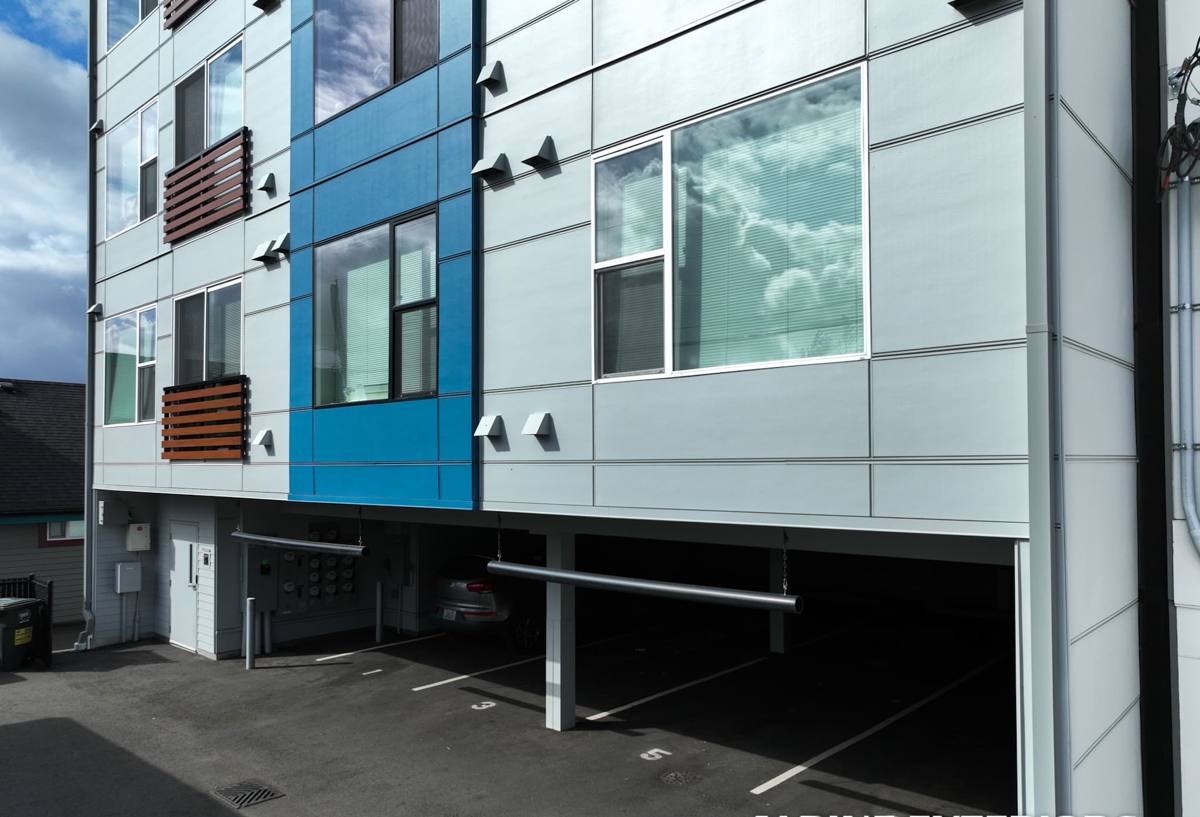
What a Correct Board & Batten Job Actually Requires
A board and batten wall is only as good as what's happening behind the boards. The visible battens get the attention, but the parts that determine whether the wall stays dry are mostly hidden once the job is done.
Weather-Resistive Barrier and Drainage Plane
Every board and batten installation needs a continuous weather-resistive barrier behind the siding, and in a climate like Skagit County's, we treat a drainage gap as standard practice rather than an upgrade. A rainscreen gap gives any water that does get past the outer surface a path to drain and evaporate instead of sitting against the sheathing. On a profile with as many vertical seams as board and batten, this is one of the details that separates a wall that lasts thirty years from one that starts showing rot at fifteen.
Fastening and Flashing
Battens need to be fastened into structural framing, not just into the panel below, and every board and batten job needs proper flashing at windows, doors, and any horizontal transition — like where the siding meets a porch roof or a lower wall section. Skipped flashing is one of the most common causes of hidden water damage we find when we tear off older siding in this area.
Panel and Batten Spacing
Fiber cement expands and contracts with temperature and moisture, just less than wood does. Manufacturer-specified gaps at butt joints and around penetrations aren't optional details — they're what keeps the panels from buckling or cracking as the seasons change.
Why We Install James Hardie for Board & Batten Here — and Not Alternatives
We install James Hardie fiber cement exclusively, and board and batten is a place where that decision shows its value clearly. HardiePanel vertical siding, paired with Hardie battens or trim, gives us a substrate that doesn't absorb water the way wood-based products can and won't support the kind of fungal growth that leads to rot.
We get asked why we don't offer LP SmartSide, vinyl board and batten panels, or primed cedar boards, since all three show up in this market. Here's the honest answer on each:
LP SmartSide
LP SmartSide is an engineered wood product with a real track record and a reasonable price point. Its strand-based core, treated properly, holds up better than old-style hardboard. But it's still wood at its core, and wood-based siding depends heavily on caulking, paint maintenance, and cut-edge sealing staying intact year after year. In a climate with this much sustained moisture and moss pressure, that maintenance margin is thinner than we're comfortable standing behind.
Vinyl Board & Batten
Vinyl board and batten panels are affordable and low-maintenance in the sense that they don't need painting, but they're a thin material that can warp in direct sun, crack in a cold snap, and rarely achieves the crisp, deep-shadow-line look that makes board and batten attractive in the first place. It also can't be repainted to change a home's color down the road.
Primed Cedar or Spruce Boards
Real wood board and batten has genuine character, and some homeowners want that specifically. But solid wood boards move more with moisture than fiber cement, need repainting on a real schedule, and in a marine-influenced climate like this one, are the material most likely to show moss growth and soft spots first — especially on north and west elevations that don't get much drying sun.
James Hardie's HZ5 product line is engineered for climates with exactly this kind of moisture exposure, comes with a factory-applied ColorPlus finish that resists fading and doesn't need repainting on the same schedule as field-painted wood, and carries a strong transferable limited warranty. That's the combination we're willing to put our name behind.
| Factor | James Hardie Fiber Cement | LP SmartSide | Vinyl Board & Batten | Cedar/Spruce Board |
|---|---|---|---|---|
| Moisture resistance | Non-combustible, engineered against moisture damage | Treated engineered wood, moderate | Doesn't absorb water, but seams can trap it | Lowest — wood absorbs and swells |
| Moss/algae resistance | Factory finish resists growth | Depends on paint maintenance | Can grow moss in shaded, damp seams | Most susceptible without frequent cleaning |
| Finish longevity | ColorPlus factory finish, long fade resistance | Field or factory paint, repaint eventually needed | Color molded in, cannot repaint | Needs repainting on a regular cycle |
| Warranty | Strong transferable limited warranty | Manufacturer warranty, shorter track record locally | Varies, often limited | Typically none beyond installer workmanship |
| Upfront cost | Mid-to-higher | Lower-to-mid | Lowest | Mid-to-high depending on grade |
Our Process for Mount Vernon Board & Batten Projects
Every board and batten job on a home in this area follows the same sequence, whether it's a full re-side or a single addition:
- Site walk and moisture check. We look at the existing wall assembly, check for soft spots or hidden rot around windows and lower wall sections, and confirm what's actually behind the current siding before quoting the job.
- Sheathing repair where needed. Any water-damaged sheathing gets replaced before new siding goes on — covering damaged sheathing with new siding just hides a problem that will resurface.
- Weather-resistive barrier and rainscreen installation. This is where the long-term performance of the wall gets decided, and it's not a step we shortcut.
- Flashing at every penetration. Windows, doors, hose bibs, light fixtures — anything that breaks the plane of the wall gets properly flashed before panels go up.
- Hardie panel and batten installation to manufacturer spec. Correct fastener spacing, correct gaps, correct nailing pattern into framing.
- Final inspection and cleanup. We walk the finished job with the homeowner before we call it done.
What We See on Older Board & Batten Homes in This Area
When we're called out to look at an aging board and batten wall in Mount Vernon or elsewhere in the Skagit Valley, a few patterns show up over and over:
- Soft, spongy boards at the base of walls where splashback and standing moisture have had years to work on wood-based siding
- Cracked or curling battens where the original fasteners weren't set into structural framing
- Heavy moss and algae buildup on north-facing and shaded elevations that never fully dry between rain events
- Paint failure and exposed grain on cedar boards that were due for repainting years earlier
- Water staining around window trim where flashing was missing or installed incorrectly
Almost none of these are failures of the board and batten look itself — they're failures of material choice or installation detail, which is exactly why both matter as much as they do here.
Maintenance a Mount Vernon Homeowner Should Actually Expect
Even with the right material, board and batten siding in this climate isn't zero-maintenance — nothing exposed to this much rain and salt air is. But the maintenance load with James Hardie is meaningfully lighter than with wood or engineered-wood alternatives.
- Rinse down shaded, north-facing walls once or twice a year to knock back moss and algae before it takes hold
- Keep gutters clean and downspouts directed away from the wall to reduce splashback at the base of the siding
- Trim back vegetation and tree limbs that keep a wall section shaded and damp
- Check caulking at trim and penetrations every couple of years and touch up as needed
- Have any soft spots or discoloration checked promptly rather than waiting — it's cheaper to catch early
Why Hiring a Crew That Already Works Mount Vernon Matters
Board and batten installation isn't unique to this area, but the conditions it has to hold up against here are specific: salt air moving in off the Sound and Padilla Bay, driving rain that comes in sideways during winter storms, and a moss season that stretches across most of the year in shaded spots. A crew that installs siding across a wide range of climates might not default to a rainscreen gap or the right flashing details unless asked — because in a drier region, skipping them doesn't show up as a problem for years.
Working this area regularly means we've seen how board and batten walls actually age here, not just how they're supposed to perform on paper. That shapes real decisions on every job: where we add extra flashing attention, which elevations need extra care in the drainage plane, and why we don't cut corners on the details that don't show up until the first hard winter has passed.
Get a Straight Answer for Your Home
If you're weighing board and batten siding for a home in Mount Vernon or elsewhere in Skagit County, we're glad to take a look and give you an honest read on what your walls need — whether that's a full re-side, a repair to an existing installation, or just a second opinion. Reach out for a free, no-pressure estimate using the form below.