 Skagit County
 Windows Built for the Skagit Valley, Not Just Any House
Mount Vernon sits in the Skagit River valley, where marine air off Puget Sound meets low-lying farmland and a long, wet stretch of fall through spring. That combination means moisture gets into places a lot of window installations never account for: sash corners, sill pans, and the gap between the window unit and the framing itself. Add in a moss season that can run half the year on shaded north and west walls, and it's easy to see why windows that were installed without real flashing and drainage detail start failing years before they should.
Custom windows for a Mount Vernon home aren't about picking a fancy shape or a designer grid pattern, though we can do that too. It's about sizing, sealing, and detailing each opening correctly for a house that sits in a valley climate — driving rain on exposed elevations, condensation risk on cooler interior walls, and window openings that were often framed decades ago to dimensions that don't match anything off the shelf.
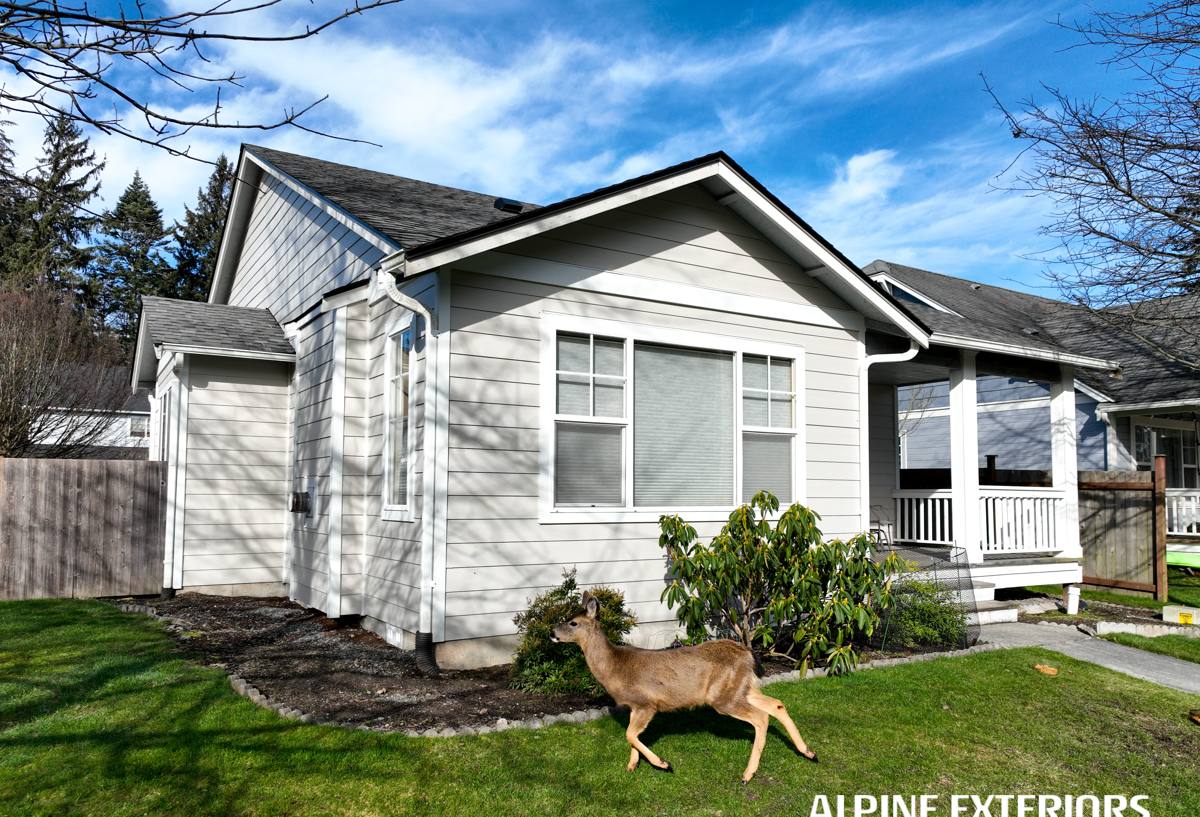
What "Custom" Actually Means Here
Most Skagit County homes, especially older farmhouses and homes built before standardized window sizing became common, have openings that are slightly out of square or don't match current manufacturer stock sizes. "Custom" simply means the window is built to the actual opening rather than forcing the opening to fit a stock window. That matters more here than in a lot of places, because a poor fit is exactly where wind-driven rain finds its way in.
Custom also covers homes where the goal isn't a straight swap — bumping up glass size to bring in more light on a shaded lot, matching a specific historic profile in an older Mount Vernon neighborhood, or replacing a mix of window styles with something consistent across the whole house.
When Custom Sizing Is Worth It
- Openings that are out of square by more than a small amount, common in homes over 30-40 years old
- Additions or remodels where window openings don't match the original house
- Replacing an odd shape — arched, angled, or an oversized picture window — that stock sizing won't cover
- Wanting to change the opening size itself, not just swap the window in the existing hole
Signs Your Current Windows Are Losing the Fight
In this climate, window failure is usually gradual and shows up as moisture damage before it shows up as a broken window. Homeowners in Mount Vernon should watch for:
- Fogging or a permanent haze between the panes of double-pane glass — the seal has failed and the gas fill is gone
- Soft or discolored wood at the sill or bottom corners of the frame, inside or outside
- Moss or dark streaking building up on the exterior trim faster than on the rest of the siding
- Drafts you can feel on a windy day even with the window latched shut
- Difficulty opening, closing, or locking — swollen wood or a warped vinyl frame
- Condensation forming on the inside of the glass regularly through fall and winter
Any one of these on its own isn't an emergency. Several of them together, especially moisture damage at the sill, usually means water has been getting behind the window for a while.
What a Correct Installation Actually Involves
The window itself is only part of the job. Most window failures we get called out to repair in Skagit County trace back to installation shortcuts, not the product. A correct install includes:
Before the Old Window Comes Out
Checking the rough opening for existing rot or water staining, and confirming the new unit's dimensions against the actual opening rather than the original paperwork.
Flashing and Drainage
A sill pan that sheds water outward, proper head and jamb flashing that integrates with the house's water-resistive barrier, and a drainage path so any water that does get behind the trim has somewhere to go besides the framing.
Sealing Without Trapping Moisture
Sealant belongs on the exterior face and at controlled points — not packed solid around the entire frame, which can trap moisture inside the wall cavity instead of letting it escape. This is one of the more common mistakes we see from past installs.
Insulating the Gap
Low-expansion foam or backer rod and sealant around the frame perimeter, sized to the actual gap so the frame isn't bowed and the window operates smoothly.
Interior and Exterior Trim
Trim reset cleanly, caulked at the right joints, and painted or finished to match — not just caulked over gaps and called done.
Frame Material Comparison
There's no single "best" frame material — the right choice depends on the elevation, the home's style, and how much upkeep you want to take on. Here's how the common options hold up in a wet, moss-prone climate like Mount Vernon's:
| Material | Moisture Behavior | Maintenance | Best Fit |
|---|---|---|---|
| Vinyl | Won't rot; seams and welds are the weak point if installed poorly | Low — occasional cleaning | Most standard replacements, budget-conscious projects |
| Fiberglass | Very stable, minimal expansion/contraction with wet-dry cycles | Low | Larger openings, homes wanting a longer-term investment |
| Wood (clad) | Good if cladding and flashing are correct; exposed wood needs protection from driving rain | Higher — finish upkeep on any exposed wood | Historic-style homes, specific architectural matches |
| Aluminum | Prone to condensation without a thermal break; can feel cold in winter | Low | Sunrooms or specific architectural needs, not a general recommendation here |
We steer most Mount Vernon homeowners toward vinyl or fiberglass because they handle repeated wet-dry cycling without the ongoing finish maintenance that clad wood requires. That's a judgment call based on this climate and upkeep tolerance, not a claim that other materials are bad — clad wood still makes sense on homes where matching a specific historic look is the priority, as long as the owner is willing to keep up with the finish.
Our Process, Start to Finish
- On-site assessment. We look at every opening individually — sizing, framing condition, and any existing moisture damage — rather than quoting off a phone call.
- Honest scope and estimate. If we find rot or damage during the walkthrough, we tell you before work starts, not after the old window is already out.
- Ordering to the actual opening. Custom units are measured and ordered to fit, not adjusted to fit a stock size after the fact.
- Removal and opening prep. Old windows come out carefully, framing is checked and repaired if needed, and the opening is prepped before anything new goes in.
- Install with proper flashing and sealing. Sill pan, flashing integration, insulation, and sealant applied in that order — not skipped for speed.
- Trim, cleanup, and walkthrough. Interior and exterior trim finished, job site cleaned, and every window operated and checked with you before we call it done.
Energy Efficiency in a River Valley Climate
Mount Vernon doesn't see the extreme temperature swings of drier climates, but the valley's humidity and marine air mean condensation and heat loss are the bigger concerns, not summer heat gain. Double-pane glass with a low-E coating and an argon or krypton gas fill is the standard baseline for new installs here, and it makes a real difference in reducing that cold-glass condensation that leads to sill rot over time. We size glass packages to the specific elevation and exposure rather than using the same spec on every wall of the house.
Why a Crew That Already Works Mount Vernon Matters
Window installation done wrong doesn't usually fail in the first year — it fails in year three or four, after enough wet seasons have worked past a bad seal. A crew that's installed windows across Skagit County and dealt with the moss, the driving rain off the valley, and the mix of older and newer construction in this area knows what to check before the old window ever comes out. That's the difference between a window that's still performing in ten years and one that needs the trim pulled apart again in five.
We also know what local building department requirements typically apply to window replacements and egress sizing in bedrooms, which saves back-and-forth if permits are needed for your project.
Keeping New Windows Performing
A correctly installed window still benefits from basic upkeep:
- Clear weep holes and track drainage at the start of the wet season so water isn't pooling in the frame
- Keep gutters and downspouts directing water away from window heads, especially on north and west walls prone to moss
- Re-caulk exterior trim joints if you notice cracking or gaps, rather than waiting for water intrusion
- Wipe down interior sills during heavy condensation periods to prevent long-term moisture buildup
If your Mount Vernon home has windows that are fogging, drafting, or showing sill damage — or you're planning a remodel and want openings sized and detailed correctly the first time — we're happy to walk the house with you and give you a straight assessment. Reach out for a free, no-pressure estimate using the form below.