 Skagit County
 Building a Deck That Holds Up in Skagit County Weather
A deck in Mount Vernon has a harder job than it looks. It's not just a platform to put furniture on — it's an outdoor structure that sits exposed to Skagit County's wet season for months at a time, gets walked on wet more often than dry, and has to keep its footings, framing, and fasteners solid year after year without anyone thinking about it. Most deck problems we get called out for weren't caused by bad luck. They were caused by a build that didn't account for how this climate actually behaves.
We build and repair decks throughout the Mount Vernon area as part of our regular service territory, not as an occasional add-on to siding work. That matters because a deck and the exterior of a house interact more than people expect — flashing at the ledger board ties directly into how water moves around your siding and foundation, and getting that detail wrong is one of the most common causes of hidden rot we find.
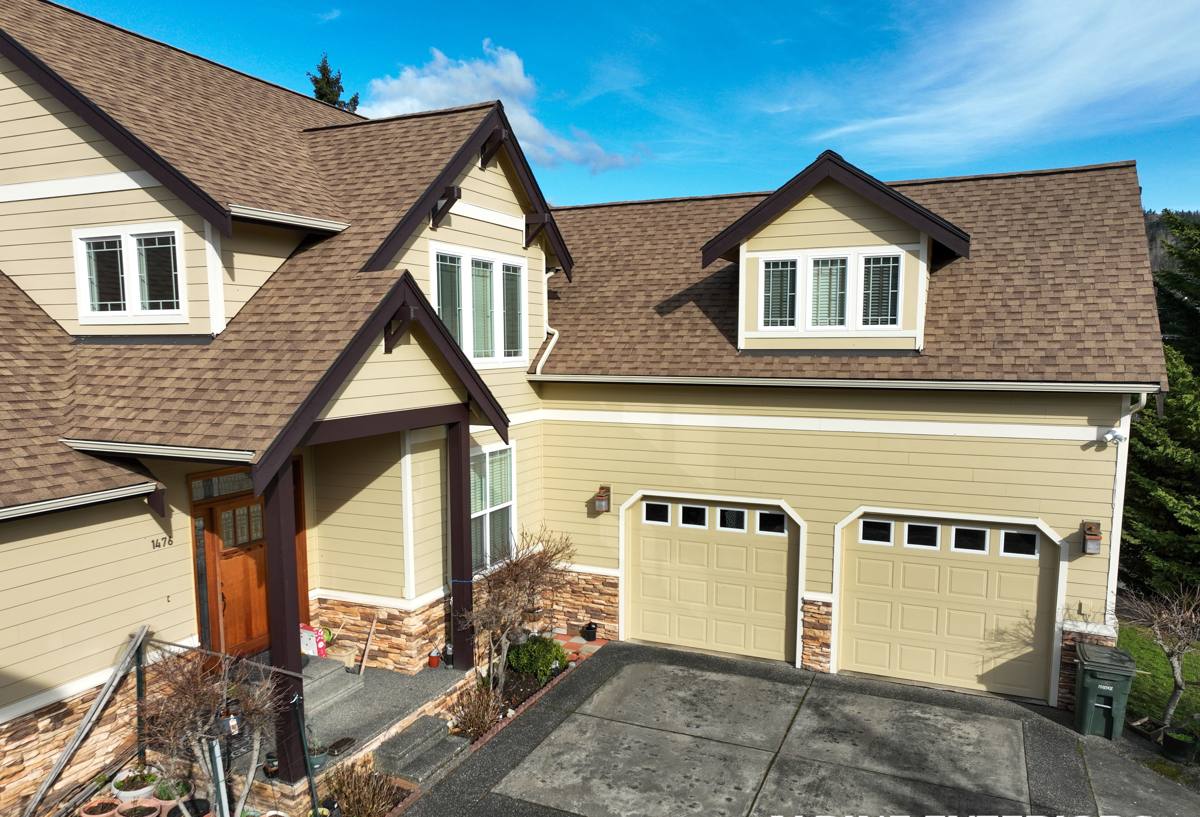
What Mount Vernon's Climate Does to a Deck
Skagit County sees a long stretch of the year where decks rarely get a chance to fully dry out. Driving rain, low winter sun angles, and shade from trees or the house itself all combine to keep deck boards damp for extended periods. That dampness is exactly what moss, algae, and mildew need to take hold, and once they're established on a deck surface they hold even more moisture against the wood.
The region also carries some marine influence in its weather patterns — salt-tinged air moving through with storms off the Sound, freeze-thaw cycles in the colder months, and humidity that lingers even when it isn't actively raining. None of that is dramatic on its own, but it adds up over years. Fasteners corrode faster than they would in a dry climate. Untreated cut ends on lumber absorb water and start to check and split. Footings that weren't set below frost depth can shift slightly each winter.
None of this means a deck can't last here. It means the build has to be planned around these conditions from the footings up, not just sealed and hoped for.
The Moss Problem Specifically
Moss on a deck isn't just a cosmetic issue — it's a maintenance and safety one. A mossy deck surface gets slick fast, and moss holding moisture against wood accelerates rot in exactly the spots you can't see until a board finally gives. Decks with poor sun exposure, tight board spacing, or inadequate drainage underneath tend to grow moss noticeably faster than decks built with airflow and drainage in mind from the start.
Getting the Foundation Right: Footings and Ledger Attachment
Everything about a deck's long-term performance starts below the surface. Footings need to be sized and set to local frost depth requirements so they don't heave or settle unevenly over time — this is inspected for a reason, and it's not a step we'd ever suggest shortcutting even where it's tempting to save time.
Where the deck attaches to the house — the ledger board — is the single most common failure point we see on older decks in this area. If that connection isn't properly flashed to shed water away from the house framing, water works its way behind the ledger and rots both the deck attachment and the wall framing behind it, often silently for years. A correct ledger installation uses proper flashing, is fastened with lag bolts or structural screws rated for the load (never just nails), and is detailed so water is directed away from, not into, the house structure.
Decking Material Options: A Local Comparison
There's no single "best" decking material — there's a best fit for your budget, how much upkeep you want to take on, and how the deck will be used. Here's how the common options actually compare for a Skagit County home:
| Material | Upfront Cost | Maintenance | Moisture & Moss Resistance | Typical Lifespan |
|---|---|---|---|---|
| Pressure-treated lumber | Lowest | Annual cleaning, periodic sealing | Fair — needs upkeep to stay ahead of moss and checking | 15–20 years with maintenance |
| Cedar | Moderate | Regular cleaning and re-sealing to hold color | Naturally decay-resistant, but surface still needs care | 15–25 years with maintenance |
| Capped composite | Higher | Occasional washing, no sealing | Strong — doesn't absorb water like wood | 25–30+ years |
| PVC decking | Highest | Occasional washing | Excellent — fully synthetic surface | 30+ years |
Our default recommendation for most Mount Vernon homeowners is capped composite decking for the walking surface, because it holds up well against the wet-dry cycling and moss pressure common here without demanding annual maintenance. That said, plenty of homeowners prefer the look and lower upfront cost of cedar or treated lumber, and we'll build a quality deck with either — the framing and structural standards underneath don't change based on what's on top.
Framing, Drainage, and Airflow Underneath
A deck that sheds water well on the surface but traps it underneath will still have problems. Joists should be spaced and sized to the actual load and span, sloped slightly away from the house for drainage, and — where the deck is low to the ground or covers usable space below — built with enough clearance and ventilation that the area underneath can actually dry out between rain events.
We also pay attention to how boards are spaced. Gaps that are too tight trap debris and hold moisture; gaps that are correctly sized let water and leaves pass through instead of collecting. It's a small detail that has an outsized effect on how much moss and grime builds up over a wet Skagit County winter.
Railings, Fasteners, and Code Requirements
Guardrails, baluster spacing, and stair rail height are all governed by code, and for good reason — this is a safety system, not a design choice. We build to the current requirements rather than to whatever the previous deck happened to have, which matters especially on rebuilds and repairs of older decks that may predate current standards.
Fasteners matter more here than in a dry climate. We use stainless steel or coated fasteners rated for exterior and ground-contact use, because standard fasteners corrode noticeably faster under the humidity and moisture cycling typical of this region. Hidden fastener systems are also an option for composite decking, giving a cleaner surface with no exposed screw heads to catch moisture or wear.
Maintenance Reality: What Keeps a Deck Looking Good Here
Even a well-built deck needs some seasonal attention in this climate. What that attention looks like depends on the material, but the underlying tasks are similar:
- Sweep debris off the surface regularly, especially in fall when leaves and needles collect and trap moisture
- Wash the deck surface at least once a year to remove early moss and algae growth before it takes hold
- Check and re-seal wood decking on the manufacturer's recommended schedule — skipping this is the top reason wood decks fail early here
- Keep gutters and downspouts near the deck clear so water isn't dumping directly onto or under it
- Trim back vegetation that's shading the deck and keeping it damp longer than necessary
- Inspect ledger board flashing and fasteners periodically for signs of rust or water staining
- Address any soft or spongy boards immediately rather than waiting — localized rot spreads
Our Process for a Mount Vernon Deck Build
We start with an on-site evaluation of the space, the house's existing structure where the deck will attach, and what you actually want to use the deck for — those factors drive material and layout recommendations more than anything else. From there we handle design, permitting, and scheduling around Skagit County's weather so footings and framing go in during a stretch that gives concrete and materials a fair chance to perform as intended.
Construction follows in order: footings and posts, structural framing with correct ledger flashing, decking installation, then railings and stairs. We walk the finished deck with you before calling the job done, and we're straightforward about what maintenance the specific materials you chose will need going forward — no surprises a year in.
Why a Local Skagit County Crew Matters
A deck built by a crew that doesn't regularly work in this climate can still look right on the day it's finished. The problems show up later — in flashing that wasn't detailed for driving rain, in fastener choices that corrode faster than expected, or in drainage that wasn't planned for a genuinely wet season rather than an occasional shower. We work in Mount Vernon and across Skagit County regularly enough to know how footings, framing, and materials actually perform here over years, not just on installation day, and we build accordingly.
If you're planning a new deck or dealing with an aging one that's showing its age, we're glad to take a look and talk through honest options for your home. Reach out for a free, no-pressure estimate using the form below.