 Skagit County
 Deck Repair Built for Mount Vernon's Weather
Mount Vernon sits in the heart of Skagit County, where marine air off the Salish Sea, long stretches of driving rain, and shaded, moisture-holding yards put decks through a slower but steadier kind of wear than homes see in drier climates. A deck here doesn't usually fail all at once. It fails in the spots where water sits the longest: the ledger board against the house, the post bases near grade, the joints between boards, and any area that stays shaded and damp through the fall and winter. If you own a home in Mount Vernon and your deck feels soft underfoot, has boards that stay dark and slick longer than the rest, or shows gaps where fasteners used to hold tight, that's the local climate doing exactly what it does to untreated or aging wood.
We repair decks in Mount Vernon and throughout Skagit County, and the approach we take reflects what actually happens to decks here versus decks in a drier part of the state. Salt-tinged air moving inland from the county's waterways accelerates corrosion on fasteners and metal hardware. A long moss season means organic growth gets a foothold on horizontal surfaces almost every winter, holding moisture against the wood long after a storm has passed. None of that means a deck is doomed — it means repairs need to account for how water moves through and off the structure, not just patch the boards that look bad.
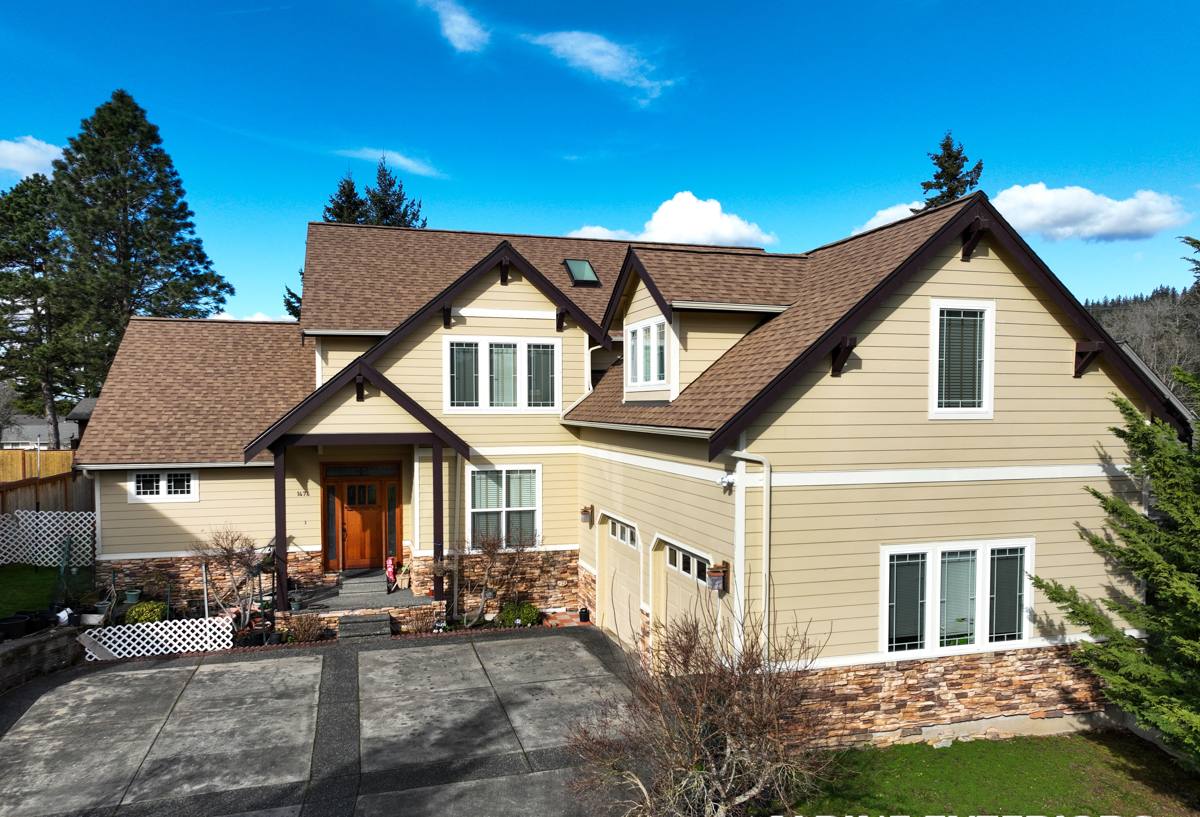
What Skagit County's Climate Does to a Deck
Moisture That Doesn't Let Up
Unlike a dry-summer climate where wood gets a real chance to fully dry out between rain events, Mount Vernon's wet season stretches long enough that decking, especially on the north or shaded side of a house, can stay damp for weeks. That sustained moisture is what drives rot, not any single storm.
Moss and Organic Buildup
Moss and algae take hold fastest on horizontal deck boards that don't get much direct sun. Beyond looking bad and making the surface slick, a moss layer holds water against the wood grain, which is exactly the condition that accelerates decay underneath a surface that may still look intact.
Hardware Corrosion
Fasteners, joist hangers, and post hardware exposed to the region's damp, salt-influenced air corrode faster than the same hardware would inland or in a drier climate. Corroded hardware loses holding strength well before it looks obviously rusted through, which is why hardware inspection is part of any repair we do, not just a visual check on the wood.
Freeze-Thaw Cycling
Skagit County doesn't see deep freezes often, but it does see repeated light freeze-thaw cycles through the winter. Water that's already worked into a crack or a fastener hole expands and contracts repeatedly, widening small problems into structural ones over a few seasons.
Where Deck Damage Actually Starts
Most deck failures we find in this area trace back to one of a handful of predictable spots. Knowing where to look is half of doing the repair correctly.
- The ledger board connection — where the deck attaches to the house is the single most important structural point on the deck, and it's also where water runoff from the house siding or roofline tends to concentrate.
- Post bases and footings — wood posts that sit close to grade or in contact with soil hold moisture longest and rot from the bottom up, often invisibly until the post is compromised.
- Joist ends — the cut ends of joists are more absorbent than the flat faces of the lumber, and they're frequently where rot starts even when the top of the joist looks fine.
- Board fastener holes — every screw or nail hole is a small entry point for water; over years, these are where individual boards start to cup, split, or loosen.
- Railing posts — railings take lateral stress every time someone leans on them, and if the post attachment has softened from moisture, that stress finds the weak point fast.
What a Correct Deck Repair Actually Involves
A deck repair that's done right starts with figuring out how far the damage actually extends, not just replacing what's visible from the top. We probe suspect boards, joists, and posts with an awl or screwdriver to find soft wood, because rot under paint or stain can look sound from a few feet away and be structurally gone underneath.
Diagnosis Before Anything Gets Replaced
Before we quote or replace anything, we check the ledger flashing and attachment, the condition of joist hangers and other hardware, post bases, and the overall drainage pattern — does water pool anywhere on the deck surface, and if so, why. Skipping this step is how a homeowner ends up paying to replace boards over a joist that was already failing.
Structural Repairs Come First
If joists, the ledger connection, or posts show rot or hardware failure, those get addressed before any cosmetic board replacement. There's no point putting new decking on top of a frame that isn't sound — it just hides the problem for another season or two.
Matching or Upgrading Hardware
Given the corrosion pressure from this region's air, we use fasteners and hangers rated for exterior, coastal-adjacent exposure rather than standard interior-grade hardware, even on repairs where only a section of the deck is being touched.
Board Replacement Done Board-by-Board
Individual boards that are cupped, split, or soft get replaced rather than resurfaced. We don't recommend covering deteriorating boards with a new surface layer — it traps moisture against wood that's already compromised and moves the problem underground instead of solving it.
Addressing Drainage and Airflow
Where we can, we improve the conditions that caused the damage in the first place — spacing boards properly for drainage, clearing debris that traps moisture underneath the deck, and making sure the area under the deck isn't holding water against structural members.
Repair or Replace: How We Help You Decide
Not every deck problem calls for a full rebuild, and not every deck is worth patching indefinitely. The honest answer depends on how much of the structure — not just the surface boards — is affected.
| Factor | Leans Toward Repair | Leans Toward Replacement |
|---|---|---|
| Extent of rot | Isolated to a few boards or one section | Present in multiple joists, the ledger, or several posts |
| Age of structure | Under 15 years, built with treated lumber | Original construction is decades old or of unknown lumber grade |
| Framing condition | Frame probes solid, hardware intact | Frame shows soft spots or corroded hardware throughout |
| Code compliance | Railing height, spacing, and attachment already meet current code | Railings or attachment don't meet current safety code |
| Budget goal | Extend usable life a number of years | Want a long-term reset and possibly a different layout or material |
We'll walk the deck with you, show you what we find, and give you a straight answer on which side of that line your deck falls on. A repair that's papering over a structural problem isn't a service worth selling, and we won't recommend one.
Our Process for Mount Vernon Deck Repairs
- On-site inspection. We walk the full deck, probe for soft wood, and check the ledger, joists, posts, and hardware, not just the top surface.
- Written scope and options. You get a clear explanation of what's failing, why, and what it will take to fix it correctly, including repair-versus-replace options where they apply.
- Structural work first. Ledger, framing, and hardware issues are corrected before any surface work begins.
- Board and railing repair. Damaged boards and railing components are replaced individually with materials suited to this climate.
- Final check and cleanup. We confirm the deck is solid underfoot at every point we worked on, and we leave the site clean.
Why Local Experience with Mount Vernon Decks Matters
A crew that works Skagit County regularly already knows which parts of a deck fail first in this climate and what building conditions are typical in the area — shaded lots, older homes with decks added or rebuilt over the years, and the moisture patterns that come with proximity to the county's waterways. That local pattern recognition shortens the diagnosis and means fewer surprises once repair work starts. It also means we're not guessing at what hardware or fastener grade holds up here versus somewhere drier — we see the results of that choice on decks around the county every season.
Being local also means we're not a one-time crew that disappears after the invoice is paid. If a repair doesn't hold up the way it should, or a related issue shows up later, we're still the same company down the road, not a name you have to search for again.
Simple Maintenance That Extends a Repair's Life
Once repairs are done, a little seasonal attention goes a long way in this climate:
- Clear leaves and debris off the deck surface and out from underneath it before the wet season sets in.
- Address moss buildup early in the season rather than letting it establish over winter.
- Reseal or restain exposed wood on the schedule the product calls for — UV and rain both break down finishes faster here than in a drier region.
- Check railings and stair connections periodically for looseness, since that's often the first sign of a fastener or post issue developing.
- Keep gutters and downspouts near the deck clear so runoff isn't draining directly onto or under the structure.
Get a Straight Answer on Your Deck
If your Mount Vernon deck has soft spots, loose railings, or boards that just don't look right anymore, it's worth having someone who knows what Skagit County's climate does to decks take a look before the damage spreads further into the frame. We offer free, no-pressure estimates — fill out the form below and we'll take it from there.