 Skagit County
 Windows Are a Water-Management System, Not Just an Opening in the Wall
When a house is being framed, the windows aren't just an item on a materials list — they're one of the most vulnerable points in the entire building envelope. Every window opening is a hole in your weather-resistive barrier, and how that hole gets flashed, sealed, and integrated with the siding determines whether the house stays dry for the next thirty years or starts showing rot around the openings in five. In new construction, we get one real chance to do this correctly before the siding and interior finishes cover it up. That's the mindset we bring to every new-construction window job in Mount Vernon: get the sequence right the first time, because nobody is going to see it again until something fails.
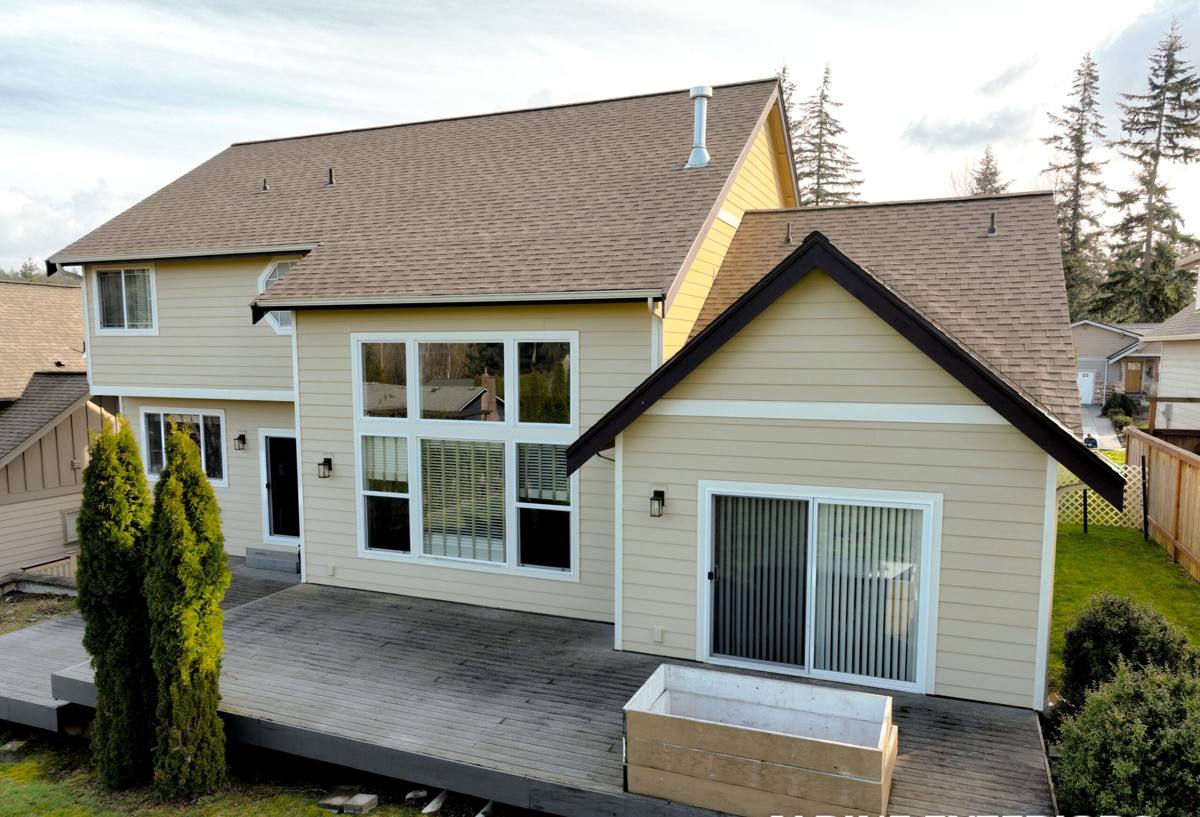
What Skagit County's Climate Asks of a New-Construction Window Install
Mount Vernon sits in the Skagit River valley, and the weather here isn't dramatic so much as relentless. It's the accumulation over years — wet falls, wet winters, wet springs — that wears down a poorly detailed window opening. A few specific local factors shape how we approach new-construction windows here.
Driving rain and wind-driven water intrusion
Skagit County gets long stretches of steady rain, often pushed sideways by wind off the valley and Puget Sound lowlands. Wind-driven rain doesn't just run down a wall — it gets forced up and under trim, flashing, and window flanges if those details aren't lapped correctly. A window that would be fine in a drier climate with a shortcut flashing job can leak here within a couple of wet seasons.
Long moss season and cladding drainage
Our moss and algae season runs long — basically anytime it's damp and shaded, which in Skagit County is most of the year. Moss and organic buildup around window trim and sills hold moisture against the wall longer than bare siding does. That means the drainage plane behind the cladding, and the sill pan under the window, need to actually work — not just look right on install day.
Marine-influenced, salt-tinged air
Skagit County's proximity to Puget Sound means the air carries more moisture and mineral content than it would further inland. This doesn't demand exotic materials for most homes, but it's one more reason we favor corrosion-resistant fasteners and flashing metals, and why we don't cut corners on sealants that are rated for long-term UV and moisture exposure.
The Details That Actually Determine Whether Windows Leak
Most window failures we get called to diagnose in this region — usually on homes built by someone else — trace back to two or three missed steps during the original install, not to a bad window unit. Here's what has to happen, in order, for a new-construction window to perform.
Sill pans first, always
Before a window ever sits in the rough opening, the sill needs a sloped, back-dammed pan flashing that directs any water that gets past the window back outside the wall, not into the framing. This is a step that's easy to skip because nobody will ever see it — until there's a stain on a windowsill years later.
Correct shingle-lap sequence
Flashing tape and building paper or housewrap have to be layered like shingles on a roof: each layer overlapping the one below it, so water is always directed outward and down. Head flashing goes over the window flange and under the housewrap above it. Get this order backward at any single point and water finds it.
Kick-out flashing where rooflines meet walls
Anywhere a roof edge meets a wall near a window — common on new builds with varied rooflines — a kick-out flashing has to divert that roof runoff away from the wall assembly instead of letting it sheet down directly onto window trim below.
Fastening and sealant that match the exposure
Nailing fins get fastened per the manufacturer's schedule, not "close enough," because gaps change how the window handles wind load and water pressure in a storm. Sealants at the trim and flange need to be rated for sustained wet exposure, not just general-purpose caulk.
Choosing Windows for a Skagit County New Build
There's no single "best" window — the right choice depends on your budget, the home's design, and how much long-term maintenance you want to take on. We'll talk through the trade-offs honestly rather than push whatever has the best margin.
| Frame Material | Moisture Tolerance Here | Maintenance | Typical Cost Tier |
|---|---|---|---|
| Vinyl | Good — won't rot or corrode, handles our wet cycles well | Low; occasional cleaning | Lower |
| Fiberglass | Very good — dimensionally stable through wet/dry and temperature swings | Low | Mid to upper |
| Wood-clad (exterior clad, wood interior) | Good on the exterior if the cladding and flashing are done correctly; the wood interior needs the exterior seal to hold | Higher — relies on the exterior finish staying intact | Upper |
For most new construction in Mount Vernon, we lean toward vinyl or fiberglass for the exterior-facing performance in our climate, and reserve wood-clad for homes where the look is a priority and the owner understands the added reliance on that exterior finish staying sound over time. Whatever frame material you land on, we'd rather you spend money on correct installation and a mid-grade window than a premium window installed with shortcuts — the flashing details matter more to long-term performance than the brand name on the frame.
Our New-Construction Window Process
Coordinating with your builder or GC
On new builds we're usually working alongside a general contractor or framing crew, so timing matters. We check rough openings against window schedules before drywall or siding crews are scheduled, catching sizing or squareness problems while they're still cheap to fix.
Rough opening inspection
Every opening gets checked for square, plumb, and correct dimensions before a window goes in. An opening that's slightly out of square can bind a window's operation or create gaps that no amount of caulk will fix properly.
Install, flash, and document
We install in the sequence described above — sill pan, window, side and head flashing, integration with the weather-resistive barrier — and we photograph the flashing at each stage before it gets covered by siding. If a question ever comes up later about how a wall was built, that record exists.
Final check with the window operating and sealed
Before we call a window done, it gets tested for smooth operation, a tight seal when closed, and a visual check of every flashing lap. This is the last point where a fix is easy — after siding goes on, corrections get expensive.
Permitting and Code in Mount Vernon
New-construction windows on a Mount Vernon project fall under the same building permit as the rest of the home, and inspections typically check window flashing and weatherproofing as part of the sheathing or siding inspection stage. Washington's energy code also sets minimum performance requirements for window U-factor and solar heat gain, which affects which glazing packages qualify for a given home's energy compliance path. We coordinate with your builder or work directly with the city/county permitting process so window details are documented and ready for inspection, not something scrambled at the last minute.
A Homeowner's Checklist Before Windows Go In
- Confirm rough openings match the approved window schedule before framing is signed off
- Ask what sill pan and flashing system will be used, and in what order it goes on
- Confirm fastener and flashing materials are corrosion-resistant for our marine-influenced air
- Check that window U-factor and performance ratings meet Washington's current energy code
- Ask for photos of flashing before siding covers it, so there's a record of what's behind the wall
- Walk the finished openings and test operation before final payment
Why Hire a Crew That Already Works Mount Vernon
A window installer who mostly works drier inland climates can do everything "by the book" and still miss the details that matter here — because the book doesn't account for how much water Skagit County throws at a wall over a wet winter, or how long moss stays established on north-facing trim. We work new builds and additions throughout Mount Vernon and the surrounding county regularly, which means we're not guessing at how local rooflines, wind exposure, and rain patterns interact with a given window opening — we've flashed openings in this exact climate enough times to know where the shortcuts show up later.
If you're framing a new home or addition in Mount Vernon and want the window openings done right the first time, we're happy to walk the plans with you or your builder and talk through what your project needs. Reach out for a free, no-pressure estimate using the form below.