 Skagit County
 Edison's Roofs Work Harder Than Most
Edison sits in a stretch of Skagit County where three things gang up on a roof at once: salt-laden air rolling off Samish and Padilla Bay, driving rain that comes in sideways during fall and winter storms, and a moss season that can stretch nine months out of the year in the shade of the tall firs and cedars common to this part of the county. Any one of those is manageable. Together, they shorten the useful life of a roof that wasn't built or installed with this specific combination in mind.
We install new roofs across Skagit County, and Edison homes get a specific version of our attention because the failure patterns here are consistent and predictable. Salt air accelerates corrosion on exposed metal fasteners and flashing. Wind-driven rain finds weak points at valleys, penetrations, and low-slope transitions that a dry-climate installer might not detail as carefully. Moss holds moisture against shingles and shakes for months at a time, breaking down the mat and lifting edges long before the material would otherwise wear out. A roof installed without those three factors in mind will often look fine for a couple of years and then fail early, all at once, during the wrong storm.
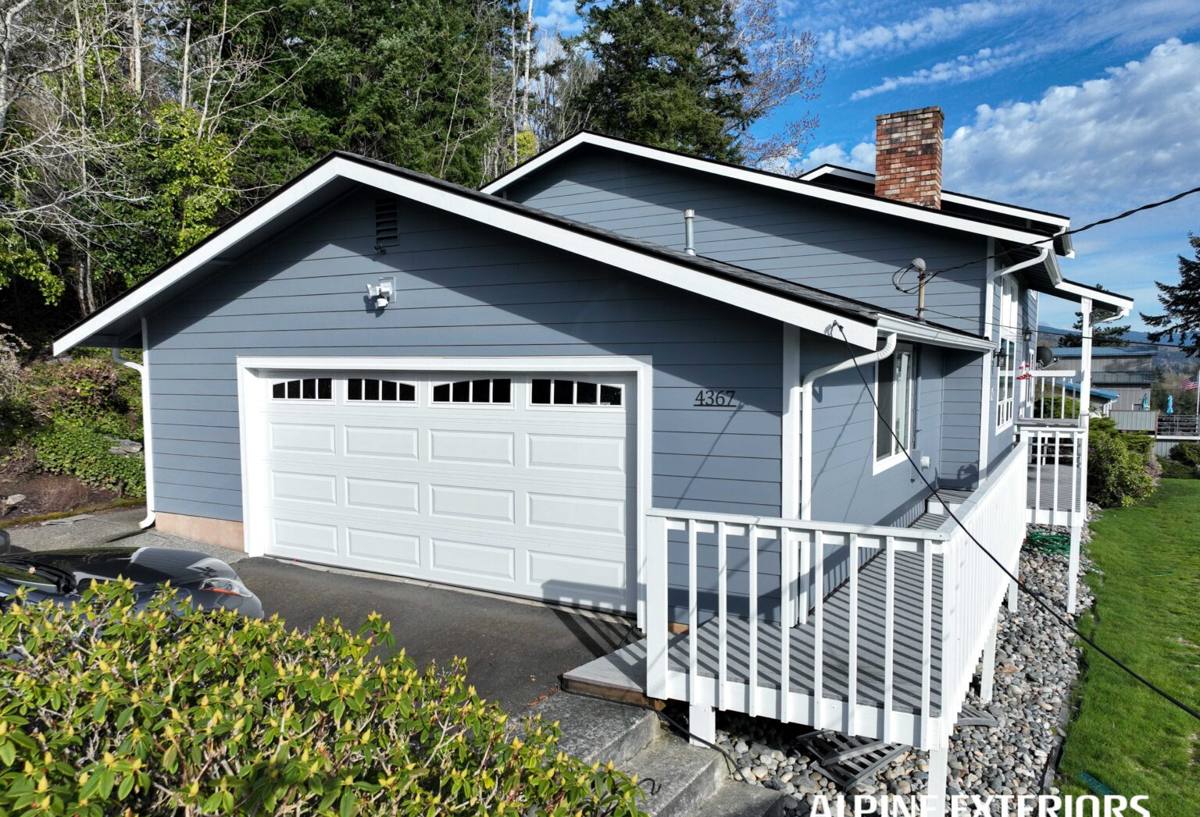
Signs an Edison Roof Is Due for Replacement
Roofs rarely fail all at once. They tell you first, usually in ways that are easy to miss from the ground. Before we ever talk about a full replacement, we look for the following:
- Granule loss on asphalt shingles heavy enough that you find grit collecting in gutters and downspouts
- Curling, cupping, or cracked shingle edges, especially on south and west-facing slopes that get the most sun and thermal cycling
- Moss and lichen colonies that have moved past the ridge and ranged across whole slopes, not just the shaded north side
- Dark streaking or soft, spongy spots underfoot when walking the roof, which usually means the decking underneath has started absorbing moisture
- Rusted or failing flashing around chimneys, skylights, and sidewall intersections
- Daylight visible through the roof deck from inside the attic, or water staining on rafters and sheathing
- Interior ceiling stains that show up during or right after a heavy rain event
Any single item on that list might just mean a repair. Two or three together, especially on a roof already past 18-20 years old, usually means the underlying materials and decking are compromised enough that patching won't hold for long. We'll tell you honestly which category your roof falls into rather than pushing a full tear-off you don't need yet.
What a Correct New Roof Installation Actually Involves
A new roof is not just new shingles laid over what's already there. Done correctly, it's a full system, and skipping steps is exactly how you end up with a roof that looks good from the street but leaks within a few years. Here's what we consider non-negotiable on every full installation:
Complete Tear-Off, Not an Overlay
We remove the existing roofing material down to the deck rather than layering new shingles over old ones. Overlays trap moisture, hide deck damage, and void most manufacturer warranties outright. A tear-off is the only way to actually inspect what's underneath.
Deck Inspection and Repair
Once the old material is off, we check every section of decking for soft spots, delamination, and rot, which shows up more often in Edison than in drier parts of the county because of how long moisture sits against a roof surface here. Any compromised sheathing gets replaced before anything new goes down. Installing new roofing over bad decking is a waste of the homeowner's money regardless of how good the shingles are.
Underlayment Built for Wind-Driven Rain
We use synthetic underlayment as a water-resistant barrier across the full deck, with self-adhering ice-and-water membrane at the eaves, valleys, and any low-slope sections where wind-driven rain is most likely to push water backward under the shingle laps. This detail matters more here than in most of the county because Edison's exposure to open water means storms regularly drive rain at angles a standard underlayment layout won't stop.
Flashing at Every Transition
Chimneys, skylights, sidewalls, and roof-to-wall intersections are where the large majority of roof leaks actually originate, not out in the open field of the roof. We install new step flashing, counter-flashing, and valley metal rather than reusing old flashing, and we specify corrosion-resistant materials given the salt air exposure common to this area.
Ventilation That Matches the Home
Balanced intake and exhaust ventilation keeps the attic dry and temperature-regulated, which directly affects how fast moss recolonizes and how long the roofing material lasts. We size and place vents based on the actual attic and roof geometry rather than defaulting to a generic ridge vent regardless of fit.
Roofing Material Choices for Edison's Climate
There's no single "correct" material for every Edison home — the right choice depends on your home's style, your roof's pitch and shading, and how much long-term maintenance you want to take on. Here's how the common options actually perform under salt air, heavy rain, and moss pressure:
| Material | Salt Air Behavior | Moss Resistance | Typical Lifespan Here |
|---|---|---|---|
| Architectural asphalt shingle | Good with corrosion-resistant fasteners and flashing | Moderate; benefits from zinc/copper strips at the ridge | 20-30 years |
| Standing seam metal | Very good with coated, marine-grade fasteners | Excellent; moss struggles to hold on a smooth, sloped metal surface | 40-50+ years |
| Wood shake/shingle | Fair; needs diligent maintenance near salt exposure | Poor without regular treatment and cleaning | 20-30 years with upkeep |
| Composite/synthetic shingle | Good; engineered materials resist corrosion-driven wear | Good to moderate depending on product | 30-50 years |
We install several of these depending on what the home calls for. We're generally cautious about untreated wood shake in this specific pocket of Skagit County — it's a fine product elsewhere, but between the salt exposure and the moss season, it demands a level of ongoing homeowner maintenance that not everyone wants to take on. That's a maintenance-burden conversation we'll have honestly with you, not a knock on the material itself.
How Our Installation Process Works
Homeowners want to know what's actually going to happen on their property, in what order, and for how long. Here's our standard sequence for a full new roof installation:
- On-site inspection and estimate. We walk the roof (or use a lift/drone where pitch or access doesn't allow safe foot traffic), check the attic from inside, and give you a written estimate with material options.
- Material selection. We go over the table above in terms specific to your home's exposure, roof pitch, and how much shade it sits under, and help you land on a material that fits your budget and maintenance tolerance.
- Permitting and scheduling. We handle any required permitting and schedule around weather windows, since a proper tear-off needs a dry stretch to keep the open deck protected.
- Protection of property. Landscaping, siding, and outdoor living areas get covered or protected before tear-off begins.
- Tear-off and deck inspection. Old roofing comes off, the deck gets inspected, and any necessary repairs are made and documented.
- Underlayment, flashing, and ventilation installation. The water-resistant system goes down first, then flashing at every penetration and transition, then ventilation components.
- Roofing material installation. The new roofing goes on to manufacturer specification, which matters for both performance and warranty coverage.
- Final walkthrough and cleanup. We walk the finished roof with you, do a full magnetic sweep and site cleanup for nails and debris, and go over warranty paperwork.
Ventilation and Moisture: Where Most Long-Term Failures Start
A new roof's biggest long-term threat in Edison isn't usually the roofing material itself failing early — it's trapped moisture doing slow damage from underneath. An attic that can't breathe properly holds humidity, which condenses on the underside of the deck, softens sheathing over time, and creates exactly the damp environment moss and algae need to establish themselves on the surface above. We size intake vents at the eaves and exhaust at the ridge to move air continuously through the attic space, which does two things at once: it keeps the deck dry from below, and it keeps the roof surface itself drying out faster after rain, which is one of the more effective ways to slow moss regrowth without relying on annual chemical treatments.
What Drives the Cost of a New Roof
We don't publish blanket pricing because roof cost depends on real, measurable factors specific to your home, but here's what actually moves the number up or down:
| Factor | Why It Matters |
|---|---|
| Roof size and number of planes | More square footage and more valleys, hips, and dormers mean more material and more labor-intensive detail work |
| Pitch and access | Steep or hard-to-access roofs require additional safety equipment and slow the work down |
| Deck condition | Rotted or soft sheathing found during tear-off adds material and labor to replace it properly |
| Material choice | Asphalt, metal, and composite carry different material and labor costs, as shown in the table above |
| Layers to remove | Removing multiple existing layers takes longer than a single-layer tear-off |
| Ventilation upgrades needed | Homes with inadequate existing ventilation may need added intake or exhaust components |
We give a written, itemized estimate before any work starts, and we'll flag anything that could change the price — like deck damage found mid-tear-off — before we proceed, not after.
What to Check Before Hiring a Roofing Contractor in Edison
Roof replacement is a significant investment, and it's worth vetting whoever you hire carefully. Before signing a contract, confirm:
- Current Washington state contractor license and active liability insurance, with proof provided in writing
- A written estimate that itemizes materials, labor, and what happens if deck repair is needed
- Manufacturer certification for the specific roofing product being installed, since some warranties require certified installation
- A clear description of the underlayment, flashing, and ventilation plan, not just the visible shingle or metal product
- References or completed work you can actually see, ideally on homes with similar exposure to yours
- A defined cleanup and debris removal process, including a magnetic nail sweep
- A written warranty covering both materials and workmanship, with the terms spelled out rather than implied
Why Working With a Crew That Knows Edison Matters
Roofing crews that mostly work drier, more sheltered parts of the county don't always detail for salt air corrosion or wind-driven rain the same way, because they don't have to as often. A crew that regularly works Edison and the surrounding Skagit County waterfront-adjacent areas knows to spec corrosion-resistant fasteners and flashing as standard, not as an upsell, and knows which roof details tend to be the weak point during the specific storm patterns that hit this area. That familiarity shows up less in the sales pitch and more in the details you don't see once the roof is finished — the flashing choices, the fastener grade, the underlayment layout at the valleys — which are exactly the details that determine whether a roof holds up through its first real Skagit County winter or starts showing problems within a season or two.
If your Edison home's roof is showing its age, or you just want an honest read on how much life is left in it, we're happy to come take a look. Reach out for a free, no-pressure estimate using the form below.