 Skagit County
 How Skagit County's Climate Wears Down a Roof
Mount Vernon sits in the Skagit Valley close enough to the Salish Sea that homes here deal with a mix most inland towns don't: salt-tinged marine air, wind-driven rain that comes in sideways during fall and winter storms, and a wet season that can stretch for months without a real drying window. None of that is dramatic on its own, but layered together year after year, it's hard on a roof. Salt air accelerates corrosion on exposed metal fasteners and flashing. Driving rain finds its way under marginal flashing details that would hold up fine somewhere drier. And the long stretches of damp, shaded weather are exactly what moss and algae need to take hold, especially on north-facing slopes or roofs shaded by mature trees.
None of this means roofs here fail faster than they should. It means the details that get overlooked in a rushed or budget install — proper underlayment, flashing at every transition, real ventilation — matter more in Skagit County than they would in a drier climate. A roof replacement done right for Mount Vernon is built with those specifics in mind from the start, not patched around later.
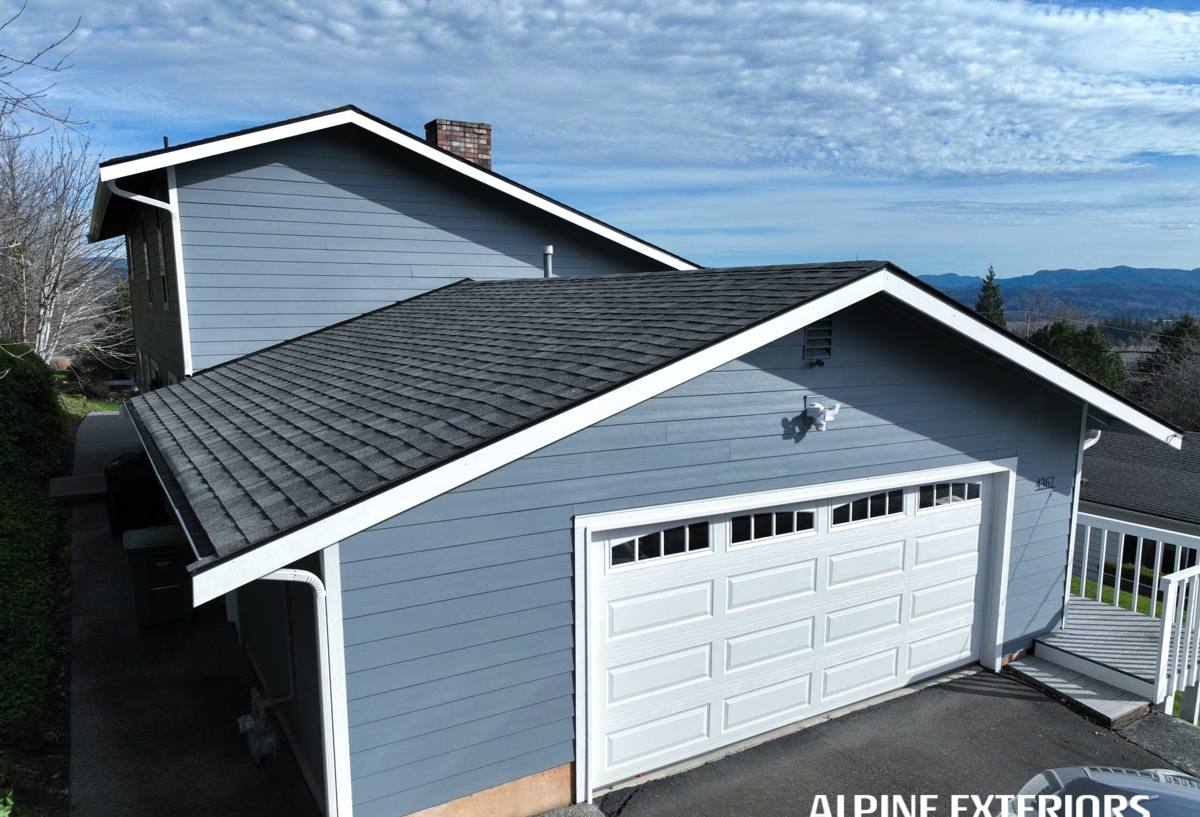
Warning Signs Your Roof Needs Replacing, Not Just Repair
Not every roof problem means a full replacement, but there's a point where repeated patching costs more over time than doing the job once. Here's what we look for when we're deciding which side of that line a roof is on.
- Shingles that are cupping, curling, or missing granules in patches larger than a few spots
- Moss buildup thick enough to lift shingle edges, not just discolor the surface
- Soft or spongy spots when walking the roof, which usually means the decking underneath is wet
- Daylight visible through the roof deck from inside the attic
- Water stains on ceilings or attic framing that show up after heavy rain
- Flashing around chimneys, vents, or skylights that's rusted, lifted, or was never properly sealed
- A roof approaching or past the manufacturer's expected service life for its material type
One or two of these on their own might be a repair. Several together, or a roof that's already had multiple repairs in recent years, usually means it's more cost-effective to replace than to keep chasing leaks one at a time.
What a Correct Roof Replacement Actually Involves
Tear-Off and Deck Inspection
A proper replacement starts with a full tear-off down to the decking, not a layover on top of old shingles. That's the only way to actually see the condition of the roof deck itself. In this climate, we routinely find sections of decking that have softened from long-term moisture intrusion — plywood or planking that looks fine from a distance but needs to be replaced before anything new goes down. Skipping this step is how a new roof ends up with problems in a few years that had nothing to do with the shingles.
Underlayment and Ice-and-Water Protection
Underlayment is the roof's backup layer if wind ever drives rain under the shingles, which happens more often here than in calmer climates. We use synthetic underlayment across the field and self-adhering ice-and-water membrane at the eaves, valleys, and around penetrations — the spots most exposed to wind-driven rain and the ones most prone to ice damming during a hard cold snap.
Flashing Details
Flashing is where most roof leaks actually originate, not the shingle field. Every place the roof plane meets something else — a chimney, a wall, a skylight, a vent pipe — needs new, properly lapped flashing, not a bead of caulk over the old metal. This is one of the details that separates a roof that holds up for decades from one that starts leaking in a few years.
Ventilation and Final Install
Balanced intake and exhaust ventilation gets addressed before the finish material goes on, and the roofing material itself gets installed to the manufacturer's nailing pattern and exposure specs, not shortcuts to save time. We finish with a walk-through so you can see the completed work before we consider the job done.
Choosing a Roofing Material That Holds Up in This Climate
There's no single "best" roofing material for every home — it depends on your roof's pitch, exposure to shade and moisture, budget, and how long you plan to stay in the house. Here's an honest comparison of the main options homeowners in Skagit County ask about.
| Material | Moss/Algae Resistance | Maintenance | Typical Lifespan |
|---|---|---|---|
| Asphalt composition shingle | Moderate; algae-resistant granule options help but don't eliminate moss on shaded slopes | Periodic moss removal and gutter clearing | 20-30 years |
| Standing-seam metal | High; smooth surface sheds moisture and gives moss little to grip | Low; occasional fastener and seam checks | 40-60+ years |
| Cedar shake/shingle | Low without diligent upkeep; wood holds moisture in a wet climate | High; regular treatment and moss control needed | 20-30 years with upkeep |
We'll walk you through the real trade-offs for your specific roof rather than push whatever's easiest to install. Asphalt shingle remains the most common choice for good reason — it balances upfront cost, appearance, and performance reasonably well when installed correctly. Metal costs more upfront but shrugs off moss and rain in a way that fits our climate especially well on steeper, more exposed roofs. Cedar can look great but asks for more ongoing maintenance than most owners want to keep up with in a climate this wet.
Ventilation and Moisture Control Matter More Here Than Most Places
A roof that can't breathe traps moisture underneath it, and trapped moisture is what rots decking, feeds mold in the attic, and shortens the life of whatever material is on top — regardless of how good that material is. In a climate with Skagit County's rainfall and humidity, ventilation isn't optional. We size intake at the soffits and exhaust at the ridge to work together, not against each other, and we check that insulation isn't blocking the soffit vents from underneath, which is one of the most common ventilation failures we find on older homes in this area.
Our Roof Replacement Process, Start to Finish
- Inspection and estimate — we get on the roof, check the deck where accessible, and give you a written estimate based on what we actually find, not a guess from the ground.
- Material selection — we go over the honest trade-offs for your roof and budget so you're picking based on facts, not a sales pitch.
- Permitting and scheduling — we handle the permit process and plan the work around a realistic weather window.
- Tear-off and deck repair — old material comes off, the deck gets inspected, and any soft or damaged sections get replaced before anything else happens.
- Dry-in — underlayment and ice-and-water membrane go down the same day the deck is exposed, so the house isn't left open to weather overnight.
- Final installation — flashing, ventilation, and finish material go on to spec.
- Cleanup and walk-through — the site gets cleared of debris and nails, and we walk the finished roof with you.
Why It Matters to Hire a Crew That Already Works Mount Vernon
Roofing crews that mostly work drier or more inland climates don't always plan for what a Skagit County roof deals with year-round. A crew that already works in Mount Vernon knows to schedule tear-offs around realistic weather windows instead of gambling on a dry stretch that doesn't show up, knows which roof exposures in this area tend to hold moss longest, and knows the local permitting process instead of learning it on your job. That familiarity shows up in fewer surprises during the job and a roof that's built for the conditions it will actually face, not generic conditions from a training manual.
What Affects the Cost of a Roof Replacement in Skagit County
Every roof is priced individually, but the same handful of factors drive most of the difference between bids. Being upfront about these helps you compare estimates that are actually apples-to-apples.
- Roof size and pitch — more square footage and steeper pitches mean more material and labor time
- Number of layers to tear off — a roof with two layers of old shingles costs more to strip than one layer
- Deck condition — hidden rot or soft decking found during tear-off adds material and labor to replace it properly
- Material choice — asphalt, metal, and cedar carry different material and installation costs, as shown above
- Roof complexity — valleys, dormers, chimneys, and skylights all add flashing work and time
- Access — steep sites or tight lot access can affect equipment and staging costs
Because of this, most full asphalt shingle replacements on an average-sized Mount Vernon home land somewhere in the low-to-mid five figures, with metal roofing typically running higher upfront in exchange for a much longer service life. We'll give you real numbers for your specific roof rather than a rough range that doesn't mean much until someone's actually looked at it.
Caring for Your New Roof Through Skagit County's Moss Season
A well-installed roof still benefits from a little upkeep in a climate like this one. A few habits go a long way toward getting the full service life out of your investment.
- Keep gutters clear so water isn't backing up under the eaves during heavy rain
- Trim back overhanging branches that keep shaded sections of the roof damp longer than the rest
- Have moss gently removed before it works under shingle edges, rather than letting it build up over multiple seasons
- Schedule a roof check after any major windstorm to catch lifted flashing or shingles early
- Avoid pressure washing the roof surface, which can strip granules and shorten shingle life
If you're noticing any of the warning signs above, or your roof is simply getting up there in age, we're happy to take a look and give you a straight answer about whether repair or replacement makes more sense — no pressure, no upsell. Reach out for a free estimate using the form below.