 Skagit County
 Deck Building Built for Sedro-Woolley's Climate
A deck in Sedro-Woolley lives outside year-round, and Skagit County doesn't go easy on outdoor structures. Between the long stretch of wet months, the salt-tinged air that drifts in off the Sound and up the valley, and a moss season that seems to start earlier every year, an outdoor deck here takes a different kind of beating than one built in a drier climate. A deck that would hold up fine in Eastern Washington can start showing rot, cupping, or slick moss growth within a couple of seasons if it wasn't designed and built with this specific climate in mind.
We build and repair decks throughout Skagit County, and Sedro-Woolley jobs make up a steady part of that work. This page walks through what actually matters for a deck built to last here — the materials, the structure underneath that nobody sees but everybody depends on, and the maintenance that keeps a good deck good.
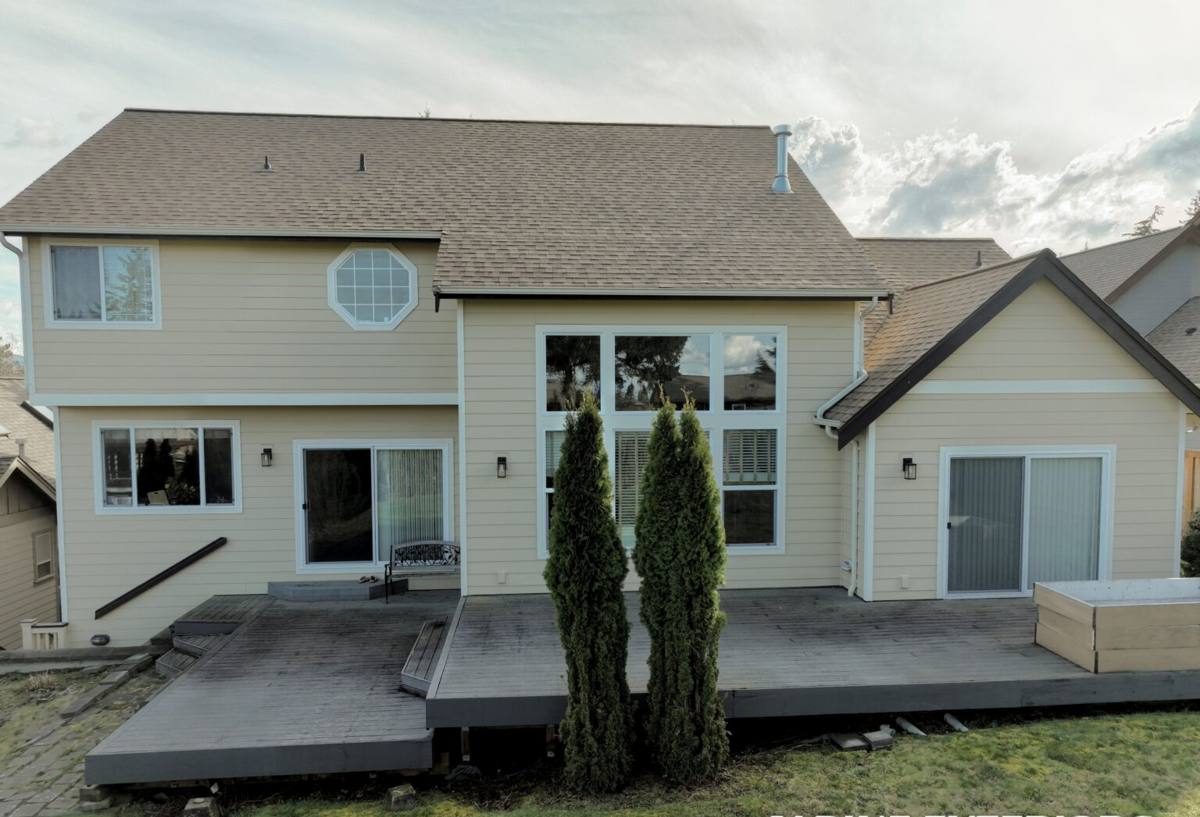
What Local Weather Does to an Outdoor Deck
Understanding the failure points helps explain why we build the way we do.
Driving Rain and Standing Moisture
Rain in this region rarely falls straight down — wind pushes it sideways into railings, fascia boards, and the gaps between decking. Water that gets trapped instead of shedding is the single biggest cause of deck failure we see: it soaks into end grain, works into fastener holes, and sits against ledger boards and framing connections where it can't dry out between storms.
Moss and Algae Growth
Skagit County's long damp season, combined with shade from mature trees common on Sedro-Woolley lots, creates ideal conditions for moss and algae on horizontal surfaces. Beyond looking bad, moss holds moisture against the decking surface and turns stairs and walking surfaces slick and genuinely dangerous, especially on wood decking with any wear to its surface texture.
Salt-Influenced Air
This part of the Pacific Northwest sees salt-tinged air move inland with weather systems off the Sound. It's not the same direct exposure a beachfront home gets, but over years it accelerates corrosion on exposed fasteners, hardware, and lower-grade metal connectors — one more reason we don't cut corners on hardware specification.
Freeze-Thaw Cycling
Skagit County doesn't get brutal winters, but it does get repeated freeze-thaw swings — nights below freezing followed by wet, above-freezing days. Water that's worked its way into wood fibers, footings, or hairline cracks expands when it freezes, which widens the damage a little more each cycle. Over several winters that's how small issues become structural ones.
Choosing the Right Decking Material
There's no single "best" decking material — there's the right material for the site, the budget, and how much upkeep the homeowner actually wants to do. Here's how the common options compare for this climate specifically.
| Material | Moisture & Moss Behavior | Maintenance | Typical Lifespan Here |
|---|---|---|---|
| Pressure-treated pine/fir | Resists rot with proper sealing; still needs annual attention to end grain and fasteners | Annual cleaning and re-sealing recommended | 15-20 years with upkeep |
| Cedar | Naturally rot- and insect-resistant, but surface grays and can hold moss without regular cleaning | Periodic cleaning, occasional oil or stain | 20-25 years with upkeep |
| Composite decking | Doesn't absorb water like wood; still needs cleaning where moss and mildew sit on the surface | Occasional washing, no sealing or staining | 25-30+ years, backed by manufacturer warranty |
| PVC decking | Fully moisture-resistant surface; best resistance to staining and moss adhesion | Lowest maintenance of the group | 25-30+ years, backed by manufacturer warranty |
We install all of these depending on what the homeowner wants. Our honest take: for a deck that gets regular shade and moisture — common on wooded Sedro-Woolley lots — composite or PVC decking earns its higher upfront cost back in reduced maintenance over the deck's life. For homeowners who like the natural look and don't mind yearly upkeep, cedar or properly treated pine is a perfectly sound choice as long as the maintenance actually happens. Where we're cautious is with lower-grade composite products that have had documented moisture-related warranty issues industry-wide — we stick with lines that have a solid track record in wet climates, and we'll tell you plainly which brands we trust and why.
What Actually Holds a Deck Up: The Substructure
The decking boards are what you see; the framing underneath is what determines whether the deck is still safe in ten years. This is where cutting corners causes the most damage and shows up the least — until it fails.
Footings
Footings need to reach below the frost line and bear on undisturbed, load-tested soil. Skagit County's mix of clay-heavy and saturated soils in low-lying areas means we don't assume a footing depth — we check the site conditions and size footings accordingly rather than using a one-size formula.
Ledger Attachment and Flashing
Where a deck attaches to the house is the single most common source of serious water damage — and of deck collapses nationally when it's done wrong. A ledger board needs proper flashing that directs water away from the house's sheathing, correct fasteners (not just nails), and confirmation that it's bolted into solid framing, not just siding. We treat this connection as the most important part of the build, not an afterthought.
Joist Spacing and Hardware
Joist spacing depends on the decking material and its span rating — composite and PVC boards often require tighter joist spacing than solid wood. We use hot-dip galvanized or stainless connectors and fasteners throughout, since standard hardware corrodes faster in this region's damp, salt-influenced air.
Ventilation Underneath
A deck built low to the ground, or over a space with poor airflow, traps moisture underneath and accelerates rot in joists and beams. We build in ventilation gaps and grade the ground below for drainage wherever the design allows it.
Railings, Stairs, and Code Requirements
Railings and stairs aren't optional add-ons — they're code-governed safety elements, and they take the brunt of weather exposure since they're vertical and unshaded on most decks.
- Guardrails are required on any deck surface more than 30 inches above grade, built to current Washington building code height and baluster-spacing requirements.
- Stair stringers need to be sized for the actual rise and run of the site — not adjusted after the fact to make a design fit.
- Handrails on stairs with four or more risers are typically required and need to be graspable, not just decorative.
- All structural connections on railings and stair stringers get the same corrosion-resistant hardware as the deck frame.
- A permit and inspection are required for most deck projects in this area — we handle that process rather than skip it.
Our Deck Building Process
Every deck starts with a site visit, not a phone quote. Here's the general sequence:
- Site assessment. We look at drainage, soil, sun and shade exposure, existing structure (for replacements), and how the deck connects to the house.
- Design and material discussion. We talk through decking material, layout, railing style, and budget honestly — including trade-offs, not just upsells.
- Permitting. We pull the required permit and schedule inspections at the appropriate stages.
- Demolition (if replacing). Old decking and framing are removed and checked for hidden rot at the ledger and posts before anything new goes up.
- Framing and footings. Footings, posts, beams, and joists go in to code, sized for the site and the decking material chosen.
- Decking, railings, and stairs. Final surfaces and safety elements are installed and checked for level, fastening, and finish.
- Final walkthrough. We go over care and maintenance specific to the material installed, so the deck actually reaches its expected lifespan.
Maintenance That Keeps a Skagit County Deck Lasting
Even the best-built deck needs some seasonal attention in this climate. What that looks like depends on the material, but the basics apply across the board:
- Clear leaves, needles, and debris from between boards and off the surface regularly — trapped organic matter feeds moss and holds moisture.
- Wash the surface at least once a year to remove moss, algae, and mildew before it gets established.
- Check and re-seal or re-stain wood decking on the manufacturer's or installer's recommended schedule — don't wait until it looks dry and gray.
- Inspect fasteners, connectors, and railing posts annually for corrosion or loosening.
- Keep gutters and downspouts near the deck clear so runoff isn't dumping extra water onto or under the structure.
- Watch the ledger board area at the house connection for any staining, soft spots, or gaps — this is the first place to catch a developing problem.
Why Hire a Crew That Already Works in Sedro-Woolley
Deck building looks straightforward from the outside, but the details that matter most — footing depth for local soil, the right flashing detail at the ledger, hardware that won't corrode in a few seasons, decking that resists this area's moss season — come from having actually built decks here before. A crew that mostly works in a drier climate or a different soil type doesn't have the same instinct for where Skagit County weather finds the weak points.
We also know the local permitting process and inspection expectations, which keeps a project from stalling out waiting on paperwork or a failed inspection over a detail that's routine for us. And because we're local, we're the same crew you'd call back in a few years if something needs a look — not a company that's moved on to the next region.
If you're planning a new deck or need to replace one that's showing its age, we're happy to come take a look and give you a straightforward, no-pressure estimate. Use the form below to get started.