 Skagit County
 Why Energy-Efficient Windows Matter for Sedro-Woolley Homes
Sedro-Woolley sits in a part of Skagit County where the weather doesn't do anything halfway. Winters bring long stretches of wind-driven rain off the valley, summers can swing warmer than people expect for the Pacific Northwest, and the air carries enough moisture year-round that anything with a gap or a weak seal eventually pays for it. Windows are one of the biggest thermal weak points in almost any home, and in older houses around Sedro-Woolley — whether that's a farmhouse on the outskirts or a mid-century home closer to town — single-pane or early dual-pane windows are often quietly driving up heating bills and letting in more moisture than the drywall around them can handle.
Energy-efficient windows aren't just about comfort, though that's real too — fewer drafts, fewer cold spots near exterior walls, less condensation fogging up the glass on cold mornings. They're also a moisture-management upgrade. A window that seals and drains properly does as much to protect the wall assembly behind it as it does to lower your energy bill.
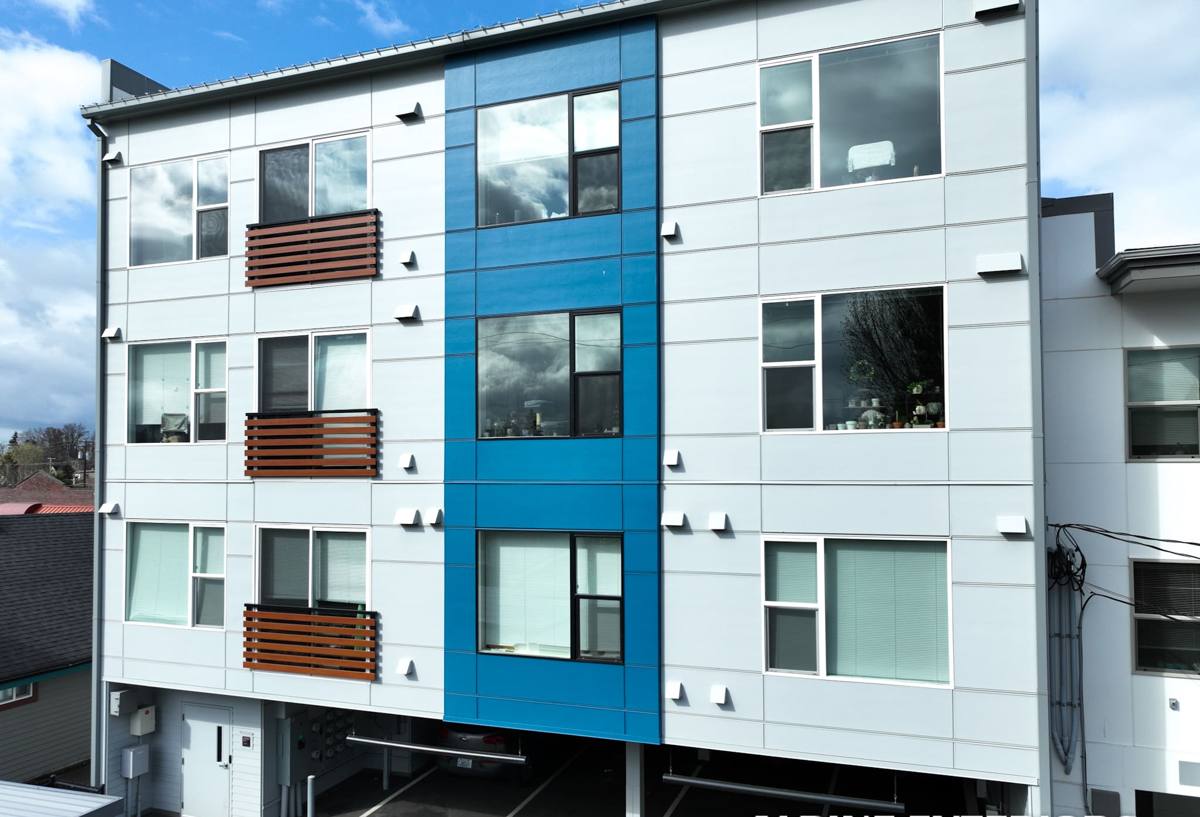
The Skagit County Climate Windows Actually Have to Handle
Salt Air and Corrosion
Sedro-Woolley is inland compared to coastal Skagit County, but this is still a marine climate — salt-laden air moves up the valley and settles on exterior surfaces over time. Cheap hardware, unprotected fasteners, and low-grade aluminum components corrode faster here than they would in a dry inland climate. It's a slow process, but it's a real one, and it's why the hardware and fastener choices on a window installation matter as much as the glass.
Driving Rain and Wind-Driven Moisture
This isn't gentle, straight-down rain. Storms coming through the valley push rain sideways against west- and south-facing walls, which means water gets tested against every seam, flange, and sealant joint a window has. A window that would perform fine in a drier climate can fail here simply because the installation wasn't built to handle water arriving at an angle, under pressure, for hours at a time.
Moss Season and Prolonged Dampness
Skagit County's moss season runs long — often eight months or more of conditions damp enough for moss and algae to take hold on anything that stays wet. Around windows, that shows up as green growth on sills, trim, and the caulk lines themselves. It's not just cosmetic. Sustained dampness breaks down cheap sealants and finishes faster, and it's often the first visible sign that water is sitting somewhere it shouldn't be.
What "Energy-Efficient" Really Means (Beyond the Sticker)
Every window sold today has an energy label on it, but the numbers only matter if they're matched to how the window sits in your specific wall, orientation, and exposure. Here's what actually determines performance in a home like yours.
U-Factor and Solar Heat Gain Coefficient
U-factor measures how well a window resists heat loss — lower is better for our winters. Solar Heat Gain Coefficient (SHGC) measures how much solar heat passes through the glass — this matters more on south- and west-facing windows that get direct sun. For most Sedro-Woolley homes, we're prioritizing a low U-factor across the board, since heat loss through drafty or poorly insulated frames is the bigger year-round cost here compared to solar overheating.
Glass Packages That Make Sense Here
Double-pane, low-E, argon-filled glass is the practical baseline for this climate — it's not an upsell, it's the minimum that makes sense given our heating season. Triple-pane can make sense on north-facing rooms or homes right along more exposed corridors of the valley where wind load is higher, but it adds weight and cost that isn't always justified on every elevation of every house.
Frame Materials: Trade-offs, Not Villains
Vinyl, fiberglass, and clad-wood frames all have a place. We don't push one material as universally "best" — we match the frame to the wall condition, the budget, and how much upkeep the homeowner actually wants to do. What we won't do is recommend a frame system whose long-term moisture behavior or maintenance demands don't match the realities of a wet climate, even if it looks good on a showroom sample.
Signs Your Current Windows Are Working Against You
Homeowners often live with underperforming windows for years before connecting the dots. Some common signs we see on service calls around Sedro-Woolley:
- Condensation forming between the panes, not just on the surface — a sign the seal has failed
- Visible fogging or a permanently cloudy look to the glass
- Cold drafts near the frame even when the window is fully latched
- Soft or discolored trim and sill wood, especially on rain-exposed walls
- Moss or dark staining building up on the exterior sill or trim
- Windows that are difficult to open, close, or lock due to frame swelling or warping
- A noticeable jump in heating costs without any change in usage habits
Any one of these can be minor on its own. Several together usually mean the window and its surrounding seal are past the point where caulk and weatherstripping will fix the underlying problem.
What a Correct Installation Actually Involves
The window unit itself is only part of the job. Most window failures we're called out to inspect in this area trace back to installation shortcuts, not the product. A correct install here means treating water management as seriously as the glass spec.
Flashing and Water Management
Proper flashing directs any water that gets past the exterior cladding back out, rather than letting it pool against the framing. In a climate with sustained, wind-driven rain, skipping or shortcutting flashing is one of the most common causes of hidden rot behind a window that looks fine from the outside.
Sealing and Insulation
The gap between the window frame and the rough opening needs to be insulated and air-sealed correctly — not overpacked with expanding foam, which can bow the frame, and not left loose, which leaves a draft path. Exterior sealant beads need to be continuous and applied to clean, dry surfaces, which sometimes means scheduling around the weather rather than around convenience.
Fit and Structural Prep
Old openings settle and shift over years. Before a new window goes in, the opening needs to be checked for square, level, and sound framing underneath — especially if the old window showed any signs of water intrusion. Installing a well-built window into a compromised opening just relocates the problem instead of fixing it.
Frame Material Comparison for Sedro-Woolley Conditions
| Frame Material | Moisture Behavior | Maintenance | Typical Fit |
|---|---|---|---|
| Vinyl | Won't rot; performs well in wet climates | Low — occasional cleaning | Most homes, strong value for the performance |
| Fiberglass | Very stable in moisture and temperature swings | Low | Homes wanting long-term durability, slightly higher upfront cost |
| Aluminum-clad wood | Good exterior protection, but relies on intact cladding and seals | Moderate — watch seams and joints | Homes prioritizing a wood interior look |
| Bare wood | Requires diligent upkeep in sustained damp conditions | High — regular repainting/sealing | Historic or period-specific homes where appearance is the priority |
This isn't a ranking of "good" versus "bad" — it's a starting point for a conversation about what you're willing to maintain versus what you want to set and mostly forget, given how much moss season this area sees.
Our Process From Estimate to Cleanup
We keep the process straightforward and try not to waste a homeowner's time with a hard-sell walkthrough.
- On-site assessment: We look at each window opening individually — not just the glass, but the sill, trim, flashing, and any signs of past water intrusion.
- Honest product recommendations: We'll tell you where a mid-range option makes sense and where it doesn't, based on that window's exposure and your priorities, not a one-size-fits-all package.
- Written estimate: Clear line items so you know what you're paying for — product, labor, and any repair work the opening needs before the new window goes in.
- Scheduled installation: We plan around weather where possible, since sealing and flashing work needs dry conditions to do right.
- Proper flashing, sealing, and insulation: Done to hold up against wind-driven rain, not just pass a quick visual check.
- Cleanup and walkthrough: We remove old materials and debris and walk you through the new windows, including any care recommendations for the frame material you chose.
Before You Hire: A Practical Checklist
Whoever you choose to do this work, these are worth confirming before you sign anything:
- Do they inspect the rough opening and framing, not just measure for the window unit?
- Do they explain flashing and sealing details, or only talk about the glass and frame?
- Can they explain U-factor and SHGC in plain terms as they relate to your home's orientation?
- Do they offer a written estimate with clear scope, not just a total price?
- Are they licensed and insured to do exterior work in Washington?
- Do they have experience with this specific area's climate, not just general window sales experience?
Why Local Experience in Sedro-Woolley Matters
A window installer who mostly works drier climates, or who treats every job the same regardless of region, is more likely to miss the details that matter here — the flashing detail that handles sideways rain, the sealant that won't break down under eight months of dampness, the hardware that won't corrode from salt-laden air moving up the valley. Working across Skagit County day in and day out means we've seen how different products and installation choices actually hold up locally, not just how they're rated on paper. That's the difference between a window that looks good at installation and one that still performs correctly five or ten wet seasons later.
If you're dealing with drafty, foggy, or hard-to-operate windows, or you're just planning ahead before the next wet season sets in, we're happy to take a look. Reach out for a free, no-pressure estimate — someone will walk the exterior with you, look at what's actually going on with your current windows, and give you straight answers about what does and doesn't need to change.