 Skagit County
 Siding Installation in Avon, Skagit County
Avon sits low in the Skagit River valley, surrounded by farmland, drainage ditches, and the kind of damp, marine-influenced air that defines this part of Skagit County. Homes here don't deal with hurricanes or wildfire smoke the way other regions do — they deal with something quieter and more persistent: months of saturated air, driving rain off the water, and a moss season that seems to start earlier every year. Siding in Avon isn't fighting one big storm. It's fighting slow, constant moisture pressure, year after year, and that's a different engineering problem than most siding salespeople want to talk about.
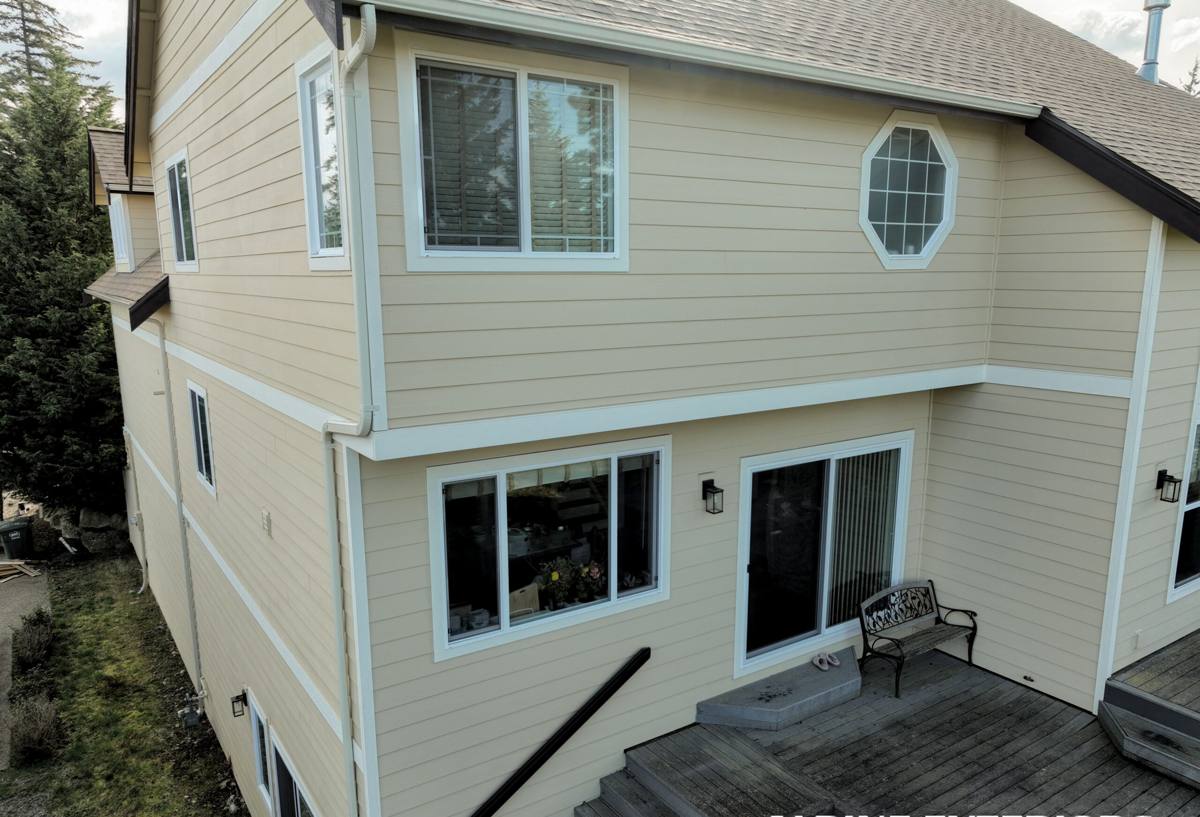
We install James Hardie fiber cement siding, exclusively, on homes throughout Skagit County — including Avon. This page covers what a correct siding installation looks like for this specific area, why the details matter more here than in a drier climate, and how we approach the work.
What Avon's Climate Actually Does to Siding
Skagit Valley weather is deceptively hard on exterior materials. It's rarely dramatic, but it's relentless. A few things stand out for Avon specifically:
- Salt-tinged marine air. Proximity to Puget Sound means the air carries salt and moisture inland, which accelerates corrosion on fasteners, flashing, and any metal trim that isn't rated for it.
- Driving, wind-pushed rain. Storms coming off the water don't just fall straight down — they push rain sideways into wall assemblies, which is exactly the condition that exposes weak seams, poor caulking, and undersized overhangs.
- A long moss and algae season. Skagit County's damp shoulder seasons stretch from fall through spring. Any siding material that holds surface moisture becomes a host for moss, mildew, and green staining, especially on north-facing walls and anything shaded by trees or outbuildings.
- Flat, low-lying terrain. Much of Avon sits in the Skagit River floodplain. Standing moisture near the ground, higher relative humidity, and slower drying times all put extra stress on the lowest courses of siding and the transition points at grade.
None of this is exotic. It's just cumulative. A siding job that's "good enough" for a drier inland climate often starts showing problems in Avon within a few years — not catastrophic failure, but soft trim, streaking, caulk lines opening up, and paint that won't hold.
Why We Only Install James Hardie
We made a deliberate decision years ago to stop installing vinyl, LP SmartSide, primed spruce, cedar, and other fiber cement brands like Cemplank or Allura, and to install James Hardie exclusively. That's not a marketing position — it's a response to what we've seen play out on real homes in this climate.
Vinyl expands and contracts with temperature swings and can warp or crack in cold snaps; it also doesn't hold paint, so your color options are locked in for the life of the product. Wood products like cedar or primed spruce look great initially but require an ongoing maintenance commitment — recaulking, repainting, and moisture vigilance — that most homeowners underestimate, especially in a climate that barely gives siding time to dry out between rain events. Engineered wood products like LP SmartSide perform reasonably well when installed and maintained correctly, but they're wood-based, which means edge swelling and moisture intrusion are real risks if flashing details or field cuts aren't sealed perfectly, every time.
James Hardie fiber cement is non-combustible, dimensionally stable across temperature and humidity swings, and factory-finished with ColorPlus technology, so the color coat is baked on rather than field-applied. That matters directly here: in a climate where paint has trouble curing and holding between rain events, a factory finish that doesn't depend on job-site weather conditions is a real advantage. Hardie's HZ5 product line is also engineered for wet, freeze-thaw-prone climates like the Pacific Northwest, which is exactly the environment Avon sits in.
What a Correct Installation Involves
Fiber cement siding is only as good as the assembly behind it. In a high-moisture area like Avon, the water management details matter more than the visible siding itself. A correct installation includes:
Weather-Resistive Barrier and Drainage Plane
A properly lapped weather-resistive barrier behind the siding, installed shingle-style so water sheds downward and never gets trapped behind the panel. In a climate with this much sustained rain exposure, any gap or reverse lap in this layer becomes a slow leak waiting to happen.
Rainscreen or Drainage Gap
Where wall conditions call for it, a drainage gap between the siding and the water-resistive barrier lets bulk water drain and lets the wall assembly dry out between storms — important in a valley climate where walls rarely get a long stretch of dry, sunny weather to fully release moisture.
Flashing at Every Penetration
Windows, doors, hose bibs, vents, and any other wall penetration need proper head flashing and end-dam details. This is the single most common failure point we find when we're asked to look at problem siding — not the siding material itself, but a missed or shortcut flashing detail that let water behind the wall.
Correct Fastening and Clearances
James Hardie has specific fastener spacing, nailing patterns, and clearance requirements — including keeping the bottom edge of the siding a minimum distance above grade, decks, and roof lines. Given how flat and low much of Avon sits, we pay close attention to grade clearance so the lowest courses aren't sitting in a splash zone or trapping ground moisture.
Caulking and Sealant Strategy
Not every joint should be caulked — some need to stay open to drain. Knowing which joints seal and which joints vent is a detail that separates a durable installation from one that traps moisture behind a bead of caulk.
Comparing Siding Options for an Avon Home
| Material | How it handles Skagit Valley moisture | Maintenance burden | Finish stability |
|---|---|---|---|
| James Hardie fiber cement | Non-combustible, dimensionally stable, engineered HZ5 line for wet/freeze-thaw climates | Low — occasional wash, no repainting for years | Factory ColorPlus finish, not field-dependent |
| Vinyl | Doesn't rot, but can warp/crack with temperature swings; seams can allow water behind panels | Low, but color fades and can't be repainted easily | Molded-in color only, fades over time |
| Cedar / primed spruce | Attractive but absorbs moisture; needs consistent drying time this climate doesn't always provide | High — recaulk and repaint on a recurring cycle | Field-applied paint, weather-dependent cure |
| LP SmartSide / other engineered wood | Reasonable performance if every flashing and cut edge is sealed correctly | Moderate — edge sealing and touch-up matter | Factory primer, field topcoat in most installs |
Dealing With Moss and Algae Long-Term
Moss and algae growth on siding isn't just a cosmetic issue in Skagit County — a north-facing wall that stays damp and shaded for months can develop surface growth that traps moisture against the material. A few things help homeowners keep it in check regardless of siding material:
- Trim back vegetation and tree cover that keeps specific wall sections in constant shade and dampness.
- Keep gutters clear so overflow isn't running down the wall face during heavy rain.
- Rinse visibly mossy or streaked sections with a garden hose and soft brush rather than a pressure washer, which can drive water behind panels and damage caulk lines.
- Check paint or factory finish integrity yearly on the shadiest, dampest sides of the house — that's where problems show up first.
Fiber cement doesn't feed mold and mildew the way wood fibers can, which is one more reason it tends to hold up better through Avon's long damp season, but no siding material is immune to surface growth if airflow and sunlight are permanently blocked.
Our Process for an Avon Siding Installation
- On-site assessment. We walk the exterior, check existing wall conditions, look at grade clearance, drainage, and any moisture damage already present behind old siding.
- Water management plan. Before any siding goes up, we plan the weather-resistive barrier, drainage strategy, and flashing details for every window, door, and penetration.
- Product and color selection. We walk through James Hardie's HZ5 product lines and ColorPlus palette so the finished home fits the neighborhood and holds up to this specific climate.
- Installation to manufacturer spec. Correct fastening, clearances, and joint treatment, done by a crew that installs Hardie product regularly in this exact climate.
- Final walkthrough. We review the finished work with the homeowner and confirm details like grade clearance and sealant placement before we consider the job done.
Why a Local Skagit County Crew Matters
Siding crews that don't work this climate regularly tend to install to a generic spec — the same details whether the job is in a dry inland valley or a damp river-bottom community like Avon. That gap shows up years later as moss buildup, soft trim, or water intrusion at a flashing point that was fine for a drier region but not for Skagit County's rain and humidity load. We work throughout Skagit County, and the water management decisions on this page — drainage gaps, flashing sequencing, grade clearances — are informed by what actually happens to siding here over time, not a generic installation checklist.
Get a Free Estimate for Your Avon Home
If you're planning a siding replacement or new installation in Avon, we're happy to come take a look, walk the exterior with you, and give you a straightforward, no-pressure estimate. Use the form below to get started.