 Skagit County
 Siding Repair for Cedardale Homes
Cedardale sits close enough to Skagit County's tidal water and open farmland that homes here take a particular kind of beating. It's not one dramatic storm that does the damage — it's the daily grind of salt-tinged air, wind-driven rain that finds every gap, and months at a stretch when siding barely dries out before the next system rolls through. Siding repair in this area isn't just patching what's visibly broken; it's understanding why that spot failed in the first place and making sure the fix doesn't fail the same way again.
We work on homes throughout Skagit County, and Cedardale's mix of older farmhouses, mid-century ranches, and newer builds gives us a good cross-section of how different siding materials and installations hold up over time in this specific climate. That local pattern recognition is worth more than it sounds like — it means we're not guessing at what's causing a problem, we've usually seen it before on a house a few miles away.
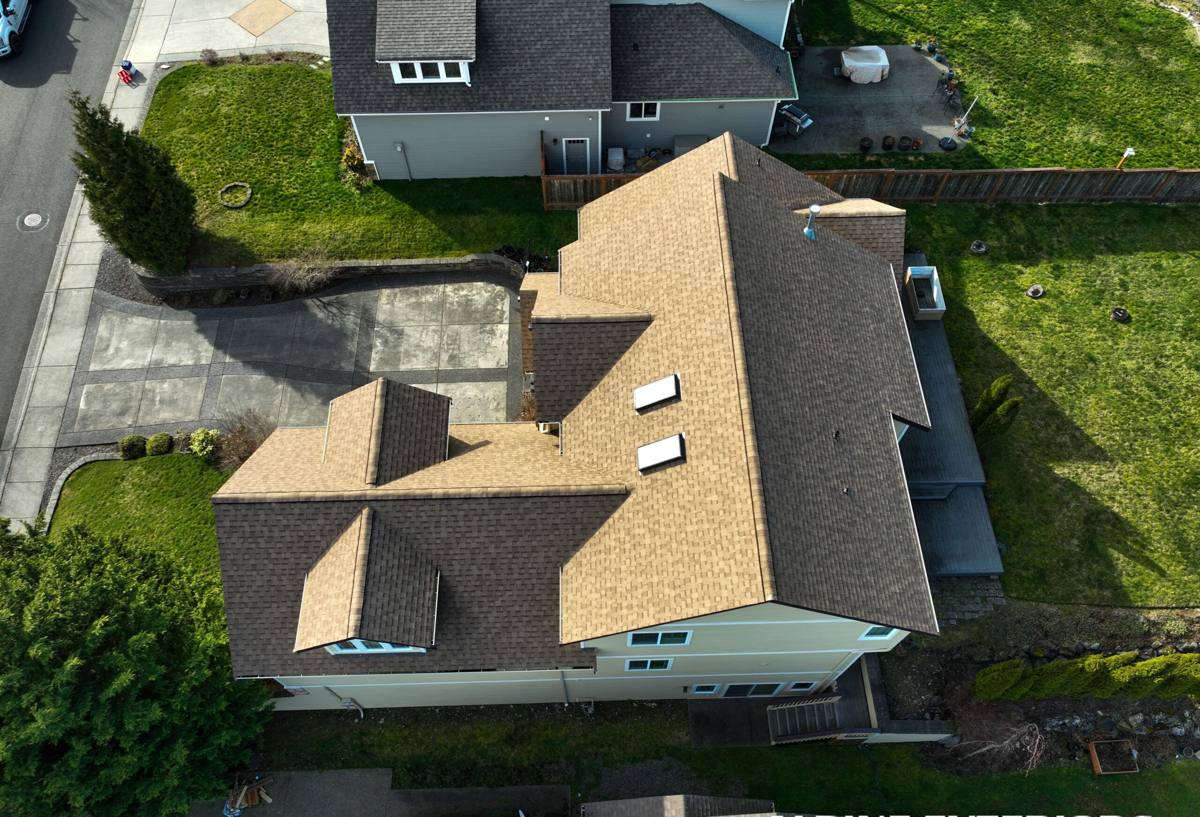
What Skagit County's Climate Does to Siding
Salt Air and Driving Rain
Cedardale's proximity to Puget Sound and the Skagit delta means a steady low-level exposure to salt-laden air. Salt is corrosive to fasteners and can accelerate the breakdown of paint films and less durable siding substrates. Combine that with wind-driven rain — rain that doesn't just fall but gets pushed sideways into wall assemblies, joints, and trim — and you get moisture intrusion at points that would stay dry in a calmer, drier climate.
The Long Moss Season
Skagit County's wet season stretches long, and shaded or north-facing walls can stay damp for weeks. That's exactly the environment moss and algae need to establish. Beyond the cosmetic green-black staining, moss holds moisture against the siding surface, which extends the time wood-based or poorly sealed materials stay wet and accelerates rot, delamination, and paint failure underneath.
Why This Combination Matters for Repair
A siding problem in Cedardale is rarely just one thing. A cracked board lets in rain, the rain doesn't dry because the wall stays shaded and humid, and moss or algae growth on top traps even more moisture. By the time a homeowner notices bubbling paint or a soft spot, there's often been slow damage building for a season or two already.
| Climate Factor | Effect on Siding | What It Means for Repair |
|---|---|---|
| Salt air | Corrodes fasteners, degrades some coatings faster | Fastener condition needs checking, not just the siding surface |
| Wind-driven rain | Forces water into seams, laps, and trim joints | Flashing and joint detailing must be corrected, not just resealed |
| Extended moss season | Keeps surfaces damp longer, feeds organic growth | Repairs must address moisture drainage, not just clean the surface |
| Cool, humid winters | Slows drying time after any water intrusion | Trapped moisture behind siding can go undetected longer |
Signs a Cedardale Home Needs Siding Repair
- Soft, spongy, or visibly warped sections of siding, especially near ground level or under windows
- Persistent moss or algae staining that returns quickly after cleaning
- Paint that's bubbling, peeling, or chalking heavily in patches
- Gaps or separation at butt joints, corners, or where siding meets trim and window frames
- Visible rust streaking from fasteners, especially on older installations
- A musty smell or discoloration on interior walls that back up to exterior siding
- Cracked or chipped boards that expose the substrate underneath
Any one of these on its own might be minor. Several together, especially on a wall that gets a lot of weather exposure, usually means water has been getting behind the siding for a while.
What a Correct Repair Actually Involves
Diagnosing Before Cutting
The first step isn't replacing the visible damage — it's figuring out how water got in and how far it traveled. That means checking the house wrap or building paper behind the siding, inspecting the framing for soft spots, and tracing the path of water rather than just the location of the stain. Cutting out a bad board and nailing up a new one without this step is how the same repair gets called back out in two years.
Matching Materials, Not Just Colors
On homes with older or discontinued siding, an exact material match can be difficult. We're upfront with Cedardale homeowners when a patch will be visible versus when a full wall or elevation replacement makes more sense to keep a uniform, weathertight result. Patching a single board into an aging wall sometimes creates a new failure point at the seam between old and new material.
Flashing and Water Management
Given how much of Cedardale's siding damage traces back to wind-driven rain finding a way in, correcting or upgrading flashing at windows, doors, and horizontal trim during a repair is often more important than the siding material itself. A new board over bad flashing just delays the next repair.
Fastener and Substrate Condition
Because of the salt air exposure here, we check fastener condition as part of any repair — corroded nails or screws are a common hidden contributor to loose or failing siding sections, even when the siding itself looks fine.
Why We Only Repair With James Hardie Fiber Cement
When a repair calls for new material — whether it's a few boards or a full wall section — we use James Hardie fiber cement exclusively. We don't install LP SmartSide, vinyl, Cemplank, Allura, primed spruce, or cedar, and in a climate like Skagit County's, that standard matters more than it might elsewhere.
Fiber cement is non-combustible and doesn't absorb and hold moisture the way wood-based products can, which is a real advantage during a long moss season when siding stays damp for extended stretches. James Hardie's factory-applied ColorPlus finish is baked on under controlled conditions, which holds up better against the fading and chalking that salt air and UV exposure cause in field-applied paint. Their HZ5 product line is engineered specifically for climates with more moisture exposure, which fits this part of Washington well.
Just as important for repair work: James Hardie is widely available and consistently manufactured, so if a homeowner needs a repair five or ten years down the road, matching the existing siding is far more realistic than with some of the less standardized alternatives. That consistency, backed by a strong transferable warranty, is a big part of why we standardized on it rather than mixing materials across a portfolio of jobs.
Our Repair Process
- On-site inspection. We walk the exterior, identify all affected areas (not just the one that prompted the call), and check for related issues like flashing gaps or fastener corrosion.
- Moisture and substrate check. Where damage looks more than surface-deep, we check behind the siding to see how far water intrusion has traveled.
- Honest scope discussion. We tell you plainly whether this is a spot repair, a section replacement, or something that points to a broader issue worth addressing now rather than later.
- Repair execution. Matching James Hardie material where new siding is needed, corrected flashing and water management details, and fastener replacement where corrosion is a factor.
- Final check. We confirm the repaired area sheds water correctly and blends reasonably with the surrounding siding.
Repair vs. Replacement: Making the Right Call
Not every siding issue in Cedardale needs a full replacement, and we're not going to tell a homeowner they do when a targeted repair will hold up. But there's a point where patching starts costing more over time than doing a proper section or full replacement.
| Situation | Repair Usually Makes Sense | Replacement Worth Considering |
|---|---|---|
| Damage extent | Isolated to one or two boards/areas | Spread across multiple walls or elevations |
| Siding age | Relatively recent, otherwise sound | Original material is decades old and failing broadly |
| Underlying moisture damage | Contained, caught early | Found in framing or sheathing, not just siding |
| Material match | Close match available or repair location is inconspicuous | No reasonable match, visible mismatch on prominent walls |
Why a Crew That Already Works Cedardale Is Worth Choosing
Siding repair done by someone unfamiliar with the area often treats every job as a generic patch-and-paint. A crew that regularly works Skagit County properties recognizes the difference between a one-off installation mistake and a pattern tied to this region's salt exposure, rain direction, or moss growth — and that recognition changes what gets fixed and how. We've seen how homes in and around Cedardale actually perform through a full wet season, not just how they look on a dry inspection day, and that shapes a more durable repair the first time.
If you're dealing with damaged, stained, or failing siding on a Cedardale home, we're happy to take a look. We'll give you a straightforward read on what's actually going on, what it will take to fix it right, and whether repair or replacement is the smarter move — no pressure, no inflated scope. Reach out for a free estimate using the form below.