 Skagit County
 Siding Repair Built for Hamilton's Corner of the Skagit Valley
Hamilton sits inland along the Skagit River, tucked between timbered hillsides that keep the town shaded and damp for a good part of the year. That's a different set of pressures than the wind-driven, salt-tinged air closer to Puget Sound, but it's no easier on a house. Heavy tree cover slows drying time after every storm, the river valley holds humidity longer than open ground, and a rainy season that stretches across most of the year means siding here rarely gets a real break to dry out between soakings. When siding fails in Hamilton, it's almost always because water found a way in and had nowhere to go.
Siding repair done right in this setting isn't about slapping a patch over a bad spot. It's about understanding why that spot failed in the first place, fixing the actual cause, and using materials that will hold up to the next twenty wet seasons instead of the next two.
Why Repairs Get Skipped — and Why That Costs More Later
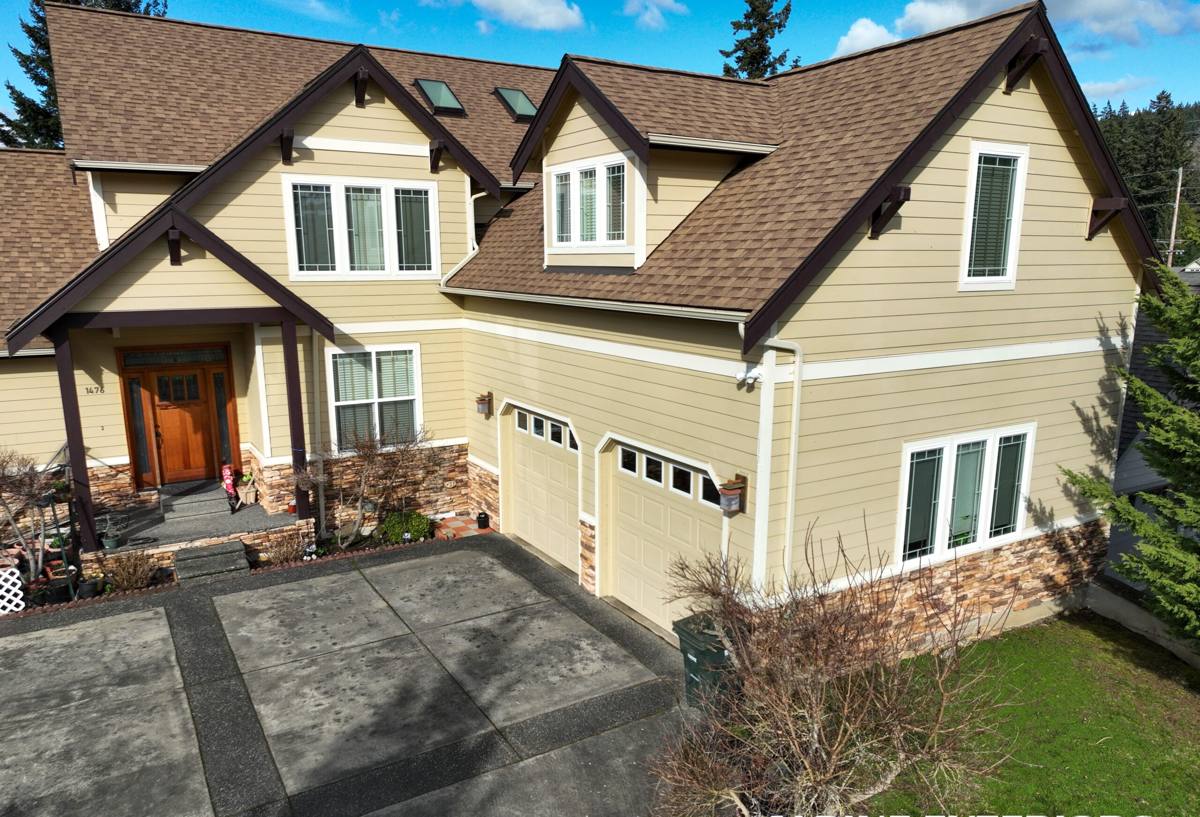
Siding damage in a shaded, humid valley town like Hamilton tends to start small and stay hidden. A hairline crack near a window trim, a soft spot low on a wall, a patch of moss creeping up from the foundation line — none of it looks urgent. But wood-based and composite sidings that have taken on moisture don't just sit there; they keep absorbing, swelling, and softening until the damage spreads well past the original spot. By the time it's visible from the street, the repair is often bigger than it needed to be.
We'd rather look at a "small" problem now than a rotted wall section in two years. That's the honest starting point for every repair estimate we give in Hamilton.
What We're Actually Looking For
- Soft, spongy, or crumbling siding when pressed by hand
- Paint that's bubbling, peeling, or repeatedly failing in the same spot
- Visible gaps, cracks, or warping at panel seams and corners
- Moss or dark staining that keeps returning after cleaning
- Interior signs — musty smell, discolored drywall, or peeling interior paint on an exterior wall
- Siding that pulls away slightly from the wall, especially near the bottom courses
- Damage clustered near downspouts, roof valleys, or areas that stay shaded most of the day
What Correct Siding Repair Actually Involves
A repair that only replaces the piece a homeowner can see, without addressing what's underneath, is a repair that fails again. In Hamilton's damp valley conditions, that shortcut shows up fast — sometimes within a single wet season.
Diagnosis Before Demolition
Before anything comes off the wall, we find out how far the damage actually goes. That means checking behind the visible siding, looking at the house wrap or building paper condition, and checking framing and sheathing for softness where water has clearly been sitting. A repair quote that skips this step is a guess, not a diagnosis.
Fixing the Water Path, Not Just the Symptom
Most siding failures trace back to a flashing detail, a caulk joint that failed, or a panel that was never properly gapped and sealed at installation. Replacing the siding without correcting that detail means the same failure happens again in roughly the same spot. Every repair we do includes correcting the underlying water path — new flashing where needed, proper drainage gaps, and sealant only where sealant belongs.
Matching Material and Finish
On homes with James Hardie fiber cement, repairs are straightforward: matching plank profile and factory ColorPlus finish are available, so a patched section blends in rather than standing out as an obvious repair. On homes with other materials, matching existing siding gets harder every year as older product lines get discontinued — which is one of the practical reasons repair costs on non-Hardie siding tend to creep up over time.
Repair or Replace? How We Help Hamilton Homeowners Decide
Not every damaged wall needs a full re-side, and not every "repair" is worth doing if the underlying siding is at the end of its life. We walk every Hamilton estimate through the same honest comparison:
| Factor | Leans Toward Repair | Leans Toward Replacement |
|---|---|---|
| Extent of damage | Isolated to one or two wall sections | Spread across multiple elevations |
| Siding age | Under 10–15 years, material still sound elsewhere | Near or past expected service life |
| Moisture readings | Localized, sheathing underneath is dry | Elevated readings across several areas |
| Material availability | Matching product still manufactured | Discontinued profile or color, poor match |
| Underlying cause | One-time event (impact, isolated flashing failure) | Systemic issue (original install defect, wrong material for the site) |
| Homeowner plans | Staying long-term, budget-focused fix | Wants a long-horizon, low-maintenance exterior |
When repair is the right call, we say so — a smaller, correctly done job is a better outcome for the homeowner than an unnecessary full re-side. When the damage points to a bigger underlying problem, we explain exactly why before recommending anything larger.
Repairing Siding That Isn't James Hardie
We install James Hardie fiber cement exclusively, but a large share of the repair calls we get in Skagit County are on homes with vinyl, LP SmartSide, cedar, or older composite siding — and we still repair those where a repair is the right call. What we won't do is pretend a patch on a moisture-compromised wood or engineered-wood product is a long-term fix; those materials are more sensitive to the exact conditions Hamilton has in abundance — sustained dampness and limited direct sun to dry things out. In those cases we'll tell you plainly what a repair will and won't buy you, and where James Hardie would remove the underlying vulnerability altogether rather than just patching around it.
Why We Standardized on James Hardie for This Climate
James Hardie fiber cement is non-combustible, doesn't swell or delaminate the way wood-based products can when they take on repeated moisture, and carries a factory-applied ColorPlus finish that resists the fading and peeling that drives most repaint-and-patch cycles. In a shaded river valley like Hamilton, where siding rarely gets a long dry stretch, that resistance to moisture-driven failure matters more than it does in a drier climate. It's also backed by a strong transferable warranty when installed to Hardie's specifications — which is why correct installation technique matters as much as the material itself.
That standard doesn't just apply to full re-sides. When a repair on an existing Hardie home needs new material, we use Hardie's HZ5 product line, engineered for wetter, harsher climate zones, so the patched section performs the same as the rest of the wall — not just matches it visually.
Our Repair Process in Hamilton
1. On-Site Inspection
We look at the visible damage, check surrounding areas for related moisture signs, and get a read on the sheathing and framing condition where accessible.
2. Honest, Itemized Estimate
You get a clear explanation of what's being repaired, why it failed, and what the fix involves — not a vague lump-sum number.
3. Repair Work
Damaged material comes out, the water-path issue gets corrected, and new material goes in matched to the existing wall wherever possible.
4. Walkthrough
We show you what we found, what we did, and what to keep an eye on going forward — especially in shaded or low-drainage areas of the property.
Why a Crew That Already Works Hamilton Matters
Skagit County covers a lot of ground, from the coastline to river valley towns like Hamilton, and each pocket has its own version of the same moisture problem. A crew that's worked Hamilton knows that shaded, tree-lined lots need extra attention to drainage detail and that moss recurrence here is a drainage and sun-exposure issue as much as a cleaning issue. That's the kind of judgment that only comes from having done the work in this specific valley, not just in "the Northwest" generally.
It also matters for accountability. A local crew is easy to call back if something needs a second look, and stands behind a repair with a warranty that means something because we're still in the area to honor it.
If you're seeing soft spots, recurring moss, peeling paint, or damage after a storm on your Hamilton home, we're happy to take a look. The estimate is free, there's no pressure to do more work than the house actually needs, and you'll get a straight answer about whether repair or replacement makes sense — use the form below to get started.