 Skagit County
 Skyline Homes Take a Different Kind of Beating
Homes in the Skyline area sit close enough to the water that the siding is dealing with more than ordinary Pacific Northwest weather. Salt-laden air, wind-driven rain that hits walls sideways instead of falling straight down, and a moss season that can stretch for months all combine to age exterior siding faster than it would age fifteen or twenty miles inland in Skagit County. We see this pattern often enough on Skyline homes specifically that it changes how we approach a repair call there.
Salt air is corrosive to exposed metal — fasteners, flashing, trim screws — long before most homeowners notice anything wrong with the siding itself. Driving rain finds every gap, seam, and unsealed joint and pushes water sideways into places it was never designed to go. And moss doesn't just sit on the roof; it colonizes north-facing and shaded wall sections, holding moisture against the siding surface for weeks at a time. None of this means Skyline homes are poorly built — it means the exterior envelope needs periodic attention, and repairs need to be done correctly the first time, because the climate doesn't give a bad patch job much room to fail slowly.
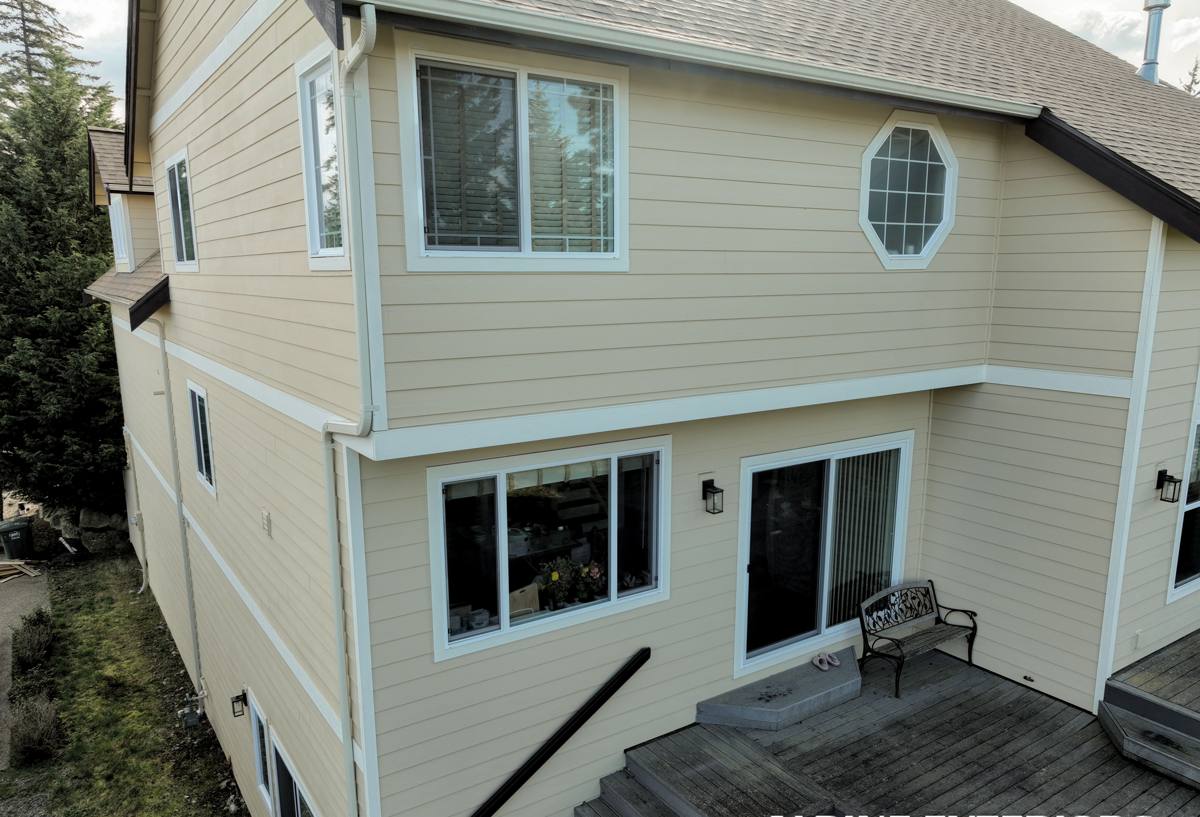
The Warning Signs Worth Calling About
Most siding repair calls we get in the Skyline area start with one of a handful of symptoms. Catching these early is almost always cheaper than waiting.
- Soft or spongy spots when you press on the siding, especially near the bottom courses or around windows and doors
- Visible cracking, splitting, or buckling in one section while the rest of the wall looks fine
- Paint or finish that's peeling or bubbling in a localized area rather than across the whole house
- Dark streaking, persistent moss, or algae growth that keeps coming back on the same wall section
- Gaps opening up at seams, corners, or trim where caulk has failed or shrunk
- Rust staining below fasteners or flashing — a sign the metal itself is starting to corrode
- Interior signs like a musty smell, discolored drywall, or a soft spot on an exterior wall
Any one of these on its own doesn't necessarily mean a major problem. But on a Skyline home, we treat them as worth investigating quickly, because moisture that gets behind siding in this climate doesn't dry out on its own the way it might in a drier part of the state.
What a Correct Siding Repair Actually Involves
It's Not Just Swapping a Board
A repair that just replaces the visible damaged piece and stops there is common — and it's also the reason so many "repaired" walls fail again within a year or two. The board you can see is rarely the whole story. Water that caused visible damage usually traveled along a path first: through a failed seam, under a piece of trim, behind flashing that was never sealed correctly, or through a nail hole that opened up over time.
What We Actually Check
A proper repair means pulling back enough of the surrounding material to find where water is actually getting in, not just where it became visible. That includes checking the house wrap or weather barrier underneath for tears, inspecting flashing above windows and at butt joints, confirming the sheathing hasn't gone soft, and looking at whether the original installation left any gaps that invited the problem in the first place. Only after that is addressed does it make sense to install new siding material and refinish the area to match.
Matching Finish and Reveal
On a repair, matching the existing reveal (the exposed width of each course), fastener pattern, and finish color matters more than people expect. A patch that's technically sound but visibly mismatched still looks like a patch. We factor color and profile matching into the estimate up front so there are no surprises.
Repair or Replace? How We Make the Call
Not every problem area needs a full re-side, and not every home is a good candidate for spot repair alone. The right call usually comes down to how contained the damage is and what condition the rest of the exterior is in.
| Factor | Favors Repair | Favors Replacement |
|---|---|---|
| Extent of damage | Limited to one or two sections | Recurring in multiple areas across the house |
| Underlying sheathing | Solid, no soft spots found | Soft, rotted, or water-stained over a wide area |
| Age of existing siding | Newer or mid-life, generally sound | Near or past its expected service life |
| Material condition | Original material is holding up elsewhere | Cracking, delaminating, or failing broadly |
| Moisture history | One identifiable, fixable entry point | Chronic moisture intrusion with no single cause |
We'll always tell you honestly which side of this table your home falls on. If a targeted repair will hold up, we're not going to sell you a full replacement — and if the damage points to a broader problem, we'd rather tell you that up front than have you pay twice.
Our Skyline Repair Process
- On-site inspection: We look at the reported problem area and the rest of the exterior, paying particular attention to shaded, north-facing, and wind-exposed walls where Skyline homes tend to show wear first.
- Moisture and structural check: Before quoting anything, we confirm what's happening underneath the visible damage — sheathing condition, weather barrier integrity, and flashing.
- Written scope and estimate: You get a clear explanation of what needs to happen, what it will cost, and why — not just a number.
- Repair and reseal: We replace damaged material, correct the underlying cause (a flashing detail, a sealant failure, a bad seam), and reinstall using proper fastening and flashing technique.
- Finish match: We match color, reveal, and trim detail as closely as the existing siding allows.
- Walkthrough: We show you what was found and what was done, including anything worth keeping an eye on going forward.
Why We Match Repairs With James Hardie Materials
We install and repair with James Hardie fiber cement siding exclusively — we don't work in vinyl, LP SmartSide, Cemplank, Allura, primed spruce, or cedar. That's a deliberate standard, not a limitation of what we're able to do. Fiber cement resists the specific problems that show up most on Skyline homes: it doesn't rot the way wood-based products can when moisture gets behind it, it's non-combustible, and Hardie's ColorPlus factory finish is engineered to hold up against UV and salt-air exposure better than field-applied paint typically does over time.
Hardie's HZ5 product line in particular is engineered for harsher, wetter climates, which makes it a sensible match for a location dealing with salt air and driving rain on a regular basis. When we're doing a repair on a home that already has Hardie siding, matching material and finish is straightforward. When a home has a different original material and the damaged section needs full replacement rather than a patch, we'll walk you through what switching that section — or eventually the whole exterior — to fiber cement would mean, including the honest trade-offs of mixing materials versus planning a full re-side down the road.
Why Local Experience on Skyline Specifically Matters
General siding contractors can do competent work anywhere. But a crew that's already worked on homes in the Skyline area has a head start: we know which wall orientations tend to take the worst of the wind and rain, where moss tends to establish itself first, and what kind of flashing and sealant details hold up against salt air versus which ones fail early. That's the difference between a repair that's technically correct on paper and one that's actually built for the conditions your specific home faces.
It also means fewer surprises during the estimate. We're not guessing at how Skagit County's coastal microclimate affects a wall section — we've seen the pattern before, which lets us diagnose the actual cause of a problem rather than just treating the symptom.
A Simple Maintenance Checklist Between Repairs
Whether your siding was just repaired or hasn't needed attention yet, a few habits go a long way toward avoiding the next call — especially in a climate this consistently wet and salty.
- Rinse siding annually to remove salt residue and surface grime, especially on walls facing prevailing wind and rain
- Trim back vegetation and tree cover that keeps a wall shaded and slow to dry
- Check and refresh caulking at trim, seams, and penetrations every couple of years rather than waiting for a visible gap
- Address moss at first sign rather than letting it establish, since it holds moisture against the surface
- Walk the exterior once or twice a year and press-test any area that looks discolored or uneven
- Keep gutters and downspouts clear so overflow isn't running down the siding face
None of these prevent every problem, but they buy time and catch small issues before they become sheathing repairs.
If you're seeing any of the warning signs above on a Skyline-area home, or you just want an honest read on whether a section needs a repair or something more, we're happy to take a look. Reach out for a free, no-pressure estimate — the form below will get us started.