 Skagit County
 Siding Replacement in Cedardale: Built for This Corner of Skagit County
Cedardale sits in a stretch of Skagit County where marine air, seasonal downpours, and shaded, moisture-holding tree cover all work against the siding on your home at the same time. Homes here don't fail because owners neglected them — they fail because the siding installed on them wasn't engineered for this specific combination of salt air, driving rain, and a long moss season that starts early and doesn't let up until late spring. If your siding is cupping, staining green or black, or you're re-caulking the same seams every year or two, that's not bad luck. That's the climate doing exactly what it does to the wrong product.
This page covers what a correct siding replacement looks like for a Cedardale home specifically: what the local climate actually does to siding, what a proper job involves, how our process works, and why it matters to hire a crew that already works this area rather than one commuting in from outside the county.
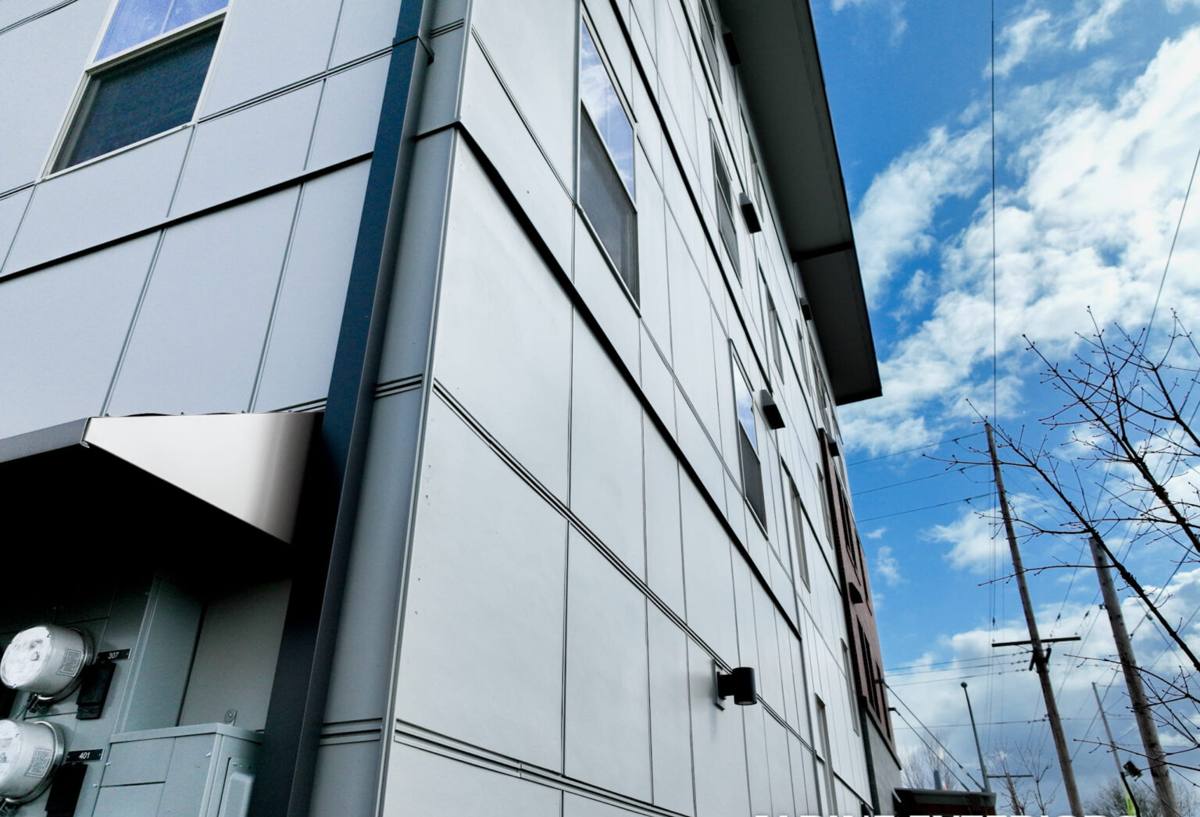
What Cedardale's Climate Actually Does to Siding
Salt Air
Proximity to Puget Sound means airborne salt is a constant, low-grade presence on exterior surfaces throughout this part of Skagit County. Salt accelerates corrosion of fasteners and trim metal, and it degrades cheap paint finishes faster than inland areas ever see. Any siding product with a weak factory finish will chalk, fade, and lose adhesion years ahead of its rated life out here.
Driving Rain
Storms off the Sound don't just fall straight down — wind pushes rain sideways into wall assemblies, seams, and any gap around windows, doors, and trim. Siding that isn't dimensionally stable, or that wasn't installed with proper flashing and clearances, lets that wind-driven water find its way behind the cladding. Once moisture gets behind siding, it doesn't dry out quickly in this climate — it sits.
A Long Moss Season
Cedardale's tree cover and persistent damp keep humidity high on north- and shade-facing walls for much of the year. That's exactly the environment moss, algae, and mildew need. Porous or fibrous siding surfaces give these organisms something to grip and feed on; smoother, factory-sealed surfaces resist it far better and clean up without stripping the finish.
How the Climate Factors Compare Across Siding Types
| Climate Factor | Vinyl | Untreated Wood / Primed Spruce | James Hardie Fiber Cement |
|---|---|---|---|
| Salt air exposure | Finish fades, becomes brittle over time | Accelerates paint failure and rot at fasteners | Factory ColorPlus finish resists fading and chalking |
| Wind-driven rain | Panels can warp, joints can open | Absorbs water, swells, invites rot | Dimensionally stable, engineered lap/flashing details |
| Moss/algae growth | Grows on surface film, hard to fully clean | Grows readily on porous, weathered wood | Dense, factory-sealed surface resists organic growth |
| Long-term maintenance | Low upfront, but early replacement is common | Frequent repainting and caulking required | Repaints on a much longer cycle when done right |
Why We Only Install James Hardie in This Area
We don't install vinyl, LP SmartSide, primed spruce, cedar, or lower-cost fiber cement alternatives like Cemplank or Allura. That's not a marketing position — it's a standard we hold because we've seen what Skagit County's climate does to each of them over time.
- Vinyl is inexpensive and low-maintenance short-term, but it's a thin material that can distort in heat, crack in cold snaps, and its color is baked into a surface that eventually chalks and fades in salt-air exposure — with no way to simply repaint it back to new.
- Primed spruce and cedar are attractive and traditional, but they're organic materials in a climate that stays damp for months at a time. That combination means ongoing repainting, caulk maintenance, and real rot risk at joints and end-cuts if upkeep ever lapses.
- Alternative fiber cement brands use the same base material category as Hardie, but the finish systems, engineered HZ moisture profiles, and warranty backing behind James Hardie products are what we've found actually hold up here, not just on paper.
James Hardie fiber cement is non-combustible, holds a factory-applied ColorPlus finish that's engineered to resist fading and chip far longer than field-applied paint, and its HZ5 product line is specifically formulated for climates like ours — freeze-thaw cycling, sustained moisture, and coastal air. Combined with a strong transferable warranty, it's the product we're willing to put our name behind on a Cedardale home.
What a Correct Siding Replacement Actually Involves
Siding replacement is not simply removing old panels and nailing up new ones. In a climate this unforgiving, the parts you don't see afterward matter more than the parts you do.
Tear-Off and Sheathing Inspection
Once old siding comes off, we inspect the sheathing underneath for water damage, soft spots, or existing rot — especially common around window and door openings and lower wall sections where wind-driven rain collects. Any compromised sheathing gets replaced before anything new goes up. Covering over hidden rot is the single most common reason a "new" siding job fails early.
Weather-Resistive Barrier
A correctly lapped, sealed weather-resistive barrier goes on before any siding, giving the wall assembly a second line of defense against the driving rain this area sees. Seams, penetrations, and transitions get sealed deliberately, not as an afterthought.
Flashing at Every Vulnerable Point
Windows, doors, deck ledgers, and roof-to-wall intersections are where wind-driven rain finds its way in. Proper flashing at each of these points, integrated correctly with the weather-resistive barrier, is what actually keeps water out — not the siding surface itself.
Manufacturer-Spec Installation
James Hardie siding has specific requirements for fastener type and placement, clearances from grade and roof lines, panel gaps for expansion, and caulking at joints. Installing it correctly is what preserves the warranty and what actually delivers the performance the product is engineered for. Installed loosely or with shortcuts, even the best siding underperforms.
Siding Replacement Checklist for Cedardale Homes
- Full tear-off with sheathing inspected, not just re-covered
- Any rotted or soft sheathing replaced before new siding goes on
- Weather-resistive barrier installed and properly lapped
- Flashing integrated at every window, door, and roof-to-wall transition
- James Hardie HZ5 product line specified for this climate zone
- Fastening, clearances, and gaps installed to manufacturer spec
- Factory ColorPlus finish selected and confirmed before installation
- Final walkthrough covering warranty registration and care basics
Our Process for a Cedardale Project
1. On-Site Assessment
We walk the home in person, looking specifically at north/shade-facing walls for moss and moisture patterns, checking trim and window details, and assessing what's actually happening underneath the current siding where visible.
2. Honest Scope and Estimate
You get a clear picture of what needs to happen — full replacement, sheathing repair if warranted, and a product and color recommendation — with a free, no-pressure estimate before any commitment.
3. Installation to Manufacturer Spec
Tear-off, sheathing repair as needed, weather-resistive barrier, flashing, and Hardie installation proceed in that order, with attention paid to the details that determine how the wall performs in five, ten, and twenty years — not just how it looks on install day.
4. Final Walkthrough
We walk the finished job with you, confirm warranty registration, and go over basic long-term care so you know what to expect from the finish over time.
Why Local Experience in Cedardale Matters
A crew that already works Skagit County knows which walls in this area take the worst of the wind-driven rain, which shaded lots grow moss fastest, and how salt air behaves differently a few miles inland versus closer to the water. That's knowledge you don't get from a general contractor passing through the region for one job. It shows up in where extra flashing attention goes, which product line gets recommended, and how the whole assembly is sequenced to hold up against exactly the conditions your home faces every year.
Cost Factors to Expect
| Factor | Why It Affects Cost |
|---|---|
| Home size and wall complexity | More corners, gables, and trim details mean more labor and material |
| Sheathing condition | Rot discovered during tear-off requires repair before siding goes on |
| Product line and finish selection | HZ5 panels and ColorPlus finish options vary by style and color |
| Trim and accessory scope | Fascia, soffit, and trim replacement alongside siding adds scope |
| Access and site conditions | Tree cover, slopes, and tight lot access affect labor time |
We don't quote broad numbers without seeing the home, because sheathing condition and scope vary too much house to house to make a blanket estimate honest.
Get a Free Estimate for Your Cedardale Home
If your siding is showing moss staining, cupped or warped panels, or you're tired of repainting and re-caulking every couple of years, it's worth having someone who works this exact climate take a look. Fill out the form below for a free, no-pressure estimate on siding replacement for your Cedardale home.