 Skagit County
 Building a Deck That Actually Holds Up in Skyline
Skyline sits close enough to the water on Fidalgo Island that salt air is part of daily life, not an occasional nuisance. Add Skagit County's long wet season and the shade that comes with mature evergreens on many Skyline lots, and you've got a climate that's tough on outdoor structures in three specific ways: corrosion, rot, and moss. A deck built to a generic spec sheet from a big-box store will show all three problems within a few years. A deck built for this location won't.
This page covers what a custom deck build actually needs to hold up in Skyline — the materials, the fasteners, the framing details, and the maintenance reality — so you know what to ask for whether you hire us or someone else.
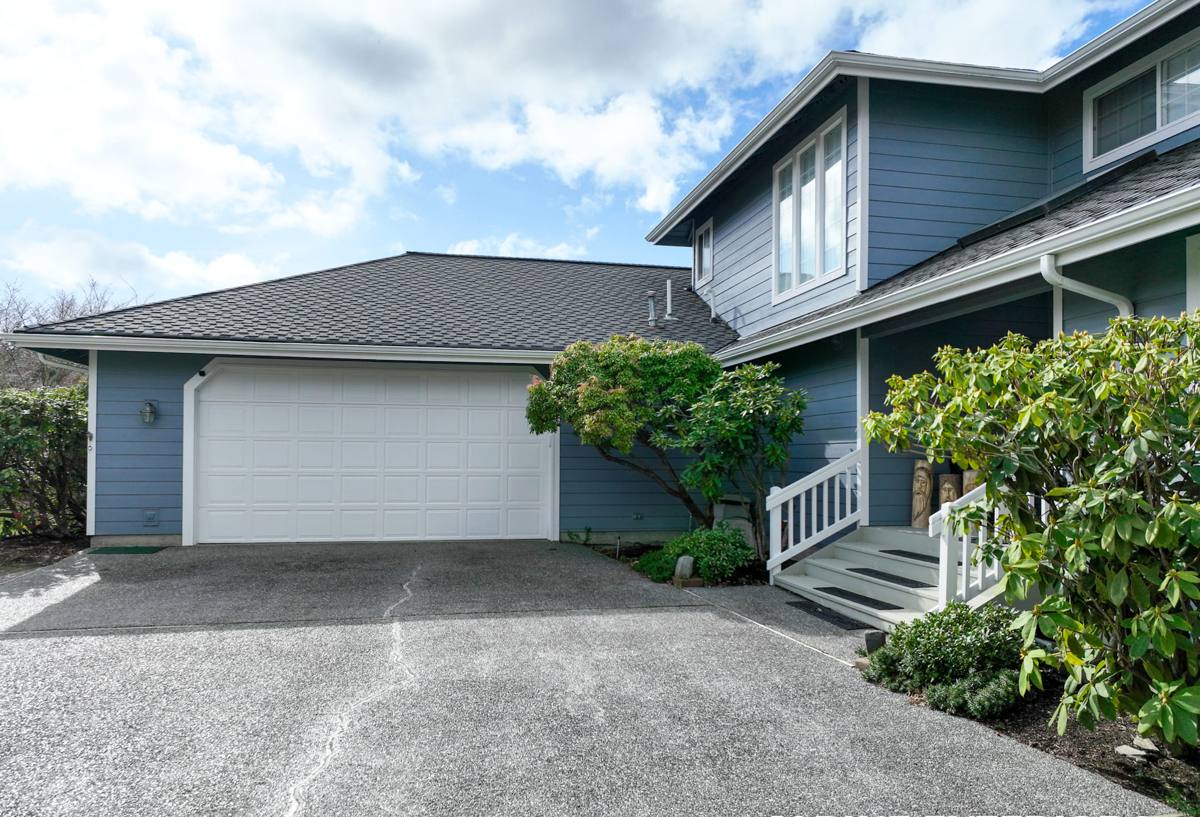
What Skyline's Climate Does to a Deck
Salt Air and Corrosion
Airborne salt from the Sound accelerates corrosion on anything metal — fasteners, joist hangers, railing brackets, and structural connectors. Standard electro-galvanized screws and hangers look fine in the store and then start rusting, bleeding orange streaks into the wood, and losing holding strength within a handful of seasons near the water. This isn't a defect in the product; it's the wrong product for a salt-air site.
Driving Rain
Skagit County gets a lot of rain, and coastal weather systems often bring it in sideways rather than straight down. That matters for decks because water doesn't just fall on the surface — it gets driven under railings, into ledger connections, and along the top edge of fascia boards. Any gap in flashing or sealant becomes an entry point, and once water gets behind a board it doesn't dry out quickly in a marine climate.
Moss and Algae
Shade, moisture, and mild temperatures are exactly what moss and algae need to thrive, and a lot of Skyline properties have tree cover that keeps deck surfaces damp well after a storm passes. Beyond the appearance issue, moss holds moisture against the decking material and turns wood and composite surfaces slick and genuinely dangerous underfoot.
Choosing the Right Decking Material for This Site
There's no single "best" decking material — there's a best material for a given lot, budget, and maintenance appetite. Here's how the common options actually perform in Skyline conditions specifically.
| Material | How it handles salt air | How it handles rain and shade | Maintenance reality |
|---|---|---|---|
| Cedar | Naturally rot- and insect-resistant; use stainless fasteners to avoid tannin staining | Needs regular sealing to prevent graying and moisture absorption in shaded spots | Annual cleaning and re-sealing recommended |
| Pressure-treated fir/pine | Chemical treatment resists rot but not corrosion on hardware — stainless still needed | Prone to cupping and checking in wet shade if not sealed | Sealing every 1–2 years; budget-friendly upfront |
| Composite decking | No rot or insect risk; capped boards resist salt staining well | Won't absorb water like wood, but shaded boards still grow moss on the surface and need scrubbing | No sealing needed; occasional cleaning |
| Tropical hardwood (e.g., ipe) | Extremely dense and rot-resistant; still needs stainless or coated fasteners | Sheds water well; very low absorption | Higher upfront cost; minimal sealing needed if left to gray |
For shaded Skyline lots specifically, composite or dense hardwood generally outperforms softwoods on the moss front simply because there's less porous surface for growth to take hold in. For open, sunnier sites closer to the water, cedar remains a solid, honest choice as long as the hardware and sealing schedule match the exposure.
Framing and Fasteners: Where Most Failures Actually Start
Almost every deck failure we've diagnosed traces back to the structure underneath the decking, not the decking itself. This is the part homeowners don't see and contractors sometimes skip corners on.
- Fasteners and hardware: Stainless steel or heavy hot-dip galvanized rated for coastal/salt-air exposure — not standard electro-galvanized, which corrodes fast this close to the water.
- Ledger flashing: Properly flashed and sealed ledger-to-house connections so driving rain can't work its way behind the board where it attaches to your home.
- Joist protection: Joist tape or flashing on top of framing members to keep fastener penetrations from becoming rot points.
- Footings: Footings sized and set below frost depth and clear of tree roots, which is a real consideration on wooded Skyline lots where root systems can shift or heave a poorly placed footing over time.
- Ventilation and clearance: Enough clearance under the deck for airflow, which slows both rot and moss growth in shaded areas.
Design Choices That Matter for Skyline Lots
Working With Slope and Tree Cover
Many lots in this part of Skagit County aren't flat, and mature trees are often worth designing around rather than removing. A custom deck lets us set post heights and footing locations to match the actual grade instead of forcing a flat rectangle onto uneven ground, and we can plan board orientation and railing placement to work with existing shade rather than fighting it.
Railings and Views
If your lot has any kind of water or valley view, railing material and spacing decisions affect how much of that view you actually get to see from a seated position. Cable rail and glass panel systems preserve sightlines better than heavy baluster railings, though they come with their own maintenance and cost trade-offs worth discussing before you commit.
Drainage Under and Around the Deck
Where the deck sits relative to your home's overall drainage matters. A deck built without regard for where roof runoff and ground water already flow can end up sitting in standing water after heavy rain, which accelerates every problem described above. Grading and drainage get evaluated as part of the design, not treated as an afterthought.
Our Process for a Skyline Deck Build
- On-site assessment: We walk the lot, check grade, sun/shade exposure, existing drainage, and any structural connection points to your home.
- Material and design consultation: Based on that assessment, we talk through decking material, railing type, and layout options suited to your specific site — not a one-size-fits-all package.
- Permitting: Skagit County requires permits for most new deck construction and many significant rebuilds. We handle the permit process as part of the job so you're not navigating it alone.
- Framing and structural work: Footings, framing, ledger flashing, and hardware go in to the standard described above — this is the step that determines how the deck ages.
- Decking, railing, and finish work: Surface material and railings are installed, sealed or capped as appropriate, and every connection is checked before we call it done.
- Walkthrough: We go over basic maintenance expectations for the material you chose so there are no surprises down the road.
What to Expect for Cost
Deck pricing depends heavily on size, decking material, railing type, footing count, and site accessibility — a lot with tree roots and slope simply takes more labor than a flat, open lot. Rather than quote a number that won't reflect your actual site, we'll give you a real figure after seeing the lot. In general, composite and hardwood decks cost more upfront than cedar or pressure-treated framing with wood decking, but they typically cost less over time in sealing, staining, and moss cleanup — worth weighing against your timeline for owning the home.
Maintenance Checklist for Salt-Air, Wet-Climate Decks
- Sweep debris and standing leaves off the deck regularly, especially in fall under tree cover
- Rinse salt residue off the surface and railings a few times a year if you're close to the water
- Check fastener heads and hardware annually for early rust or staining
- Reseal wood decking on the schedule appropriate to the product (typically every 1–2 years)
- Scrub or treat shaded boards for moss before it becomes slick and embedded
- Inspect ledger flashing and railing post connections yearly for any sign of water intrusion
- Clear vegetation and debris from under the deck to maintain airflow
Why Local Experience Matters for This Job
A deck built from a national framing spec sheet doesn't account for what a Skyline lot actually deals with — the salt exposure, the shade patterns from mature trees, and the sheer volume of wet-season rain Skagit County sees most of the year. Crews who already work this area know which fastener grade holds up here, which materials fight moss instead of feeding it, and how local permitting actually works, without treating your job as a first attempt at solving those problems.
If you're planning a new deck or replacing one that's showing its age, we're happy to walk your Skyline property, look at your specific site conditions, and put together a straightforward estimate — no pressure, no generic quote pulled from a price list. Use the form below to get started.