 Skagit County
 Roofing in Skyline Isn't the Same Job as Roofing Inland
Skyline sits close enough to the water and open enough to weather that its roofs take a different kind of beating than a roof twenty minutes inland. Homes here deal with salt-laden air, wind-driven rain that gets pushed sideways under standard flashing details, and a moss season that runs longer than most homeowners expect. A roof replacement here needs to be planned around those conditions from the first nail, not treated as a generic tear-off-and-reshingle job.
We work in Skagit County year-round, and Skyline is one of the areas we're on regularly. That matters more than it sounds like it should — knowing how a specific pocket of the county behaves in a wet November or a windy February changes real decisions on the roof: underlayment choice, flashing detail, ventilation layout, and where we spend extra time versus where standard practice is already enough.
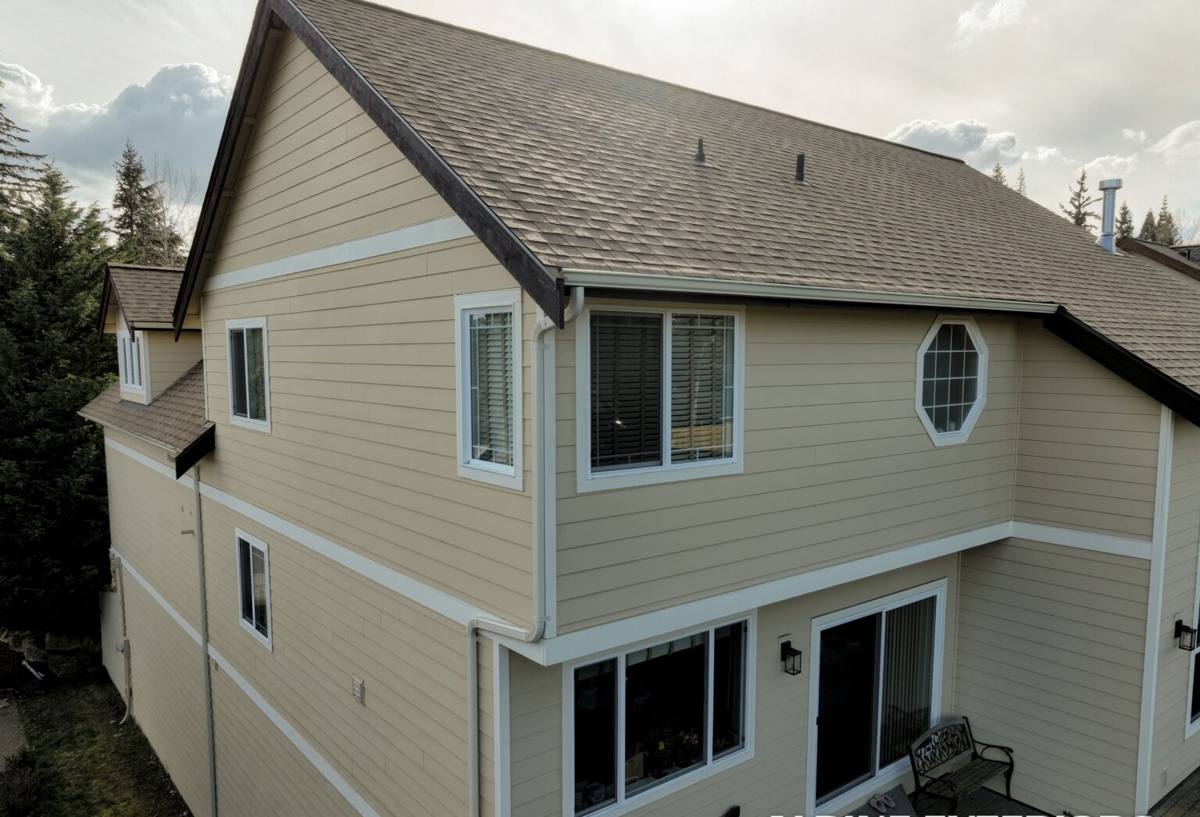
What Skagit County Climate Does to a Roof Over Time
Salt Air and Metal Fatigue
Homes closer to the water see accelerated corrosion on exposed metal — nails, flashing, vents, and fasteners. Cheap or under-spec metal components can start showing rust streaks and pinholing well before the shingles around them are due for replacement. On a full replacement, this is the moment to correct that with properly rated fasteners and flashing metal, because doing it now is far cheaper than a callback in five years.
Driving Rain and Wind-Driven Water
Standard shingle installation assumes rain falls mostly straight down. In open, windy stretches of Skagit County, rain regularly comes in at an angle, which pushes water up under shingle tabs and around flashing edges that would be fine in a calmer microclimate. This is why underlayment quality and flashing detail at valleys, walls, and penetrations matter more here than the shingle brand printed on the wrapper.
Moss, Shade, and Moisture Retention
A long moss season means roofs here spend more of the year damp than roofs in drier parts of the state. Moss holds moisture against the roof surface, works into shingle granules and seams, and can lift edges over time if it's left unchecked. Replacement is the right time to address the conditions that let moss take hold in the first place — tree cover, poor drainage, and low-sun roof sections — not just the moss itself.
Signs a Skyline Roof Is Actually Due for Replacement
Not every roofing problem means full replacement. Here's how we tell the difference on a home in this area:
- Granule loss heavy enough that shingles look patchy or bald in sun-exposed sections
- Shingles cupping, curling, or cracking — common once a roof has spent many wet seasons under moss and standing moisture
- Soft spots or sagging in the roof deck, usually found by walking the roof, not just looking at it from the ground
- Repeated leaks around the same valley, chimney, or wall flashing despite prior patch repairs
- Moss and algae staining that keeps returning within a season or two of cleaning
- Visible daylight or water staining in the attic along the roof line
- A roof approaching or past the manufacturer's expected service life for its material and local exposure
If a roof is showing one or two of these in isolation, targeted repair may still make sense. When several show up together, or the roof is old enough that repair would just be delaying the inevitable, replacement is usually the more honest recommendation — and we'll tell you which situation you're in rather than defaulting to the bigger job.
What a Correct Roof Replacement Includes Here
Tear-Off and Deck Inspection
We remove the existing roofing down to the deck rather than layering over it. That's the only way to actually see the condition of the sheathing underneath — soft, delaminated, or water-damaged decking needs to be found and replaced before anything new goes down, or the new roof is sitting on a compromised base regardless of how good the shingles are.
Underlayment Suited to Wind-Driven Rain
Given how much of Skagit County's weather comes in sideways rather than straight down, we don't treat underlayment as an afterthought. Synthetic underlayment with proper lap and fastening, plus self-adhered membrane in vulnerable areas like eaves, valleys, and low-slope transitions, is standard practice for us here — not an upsell.
Flashing Done Right the First Time
Most roof leaks trace back to flashing, not the field of the roof. Chimneys, skylights, sidewalls, and valleys all need flashing that's properly integrated with the underlayment and shingle courses, not just caulked and hoped for. This is the part of a roof replacement where corner-cutting shows up years later as a leak, and it's where we spend the most careful attention.
Ventilation That Matches the Roof
Proper intake and exhaust ventilation keeps moisture from building up in the attic, which matters in a climate where the roof deck is already dealing with a lot of ambient dampness. Poor ventilation shortens shingle life from underneath, which is invisible until it isn't.
Cleanup and Magnetic Sweep
A full tear-off leaves nails and debris behind if you're not careful. We clean the site and run a magnetic sweep of the yard and driveway before we consider the job done — small thing, but it's the kind of detail that tells you how a crew treats the rest of the work too.
Material Choices for This Climate
There's no single "best" roofing material for every home — it depends on budget, roof pitch, architectural style, and how much long-term maintenance a homeowner wants to take on. Here's how the common options stack up for a moss-prone, salt-air, rain-heavy area like Skyline:
| Material | How It Handles This Climate | Maintenance Reality |
|---|---|---|
| Architectural asphalt shingle | Good moisture and wind resistance when properly installed; widely proven in Western Washington conditions | Periodic moss treatment; typical 25–30 year lifespan with good ventilation |
| Standing seam metal | Excellent water shedding on steeper pitches; sheds moss more easily than shingles | Low maintenance, but requires correct coating and fastener spec near salt air to avoid corrosion |
| Wood shake | Traditional look, but holds moisture longer and is more moss- and rot-prone in a wet, shaded climate | Higher upkeep — regular treatment and inspection needed to avoid accelerated decay |
| Synthetic/composite shingle | Resists moisture absorption well; consistent performance in damp conditions | Low to moderate; product-dependent warranty and repair availability |
For most Skyline homes, a quality architectural asphalt shingle with the right underlayment and ventilation package hits the best balance of cost, appearance, and climate performance. Metal roofing is a strong option where budget allows or where moss and moisture are a persistent, ongoing fight. We'll walk through the honest trade-offs for your specific roof rather than steering you toward whichever product happens to be easiest to sell.
Our Process for a Skyline Roof Replacement
- On-site assessment — we walk the roof (not just look from the ground) to check deck condition, ventilation, flashing points, and moss or moisture damage
- Written scope and estimate — clear on materials, underlayment, flashing work, and what's included, with no vague line items
- Material selection — we go over the practical trade-offs for your home's pitch, sun exposure, and budget
- Tear-off and deck repair — old roofing removed, deck inspected, any damaged sheathing replaced before moving forward
- Underlayment, flashing, and roofing installation — installed to hold up against wind-driven rain, not just average conditions
- Ventilation check — intake and exhaust confirmed adequate for the home before closing out
- Final walkthrough and cleanup — magnetic sweep, debris removal, and a review of the finished roof with you
Why a Crew That Already Works Skyline Is Worth Choosing
Roofing crews that work all over Western Washington aren't wrong for the job, but a crew that's already familiar with Skyline and the surrounding Skagit County area brings something specific: they've already seen how roofs in this exact pocket of weather age, where moss tends to take hold first, and which flashing details actually get tested by the wind and rain patterns here. That's not something you can fully substitute with general roofing experience alone.
It also means faster response if something needs attention after the job — no long drive across the region, no scheduling around a crew that's based somewhere else entirely. For a homeowner, that local presence is part of what you're paying for, even if it's not itemized on the estimate.
Get a Free, No-Pressure Estimate
If your roof is showing wear, has a leak that keeps coming back, or you're just planning ahead, we're happy to take a look and give you a straight answer — repair, replace, or wait — with no pressure either way. Use the form below to request a free estimate for your Skyline home.