 Skagit County
 Siding Built for the Skyline Neighborhood's Climate
Homes in the Skyline area sit inside one of the more demanding climates in western Washington for exterior materials. Skagit County's mix of salt-laden air drifting off the water, long stretches of driving rain in the fall and winter, and a moss season that can run six months or more puts constant pressure on whatever is covering your walls. Siding here doesn't just need to look good on install day — it needs to hold up to repeated wetting and drying cycles, resist organic growth in shaded and north-facing areas, and shrug off the fine salt spray that slowly breaks down weaker materials over the years.
We install James Hardie fiber cement siding exclusively, and we work Skyline and the surrounding Skagit County communities regularly enough to know which parts of a home take the worst of the weather and which installation details actually matter here — not in a showroom, but on a roof-exposed gable end or a shaded north wall that never fully dries out between storms.
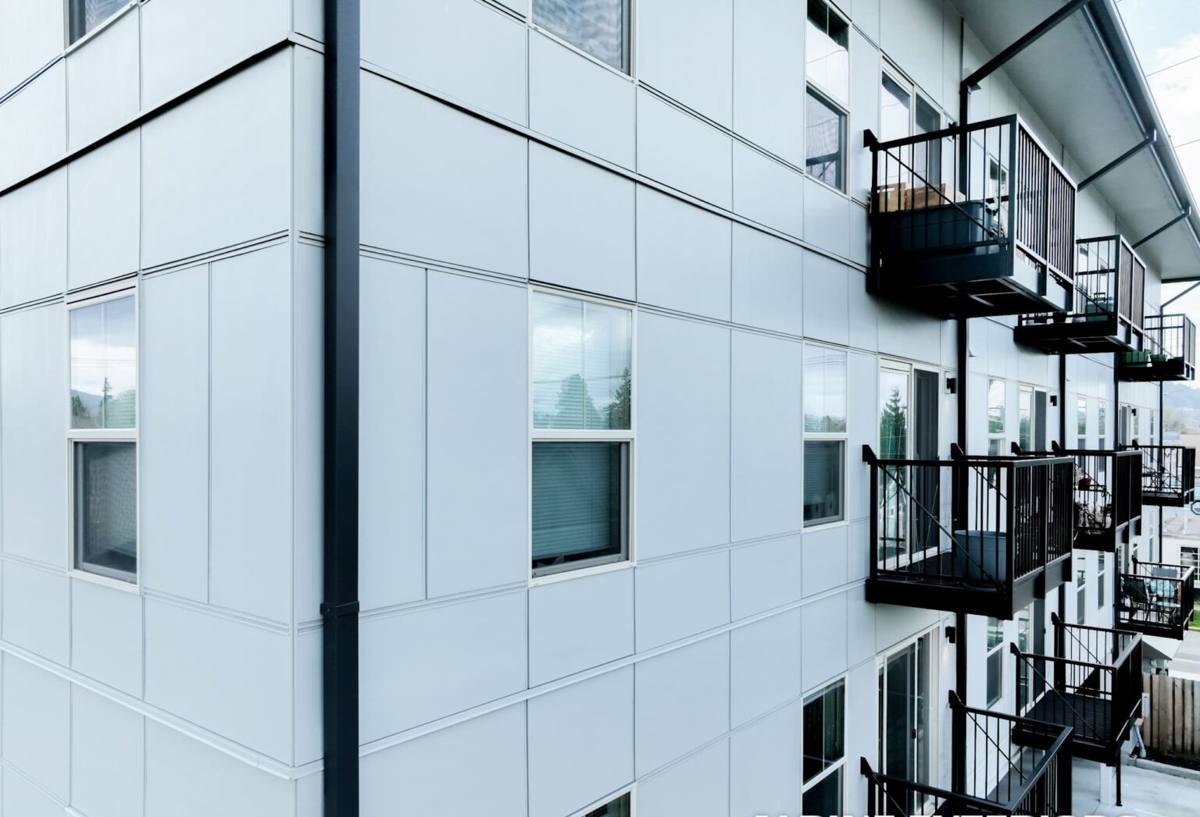
What Skyline Homes Are Up Against
Salt Air
Proximity to Skagit Bay and the broader Salish Sea means airborne salt is a real factor for exterior materials in this area, even a few miles inland. Salt accelerates corrosion in fasteners and metal flashing, and it can speed up the breakdown of paint films and less durable siding substrates over time. Materials and hardware need to be chosen with that in mind, not just for how they look at installation.
Driving Rain
Storms coming off the water tend to arrive with wind-driven rain rather than gentle, straight-down precipitation. That means water gets pushed sideways into seams, laps, and penetrations — window and door trim, hose bib penetrations, deck ledger connections — far more aggressively than in a calmer climate. A siding job that looks fine in dry weather can still fail here if the water management details underneath weren't done correctly.
A Long Moss Season
Shaded walls, tree cover, and the region's extended damp season give moss, algae, and mildew a long runway to establish themselves on exterior surfaces. Once organic growth gets a foothold on a porous or degrading material, it holds moisture against the wall longer, which compounds the problem. Siding that resists moisture absorption in the first place, and that carries a factory finish designed to shed growth rather than feed it, has a real advantage in this environment.
Why We Install James Hardie and Nothing Else
We made a deliberate decision years ago to install only James Hardie fiber cement siding — no vinyl, no LP SmartSide, no Cemplank, no Allura, no primed spruce or cedar. That's not a marketing position; it's a standard we hold because of what we've seen these products do (and not do) in exactly the kind of climate Skyline homes deal with every year.
- Non-combustible core. Fiber cement doesn't feed a fire the way wood-based products can, which matters in any wildfire-adjacent region of Washington.
- Won't rot or swell from moisture. Unlike wood-based sidings, Hardie's cement composite doesn't absorb water and swell, which is a major advantage in a climate with this much sustained rain and humidity.
- ColorPlus factory finish. Baked-on, UV-cured color resists fading and chalking far better than field-applied paint, and it holds up to salt exposure and repeated wet-dry cycling better than typical site-applied coatings.
- Climate-engineered HZ formulation. James Hardie manufactures its siding to different HardieZone specifications for different climates, with formulations engineered for the moisture and temperature patterns of the Pacific Northwest rather than a one-size-fits-all product.
- A strong, transferable warranty. Backed by a real manufacturer with a long track record, which matters if you ever sell the home.
We're not going to pretend other products don't have their place — vinyl is inexpensive, LP SmartSide has a following, and cedar has real curb appeal for the right buyer. But when we weigh moisture behavior, long-term maintenance, fire performance, and finish durability against what this climate does to a house over 20-plus years, fiber cement wins, and James Hardie is the manufacturer we trust to deliver it consistently.
What a Correct Siding Installation Actually Involves
The siding itself is only part of the equation. Most siding failures we get called out to inspect — regardless of brand — trace back to what's happening behind the panels, not the panels themselves. A correct James Hardie installation in a climate like Skagit County's includes:
Water-Resistive Barrier and Drainage Plane
A properly lapped weather-resistive barrier behind the siding, installed shingle-style so water sheds downward and out rather than working its way behind the material. In a driving-rain climate, this layer is doing more work than most homeowners realize.
Rainscreen or Drainage Gap
Where appropriate, a drainage gap between the siding and the water-resistive barrier lets any moisture that does get past the surface drain and dry out instead of sitting against the wall sheathing. This is especially valuable on shaded or north-facing walls where a moss season this long keeps surfaces damp longer.
Flashing at Every Penetration
Windows, doors, hose bibs, light fixtures, and deck ledgers all need proper flashing details, integrated correctly with the water-resistive barrier — not caulk used as a substitute for flashing. Caulk fails; correctly lapped flashing doesn't rely on adhesion to keep water out.
Manufacturer-Spec Fastening and Clearances
James Hardie publishes specific fastening patterns, nail types, and minimum clearances from grade, roof lines, and decks. Skipping these — over-driving nails, fastening too close to panel edges, leaving no gap at the bottom — is a common shortcut that shows up as problems years later, and it can also void the manufacturer's warranty.
Caulking and Sealant at Butt Joints
Butt joints and trim transitions need the right sealant, applied correctly, to keep wind-driven rain from finding its way in at the seams — one of the most common entry points in storms that come off the water sideways rather than straight down.
Our Process for a Skyline Project
- On-site assessment. We walk the exterior, check for existing moisture damage, rot, or failed flashing, and evaluate sun/shade exposure on each wall — shaded and north-facing walls get extra attention given the moss season here.
- Product and color selection. We help you choose the right Hardie plank profile, panel type, and ColorPlus finish for the home's style and the site's exposure.
- Tear-off and substrate inspection. Old siding comes off and we inspect the sheathing underneath for damage before anything new goes up. Any rot or compromised wood gets addressed, not covered.
- Water-resistive barrier and drainage details. Properly lapped barrier, flashing at every penetration, and drainage provisions where called for.
- Installation to manufacturer spec. Correct fastening, clearances, and joint treatment throughout — the details that determine whether the siding performs for its full lifespan.
- Final walkthrough. We review the completed work with you before calling the job done.
Why a Crew That Already Works Skyline Matters
Siding installation isn't identical from one climate to the next, and it isn't even identical from one wall of a house to another. A crew that regularly works Skyline and the surrounding Skagit County area already knows which walls tend to stay damp longest, how far wind-driven rain typically pushes during a fall storm, and what kind of moisture and growth patterns show up on homes here after a few seasons. That local pattern recognition shows up in small decisions — where to add extra flashing attention, which walls justify a drainage gap, how tight to keep clearances near grade — that a crew unfamiliar with this specific coastal-influenced, high-rainfall environment might not think to prioritize.
Cost Factors for Skyline Siding Projects
Every home is different, and we don't quote sight-unseen, but these are the main factors that drive cost on a siding installation in this area:
| Factor | Why It Matters |
|---|---|
| Home size and wall complexity | More square footage, corners, and trim details mean more labor and material |
| Existing siding removal and substrate condition | Tear-off, disposal, and any rot repair add time before new siding can go up |
| Product line and profile | Lap width, panel type, and finish selection affect material cost |
| Drainage and flashing scope | Homes with more shaded walls or prior moisture issues may need additional water management detailing |
| Access and site conditions | Slopes, landscaping, and building height affect scaffolding and staging needs |
Signs Your Siding Needs Attention
- Visible moss or persistent green/black staining on shaded or north-facing walls
- Soft or spongy spots when you press on the siding surface
- Peeling, bubbling, or chalking paint on wood-based siding
- Warping, cupping, or visible gaps at panel joints
- Staining or discoloration around windows, doors, or penetrations, suggesting water intrusion behind the siding
- Increasing heating bills that may point to a compromised weather barrier
If you're weighing a siding replacement for a home in the Skyline area, we're happy to take a look, walk the exterior with you, and give you a straightforward assessment of what your home needs. Reach out for a free, no-pressure estimate using the form below.